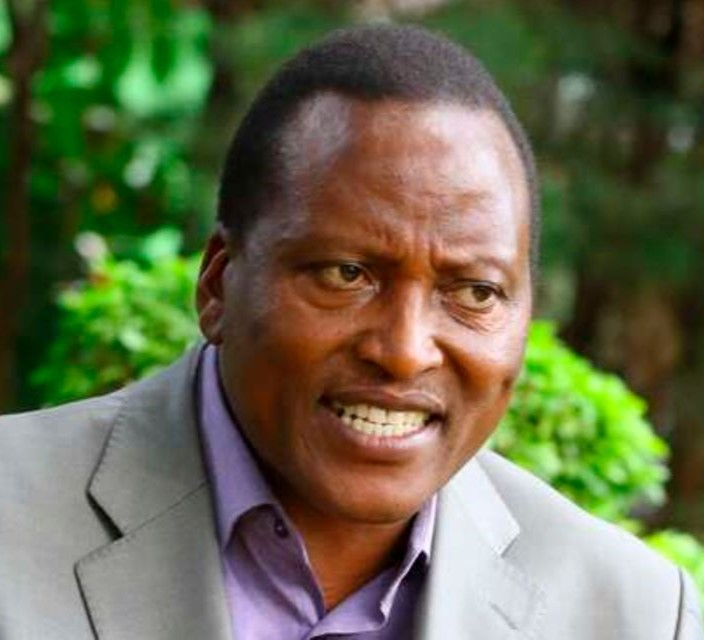

There is a particular kind of pressure that comes with being the son of a legend. Richard Momoima Onyonka has lived with that pressure for his entire public life — and by most measures, he has not just survived it, but built a formidable political identity of his own. His father, the late Dr. Zachary Onyonka, was one of Kenya’s most decorated economists and politicians, a man appointed minister at just thirty years old, the first Kisii man to earn a PhD, and a trusted hand in the cabinets of both Jomo Kenyatta and Daniel arap Moi. Most sons of such men quietly accept a smaller stage. Richard Onyonka is not that kind of man.
He has served Kenyans in Parliament for nearly two decades — first as an MP for Kitutu Chache South, and now as the Kisii County Senator — and in all that time, he has never been accused of timidity. He has crossed party lines strategically, survived a suspected poisoning, been arrested as a student during a coup attempt, gone to battle with governors, spoken against corruption with a directness that embarrasses colleagues, and — most recently — dropped a family revelation that sent Kenyan social media into a spin. There is no such thing as a quiet week when Richard Onyonka is speaking.
This biography traces his journey from Kisii’s political royalty to his own hard-won place in Kenyan public life.
Richard Onyonka Biography
| Detail | Information |
|---|---|
| Full Name | Richard Momoima Onyonka |
| Date of Birth | January 1, 1962 |
| Age (2026) | 64 years old |
| Place of Birth | Kitutu Chache, Kisii County, Kenya |
| Nationality | Kenyan |
| Tribe/Ethnicity | Abagusii (Gusii) |
| Religion | Christian |
| Profession | Senator, Politician, Businessman |
| Current Role | Senator for Kisii County |
| Party Affiliation | ODM (Orange Democratic Movement) |
| Father | The late Dr. Zachary Onyonka |
| Mother | The late Mama Teresia Nyaboke Omoke |
| Children | 12 (publicly confirmed by the senator) |
| Net Worth | Not publicly declared |
Early Life and Background
Richard Onyonka was born on January 1, 1962, in the Kitutu Chache area of what is today Kisii County, one of Kenya’s most densely populated and politically active regions. Growing up in Gusii land means growing up among a people with a strong tradition of education, entrepreneurship, and spirited political debate — qualities that the Onyonka household had in abundance.
His mother, Mama Teresia Nyaboke Omoke, was the heart of the family by all accounts. She raised her children with a commitment to education and a clear sense of values, even after the death of her husband in 1996. The senator remembered her publicly as “the heart of our home” when she passed away in May 2026 at the age of 81, following treatment at the Aga Khan Hospital in Nairobi.
Growing up as the son of Dr. Zachary Onyonka — a cabinet minister, economist, and public intellectual of national standing — would have opened some doors but also set expectations that could not easily be ignored. The Onyonka name carried weight in Kisii, in Nairobi’s political circles, and in the history of post-independence Kenya. Richard grew up in that shadow, but also in the genuine richness of a family defined by academic ambition and civic consciousness.
A Father Worth Knowing: Dr. Zachary Onyonka
To fully appreciate who Richard Onyonka is, you need to understand who his father was.
Dr. Zachary Onyonka, born in 1939, was the first Gusii man to earn a PhD. He studied economics at the University of Puerto Rico and went on to complete a master’s degree at Syracuse University before earning his doctorate. When Tom Mboya — Kenya’s celebrated Minister for Economic Planning — was assassinated in 1969, President Jomo Kenyatta chose the 30-year-old Zachary Onyonka to step into the docket. It was an extraordinary appointment for someone so young, and it reflected just how seriously the elder Onyonka was regarded.
Over the following decades, Dr. Zachary served in multiple ministries under both Kenyatta and Moi — Foreign Affairs, Economic Planning and Development, Education, and later Science and Technology. He was also a businessman of note, associated with assets including The Mosac Mall and The Monarch Hotel. He died of a stroke on October 22, 1996, while still serving as Minister for Research, Technical Training and Technology. He was 57.
His death left a void — not just in the family, but in Kisii politics. Richard had already begun his own political journey by then, but the loss of his father was, by all accounts, the most difficult period of his life.
The Two Fathers: A Family Story Recently Revealed
A remarkable personal story emerged in May 2026, following the death of his mother. Reporting by The Standard revealed that Senator Onyonka traces his childhood between two villages and, in a meaningful sense, two fathers — a biological father and a foster father — explaining why he carries the surname Onyonka and not Omoke, which was his mother’s family name.
This piece of family history, which many Kenyans did not know, sparked widespread curiosity and added a deeply human dimension to the senator’s public biography. It is a reminder that behind even the most publicly known figures, there are personal stories that rarely make it into political profiles.
Education
Richard Onyonka’s educational journey followed a path through some of Western Kenya’s most respected institutions. He attended Otamba Primary School and St. Mary’s Mosocho Primary School for his early years before moving to Kisii High School for his O-Levels — an institution with a long tradition of producing Kenya’s professional and political class.
For his A-Levels, he transferred to St. Mary’s School Yala, a Roman Catholic institution in what is now Siaya County with a strong academic reputation. In 1980, he enrolled at the University of Nairobi to study for a Bachelor of Commerce degree, majoring in Economics. He graduated in 1985.
The economics training echoed his father’s academic background and gave Richard a grounding in the language of budgets, public finance, and development policy — tools he would later deploy in parliamentary debates with notable fluency.
The 1982 Coup Attempt: A Student’s Defining Moment
Not every politician’s formative experience comes from a campaign rally. For Richard Onyonka, one of the sharpest turning points in his early life came during the attempted coup against President Daniel arap Moi on August 1, 1982.
Then a second-year student at the University of Nairobi, Onyonka was among a group of 152 students arrested and charged with sedition in connection with the coup attempt. The charges were serious. The timing was difficult — his own father was serving in Moi’s cabinet at the time, which put the family in an acutely uncomfortable position.
The students were eventually released by the High Court under a “nolle prosequi” order — meaning the state chose not to proceed with prosecution — and were freed just in time to sit their university examinations. Onyonka has spoken about this episode as a period that sharpened his political awareness, expanded his thinking, and helped build the resilience that would carry him through decades of competitive politics.
It is also a reminder that Kenya’s current legislative class is, in many cases, a generation that came of age under authoritarian pressures — and that experience has shaped how many of them approach questions of rights, accountability, and government overreach.
Career Journey: From Businessman to Legislator
After completing his degree in 1985, Onyonka pursued further studies and business interests before formally entering politics. He is associated with business ventures in Nairobi, and various reports point to properties in the city. The Onyonka family name has also been linked to real estate holdings, though the senator himself has not made detailed public disclosures about his business portfolio.
His entry into electoral politics was not instant success. He contested the parliamentary seat for Kitutu Chache before finding his footing, but in 2007 — a particularly turbulent election year in Kenya — he won the seat for Kitutu Chache South on a People’s Democratic Party (PDP) ticket. He was re-elected in subsequent cycles, serving the constituency until the 2022 elections.
That year, rather than contest the MP seat again, he shifted focus and successfully vied for the Kisii County Senate seat, joining Kenya’s upper house of Parliament. The Senate gave him a wider platform, more legislative scope, and a position from which to oversight county government — a role he has taken seriously.
During his time in the National Assembly, he served on the Departmental Committee on Defence and Foreign Relations (2013–2017), a position that called on both his academic background in economics and his familiarity — through his father’s career — with Kenya’s foreign policy landscape.
In 2008, following his first election as an MP, he was appointed Assistant Minister for Foreign Affairs during President Mwai Kibaki’s government. It was a role that connected directly to his father’s legacy while also establishing his own credential in national governance.
Party Affiliations and Political Strategy
If there is one area where Richard Onyonka has been consistently candid, it is the pragmatic nature of Kenyan party politics. He has moved between PDP, ODM, and Ford Kenya over the course of his career — and has made no apology for it.
Speaking in November 2025, he explained his thinking plainly: “I’ve never won an election with more than one party. Every move I made, every time I was moving away, it was because I saw I was going to be rigged out, so I moved ahead of the opposition.”
He also revealed openness to joining the Jubilee Party if former Interior CS Fred Matiang’i — whom he has publicly backed for a 2027 presidential run — were to invite him. His current home is ODM, but he has made clear that his compass points toward what he believes will best serve his constituents in Kisii and advance his political goals.
This frankness is unusual. Most politicians in Kenya speak about party loyalty in terms of ideology or principle; Onyonka speaks about it in terms of electoral arithmetic. Whether that honesty is refreshing or alarming depends on who you ask.
Landmark Moments in Parliament
Onyonka’s parliamentary career has been defined by a willingness to speak when others stay silent. Several moments stand out.
On corruption, he has been consistently direct. In September 2025, he publicly stated that Kenya’s government was losing approximately Ksh 10 billion daily to graft — a figure he described as “crazy” and substantially worse than under previous administrations.
On MPs’ salaries, he distanced himself from colleagues who pushed for a pay rise in early 2025, saying publicly that he had not asked for the salary increment and that the money would be better used supporting Members of the County Assembly. It was a rare act of voluntary restraint from a sitting legislator.
On county financial oversight, he walked out of a Senate committee meeting in November 2025 alongside Nairobi Senator Edwin Sifuna when they felt Nairobi Governor Johnson Sakaja was not providing adequate evidence to justify the county’s banking decisions. The walkout made national headlines.
On political arrests, he claimed in August 2025 to have intelligence suggesting the government was plotting to arrest Nairobi Senator Sifuna and other MPs over bribery allegations — a claim that sparked intense national debate.
These moments paint a picture of a legislator who has found his most effective register not in quiet committee work but in the kind of floor speeches and media interventions that shape public conversation.
The 2021 Poisoning Incident
In December 2021, Onyonka was attending a political event in Kisii County when he allegedly began bleeding from his mouth after taking a sip of water from a bottle passed to him by an unidentified individual. He was rushed to hospital for emergency treatment and was later discharged after recovering.
The incident generated enormous press coverage and deep concern about political safety in Kenya’s competitive county politics. Onyonka survived, and the matter became part of the folklore of just how high the stakes can get in Western Kenya’s political arena.
The 2027 Gubernatorial Ambition
In July 2025, Onyonka formally declared his intention to run for the Kisii governorship in the 2027 General Election, setting up a direct confrontation with incumbent Governor Simba Arati — a man he once supported.
The two leaders, both ODM members, had campaigned together in 2022 before falling out over governance disagreements. Onyonka accused Arati’s administration of mismanagement and sidelining key stakeholders, and described his earlier support for Arati as “a political mistake” for the Kisii community.
His gubernatorial platform emphasises equitable development, transparent governance, and youth empowerment — with a focus on involving elders, business leaders, and youth groups in decision-making. His supporters point to his combined experience as a former MP, assistant minister, and senator as a compelling preparation for county executive leadership.
The 2027 race is shaping up as one of the most watched county contests in Kenya.
Leadership Style and Political Voice
Richard Onyonka does not govern by consensus-building or quiet diplomacy. His instinct is to state a position clearly, defend it publicly, and live with the consequences — a style that earns enemies but also loyal admirers.
His speeches in the Senate have gone viral on social media, particularly a notable address in which he reflected on Kenya’s cycles of political change, called out corruption in specific terms, and appealed to the country’s leadership to govern with “wisdom and decency.” The TikTok clip of the speech accumulated nearly 8,000 likes and hundreds of comments — an unusually strong performance for parliamentary content, which suggests that Kenyans are hungry for legislators who speak to them directly.
He describes himself as a defender of devolution and constitutionalism, frequently criticising what he calls the deliberate dysfunctioning of devolved structures for political purposes. He is aligned with the opposition and has been an active voice in the broad coalition surrounding Matiang’i’s presidential ambitions.
Personal Life: Family, Wives, and Children
In May 2026, at a memorial gathering at his Utawala home following the death of his mother, Richard Onyonka made a public statement that caught Kenya by surprise.
He revealed that he is a polygamous man with five wives and twelve children, and that one of those wives is Dr. Roselyn Akombe — the former IEBC Commissioner who made international headlines in 2017 when she resigned from Kenya’s electoral body mid-election, citing safety concerns, and relocated to the United States.
Akombe confirmed the relationship publicly at the burial of Mama Teresia Nyaboke at the family’s Mosocho home in May 2026, identifying herself as “one of the bona fide daughters-in-law” of the late matriarch. She spoke about spending time with the senator’s mother, taking her to the US for medical treatment, and recalled her as a woman who deeply valued education.
Among the Abagusii, polygamy has historically been recognised under customary law and carries social meaning — a man with multiple wives was traditionally associated with the ability to provide for several households, requiring land, cattle, and resources. Each wife typically maintained her own household within the family compound.
Onyonka’s other wives and children have not been publicly identified in verified sources. He promised to introduce all twelve of his children at the burial ceremony in Kisii.
His late mother, Mama Teresia Nyaboke Omoke, passed away on May 6, 2026, at 81. Onyonka’s tribute described her as the family’s source of “strength and wisdom” and the heart of their home.
Net Worth and Financial Profile
Richard Onyonka has not made a formal public declaration of his net worth. Various estimates circulate online, including a frequently cited figure of approximately Ksh 100 million, but this is speculative and not independently verified.
What is confirmed is his parliamentary salary. According to the Salaries and Remuneration Commission, a Kenyan senator earns a basic salary of approximately Ksh 443,760 per month, with additional allowances for housing (Ksh 150,000) and other benefits, bringing total monthly compensation to approximately Ksh 739,600. Onyonka has publicly criticised the pay structure, noting that the recent mileage increase approved in April 2025 was something he “never asked for.”
Beyond his parliamentary income, he is believed to have business interests in Nairobi, though he has not confirmed specific assets. The Onyonka family is broadly regarded in Kisii as one of significant historical standing and property. Any specific net worth figure should be treated with caution in the absence of official disclosure.
Social Media and Public Presence
Richard Onyonka is active on social media and uses it as a direct communication channel with constituents and the broader public.
- Twitter/X: @RichardOnyonka_ — his most active platform, used for political commentary and direct responses to critics and colleagues
- Facebook: Available through the Kenyan Parliament’s official presence and his own page
- TikTok: His parliamentary speeches have been widely shared on TikTok, particularly his address on Kenya’s democracy and corruption
His X presence is particularly notable for its candour — he has used the platform to challenge colleagues by name, respond to accusations, and comment directly on national events without the careful hedging that characterises many politicians’ social media use.
Latest News (May 2026)
The most significant news in Richard Onyonka’s recent life has been personal, not political. The death of his mother, Mama Teresia Nyaboke Omoke, on May 6, 2026, brought together Kisii political leadership and national figures for a period of public mourning. It was during the condolence gatherings that he made the widely reported disclosure about his wife Roselyn Akombe and his twelve children.
The burial, held at the family’s Mosocho home on May 15, 2026, was attended by prominent political figures including Education CS Migosi Ogamba. Dr. Akombe’s presence and public statement confirming the marriage became a major talking point nationally.
On the political front, his 2027 gubernatorial campaign is gaining momentum, with alignment to Matiang’i’s broader opposition movement forming the backdrop of his electoral strategy. Whether he stays in ODM, joins Jubilee, or finds a different vehicle will be one of the more closely watched political decisions in Kisii politics over the coming months.
Conclusion
Richard Onyonka is what happens when political inheritance meets genuine conviction. He could have coasted on his father’s name — and in Kenya’s politics, it would have taken him far enough. Instead, he built a record of his own: two decades of parliamentary service, positions that required courage to take, and a public voice that Kenyans increasingly take seriously.
He is not without contradictions. He talks about principles while openly describing strategic party-hopping. He criticises inflated salaries while drawing a senator’s pay. He champions devolution while his battles with county governors sometimes blur the line between oversight and personal rivalry.
But in a political landscape where many legislators are either invisible or spectacularly self-serving, Onyonka has managed something harder: he remains interesting, relevant, and willing to say the uncomfortable thing. As he moves toward a 2027 gubernatorial run with the weight of his family’s legacy behind him and years of legislative experience in front of him, the Kisii electorate will have to decide whether what he offers is what they need — and whether the son of a great minister is ready to become a governor in his own right.
Frequently Asked Questions (FAQs)
1. Who is Richard Onyonka? Richard Momoima Onyonka is a Kenyan politician currently serving as the Senator for Kisii County. He previously served as the Member of Parliament for Kitutu Chache South from 2007 to 2022 and was once appointed Assistant Minister for Foreign Affairs. He is the son of the late Dr. Zachary Onyonka, one of Kenya’s most prominent post-independence cabinet ministers.
2. What tribe is Richard Onyonka? Richard Onyonka belongs to the Abagusii (Gusii) community, an Bantu-speaking people indigenous to the Kisii and Nyamira counties of southwestern Kenya.
3. How many wives and children does Richard Onyonka have? Senator Onyonka publicly confirmed in May 2026, during the mourning period following his mother’s death, that he has five wives and twelve children. One of his wives is Dr. Roselyn Akombe, the former IEBC Commissioner, who confirmed the relationship publicly at the family burial in Mosocho.
4. What is Richard Onyonka’s educational background? He attended Otamba and St. Mary’s Mosocho primary schools, Kisii High School for his O-Levels, and St. Mary’s School Yala for his A-Levels. He then enrolled at the University of Nairobi in 1980, graduating in 1985 with a Bachelor of Commerce degree in Economics.
5. What are Richard Onyonka’s political plans for 2027? He formally declared his intention in July 2025 to contest the Kisii County governorship in the 2027 General Election, running against incumbent Governor Simba Arati. He has also expressed support for former Interior CS Fred Matiang’i’s presidential bid and has indicated openness to shifting party affiliation depending on which vehicle gives him the best path to victory.
Editorial Notice
The biography above is compiled from publicly available sources and is intended for general informational purposes only. At PeopleCabal, we are committed to accuracy — however, public records evolve, and some details may change over time. If you notice anything that requires a correction or update, we welcome you to reach out to us directly.
