
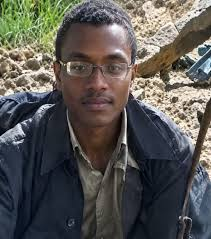
Abu-Bilal al-Minuki: Who Was ISIS’s Shadow Commander in West Africa – And What His De@th Means

In the early hours of Saturday, May 16, 2026, US President Donald Trump made an announcement that reverberated across counterterrorism circles worldwide. American and Nigerian forces had just killed Abu-Bilal al-Minuki — described by the US government as the second-in-command of ISIS globally — in a precision strike on his compound in the Lake Chad Basin of northeastern Nigeria. It was, by any measure, one of the most consequential counterterrorism operations in West Africa in years.
Yet for most people outside of intelligence and security circles, the name meant almost nothing. Unlike high-profile terrorist figures who cultivate visibility as propaganda tools, al-Minuki was a deliberate shadow — a man who worked behind networks, not in front of cameras. That obscurity was, in a way, the point. And it is precisely why his story demands a serious, sober examination.
This analysis draws exclusively on verified reporting from the US government, Nigerian authorities, Al Jazeera, CNN, The Cable, Daily Trust, and counterterrorism researchers to explain who al-Minuki was, what he did, how the operation unfolded, and what — if anything — his de@th changes.
Who Was Abu-Bilal al-Minuki?
Real name and origins
Al-Minuki, also known as Abor Mainok or Abubakar Mainok, was born in 1982 in Mainok, Benisheikh, Borno State — a small town in Nigeria’s volatile northeast, a region that would become, over the following two decades, the epicentre of one of Africa’s most destructive jihadist insurgencies. His nom de guerre, “al-Minuki,” is simply an Arabised derivation of his hometown. He did not come from nowhere; he came from the very communities that insurgency would later consume.
According to documents from the US Office of Foreign Assets Control, al-Minuki was born in 1982 in the northeastern Nigerian state of Borno, which borders Cameroon, Chad and Niger. That geography matters. Borno sits at the intersection of four countries, in a basin around Lake Chad where porous borders, ungoverned spaces, and chronic poverty have long made it fertile ground for armed groups.
From Boko Haram to ISIS
Al-Minuki did not start with ISIS. Before pledging allegiance to ISIL in 2015, al-Minuki was a prominent Boko Haram leader, according to the Nigerian army. His transition from Boko Haram to ISIS’s West Africa affiliate — the Islamic State West Africa Province, or ISWAP — was shaped by the internal fractures that defined jihadist politics in the Lake Chad Basin in the mid-2010s.
The pivotal moment came over a dispute about Libya. When ISIS requested 1,000 ISWAP fighters to help defend the city of Sirte in Libya, Shekau declined, saying he could not spare the men. Al-Minuki, who was ISWAP’s Lake Chad area commander at the time, sent some fighters himself. The action angered Shekau and pointed to a growing rift between the then-Boko Haram commander and those who wanted a closer working relationship with ISIS.
That single act of defiance against Abubakar Shekau — Boko Haram’s notoriously volatile and authoritarian leader — was a declaration of where al-Minuki’s loyalties lay. He was not a Boko Haram man. He was, fundamentally, an ISIS man. The distinction mattered operationally, strategically, and eventually for his rise to global significance within the group.
The arrival of foreign fighters and a tactical transformation
Security and intelligence sources familiar with extremist operations in the Lake Chad Basin say al-Minuki arrived in the region alongside nearly 60 foreign fighters dispatched to strengthen ISWAP’s operational structure and battlefield capabilities.
These were not ordinary recruits. The foreign operatives al-Minuki arrived with were believed to possess combat experience from the Middle East and other jihadist theatres, and reportedly introduced a new phase of insurgent warfare into Nigeria’s conflict environment. Their arrival also coincided with noticeable tactical changes in ISWAP operations: increased night assaults on military formations, coordinated raids using mobile attack teams, deployment of armed drones for surveillance and attacks, more sophisticated use of improvised explosive devices (IEDs), renewed suicide bombing campaigns, and improved battlefield communications.
This is not a minor footnote. It describes a fundamental shift in the quality and complexity of terrorist operations in a region that was already suffering enormously. Al-Minuki’s arrival was not just a change in personnel — it was a change in capability.
His Rise Through ISWAP’s Internal Chaos
ISWAP is not a monolithic organisation. It has always been shaped by internal rivalries, succession crises, and factional disputes. Al-Minuki’s ascent to global significance was a direct product of that volatility.
Al-Minuki reportedly gained influence within ISWAP following years of internal divisions among jihadist factions in West Africa. ISWAP emerged in 2016 after breaking away from Boko Haram over disagreements surrounding the leadership style and strategy of former Boko Haram leader, Abubakar Shekau. After the killing of senior ISWAP commander Mamman Nur in 2018, al-Minuki was said to have expanded his influence within the organisation and strengthened ties with ISIS central leadership.
After Nur’s death, al-Minuki, who was a rival, emerged as a leading figure in the organisation, alongside Mustapha Kirmima, another ISWAP commander. Al-Minuki was reportedly among the hardliners dissatisfied with Nur’s leadership.
By 2020, his stature was formally recognised within ISIS’s command structure. In 2020, al-Minuki was identified as the second deputy emir of ISWAP in a letter that sought to address the institutional leadership crisis.
He continued rising. Al-Minuki had recently taken up the role of General Directorate of States around February 2026 according to Nigerian Intelligence. By the time he was killed, he was not just a regional commander — he was a global one.
What He Actually Did: Roles and Responsibilities
Understanding what al-Minuki actually oversaw is important for understanding why his elimination was considered so significant — and why it is also limited in what it can achieve.
US Secretary of Defense Pete Hegseth confirmed that “Abu-Bilal al-Minuki was the senior ISIS General Directorate of Provinces Emir — the number two for ISIS globally — responsible for overseeing the planning of attacks, directing hostage-taking and managing financial operations.”
The Nigerian army’s statement added further operational detail. An army statement described him as a “key” operational and strategic figure who provided guidance to ISIL entities outside Nigeria on media operations, economic warfare and weapons manufacturing.
The al-Furqan office covers Nigeria and its neighbours, as well as the Islamic State in the Greater Sahara (ISGS) affiliate in the western Sahel and provides ISIS affiliates with operational guidance and international funding.
In other words, he was not a battlefield commander in the traditional sense. He was an administrator of violence — a man who managed money, coordinated logistics, guided propaganda, and directed operations across multiple countries from a compound in the Lake Chad Basin. That combination of operational reach and financial control is what made him valuable to ISIS, and what made him dangerous far beyond Nigeria’s borders.
The Dapchi Schoolgirls Connection
Perhaps the most emotionally resonant dimension of al-Minuki’s record is his alleged role in one of Nigeria’s most heartbreaking terrorist acts: the 2018 Dapchi kidnapping.
In 2018, he was linked to the kidnapping of more than 100 schoolgirls in Dapchi, in northeastern Nigeria’s Yobe State. The abduction, which bore uncomfortable similarities to the 2014 Chibok kidnapping by Boko Haram, shook Nigeria and drew international condemnation. Most of the girls were eventually released, but one — Leah Sharibu, a Christian who refused to convert to Islam — remained in captivity. As of May 2026, her fate remains unknown.
Nigeria’s Defence Headquarters officially confirmed al-Minuki’s connection to the Dapchi kidnapping in its statement announcing his death, stating that the terrorist leader had “maintained longstanding operational ties with ISIS-West Africa and was linked to the 2018 Dapchi kidnapping of over 100 schoolgirls.”
The US Designation and the Hunt
Al-Minuki did not suddenly become visible in May 2026. The United States had been tracking him for years.
In 2023, Al-Minuki was officially designated a global terrorist by the United States. He was named a “Specially Designated Global Terrorist” under the administration of Joe Biden. He was sanctioned by the Office of Foreign Assets Control (OFAC), which froze any assets linked to him and criminalised financial or material support. The US government cited his role in terrorist financing, operational leadership within ISIS, and influence across multiple regions.
There was also a false alarm. In 2024, he was among the suspected ISWAP/Boko Haram commanders killed in the Birnin Gwari forest area of northern Kaduna State. On Sunday, a spokesperson for President Tinubu issued a statement acknowledging the earlier claim of al-Minuki’s de@th in 2024, but explained that the previous listing was “a case of mistaken identity or misattribution,” adding that the Birnin Gwari area was never within al-Minuki’s established operational hub.
The false confirmation in 2024 underlines how difficult tracking and verifying high-value targets in the Lake Chad Basin can be — even for sophisticated intelligence services.
The Operation: What Happened on May 16, 2026
The operation that killed al-Minuki was not a drone strike ordered from thousands of miles away. It was a close-quarters, high-risk mission of the kind that only a handful of military units in the world are trained to execute.
The operation began at approximately 12:01am as two dozen operators arriving by helicopter, including Seal Team 6, began fighting with militants on two small islands in the Lake Chad Basin with the intent to capture al-Minuki. After a three-hour firefight, a surrender seemed unlikely. Rather than risking a potential escape, an airstrike was launched on his compound, killing al-Minuki and several top lieutenants.
The Nigerian army described it as “a meticulously planned and highly complex precision air-land operation” carried out on Saturday between midnight and 4am (23:00 to 03:00 GMT) in Metele, in Borno State in northeast Nigeria.
AFRICOM commander US Air Force Gen. Dagvin Anderson said: “This operation underscores the exceptional value of the US-Nigeria partnership and was made possible through the cooperation and coordination of our forces in recent months. Make no mistake, our two nations will relentlessly pursue and neutralize terrorist threats and are committed to protecting our people and interests.”
Trump thanked the Nigerian government for its cooperation and said “with his removal, ISIS’s global operation is greatly diminished.” No US service members were harmed.
What the Analysts Say: A Win, But Not the End
No serious counterterrorism analyst is claiming al-Minuki’s de@th ends the insurgency. The reaction from experts has been measured — acknowledging the tactical significance while cautioning against strategic overconfidence.
“The killing of al-Minuki will disrupt ISWAP operationally in the short term,” Alex Vines, the Africa programme director at the European Council on Foreign Relations, told Al Jazeera.
Dennis Amachree, former director of the Department of State Services in Nigeria, told Al Jazeera that the killing of al-Minuki “is going to create a huge vacuum in the leadership and financing of ISWAP, as many top officers were decimated with him. Expect internal friction over succession because he managed global funding streams and external operations; the group’s ability to move funds across borders will be severely disrupted in the short term.”
But there is a longer view too. “While the reported killing of ISIL leader Abu-Bilal al-Minuki may temporarily disrupt command structures, it is also likely to trigger retaliatory violence as rival jihadist factions compete for relevance, legitimacy, and territorial influence,” said Abiola Sadiq, a security consultant, speaking to Al Jazeera.
“ISWAP and Boko Haram’s recent resurgence reflects not simply a military setback, but a deepening governance vacuum across the Lake Chad Basin,” Sadiq added. “The Lake Chad Basin continues to face overlapping crises: millions remain displaced, schools are closed, and humanitarian aid is insufficient. Armed groups exploit geographic and administrative gaps to expand operations, while regional security cooperation struggles to keep pace with their adaptability.”
The broader strategic picture is sobering. ISIS lost its caliphate in Syria and Iraq in 2017. Analysts declared it finished. Instead, it pivoted to Africa, Central Asia, and Southeast Asia, where it found ungoverned spaces, ethnic grievances, poverty, and weak state institutions — perfect conditions for insurgency. ISWAP is that pivot. It is ISIS’s most successful geographic expansion.
Removing one man — even the second-most powerful man in the organisation — does not dismantle a movement that has been building structural roots in West Africa for more than a decade.
The Significance for Nigeria and US-Africa Relations
For Nigeria, the operation carries significance that goes beyond the security dimension. For years, the Nigerian government struggled to contain ISWAP and faced criticism — domestically and internationally — for the slow pace of counterterrorism progress in the northeast. A joint operation that eliminates ISIS’s global deputy, conducted on Nigerian soil with Nigerian forces as equal partners, is a powerful statement about the evolution of that capacity.
Nigerian President Bola Tinubu said: “Nigeria appreciates this partnership with the United States in advancing our shared security objectives. I extend my sincere gratitude to President Trump for his leadership and unwavering support in this effort.”
For the United States, the operation demonstrates that the counterterrorism architecture it has built in Africa — intelligence sharing, joint training, surveillance assets — can produce high-value results even in some of the world’s most operationally difficult environments.
The message being sent — to every ISWAP commander sitting in a compound somewhere between Borno and the Sahel — is that the surveillance architecture is global, and there is no hiding place deep enough.
Key Facts at a Glance
| Detail | Information |
|---|---|
| Full Name | Abu-Bilal al-Minuki (also known as Abubakar Mainok / Abu Mainok) |
| Born | 1982, Mainok, Benisheikh, Borno State, Nigeria |
| Age at Death | 44 |
| Nationality | Nigerian |
| Affiliation | ISIS / Islamic State West Africa Province (ISWAP) |
| Role | Second-in-command of ISIS globally; Senior Emir of General Directorate of Provinces |
| US Designation | Specially Designated Global Terrorist (June 2023) |
| Linked to | 2018 Dapchi schoolgirls kidnapping; international terrorist financing; drone and weapons development |
| Killed | May 16, 2026, Metele, Borno State, Nigeria |
| Operation | Joint US-Nigeria precision air-land strike; included SEAL Team 6 |
Five Key Questions Answered
1. Why was al-Minuki considered so dangerous? He was not a frontline fighter — he was an administrator of global terrorism. He managed ISIS’s financial flows across multiple countries, coordinated operational guidance to affiliates from West Africa to the Sahel, oversaw recruitment and weapons development, and served as the critical link between ISIS’s central command structure and its African operations. Removing that link disrupts the network at a systemic level, not just a tactical one.
2. Was his killing confirmed beyond Trump’s announcement? Yes. Nigeria’s State House confirmed the operation in a statement. Nigerian and US forces “conducted a daring joint operation that dealt a heavy blow to the ranks of the Islamic State,” and “early assessments confirm the elimination of the wanted IS senior leader, Abu-Bilal Al-Manuki, also known as Abu-Mainok, along with several of his lieutenants, during a strike on his compound in the Lake Chad Basin.” AFRICOM also issued a formal confirmation.
3. Hadn’t he already been reported dead in 2024? Yes, and that was an error. A Nigerian government spokesperson explained the 2024 claim was “a case of mistaken identity or misattribution” and that the Birnin Gwari area was never within al-Minuki’s established operational hub. The 2026 operation involved far higher-confidence identification.
4. What happens to ISWAP now? In the short term, disruption. Al-Minuki managed global funding streams and external coordination. His death, combined with the loss of several lieutenants in the same strike, removes multiple nodes of the network simultaneously. But ISWAP has survived leadership losses before — it emerged from the fracturing of Boko Haram and has shown resilience. The underlying conditions that drive recruitment — poverty, displacement, governance failure — remain unchanged.
5. What does this mean for the families still affected by past attacks, including Dapchi? For families of kidnapping victims, the operation closes one chapter without resolving the deepest pain. The Nigerian military linked him to the 2018 schoolgirls kidnapping. But Leah Sharibu and others who may still be held remain unaccounted for. The de@th of a commander does not automatically produce information about captives. It may even complicate efforts, depending on who inherits control of ISWAP’s operations.
Conclusion
It would be a disservice to the people of northeastern Nigeria — who have lived through more than fifteen years of violence, displacement, and loss — to treat this operation as a triumphant conclusion rather than a significant but partial milestone.
The conflict in the Lake Chad Basin has claimed over 35,000 lives since 2009. Millions remain displaced. Schools have been closed for years in parts of Borno. The insurgency did not begin with al-Minuki, and it will not end with his death. What the operation demonstrated is that sustained intelligence work, genuine bilateral cooperation, and precise military action can reach even the most protected figures in the most remote operating environments. That capability matters.
But capability without a comprehensive political and development strategy for the northeast — one that addresses the governance vacuum, the displacement crisis, and the economic conditions that jihadist recruiters exploit — will always be fighting a war on a treadmill.
The Lake Chad Basin’s problem is not one that can be killed. It has to be built out of.
This analysis is based entirely on verified reporting from AFRICOM, the Nigerian Presidency, Al Jazeera, CNN, The Cable, Daily Trust, The Guardian Nigeria, Pan African Visions, and the US Office of Foreign Assets Control. No content in this article promotes, glorifies, or celebrates terrorism or terrorist actors.
Editorial Notice
The biography above is compiled from publicly available sources and is intended for general informational purposes only. At PeopleCabal, we are committed to accuracy — however, public records evolve, and some details may change over time. If you notice anything that requires a correction or update, we welcome you to reach out to us directly.
