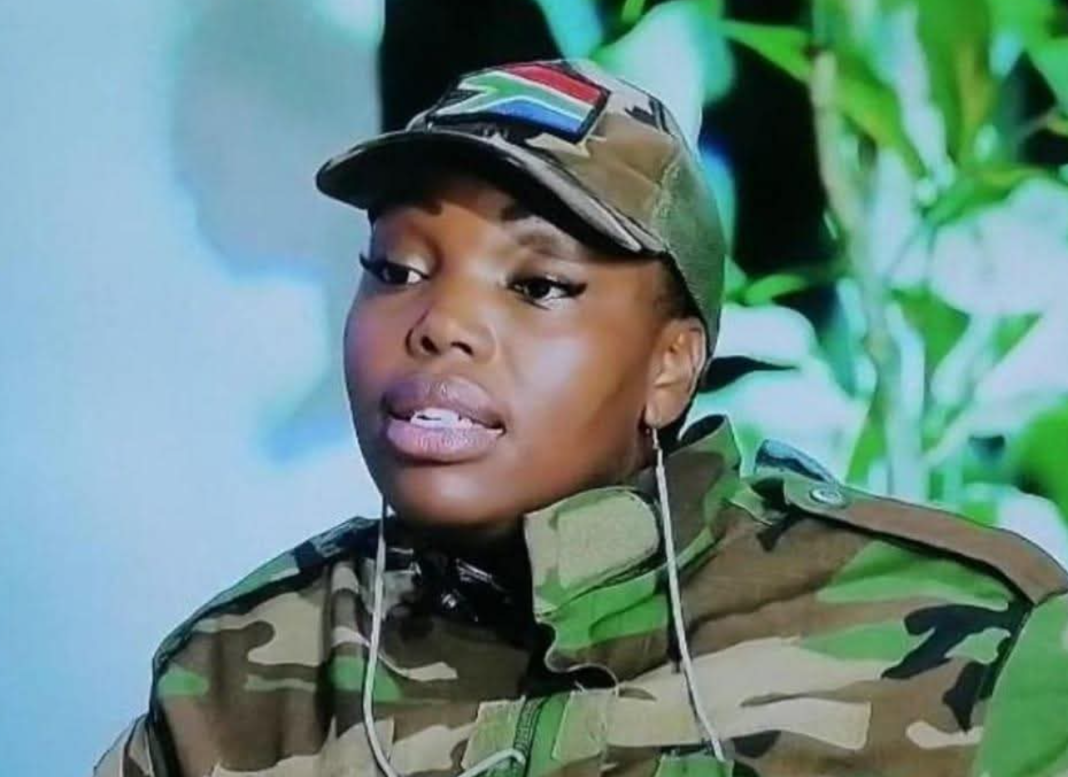

There are few figures in contemporary South Africa who provoke as much passionate debate as Zandile Dabula. She is not a politician who rose through party structures, nor a celebrity who stumbled into social commentary. She is, by all accounts, a township woman who made a deliberate, defiant choice to step into one of the most contested political conversations in the country — immigration. And in doing so, she became the face of a movement that South Africans either passionately defend or fiercely oppose.
As the president of Operation Dudula, Dabula has been tear-gassed at protests, dragged into court battles, subjected to fake AI-generated videos claiming she resigned, and accused of being the very thing she campaigns against — a foreigner. She has pushed back against each of these. Whether you agree with her politics or not, it is impossible to look away from the kind of conviction it takes to lead a movement that courts controversy as a matter of course.
This biography takes a measured look at what is publicly known about her life — who she is, where she came from, how she rose to leadership, and what she represents in the broader tapestry of post-apartheid South Africa.
Zandile Dabula Biography
| Detail | Information |
|---|---|
| Full Name | Zandile Siphesihle Dabula |
| Date of Birth | March 5, 1980 (widely cited; not officially confirmed) |
| Place of Birth | Diepkloof, Soweto, South Africa (as stated by Dabula) |
| Nationality | South African |
| Tribe/Ethnicity | Amahlubi (Hlubi); clan names include Bhele, Langa, Qunta, Mafu, Khuboni |
| Religion | Not publicly confirmed |
| Profession | Activist, Political Leader, Former HR Recruitment Professional |
| Organisation | Operation Dudula (President) |
| Children | Two to three (reports vary) |
| Net Worth | Not officially confirmed; estimated in some sources at approximately $1 million |
Early Life and Background
Zandile Dabula grew up in Diepkloof, Soweto — a section of the vast township southwest of Johannesburg that carries enormous historical and cultural weight. Soweto is not just a postal address; it is the birthplace of the 1976 student uprisings, a cradle of the anti-apartheid struggle, and the kind of place where political consciousness does not need to be taught — it is absorbed from the streets themselves.
Growing up in Diepkloof in the 1980s and 1990s meant growing up during two seismic shifts in South African history: the final, violent death throes of apartheid, and the euphoric but complicated transition to democracy after 1994. For many families in Soweto, the promises of the new democratic order — jobs, housing, quality education, equal access to services — remained frustratingly out of reach even decades later.
It is this gap between expectation and reality that would eventually fuel Dabula’s activism. She has spoken publicly about knowing firsthand the struggles of unemployment and poverty in township communities. Long before she stood in front of cameras in military-style uniforms, she was, by her own account, an ordinary South African woman watching her community bear the weight of an economic system that had not kept its promises.
Her family background remains relatively private. She has not spoken in detail in public forums about her parents or siblings. What is known comes primarily from her own statements and, occasionally, from those who have investigated her background — with sharply differing conclusions.
Tribe, Identity, and the Nationality Controversy
Perhaps no aspect of Zandile Dabula’s biography has generated more heat than the question of where she truly comes from.
She is Hlubi (Amahlubi), a Nguni-speaking people historically rooted in the Eastern Cape and KwaZulu-Natal, whose descendants were scattered across South Africa over generations — including through the forced removals of the apartheid era. Her clan names — Bhele, Langa, Qunta, Mafu, Khuboni — place her within this tradition. Like many fifth-generation Sowetans, Soweto itself has become her ancestral home; her family, as is the reality for many, has deep roots in Johannesburg going back to the early twentieth century.
Yet throughout 2025, persistent claims on social media accused her of being Zimbabwean — or Ndebele from Zimbabwe — particularly highlighting that the alleged father of her children is reportedly Zimbabwean. In November 2025, Africa Check debunked an AI-generated video that appeared to show Dabula claiming her parents were Zimbabwean. A separate AI-generated image and video falsely showed her “resigning,” which was also discredited by fact-checkers.
Dabula addressed the nationality question directly and firmly in September 2025: “I’m a bona fide citizen of this country. I was born and bred in Diepkloof in Soweto and not in Zimbabwe. That’s the only reason I want to put my fellow South Africans first, because I know their struggles.” She attributed the smear campaign to the Economic Freedom Fighters (EFF), her most vocal political opponents.
The irony is not lost on observers: the leader of an anti-immigration movement being accused of being an immigrant herself. Whether those accusations are rooted in fact or in political warfare is something that credible, independent verification has not settled — and any responsible account of her biography must note that clearly.
Education and Professional Background
Details about Dabula’s formal education are limited in the public record. She is believed to have attended local public schools in Diepkloof. Social media posts from various commentators have made unverified claims about university degrees, but no verified, independent record of tertiary qualifications has been publicly confirmed.
What is known is that before her rise to political prominence, Dabula worked in human resources and recruitment. Her LinkedIn profile, referenced in local media, listed her as a recruitment professional with skills in people management, communication, and organisational development. This professional background — understanding how employers hire, how skills mismatches hurt workers, and how structural unemployment operates — would later inform the way she framed her activist arguments about foreigners competing with South Africans for jobs.
Some reports also suggest she had involvement with non-profit organisations, including stints connected to community development work. The picture that emerges is of someone who moved through multiple sectors — HR, non-profit, community work — before her activism became her full-time occupation.
How Operation Dudula Was Born
To understand Zandile Dabula, you first need to understand Operation Dudula — and to understand Operation Dudula, you need to understand Soweto in 2020.
The COVID-19 pandemic devastated South Africa’s already fragile economy. Unemployment, especially in townships, reached catastrophic levels. Alongside this, long-standing frustrations about foreign nationals operating informal businesses in townships — spaza shops, salons, street trading — that locals felt were taking opportunities away from South Africans, began boiling over.
Operation Dudula was founded in 2021 as a grassroots, civic response to these frustrations, initially by figures including Nhlanhla “Lux” Dlamini, Solomon Kruger Kekana, and others — with Dabula identified as a co-founder and early organiser. The name “Dudula” is a Zulu word meaning “to push out” or “to force out.” The movement started by organising neighbourhood patrols in Soweto to check documentation and close down foreign-owned shops operating without permits.
It quickly expanded beyond its origins. By 2022, it was making national headlines. By 2023, it had grown into a movement with chapters across Gauteng, KwaZulu-Natal, and the Western Cape. Its rise was, in essence, a symptom of post-apartheid South Africa’s unresolved contradictions — the persistence of inequality, the failure of service delivery, and the search for a simple explanation for deeply complex problems.
Zandile Dabula’s Rise to Leadership
Nhlanhla “Lux” Dlamini, the movement’s most prominent early face, stepped back from his role, and in mid-2023, Zandile Dabula was elected president of Operation Dudula. It was a significant moment. She became not just the leader of one of South Africa’s most controversial civic movements but one of the few women to front a movement of this kind in the country’s political landscape.
Her rise was not accidental. Those who watched her in the movement’s early days noted her ability to communicate clearly and calmly in charged situations — a quality that stands out when the atmosphere around Operation Dudula has often been tense. She can address crowds, face cameras, and absorb hostile questioning without losing composure. In a movement that has sometimes been associated with volatility, she projects a kind of deliberate steadiness.
Under her presidency, Operation Dudula made several notable structural shifts. The movement formally registered as a political party, contesting elections in 2024 — attracting approximately 5,000 votes in Gauteng. It expanded its campaigns beyond immigration enforcement into broader service delivery issues, and Dabula consistently framed its actions as law-based and legal, even as courts and critics challenged that framing.
Key Actions and Campaigns Under Her Leadership
The scope of Operation Dudula’s activities under Dabula’s leadership has been wide — and deeply controversial.
Clinic and healthcare blockades emerged as one of the most publicised flashpoints. The movement organised patrols outside public health facilities, demanding that staff check documentation before treating patients. A Johannesburg High Court eventually interdicted Operation Dudula from preventing foreign nationals from accessing public healthcare. Dabula announced the movement would appeal the ruling.
The most devastating moment came in August 2025, when a one-year-old child died after Operation Dudula members allegedly prevented the child’s mother from accessing a clinic. The EFF filed a murder charge against Dabula and other movement members. Dabula denied the accusations, calling them politically motivated, and filed a defamation case against the EFF in response.
In November 2025, Operation Dudula protested near the G20 Summit at Nasrec, Johannesburg — demanding that world leaders and President Cyril Ramaphosa address immigration and border security. Police deployed tear gas and pepper spray to disperse protesters. Dabula herself was hit. Two members were arrested. She accused police of corruption and working against citizens’ interests.
The movement also ran campaigns targeting undocumented children’s access to public schools — framing it as prioritising South African students, while critics saw it as a violation of children’s constitutional rights.
Legal Battles and Controversies
Zandile Dabula’s time as Operation Dudula’s president has been marked by a continuous stream of legal and public controversies.
The High Court interdict barring the group from harassing foreign nationals at healthcare facilities was a landmark ruling against the movement’s methods. The court described Operation Dudula as “one of the most visible and violent proponents of xenophobia” in South Africa.
The EFF murder charge after the clinic death of the one-year-old in August 2025 attracted national outrage and enormous media attention. Dabula’s response — filing a defamation case against the EFF — signalled that she intended to fight back through legal channels rather than retreat.
The AI-generated disinformation campaign against her — fake resignation videos, fake images, fake claims about her parents’ nationality — became its own story. Africa Check documented and debunked multiple instances throughout late 2025, underscoring both how influential Dabula had become and how toxic the information environment around her was.
Leadership Style and Public Persona
What separates Dabula from many activists who rise briefly and fade is her consistency of tone. She leads — as she herself has put it — through “negotiation first, then action.” In videos from community operations, she is often seen calming crowds before confrontations escalate, insisting that the movement asks for law enforcement rather than vigilante justice.
Her communication style is direct, simple, and deliberately accessible. She speaks in plain language, mixing Zulu, English, and township vernacular in a way that resonates with the communities she represents. She is not a polished political operative; she is, in texture and tone, someone who comes across as a product of the same streets she is fighting for.
Critics would argue that this accessible persona is precisely what makes her dangerous — that she packages exclusionary ideology in the language of grievance and community upliftment in ways that normalise prejudice. Supporters argue that she gives voice to frustrations that the political establishment has ignored for three decades.
Personal Life: Family, Children, and Relationships
Dabula is a mother. Reports indicate she has two to three children — most accounts mention two boys, with some adding a daughter. She keeps her children largely out of the public eye, and photographs on her social media occasionally show her with them at community events.
Her romantic relationship is a matter she has chosen not to disclose in detail. Her Facebook page indicates she is in a relationship, though she has not publicly named her partner. Some sources have speculated about a partner named Thulani Dabula, while others describe her as effectively a single parent. Given the politically charged nature of the claims about her children’s paternity — critics have alleged the father is Zimbabwean, which she has not directly addressed — it is reasonable that she exercises caution around disclosing details of her private life.
Her parents have not been publicly identified or discussed in verified sources. The limited information available comes from her own statements about her upbringing in Diepkloof.
Contact information: Zandile Dabula does not publish personal contact details publicly. Queries about Operation Dudula can be directed through the movement’s official social media channels.
Net Worth and Sources of Income
Dabula’s net worth is not publicly confirmed. Some biographical sites have estimated figures in the range of approximately $1 million, but these appear to be speculative and are not backed by verified financial disclosures.
Her income is likely drawn from her role as president of Operation Dudula — which, as a registered movement with documented fundraising activity, may offer a leadership stipend. Public speaking engagements, media appearances, and her increasing political profile are additional potential income streams. The movement’s successful growth to over 30,000 Facebook followers by mid-2024 also assisted in fundraising capacity.
What is notable is that Dabula does not project a lifestyle of conspicuous wealth. Her public image is consistent with the working-class, township constituency she represents — which may be both a genuine reflection of her circumstances and a deliberate political choice.
Social Media Presence
Zandile Dabula is active on social media, primarily on Facebook and TikTok, where Operation Dudula’s campaigns and her public statements are regularly shared.
- Facebook: Her personal and Operation Dudula’s official pages are her primary platforms.
- TikTok: Videos of her speeches, community operations, and interviews circulate widely.
- Twitter/X: Content about her is shared extensively, often by news outlets like SABC News.
It is worth noting that because of her visibility, a significant amount of content attributed to her online is fabricated — including AI-generated videos and images that Africa Check has repeatedly debunked. Anyone following her is advised to verify content through reputable news sources before accepting it as authentic.
Latest News (May 2026)
As of May 2026, one of the most significant developments in Dabula’s story involves reported internal divisions within Operation Dudula over its future direction. Reports from May 2026 indicate that Dabula has stepped away from the movement following disagreements about whether it moved too quickly into formal politics — specifically, whether registering as a political party aligned with the movement’s original identity as a community activism organisation. Dabula reportedly expressed that her vision no longer aligned with the direction being taken by current leadership.
These reports, however, warrant caution. Given the documented history of disinformation campaigns involving fake resignation claims, any such reports should be verified through multiple reliable sources. Africa Check’s December 2025 fact-check confirmed that earlier resignation claims were entirely fabricated using AI tools.
Influence, Legacy, and What She Represents
Zandile Dabula is, in a sense, a mirror. She reflects something uncomfortable about where South Africa finds itself three decades into democracy — the anger of people who feel the promises of 1994 were not kept, who watch unemployment soar and public services crumble, and who want someone to blame and something to be done.
Whether her movement offers solutions or deepens divisions is a legitimate debate. Courts have found its methods unconstitutional in specific instances. Human rights groups have condemned its approach. And yet, thousands of South Africans march with it, vote for it, and share its message online.
What Dabula has done — whatever your view of her politics — is force a conversation that South Africa’s mainstream parties had long avoided having at full volume. She has made the question of immigration, resource allocation, and belonging unavoidable in national discourse. That is, in itself, a form of political influence that cannot easily be dismissed.
Conclusion
Zandile Dabula is not a figure easily reduced to a headline. She is a Soweto woman who came up through township life, built a career in HR, and then chose to step into one of the most turbulent political spaces in South Africa — leading a movement that polarises the nation. Her story is intertwined with questions of identity, belonging, economic justice, and the limits of activist tactics in a constitutional democracy.
What is verifiable is that she leads with conviction, endures scrutiny that would sink many public figures, and continues to shape a national conversation about what South Africa owes its citizens — and who, exactly, counts as one. Whether history judges her as a courageous voice for the marginalised or a figure who deepened division will depend on what South Africa itself chooses to become.
Frequently Asked Questions (FAQs)
1. Who is Zandile Dabula? Zandile Dabula is a South African activist and the president of Operation Dudula, a nationalist anti-immigration movement that advocates for prioritising South African citizens in employment, education, and public services. She rose to national prominence after being elected the movement’s leader in 2023.
2. What is Operation Dudula and what does it do? Operation Dudula is a South African civic movement founded in 2021. It campaigns against undocumented immigration and pushes for stricter enforcement of immigration laws. Under Dabula’s leadership, it has grown to cover multiple provinces and formally registered as a political party, contesting national elections in 2024.
3. Is Zandile Dabula really South African or is she from Zimbabwe? Dabula has repeatedly and emphatically stated she was born and raised in Diepkloof, Soweto, South Africa, describing herself as a “bona fide citizen.” She is of Amahlubi (Hlubi) ethnicity. Claims about her being Zimbabwean have circulated widely on social media, and Africa Check has debunked multiple AI-generated videos making false claims about her nationality. Independent verification of her background remains limited.
4. Does Zandile Dabula have a husband and children? She has not publicly identified a husband or named a partner, though her social media indicates she is in a relationship. She is a mother to two or possibly three children. She has chosen to keep the details of her private and family life out of the public spotlight.
5. What is Zandile Dabula’s net worth? Her net worth is not publicly confirmed. Estimates circulating online suggest approximately $1 million, but these figures are not backed by any verified financial disclosure. Her income is believed to be derived primarily from her role leading Operation Dudula, potential public speaking engagements, and media appearances.
Editorial Notice
The biography above is compiled from publicly available sources and is intended for general informational purposes only. At PeopleCabal, we are committed to accuracy — however, public records evolve, and some details may change over time. If you notice anything that requires a correction or update, we welcome you to reach out to us directly.
