
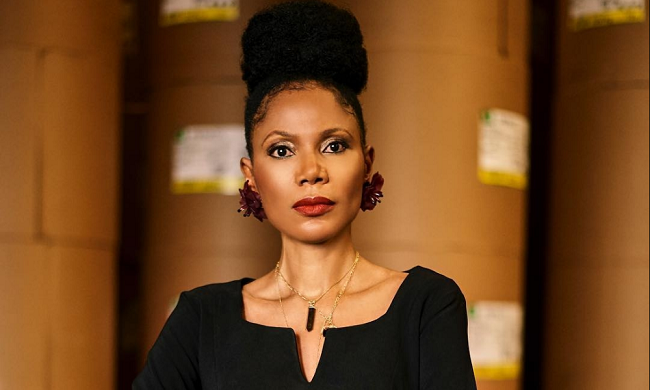

Nigerian television has produced many beloved personalities. It has produced fewer genuine institutions. Funmi Iyanda is one of the latter. Over more than two decades, she has hosted the longest-running independently produced show in NTA history, founded a social intervention charity that supported over five thousand vulnerable Nigerians, climbed Mount Kilimanjaro for gender advocacy, produced BBC-commissioned documentaries, built two media companies across two continents, been named a World Economic Forum Young Global Leader, appeared on Forbes’ list of Africa’s most powerful women, and been recognised by the BBC as one of its 100 Women of 2014.
None of that is the work of someone who fell into broadcasting. It is the work of someone who understood, from the very beginning, that a television camera is a tool for social change — and who has spent her entire career using it with exactly that intention.
Funmi Iyanda Biography
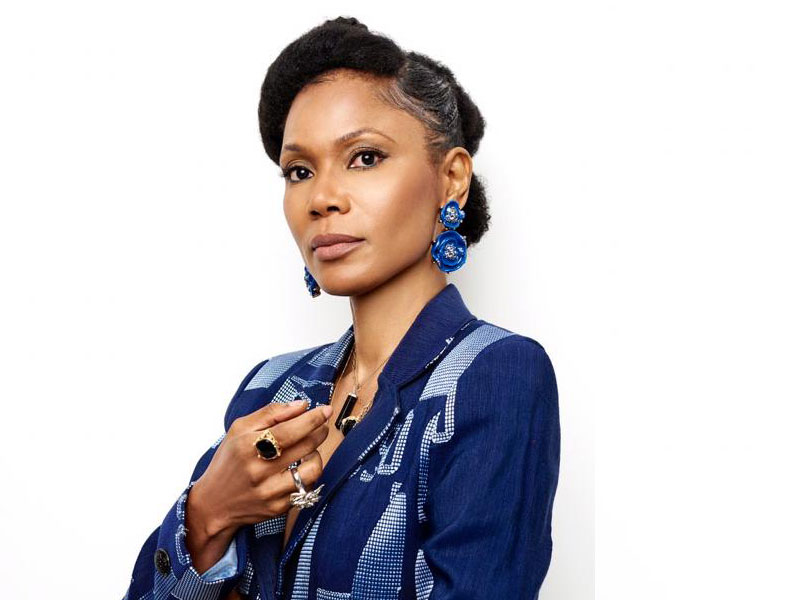
| Detail | Information |
|---|---|
| Full Name | Olufunmilola Aduke Iyanda |
| Date of Birth | 27 July 1971 |
| Age | 54 years old (as of 2026) |
| Place of Birth | Lagos, Nigeria |
| State of Origin | Oyo State (Ogbomoso — paternal); Lagos/Ogun (Ijebu-Ode — maternal) |
| Tribe | Yoruba |
| Nationality | Nigerian |
| Profession | Broadcaster, talk show host, journalist, film and TV producer, writer, philanthropist, media executive |
| Company | OYA Media (Executive Director) — London-based |
| Children | One daughter — Morenike Odegbami |
| Marital Status | Single by choice (has publicly declared she does not wish to marry) |
| Education | International School Ibadan; University of Ibadan (B.Sc. Geography); Harvard Kennedy School (Certificate, Global Leadership and Public Policy); University of Cumbria (Honorary Fellow) |
| Net Worth | Estimated $1–5 million USD (not publicly confirmed) |
| Twitter/X | @funmiiyanda |
| @funmiiyanda | |
| Website | funmiiyanda.com |
Early Life and Background
Olufunmilola Aduke Iyanda was born on 27 July 1971 in Lagos to the family of Gabriel and Yetunde Iyanda. Her father was from Ogbomoso and her mother from Ijebu-Ode. She grew up in the Lagos Mainland area; however, her mother died when she was seven years old.
Losing a mother at age seven is the kind of loss that reshapes everything — how a child understands vulnerability, what protection and advocacy mean, who has the power to speak and who must struggle to be heard. For Funmi Iyanda, that early experience of loss and the particular kind of growing-up-quickly it demands appears to have planted the seeds of the empathy and advocacy that would eventually define her broadcasting career. When she later built programmes specifically designed to amplify the voices of women, children, and the vulnerable, it was not a strategic positioning decision. It was personal.
She attended the African Church Princess Primary School, Akoka, and Herbert Macaulay School in Lagos for her primary education, and the International School Ibadan for secondary education.
The International School Ibadan — located on the campus of Nigeria’s oldest university — is one of the most intellectually stimulating secondary school environments in Nigeria. It has produced writers, academics, journalists, and public figures disproportionate to its size, and for Funmi, growing up on a university campus gave her early exposure to the world of ideas, debate, and rigorous inquiry that would later characterise her broadcasting style.
She also had a brother, Olumide Iyanda, who is an editor at Saturday Independent Newspaper — a sibling in media who perhaps both reflects and reinforces the intellectual and communicative environment in which she was raised
Education
Funmi Iyanda studied at the University of Ibadan, where she graduated with a Bachelor of Science degree in Geography.
Geography — the study of how physical, social, and cultural forces shape the places and communities people inhabit — turns out to be a more relevant undergraduate discipline for a journalist and broadcaster than it might initially appear. It trains its students to think spatially, to understand how context shapes behaviour, and to see individual stories as part of larger systems. For a woman who would spend her career using television to reveal the human stories behind Nigeria’s social geography — the poverty, the resilience, the inequality, the extraordinary ordinariness of Nigerian daily life — that geographic training was perhaps not so far from journalism after all.
She holds a certificate in Global Leadership and Public Policy from the Harvard Kennedy School and is an honorary fellow of the University of Cumbria UK.
The Harvard Kennedy School certificate places her in a global network of public leaders and policymakers whose work, like hers, sits at the intersection of communication, governance, and social change. The University of Cumbria honorary fellowship recognises her contribution to media and society from an international British university perspective — a recognition that her influence extends well beyond Nigerian borders.
Career Journey
Sports Journalism: The Unexpected Beginning
After graduating, Iyanda forayed into sports journalism. She first anchored MITV Live, a sports show produced by Segun Odegbami and Tunde Kelani. She was a member of the Nigerian Football Association between 1995 and 2003. She covered the 1999 FIFA Women’s World Cup, the All Africa Games in Zimbabwe, and the 2000 and 2004 Olympic Games in Sydney and Athens.
That a woman who became most famous for advocacy-driven talk show broadcasting started her career covering football and the Olympics is one of the more unexpected biographical turns in Nigerian media history. But it makes a certain sense. Sports journalism teaches you to tell a story quickly, to capture human emotion under pressure, to work in environments not designed for your convenience, and to find the narrative in events that are primarily physical. All of those skills transferred directly into her later, more serious broadcast work.
She was one of the very few Nigerian female sports journalists of her era — and her willingness to occupy that space, without apology or qualification, speaks to the professional confidence that would later allow her to take on the far more dangerous terrain of social advocacy television.
Good Morning Nigeria: The First Platform
Funmi Iyanda’s journey in television began with her production and hosting of Good Morning Nigeria, a breakfast magazine show. Her segments on the show, such as “Heroes” and “Street Life,” focused on celebrating deserving individuals and highlighting intriguing human-interest stories from Nigeria’s streets
Good Morning Nigeria gave her the production experience and the on-screen presence she needed before launching her own independent show. The “Heroes” segment — which sought out and celebrated ordinary Nigerians doing extraordinary things with minimal resources and recognition — was an early expression of the editorial philosophy that would define everything she built next.
New Dawn with Funmi: Eight Years That Changed Nigerian Television
The show that defined Funmi Iyanda’s career — and that placed her permanently in Nigerian broadcasting history — is New Dawn with Funmi.
New Dawn with Funmi started in 2000 and ran daily on NTA 10 Lagos, becoming the longest-running independently produced show on NTA.
Eight years. A daily show. Independently produced — meaning she was not just the host but the executive producer, responsible for budgets, guests, production crew, broadcast logistics, and everything that makes a television programme run. On Nigeria’s national broadcaster. Without the institutional cushion of a major media company behind her.
The show was not comfortable television. Typical with Iyanda, the show was another advocacy move for vulnerable members of society, with emphasis on women, youth, and children. Through this program, a social intervention project “Change-A-Life” was birthed, and over the years, the project has touched lives by providing scholarships, healthcare, counselling and micro-finance intervention schemes for hundreds.
She was famed for her intelligent, nuanced and irreverent interview style; Funmi quickly rose to become one of Nigeria’s most watched and revered TV personalities.
The architectural starchitect Rem Koolhaas — co-founder of the Office for Metropolitan Architecture and a professor at Harvard Graduate School of Design — said of her interviewing: “Funmi Iyanda was one of the best interviewers I’ve ever seen. Stunning. She understood everything immediately. Her questions were incredibly sharp. It was without equivalence in my experience.”
That testimonial from one of the world’s most intellectually formidable architects — about a Nigerian television broadcaster — says something important about the level at which Funmi Iyanda operates.
Change-A-Life Foundation: Turning Media Into Action
While New Dawn was on air, something extraordinary happened. The show’s interventions — the stories told, the problems exposed, the viewers moved to action — generated a tangible response that Funmi formalised into a permanent institution.
She established Change-A-Life Nigeria in 2002 as a direct response to the systemic barriers faced by vulnerable families. Over 15 years, she built and scaled the foundation into a nationally respected force for good, providing scholarships, healthcare, training and support to more than 5,000 individuals affected by poverty, violence and disaster
Five thousand lives directly impacted. Not through broadcasting alone, but through the foundation that broadcasting built. This is the dimension of Funmi Iyanda’s career that most biographical summaries underweight: she did not just tell stories about vulnerable Nigerians; she built infrastructure to help them.
The BBC Documentary and International Recognition
After a two-year break from television, she returned in 2010 with a slate of internationally ambitious projects.
In 2010, Iyanda completed production on My Country: Nigeria, a three-part BBC World Service documentary celebrating the country’s 50th anniversary of independence. One episode, “Lagos Stories,” was subsequently nominated for Best News Documentary at the 2011 Monte Carlo Television Festival.
The Monte Carlo Television Festival is one of the world’s most prestigious television awards events. A nomination there — for a documentary commissioned by the BBC — confirmed that her work belonged in international conversations, not just Nigerian ones.
She and her creative collaborator Chris Dada also created Chopcassava.com in 2012, a web series capturing the Lagos fuel subsidy demonstrations in January 2012. It was nominated for the 2012 BANFF World Media Festival in Alberta, Canada, in the non-fiction web series category.
Two major international nominations — Monte Carlo and BANFF — within two years, both for documentary work that was unapologetically Nigerian in subject matter, confirmed that she had mastered the art of telling Nigerian stories in a register that international audiences could receive without the mediation of foreign narrators.
Mount Kilimanjaro: Advocacy Beyond Television
In 2012, Iyanda was honoured by the Lagos State Governor, Babatunde Raji Fashola, for her commitment to gender advocacy as she returned from a five-day UN advocacy trek up Mount Kilimanjaro. The climb was organised by the UN to raise global awareness on its campaign to end violence against women and girls and brought together climbers from more than 32 African countries.
Climbing Mount Kilimanjaro for gender advocacy — at 40, representing Nigeria among climbers from 32 African countries — is not symbolic activism. It is the embodiment of the principle that if you are asking vulnerable people to do difficult things to survive, you can at least do difficult things to advocate for them.
OYA Media: The London Chapter
She is Executive Director at OYA Media, a London-based media production studio and brand advisory set up to develop, produce, and facilitate films and TV shows for cinema, television, and the web
Under her leadership at Oya Media, the company produced Walking with Shadows (London Film Festival selection), Chopcassava (Banff Nominee), and My Country: Nigeria (BBC/Monte Carlo Nominee). Oya also built partnerships with international broadcasters, arts institutions, and NGOs, positioning the company at the intersection of storytelling, policy, and social progress. She also led public-facing conversations such as “How to Fix Nigeria” — a civic tour developed with the Royal Africa Society and the MacArthur Foundation.
A London Film Festival selection — Walking with Shadows, a film exploring homosexuality and family in Nigeria — represented the most politically courageous production decision of her career, in a country where that subject carries significant social and legal risk.
Personal Life: The Choice Not to Marry
One of the most frequently discussed personal dimensions of Funmi Iyanda’s public identity is her deliberate, long-stated decision not to marry.
Iyanda has declared that she would never marry. According to her: “I have never wanted to be married. I like it for others who like it for themselves but as for me Ms Funmi Iyanda, no, thank you.”
This statement — made publicly and repeatedly over the years — is a culturally significant act in Nigerian society, where marriage for women is often presented not as a choice but as an obligation. Funmi’s willingness to state her position clearly and without apology has made her a quiet reference point for Nigerian women who question whether the conventional life script must be followed.
Funmi has a daughter, Morenike Odegbami. Morenike’s father is Segun Odegbami — the legendary Nigerian football star and sports broadcaster. Funmi and Segun were not married, and she has raised her daughter with the same independence and clarity of values that characterises everything else she does
Awards and Recognition
Funmi Iyanda was recognised as one of the BBC’s 100 Women of 2014. In 2011, she was honoured for her web series by the World Economic Forum and named one of Forbes’ “20 Youngest Powerful Women in Africa.” She is a member of the African Leadership Institute, a Tutu Fellow, and a participant of the ASPEN Institute’s Forum for Communications and Society. She is also a UN Women Global Equality Champion.
Net Worth
Funmi Iyanda has an estimated net worth of $1 to $5 million — accumulated through more than two decades of television production, broadcasting, documentary filmmaking, international speaking and advisory engagements, brand consultancy, and OYA Media’s commercial operations. No officially confirmed figure exists
Conclusion
Funmi Iyanda at 54 is not resting on what she has built. She is still producing, still writing, still advocating, still holding conversations that Nigerian public life would rather avoid. She has been doing this since the year 2000, when she launched New Dawn with Funmi on a national broadcaster as an independent producer — a decision that required both courage and conviction.
Everything that came after — the BBC commission, the Monte Carlo nomination, the Harvard certificate, the Forbes recognition, the BBC 100 Women listing, the UN advocacy climb, the London Film Festival selection, the Change-A-Life Foundation — all of it flows from that original decision to use television seriously, as a tool for the Nigeria she believed was possible rather than merely a record of the Nigeria that was.
She is one of the most important media figures Nigeria has produced. And she is not done yet.
Frequently Asked Questions (FAQs)
How old is Funmi Iyanda? She was born on 27 July 1971, making her 54 years old as of 2026.
Where is Funmi Iyanda from? She was born in Lagos. Her father was from Ogbomoso in Oyo State and her mother from Ijebu-Ode. She is of Yoruba descent.
Does Funmi Iyanda have children? Yes — she has one daughter, Morenike Odegbami, with the Nigerian football legend and broadcaster Segun Odegbami. She has never been married, a choice she has stated publicly and clearly over the years.
What is Funmi Iyanda most famous for? She is most widely known for hosting and independently producing New Dawn with Funmi — the longest-running independently produced show in NTA history, which aired daily from 2000 to approximately 2008.
Where did Funmi Iyanda go to school? She attended International School Ibadan for secondary education, studied Geography at the University of Ibadan, and holds a certificate in Global Leadership and Public Policy from Harvard Kennedy School. She is an honorary fellow of the University of Cumbria, UK.
What is Funmi Iyanda’s net worth? Her net worth is estimated between $1 million and $5 million USD, earned through broadcasting, documentary production, media consulting, OYA Media, speaking, and her Change-A-Life Foundation activities. No specific figure has been officially confirmed.
What is OYA Media? OYA Media is Funmi Iyanda’s London-based media production company, which she uses to develop and produce films and television projects from Africa for international cinema, television, and digital platforms. Its productions include Walking with Shadows (London Film Festival), My Country: Nigeria (BBC), and Chopcassava (BANFF nominee).
Editorial Notice
The biography above is compiled from publicly available sources and is intended for general informational purposes only. At PeopleCabal, we are committed to accuracy — however, public records evolve, and some details may change over time. If you notice anything that requires a correction or update, we welcome you to reach out to us directly.
