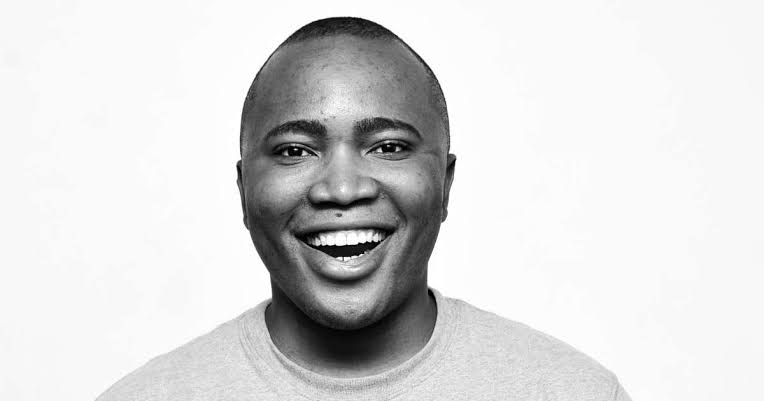

Music journalism in Nigeria has long existed in a strange limbo. The music itself, Afrobeats in particular, has conquered global playlists and filled arenas from London to Los Angeles. Yet the critical writing around it, the kind of deep, contextual, accountable journalism that interrogates the industry rather than simply celebrating it, has lagged behind. Joey Akan is one of the people trying to close that gap, and he has been doing it longer and more rigorously than most.
He is not a celebrity journalist in the tabloid sense. He does not chase gossip or manufacture controversy for clicks. What Joey Akan does is harder and, in the long run, more valuable: he documents, analyses, and interrogates the African music industry with the seriousness it deserves but rarely receives. In a media environment full of hype and hollow praise, that kind of journalistic integrity is genuinely scarce.
| Joey Akan | |
|---|---|
|
|
|
| Wiki Facts & About Data | |
| Full Name: | Joey Akan |
| State of Origin: | Not publicly confirmed |
| Nationality: | Nigerian |
| Occupation: | Music Journalist, Writer, Podcast Host |
| Religion: | Christianity |
| Tribe: | Igbo |
| Net Worth: | Not publicly verified |
| Social / Web: | 🐦 @JoeyAkan |
Early Life and Background
Joey Akan was born and raised in Nigeria, though the specific details of his state of origin, hometown, and early family background have not been made part of his public profile. This is not unusual for journalists, who often deliberately keep the focus on their work rather than their personal history. For writers especially, the biography that matters most tends to be the one expressed through the body of work, not the one printed in an author bio.
What is evident from his professional trajectory is that he grew up with a deep relationship with music and storytelling. These are not things people acquire in their thirties. The sensitivity to sound, to narrative, to the way a song or an album sits within its cultural moment, tends to be cultivated early, through years of listening, reading, and paying a different kind of attention to the world.
Nigeria, and Lagos in particular, is one of the most sonically rich environments on earth. Music is not background noise there. It is social currency, emotional language, and political commentary all at once. Growing up inside that environment with curious ears and a writer’s instinct is exactly the kind of origin story that produces someone like Joey Akan: a person who does not just love music, but feels compelled to understand and explain it.
His emergence as a credible voice in African music journalism also speaks to a broader generational shift. A generation of young Nigerians grew up watching Afrobeats move from local street anthems to global phenomenon, and many of them felt, correctly, that the storytelling around that movement was not keeping pace with the music itself. Joey Akan belongs to the cohort that decided to do something about that.
Education
Joey Akan has not publicly detailed the specifics of his formal education. This is consistent with many journalists and writers who allow their published work to serve as the primary evidence of their intellectual formation. What his writing demonstrates is a strong command of English, a clear analytical framework, and the kind of cultural literacy that comes from years of engaged reading and reporting.
In journalism, the work is always the credential that matters most.
Career Journey
Starting With a Commitment to the Craft
Joey Akan did not arrive in music journalism through an accidental viral moment or a shortcut. He built his reputation the traditional way: through consistent, quality writing produced over years. His early work established a voice that was immediately recognizable as different from the promotional, uncritical coverage that dominated much of Nigerian entertainment media.
Nigerian music journalism has historically had a complicated relationship with objectivity. The proximity between journalists and artists, the reliance on access, the pressure from publicists and labels, and the general culture of celebrating rather than examining, has made truly independent music criticism a rarity. Joey Akan chose independence, and it cost him nothing in credibility. If anything, it became his brand.
Building Authority Through Depth
The turning point in his career was not a single article, but a body of work that accumulated into authority. He spent years studying the African music industry, not just as a fan or a chronicler, but as a reporter who asked uncomfortable questions about how the industry actually works. Who owns the money? Who controls the narratives? What happens to artists who do not have powerful management? What does success actually look like behind the scenes?
These are the questions that most entertainment journalism in Nigeria avoids, either because the answers are inconvenient or because asking them risks access to the very artists and labels that define the beat. Joey Akan has shown a consistent willingness to ask them anyway, and that willingness has made him one of the most trusted voices on African music among readers who care about substance over surface.
His multi-award winning status as a writer reflects recognition from within an industry that does not give awards lightly to journalists who bite the hand that feeds. It is a meaningful distinction.
The No Ketchup Podcast
Co-hosting The No Ketchup Podcast represents a natural evolution of what Joey Akan has always done in writing, translated into audio. The podcast format suits his style well. It rewards depth, allows for extended analysis, and creates the kind of conversational space where ideas about music and the music industry can be properly explored rather than compressed into a headline.
The name itself is telling. “No Ketchup” is Nigerian slang for no embellishment, no artificial sweetening, no covering up what is actually on the plate. It signals exactly the kind of journalism Joey Akan is known for: direct, honest, and uninterested in flattery for its own sake.
In an era where podcasts have become a primary vehicle for serious cultural commentary in Nigeria, his presence in that space extends his reach beyond readers to a new, audio-first audience without sacrificing the intellectual standards that define his written work.
Real-World Impact on African Music Discourse
The impact of good music journalism is often invisible precisely because it works slowly. It shapes how people talk about music, what questions they think to ask, what standards they hold labels and artists to. Over years of consistent work, Joey Akan has contributed to raising the level of discourse around African music, particularly Afrobeats, in meaningful ways.
His writing has appeared across platforms that reach both Nigerian domestic audiences and the international readers who are increasingly invested in understanding Afrobeats beyond its surface appeal. In that sense, he functions as something of a cultural interpreter, not translating the music itself, but translating the industry, the context, the complexity, for audiences who want more than a press release.
Influence and What He Represents
Joey Akan represents something important in the African media landscape: the possibility of a career built entirely on journalistic integrity in a space where that integrity is chronically undervalued.
Music journalism in Africa has often been treated as a soft discipline, something that exists to promote rather than to examine. Joey Akan’s career is a sustained argument against that assumption. He has demonstrated that there is an audience for serious, critical, accountable music writing, and that it is possible to build a reputation, and a career, by serving that audience faithfully.
He also represents the growing professionalization of Nigerian media more broadly. The era of anonymous bloggers posting unverified information is not over, but it is increasingly challenged by journalists like Joey Akan who operate with bylines, accountability, and editorial standards. That shift matters for the credibility of Nigerian media at home and abroad.
His presence on social media, particularly on Twitter/X where he engages directly with industry discussions under @JoeyAkan, has also made him a real-time participant in the conversations he covers, not just an observer. That kind of engaged journalism, where the writer is also a genuine stakeholder in the discourse, tends to produce better, more honest work.
Personal Life
Joey Akan keeps his personal life largely private, which is consistent with the approach of many journalists who prefer to maintain a clear boundary between their professional voice and their private world. Details about his family background, relationship status, and personal relationships have not been made part of his public profile.
What is visible through his public work and social media presence is someone who is deeply invested in ideas, in music, and in the state of African creative industries. The intellectual energy that comes through in his writing does not read like a professional performance. It reads like a genuine vocation, the work of someone who would probably be doing this even if no one was paying attention.
Net Worth
Joey Akan’s net worth has not been publicly confirmed or verified through any credible financial source. As a professional journalist, writer, and podcast host, his income is primarily earned from writing commissions and editorial fees, podcast production and sponsorships, public speaking and media appearances, and consultancy or advisory roles within the media and music industry space.
Music journalism, even at the highest levels, is not typically a path to significant personal wealth. What it offers instead is influence, access, and the kind of professional respect that is hard to put a number on but genuinely valuable within the industry. By those measures, Joey Akan is doing exceptionally well.
Conclusion
Joey Akan is what Nigerian music journalism looks like when it takes itself seriously. In a media environment that has often defaulted to cheerleading, he has carved out a space for critical, contextual, and accountable reporting on the African music industry, and he has done it consistently enough, and well enough, that the industry has had to take notice.
The broader significance of his work is not just in any individual article or podcast episode. It is in what his career proves: that African music, one of the most commercially and culturally significant musical forces of the 21st century, deserves and can support serious journalism. As Afrobeats continues its global ascent, the need for writers who can document that ascent with honesty and depth will only grow. Joey Akan has been doing that work for years. The rest of the world is only now catching up to why it matters.
Frequently Asked Questions
1. Who is Joey Akan? Joey Akan is a multi-award winning Nigerian music journalist and writer based in Lagos. He is known for his in-depth, critical coverage of the African music industry and co-hosts The No Ketchup Podcast.
2. What is The No Ketchup Podcast? The No Ketchup Podcast is a show co-hosted by Joey Akan that focuses on honest, unfiltered conversations about music, the African music industry, and related cultural topics. The name reflects the show’s commitment to straight talk without embellishment.
3. Where can I follow Joey Akan online? Joey Akan is active on Twitter/X under the handle @JoeyAkan, where he regularly engages with music industry discussions and shares his writing.
4. What kind of journalism does Joey Akan practice? He specialises in music journalism with a focus on the African music industry, particularly Afrobeats. His work is known for being analytical, critical, and independent rather than promotional or celebrity-focused.
5. What is Joey Akan’s net worth? His net worth has not been publicly verified. His income is primarily derived from journalism, writing, podcast hosting, and related media activities
Editorial Notice
The biography above is compiled from publicly available sources and is intended for general informational purposes only. At PeopleCabal, we are committed to accuracy — however, public records evolve, and some details may change over time. If you notice anything that requires a correction or update, we welcome you to reach out to us directly.
