
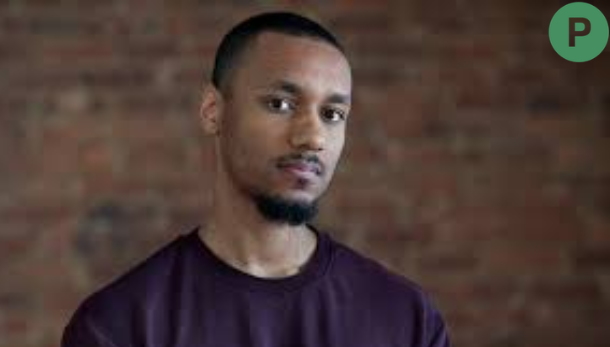

There is a particular kind of creative person who was never going to fit comfortably inside a single national identity, a single artistic discipline, or a single professional category. Uwa Iduozee is precisely that kind of person. He is Finnish and Nigerian simultaneously — not hyphenated in the way that implies two halves that never fully add up, but genuinely both, in a way that has become the engine of some of the most internationally recognised visual storytelling to emerge from the African diaspora in the past decade.
He grew up Black in Helsinki — a city and a country that spent most of the twentieth century telling itself it had no Black population worth acknowledging. He trained as a photojournalist in Finland before going to New York to study documentary filmmaking. And he has spent his career using both disciplines — photography and film — to tell the stories that the countries he belongs to preferred not to see. His work has been exhibited at the Helsinki Biennial, PHotoESPAÑA in Madrid, the Finnish Museum of Photography, the International Studio and Curatorial Program in Brooklyn, and presented at the Bienal’23 Fotografia do Porto. He is, by any fair measure, one of the most internationally exhibited visual artists of Nigerian descent working today.
Uwa Iduozee Biography

| Detail | Information |
|---|---|
| Full Name | Uwa Iduozee |
| Date of Birth | 1987 |
| Age | 38 years old (as of 2026) |
| Nationality | Finnish-Nigerian |
| Based | New York City, USA and Helsinki, Finland |
| Heritage | Nigerian paternal roots; Finnish upbringing |
| Profession | Documentary filmmaker, cinematographer, photographer, visual artist |
| Education | University of Tampere, Finland (B.A. Photojournalism); The New School, New York (M.A. Documentary Media Studies) |
| Notable Projects | They Walked on Water (2018/2021); A Part of Mom (2017); Not Yet, But I Like Painting (2023) |
| Exhibitions | Helsinki Biennial 2021; PHotoESPAÑA 2023; Finnish Museum of Photography; ISCP Brooklyn; Bienal’23 Porto |
| Marital Status | Not publicly confirmed |
| @uwaiduozee | |
| Website | uwaiduozee.com |
Early Life and Background
Uwa Iduozee was born in 1987 and is a photographer and documentary filmmaker based in Helsinki and New York.
His father is Nigerian — a man who arrived in Finland as part of the same pioneering generation of Black immigrants who came to Scandinavia from Africa, the Americas, and the Caribbean between the 1950s and 1990s. The story of how his father and his generation experienced Finland — a country that had almost no framework for understanding or integrating Black residents — became, decades later, the subject of one of Uwa’s most celebrated artistic projects.
When Iduozee’s father arrived in Finland, he had sent news to friends back home in Nigeria about this strange new land. It was winter, and several of them had taken a journey, on foot, over the frozen sea. “They walked on water!” he gasped in awe. Sheer, inconceivable magic; an act of fearlessness; the stuff of dreams
That image — Nigerian men walking across a frozen Finnish sea, in a country they had chosen as home with no guarantee of welcome — is both the literal origin of the title of Uwa’s landmark project and a perfect metaphor for the entire experience of being Black in Finland: moving across terrain that was not designed with you in mind, with a mixture of awe, courage, and the stubborn insistence that you belong here too.
Growing up Afro-Finnish in Helsinki in the 1990s and 2000s meant growing up in a country that was, for most of that period, statistically and culturally unprepared for racial diversity. Finland’s Black population was small, geographically concentrated, and largely invisible in the national media and cultural imagination. For a child of Nigerian heritage growing up in that environment, the experience of navigating a Finnish identity that did not fully acknowledge his presence was formative in the deepest sense.
Iduozee reflects: “We would often have conversations about our past with our parents — about how differently our lives had panned out.” Beyond discussions held in the close-knit community of Afro-Finns, he was struck by the reductive dialogue around Black people in Finland, a history originating in 1899, the year Rosa Emilia Clay became the first person of African descent to claim Finnish citizenship
That historical awareness — the understanding that Afro-Finnish history did not begin with his father’s generation but stretched back more than a century — gave his artistic practice a depth of historical grounding that separates serious documentary work from mere personal expression.
Education: From Photojournalism to Documentary Media
He graduated from the graduate programme in Documentary Media Studies at The New School and has a Bachelor’s degree in Photojournalism from the University of Tampere.
The University of Tampere is one of Finland’s most respected universities, and its photojournalism programme trained him in the foundational discipline of documentary photography — the ethics of representation, the technique of capturing decisive moments, and the editorial judgment required to tell a complete story in a single frame. That training gave him the rigorous technical and ethical foundation on which all his later, more experimental work rests.
The New School in New York — where he later completed his master’s in Documentary Media Studies — is one of America’s most intellectually progressive academic institutions, known for producing graduates who approach media not just as craft but as social practice. Its documentary programme explicitly connects filmmaking to questions of power, representation, and social change. For a Finnish-Nigerian visual artist whose entire practice is built around challenging how Black identity is represented in mainstream media, it was an ideal environment.
He has reflected on what living between New York and Helsinki has given him professionally: “Living in New York for the past few years has enabled me to distance myself from Finland in a way that has helped me to better reflect on my own experiences of growing up in Helsinki, but it has also provided a new lens for looking at the structures and traditions of Finnish society as a whole. At the same time my background in Helsinki informs the way I approach my work in the US, and gives me a different way of looking at things here.”
That dual-lens perspective — using each city to see the other more clearly — is one of the defining characteristics of his artistic practice. He is never simply documenting what is in front of him. He is always also asking what the same subject would look like from the other side of the Atlantic.
Career Journey
The Early Films: A Part of Mom and the Emergence of a Filmmaker
Uwa Iduozee is known for A Part of Mom (Osa Äitiä) (2017), Perjantai-dokkari (2016), and That Style (Se Tyyli) (2018).
A Part of Mom was a significant early career achievement — a short documentary that announced his arrival as a filmmaker of real sensitivity and emotional intelligence. His first short film A Part of Mom won the short documentary category at the international 2017 College Photographer of the Year competition — one of the most prestigious student and emerging photographer competitions in the world, run by the University of Missouri. Winning in the documentary category placed him immediately on the international photojournalism and documentary community’s radar
That Style (2018) demonstrated his ability to find cultural richness and human complexity in subjects that outsiders might overlook — a short documentary about personal style as identity expression that received attention at Finnish film festivals and online documentary platforms.
They Walked on Water: The Defining Project
The project that established Uwa Iduozee as one of the most significant voices in contemporary Afro-European visual storytelling is They Walked on Water — a collaborative photography and documentary project developed over two years with writer Maryan Abdulkarim.
The work features portraits of people who arrived in Finland from the United States, the UK, Somalia, Sudan, Ethiopia, and Nigeria between the 1950s and 1990s — the story of the first pioneering generation of Black people who made their home in Finland
The project’s approach was specific and deliberate. Iduozee deliberately chose people who came to Finland not as children but as adults with their own hopes and dreams. This was a conscious editorial choice — these were not people who grew up Finnish and happened to be Black. They were people who chose Finland as adults, who arrived with identities already formed, and who then spent decades navigating a society that had not been built with them in mind.
His approach when working in Nigeria for the project was consciously “mindful” — avoiding “photographing in an eroticising way.” His authorship is neutralised, contexts and geographies rendered ambiguous. In one image, a figure floats in milky water, seemingly renewed in its opaque embrace. In another, a woman is spellbound against the scarlet and indigo of an evening sky — eyes closed, solitary.
They Walked on Water was part of the inaugural Helsinki Biennial in 2021 — one of the most significant exhibitions of contemporary visual art in the Nordic region, which in its first edition brought together artists from across the world to engage with questions of environment, belonging, and identity. Having work in the inaugural edition placed Uwa among the most significant visual artists Finland chose to represent itself to the world in 2021.
The collaboration was Iduozee and Abdulkarim’s first joint project. The value of working with a writer was immediately plain — from the “extra pair of eyes” to the critical element of storytelling gathered through in-depth interviews. “There were questions I might not have asked because I was so engulfed in the visuals,” Iduozee admits, conceding that he “wouldn’t have done the stories justice” without this written component
That candour — a visual artist acknowledging the limits of the purely visual and actively seeking a writing collaborator to complete what the images cannot say alone — reflects the intellectual honesty that runs through all of his public statements about his practice.
The ISCP Residency: Algorithms, Race, and Technology
In January 2021, Uwa took up residency at the International Studio and Curatorial Program (ISCP) in Brooklyn — the flagship residency programme for international artists in New York, hosted by the Finnish Fine Arts Academy and the Saastamoinen Foundation.
During his residency at ISCP, he worked on a new video installation exploring links between modern algorithms and racialization, focusing on how emerging technologies are used to reinforce white supremacy and deepen social inequality
His goal with this project was to problematize the techno-optimistic myth that the “objective” technologies of tomorrow will somehow inevitably lead to an equitable, colour-blind utopian society. In reality, the algorithms behind these tools are a reflection of the data they are learning from, and as such often actively replicate and intensify the racial hierarchies they are supposedly dismantling. His focus narrowed to the realm of surveillance technology — specifically on how the history of surveillance informs us on the interplay between Blackness and technology, and how we might use this knowledge to understand how technology is linked to white supremacist power structures.
This is a significant intellectual pivot — from documentary photography about human subjects to a video installation examining how invisible systems encode and perpetuate racial inequality. It demonstrates that his practice is not fixed in a single medium or approach but expands as the questions he is asking demand different tools.
Not Yet, But I Like Painting: Madrid and Porto, 2023
In June 2023, Uwa exhibited Not Yet, But I Like Painting at the Ibero-American Institute of Finland in Madrid, as part of PHotoESPAÑA — one of Europe’s most prestigious international photography festivals.
The work was also exhibited at Bienal’23 Fotografia do Porto — an international photography biennial in Portugal — as part of Inter-relações / Inter-relationships, a joint exhibition with Portuguese photographer Matilde Viegas. The bienal’s theme was “Acts of Empathy,” affirming the collective and individual ability to feel, collaborate, and drive change through artistic acts of connectivity, reparation, and healing
The project focused on youth in marginalised communities — using the same sensitivity and unhurried observational approach that characterised They Walked on Water but applied to a different geography and a different generation of subjects.
Having work at PHotoESPAÑA — which draws photographers, curators, and collectors from across Europe and beyond — confirmed his growing international standing and his ability to produce work that resonates with audiences well outside the Finnish or Nigerian cultural contexts in which most of his biography is rooted.
Philosophy and Artistic Approach
His practice examines stories that open up new visual representations toward personal and communal identities and the ways that they relate to and are shaped by their environments. Everyday life and personal narratives are the core subjects in his work, opening up into wider discourses around marginalised communities and acceptance within larger societal and cultural structures.
His work aims to increase visual representation and storytelling about people who receive less attention in society. Marginalised communities, identity, and belonging are key themes in his works.
What is distinctive about his philosophy is the refusal of both easy celebration and easy critique. He does not photograph marginalised communities as victims. He does not frame them as exotic. He photographs them as people — complex, ordinary, beautiful, struggling, resilient — and trusts the audience to meet them there, without the mediating distance of pity or sentimentality.
His process became slowed, his glance more considered, “such that when the moment presented itself, he would be receptive towards it, rather than compulsively documenting everything.” This act of “being present” in the moment speaks not only to his process but also to the project’s conceptual ground.
Personal Life and Identity
Uwa Iduozee’s personal life — beyond his professional and artistic identity — is kept private. His romantic status and family details beyond what is publicly documented have not been confirmed.
What he has shared publicly is a thoughtful, ongoing engagement with what it means to occupy multiple identities simultaneously. He has described New York as giving him the distance to see Finland more clearly, and Helsinki as giving him a different way of looking at the United States — always carrying two sets of eyes, never fully at home in either place, always finding that productive displacement generative rather than limiting
That condition — of permanent creative displacement — is perhaps the most honest description of who he is. He does not resolve the tension between his Finnish and Nigerian identities. He lives inside it, and makes art from within it.
Net Worth
Uwa Iduozee’s net worth has not been publicly confirmed. His income streams include gallery exhibition fees, film festival appearances, documentary commissions, commercial cinematography work, artist residency stipends from institutions including the Finnish Fine Arts Academy, Saastamoinen Foundation, and ISCP Brooklyn, and grant funding from organisations including the Kone Foundation and the Finnish Cultural Foundation. Given the international recognition of his work and the competitive compensation that European art institutions provide for residencies and commissions, he is professionally sustaining — but no specific net worth figure has been published.
Conclusion
Uwa Iduozee is, in the most literal sense, a product of migration — his father’s migration from Nigeria to Finland, and his own migration from Helsinki to New York. Each of those journeys created the conditions for the work he makes: the outsider perspective that sees what insiders have stopped noticing, the dual cultural fluency that allows him to move between communities without reducing either, and the restless creative intelligence that refuses to settle in a single medium or a single story.
His work is exhibited on three continents. It is funded by Finnish and African foundations. It speaks to audiences in Madrid, Porto, Helsinki, New York, and Lagos — each of whom sees something in it that the others might miss, depending on where they are standing. That capacity to hold multiple truths simultaneously, without collapsing them into simplicity, is the rarest thing in art. Uwa Iduozee has it.
Frequently Asked Questions (FAQs)
Who is Uwa Iduozee? He is a Finnish-Nigerian documentary filmmaker, cinematographer, and photographer born in 1987. Based between New York and Helsinki, his work focuses on Black identity, marginalised communities, and the relationship between technology and racial inequality. His projects have been exhibited at the Helsinki Biennial, PHotoESPAÑA, and major international photography festivals.
What is They Walked on Water? It is his landmark collaborative project with writer Maryan Abdulkarim — a photography and documentary series documenting the first generation of Black pioneers who immigrated to Finland between the 1950s and 1990s, including people who came from Nigeria, the United States, the UK, Somalia, Sudan, and Ethiopia. It was part of the inaugural Helsinki Biennial in 2021.
Where did Uwa Iduozee go to school? He holds a B.A. in Photojournalism from the University of Tampere in Finland and an M.A. in Documentary Media Studies from The New School in New York.
Is Uwa Iduozee Nigerian? His father is Nigerian, giving him Nigerian heritage and a Finnish-Nigerian dual identity. He grew up in Helsinki, Finland, and is now based between New York and Helsinki.
What is his most recent major project? Not Yet, But I Like Painting (2023) — exhibited at PHotoESPAÑA in Madrid and the Bienal’23 Fotografia do Porto, focusing on youth in marginalised communities through intimate portraiture.
Is Uwa Iduozee married? His personal and romantic life details have not been publicly confirmed. He keeps this aspect of his life private
Editorial Notice
The biography above is compiled from publicly available sources and is intended for general informational purposes only. At PeopleCabal, we are committed to accuracy — however, public records evolve, and some details may change over time. If you notice anything that requires a correction or update, we welcome you to reach out to us directly.
