
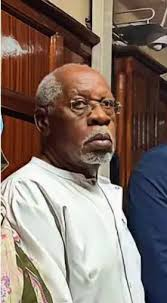

When a doctor spends over four decades dedicating their life to the health of mothers and newborns, they become more than a clinician — they become a cornerstone of a community. Dr. Job Masakhue Lukuru Obwaka was exactly that kind of doctor. His death on May 1, 2026, at the age of 83, closed a remarkable chapter in Kenya’s medical history, and the outpouring of tributes from the Nairobi Hospital and the wider medical community spoke volumes about the man he was.
This is not just a story about a doctor who delivered babies. It is a story about a man from western Kenya who rose through the ranks of a post-independence medical system, broke new ground in underserved regions, and eventually helped govern one of East Africa’s most respected hospitals. His life is worth understanding in full.
Dr. Job Obwaka Biography
| Detail | Information |
|---|---|
| Full Name | Dr. Job Masakhue Lukuru Obwaka |
| Date of Birth | May 18, 1942 |
| Date of Death | May 1, 2026 |
| Age at Death | 83 years |
| Nationality | Kenyan |
| Profession | Obstetrician & Gynaecologist, Hospital Board Director |
| Tribe | Luhya |
| Wife | Everose Obwaka |
| Son | Dr. Chris Obwaka |
| Education | MBChB (1975), M.Med OB/GYN (1981) |
| Place of Death | Nairobi Hospital, Kenya |
Early Life and Family Background
Dr. Job Obwaka was born on May 18, 1942, in Kenya — just five years before the country’s independence movement began gathering serious momentum. Growing up Luhya in western Kenya during the colonial era meant navigating a world where access to formal education, let alone medical school, was far from guaranteed. That he chose medicine, and specifically the most intimate branch of it — the health of women during pregnancy and childbirth — says something important about his character.
The Luhya community, one of Kenya’s largest ethnic groups, has a deep cultural emphasis on family, community responsibility, and collective wellbeing. It is not hard to imagine how that cultural backdrop shaped a young man who would go on to spend his career ensuring safe deliveries and healthy mothers.
Details about his parents are not part of the public record, which is not unusual for professionals of his generation in Kenya. What is known is that he built a family of his own — one that continued his medical legacy in a remarkable way.
Education and Medical Training
Dr. Obwaka’s academic journey was disciplined and methodical. He earned his Bachelor of Medicine and Bachelor of Surgery (MBChB) in 1975, giving him the foundation to begin clinical practice. But he did not stop there.
Six years later, in 1981, he completed a Master of Medicine (M.Med) in Obstetrics and Gynaecology — a specialisation that requires not just academic rigour but a particular kind of patience and empathy. Obstetrics and gynaecology is a field where the margin for error is slim and the emotional stakes are always high.
His decision to specialise in women’s reproductive health at a time when Kenya’s healthcare infrastructure was still developing was both brave and strategically important. The country needed specialists outside of Nairobi, and Obwaka would soon make that his mission.
Starting Out: The Intern Years
After completing his MBChB, Dr. Obwaka undertook his internship at the Coast Provincial General Hospital in Mombasa — one of Kenya’s major referral facilities. This one-year placement would have introduced him to the full spectrum of medical emergencies: trauma, infectious disease, maternal complications, and surgical cases arriving from across the coast region.
Internships in Kenya’s public hospitals are famously demanding. Resources are often stretched thin, and junior doctors must develop clinical instincts quickly. That Obwaka thrived in this environment and went on to pursue a competitive specialisation reflects the kind of professional grit that would define his career.
Pioneering Gynaecology in Kisii Town
Perhaps the most underappreciated chapter of Dr. Obwaka’s career is the period between 1981 and 1989, when he served as the first gynaecologist in Kisii Town.
Think about what that means for a moment. Kisii, in the South Nyanza region, had no specialist in women’s reproductive health before him. Women with complicated pregnancies, gynaecological conditions, or difficult deliveries had nowhere local to turn. Dr. Obwaka changed that, almost single-handedly, for nearly a decade.
This was not glamorous work. It was the kind of medicine done far from the spotlight — in under-resourced settings, often with limited equipment, serving patients who had few alternatives. Eight years is a long time to spend building something from scratch, and the fact that he did it speaks to a genuine sense of vocation rather than career opportunism.
His time in Kisii likely shaped his understanding of what Kenyan women needed from the healthcare system — and informed everything he did afterward.
Work with APHIA and the NGO Sector
Following his years in Kisii, Dr. Obwaka worked with the APHIA Program — a major USAID-funded health initiative in Kenya focused on improving access to health services, including maternal and reproductive health.
His involvement in this NGO space represented a shift from purely clinical work to a broader systems-level approach to healthcare. APHIA programs operated across multiple counties in Kenya, and professionals who contributed to them were helping shape national health policy at scale.
This phase of his career demonstrated an important quality: the ability to see beyond the consulting room and engage with healthcare as an institutional and policy challenge.
Rise to Nairobi Hospital and Board Leadership
Dr. Obwaka eventually joined The Nairobi Hospital as a consultant obstetrician and gynaecologist — one of the most prestigious clinical appointments in East Africa. The Nairobi Hospital is a leading private hospital and a benchmark institution for medical excellence in the region.
His role there was not limited to clinical work. By 2025, he had joined the Board of Management, where he contributed to the hospital’s strategic direction. For a doctor who had started his career in a public hospital on the Kenyan coast, reaching the boardroom of Nairobi Hospital represented a full arc of professional achievement.
The hospital’s Board Chair, Dr. Barcley Onyambu, signed an official tribute describing Obwaka as “a respected clinician and leader” who was “highly regarded by colleagues and patients for his professionalism and dedication to care.”
The Nairobi Hospital’s Tribute
The formal statement released by the Nairobi Hospital following Dr. Obwaka’s death was notable for its warmth and specificity. Institutions do not always issue personal tributes for clinicians, even senior ones. The fact that the hospital’s Board Chair personally signed the tribute suggests Obwaka held genuine respect — not just administrative rank.
He was described as a long-serving admitting consultant, which in hospital terms means he had privileges to admit patients directly — a status that reflects trust, clinical reputation, and years of demonstrated competence.
It is worth noting that at the time of his death, a separate court case involving allegations of falsified records was still pending. The Nairobi Hospital’s tribute did not address this matter, and it would be inappropriate to conflate a legal proceeding — which had not reached a verdict — with the man’s overall legacy. Kenya’s courts operate on the presumption of innocence, and that principle extends to everyone, regardless of profession.
Family Life: Wife, Children, and Legacy
Dr. Obwaka was married to Everose Obwaka, though details about their personal life remain private — as they should be.
What is publicly known, and professionally significant, is that his son, Dr. Chris Obwaka, is a consultant obstetrician and gynaecologist with Tibu Health in Kenya. This is not a coincidence. A father who spent his entire career in women’s health, clearly had a son who grew up understanding that work as something noble and worthwhile.
Medical dynasties are rare in Kenya. When they exist, they tend to reflect households where medicine was not just a job but a calling that got discussed at the dinner table. The Obwaka household appears to have been exactly that kind of home.
Tribe, Religion, and Cultural Roots
Dr. Obwaka was Luhya — a member of one of Kenya’s most populous communities, primarily based in the western counties of Bungoma, Kakamega, and Vihiga. The Luhya are known for their communal values, emphasis on education, and strong family structures.
His religious affiliation has not been confirmed in available public records. Any claim about his faith would be speculative, and this article will not make one.
Net Worth and Financial Legacy
Estimating the net worth of a private medical professional is always an imprecise exercise. Based on contextual information, Dr. Obwaka’s accumulated wealth has been reported at approximately Ksh 800 million — a figure consistent with a career spanning over four decades in both public service and private consultancy, combined with board-level roles at a major private hospital.
This wealth was primarily earned through clinical practice, consultancy fees, and institutional governance roles. It is not publicly confirmed in any official filing, and readers should treat it as an informed estimate rather than a verified figure.
What is clear is that Dr. Obwaka built financial stability through decades of disciplined professional work — not through shortcuts.
Dr. Job Obwaka’s Influence on Kenyan Medicine
It would be easy to reduce Dr. Obwaka to a list of job titles. But his real influence was quieter and more durable than any CV entry.
He was a pioneer in rural specialist medicine — proving that gynaecological expertise did not have to be concentrated in Nairobi. He helped bridge the gap between clinical medicine and health policy through his NGO work. And he mentored, by example if not explicitly, at least one specialist who continued his work.
In a country where maternal mortality remains a public health challenge, the contributions of doctors like Obwaka — who showed up for decades in places that needed them — are not trivial. They are foundational.
De@th and Final Days
Dr. Job Masakhue Lukuru Obwaka passed away on May 1, 2026, at the Nairobi Hospital — the same institution where he had served as both clinician and board member. He was 83 years old.
There is a certain symmetry in that. A man who spent his life inside hospitals, making them safer for others, spent his final days in one of Kenya’s finest. He died just 17 days before what would have been his 84th birthday.
Kenya lost a quiet giant that day.
Conclusion
Dr. Job Obwaka did not seek fame. His name was not in newspapers every week, and he did not have a large social media presence. What he had was something rarer: a career of consistent, courageous service to Kenyan women’s health, built over more than four decades.
From the wards of Coast Provincial General Hospital to the boardroom of the Nairobi Hospital, he grew in every direction — clinically, institutionally, and in terms of the scale of his impact. His son’s career in the same field is perhaps the most personal measure of his legacy.
Kenya produces many professionals. It produces few who leave the system measurably better than they found it. Dr. Job Obwaka was one of those few.
FAQs
1. Who was Dr. Job Obwaka? Dr. Job Masakhue Lukuru Obwaka was a Kenyan obstetrician and gynaecologist who served for over four decades in both public and private healthcare. He was the first gynaecologist in Kisii Town and later served on the Board of Management of the Nairobi Hospital.
2. When did Dr. Job Obwaka die? He passed away on May 1, 2026, at the Nairobi Hospital at the age of 83.
3. Who is Dr. Chris Obwaka? Dr. Chris Obwaka is the son of Dr. Job Obwaka. He is a consultant obstetrician and gynaecologist working with Tibu Health in Kenya, carrying forward his father’s specialisation.
4. What was Dr. Job Obwaka’s educational background? He earned his MBChB in 1975 and completed his Master of Medicine (M.Med) in Obstetrics and Gynaecology in 1981.
5. What is Dr. Job Obwaka’s net worth? His wealth has been estimated at around Ksh 800 million, accumulated through decades of clinical practice, consultancy, and board-level service. This figure is not officially verified and should be treated as an informed estimate.
Editorial Notice
The biography above is compiled from publicly available sources and is intended for general informational purposes only. At PeopleCabal, we are committed to accuracy — however, public records evolve, and some details may change over time. If you notice anything that requires a correction or update, we welcome you to reach out to us directly.
