
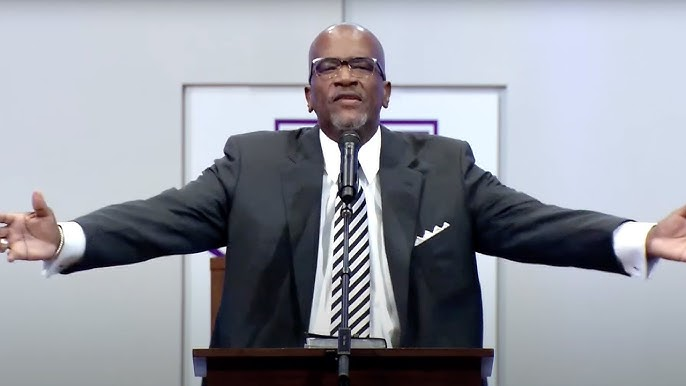

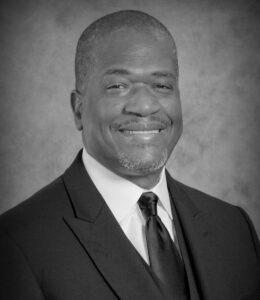
There is a particular kind of pastoral leader who does not merely occupy a pulpit — one who, over decades, becomes woven into the fabric of a community so thoroughly that separating the person from the institution becomes almost impossible. Pastor Terry K. Anderson is that kind of minister.
Since December 1990, he has served as the fourth pastor of Lilly Grove Missionary Baptist Church — a tenure that now spans more than three decades and counting. In a religious landscape where pastoral transitions are frequent and congregational loyalty is perpetually tested, that kind of sustained, rooted leadership is increasingly rare. It speaks to something beyond organizational tenure. It speaks to genuine trust, built sermon by sermon, crisis by crisis, year by year.
At 66, Anderson carries a biography that stretches from a large family household in rural Louisiana to the Martin Luther King Jr. Board of Preachers at Morehouse College — one of the most distinguished preaching honors in African American religious life. He has sat on national church boards, served the NAACP as a lifetime member, and in 2025 received an Honorary Doctor of Ministry from Simmons College of Kentucky. But those credentials, while significant, are not the heart of his story. The heart is the congregation — and the thousands of lives his preaching has reached across more than four decades of ministry.
Early Life and Background
Terry K. Anderson was born in Eunice, Louisiana — a small city in St. Landry Parish in the heart of Cajun country, where faith, family, and community life are deeply interwoven. He was the ninth child born to the late Houston and Lena Anderson, a detail that carries more context than it might initially appear.
Growing up as the ninth child in a large family in the American South during that era meant navigating a household shaped by collective responsibility, shared resources, and the kind of character-building that comes from never being the center of attention by default. Large families in Southern Black communities during this period were often anchored in the church — it was the social institution that provided structure, belonging, celebration, and grief support in ways that secular institutions rarely offered with the same consistency or warmth.
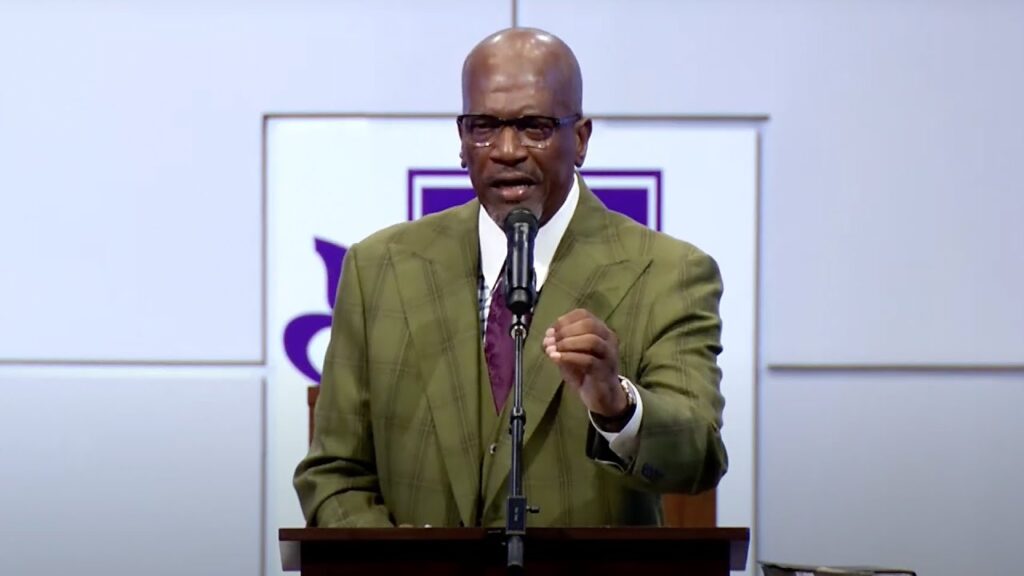
For young Terry, the church was not something he discovered as an adult seeking direction. It was the environment he was born into — and he responded to it early. His involvement in church work began at a very young age, suggesting a natural inclination toward ministry that predated any formal theological training. Some people find their calling after a long search. Anderson appears to have recognized his without needing much convincing.
Eunice, for all its modest size, sits within a Louisiana tradition of Baptist worship that is deeply expressive, community-centered, and rooted in the specific experience of African American faith in the South. That formation — emotional, communal, and historically grounded — is visible in the preaching style he would develop over the decades that followed.
Education
Anderson’s theological education was broad and deliberately multi-institutional — a reflection of serious intellectual commitment rather than the minimal credentialing that some ministers pursue. He attended Bishop College in Dallas, Texas, a historically Black institution with a strong legacy in African American theological education. He also studied at Louisiana State University in Pineville, Union Theological Seminary in New Orleans, and Houston Baptist University in Houston.
The range of institutions is notable. Bishop College grounded him in the HBCU tradition of African American higher education. Union Theological Seminary in New Orleans added formal theological depth from one of the South’s significant seminary institutions. Houston Baptist University extended his academic formation into a broader interdenominational context.
He was licensed and ordained in 1977 — the formal beginning of his ministerial career, though his involvement in church life had begun years earlier. In 2025, Simmons College of Kentucky recognized his decades of pastoral contribution by awarding him an Honorary Doctor of Ministry Degree — a culminating academic acknowledgment of a career built as much through practice as through study.
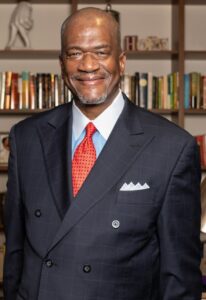
Career Journey
The Early Years of Ministry
Anderson’s formal licensing and ordination in 1977 set the clock on what would become a ministerial career of remarkable duration and consistency. His early years in pastoral work were characterized by a dual commitment that is not uncommon in smaller Southern Baptist communities — he served concurrently as pastor of Greater True Light Baptist Church in Eunice, Louisiana, and Zion Travelers Baptist Church in Mamou, Louisiana, from 1983 to 1990.
Serving two congregations simultaneously is not a small undertaking. It requires organizational discipline, emotional availability across two separate communities, and the kind of pastoral adaptability that comes from genuine love for the work rather than administrative routine. That he sustained this dual role for seven years speaks to both his energy and his commitment during what were clearly formative years of ministerial development.
The towns themselves — Eunice and Mamou — are rural Louisiana communities where the Baptist church functions as far more than a Sunday institution. It is the center of communal life, the venue for rites of passage, the space where grief is processed and joy is celebrated. Serving these communities gave Anderson a pastoral foundation that was thoroughly rooted in the lived experience of ordinary people navigating extraordinary challenges.
Lilly Grove Missionary Baptist Church
In December 1990, Anderson was called to serve as the fourth pastor of Lilly Grove Missionary Baptist Church — a role he has held continuously ever since. The significance of being the fourth pastor of an established church is worth pausing on. Every institution carries the weight of its predecessors, and stepping into a pastoral lineage means inheriting not just a congregation but a tradition, a set of expectations, and a community identity shaped by those who came before.
What Anderson has done at Lilly Grove over more than three decades is build on that tradition while making the ministry distinctly his own. His preaching — described by those who have experienced it as touching hearts through a unique method of delivery — draws people not merely into theological agreement but into emotional and spiritual engagement. That quality is rarer than it sounds. Many ministers teach effectively. Fewer preach in ways that move thousands.
His tenure has coincided with significant changes in American religious life — the rise and decline of mainline church attendance, shifting demographics, the increasing competition for spiritual community from secular alternatives. The fact that Lilly Grove has maintained and grown its significance under his leadership through these currents is itself a meaningful organizational achievement.
National Recognition and Leadership
Beyond his congregation, Anderson has accumulated a record of national ecclesiastical and civic recognition that reflects his standing within the broader African American religious community.
His induction in April 2008 into the Martin Luther King Jr. Board of Preachers at Morehouse College was perhaps the single most significant formal honor of his preaching career. The Board of Preachers is not a ceremonial designation — it represents recognition by one of the nation’s most historically significant African American academic institutions of a minister’s preaching excellence and moral influence. To be inducted alongside the tradition of King himself, whose own Morehouse formation shaped his preaching and his activism, is a distinction that carries genuine weight.
In 2010, he was appointed to two additional national bodies: the Commission on Baptist Heritage and Identity within the Baptist World Alliance, and the Board of Directors of the Conference of National Black Churches. Both appointments positioned him as a voice in conversations about the direction and identity of Black Christian institutions at a denominational and national level.
He is also a Board Member of the National Action Network — the civil rights organization founded by the Reverend Al Sharpton — and a lifetime member of the NAACP. These affiliations reflect a pastoral philosophy that does not separate spiritual leadership from civic engagement, a tradition with deep roots in the African American church experience.
Influence and Pastoral Philosophy
What distinguishes Anderson as a minister is not simply what he has accomplished institutionally, but how he has approached the work. His preaching is described as having a unique method — a phrase that, in Baptist circles, often points to the rare ability to make ancient texts feel personally urgent, to move between intellectual clarity and emotional resonance without losing either quality.
His hobbies — reading and golf — offer a small but telling insight into his character. Reading sustains the intellectual curiosity that makes preaching genuinely substantive rather than merely performative. Golf, a game of patience, precision, and sustained focus over a long course, suits someone whose ministry has been defined by exactly those qualities applied across a career measured in decades rather than moments.
His civic affiliations — the NAACP, the National Action Network — reflect a belief, consistent with the best traditions of African American Baptist ministry, that the church’s responsibility does not end at its own walls. The congregation is the center. The community is the context. Both matter.
Personal Life
Pastor Anderson is married to Ann Brock Anderson, his wife and partner in ministry and life. He is the father of one daughter, Victoria Patsy Anderson, and the proud grandfather of Sybil Noelle Demar — a family lineage that clearly brings him deep personal satisfaction.
The father-daughter relationship in pastoral families often carries its own particular weight. Growing up with a minister as a parent means navigating both the privileges and the particular pressures of a public family life, where the personal and the professional are rarely fully separated. That Victoria carries her father’s name — Patsy Anderson — suggests a close family identity.
Anderson’s personal life reflects the same consistency visible in his professional one: long-term commitment, family centrality, and a rootedness in community that has remained stable across decades of change in the broader culture.
Net Worth
Pastor Anderson’s financial standing has not been publicly disclosed. His income is primarily derived from his pastoral role at Lilly Grove Missionary Baptist Church, speaking engagements, and his involvement with various national religious and civic organizations. As is typical with pastoral leaders of his standing, specific financial figures are not available through any public record, and any estimate would be speculative. His life and ministry, by all visible evidence, are oriented around service rather than material accumulation.
Conclusion
Pastor Terry K. Anderson’s story is, at its core, a story about staying. In an era that celebrates the disruptive, the peripatetic, and the constantly reinvented, his ministry represents a different and perhaps more demanding kind of faithfulness — the faithfulness of someone who found his place, committed to it fully, and built something of lasting value over more than three decades.
From Eunice, Louisiana, where he was the ninth child in a household anchored in faith, to the Martin Luther King Jr. Board of Preachers at Morehouse College, to the pulpit of Lilly Grove Missionary Baptist Church where he has stood since December 1990 — his trajectory is not one of dramatic reinvention but of deepening. Every year of ministry adding another layer to a foundation that was laid in childhood and consecrated in 1977.
At 66, with an Honorary Doctor of Ministry received in 2025 and a congregation still shaped by his voice, Pastor Terry K. Anderson is not a man whose work is behind him. He is a man whose work has roots deep enough to keep bearing fruit.
FAQs
1. Who is Pastor Terry K. Anderson? Pastor Terry K. Anderson is a Baptist minister from Eunice, Louisiana, who has served as the fourth pastor of Lilly Grove Missionary Baptist Church since December 1990. He is a nationally recognized preacher, Morehouse College Board of Preachers inductee, and civic leader with affiliations including the NAACP and the National Action Network.
2. Where does Pastor Terry K. Anderson pastor? He serves as the fourth and current pastor of Lilly Grove Missionary Baptist Church, a position he has held continuously since December 1990 — a tenure of more than three decades.
3. What is the Martin Luther King Jr. Board of Preachers at Morehouse College? It is one of the most prestigious preaching honors in African American religious life, recognizing ministers of exceptional preaching excellence and moral influence. Pastor Anderson was inducted in April 2008.
4. Who is Pastor Terry K. Anderson’s wife? He is married to Ann Brock Anderson. He is also the father of one daughter, Victoria Patsy Anderson, and the grandfather of Sybil Noelle Demar.
5. What honorary degree did Pastor Anderson receive in 2025? In 2025, Simmons College of Kentucky awarded Pastor Terry K. Anderson an Honorary Doctor of Ministry Degree in recognition of his decades of pastoral service and contribution to American religious life.
Editorial Notice
The biography above is compiled from publicly available sources and is intended for general informational purposes only. At PeopleCabal, we are committed to accuracy — however, public records evolve, and some details may change over time. If you notice anything that requires a correction or update, we welcome you to reach out to us directly.
