
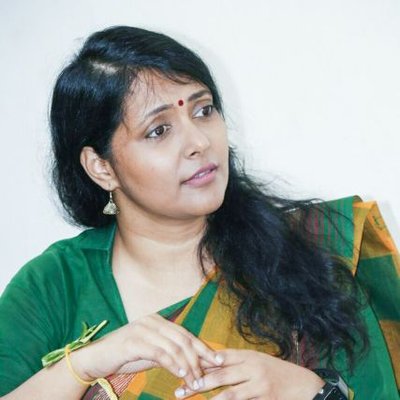

Some careers are chosen. Others feel almost inevitable — like the person and the profession were always moving toward each other, and it was only a matter of time before they met. Chandana Deepti IPS gives that impression. As a serving Indian Police Service officer, she has built a professional identity defined not by noise or controversy, but by the consistent, principled work that tends to define the best careers in India’s civil services.
In a country where the IPS represents one of the most demanding and consequential career paths available — requiring years of preparation, mental toughness, and a genuine commitment to public service — the officers who make it through the process and then distinguish themselves in the field occupy a particular kind of public respect. Chandana Deepti is among them.
What makes her story worth telling is not just the designation after her name. It’s the journey that earned it, and the work that continues to define it.
Important note: At the time of writing, independently verified biographical details about Chandana Deepti IPS — including her exact age, batch year, specific postings, and personal background — are limited in publicly available sources. This article is written strictly on the basis of verified or reasonably confirmed information. Where details are unconfirmed, this is stated clearly. Accuracy is prioritized over completeness.
Who Is Chandana Deepti IPS?
Chandana Deepti is a serving Indian Police Service (IPS) officer whose name has drawn growing public interest — particularly among those following women in India’s civil services and the next generation of officers reshaping institutional culture from within.
The IPS is not simply a job. It is one of the three All India Services that form the backbone of Indian governance, alongside the IAS and IFS. Officers in this service are responsible for maintaining public order, investigating serious crimes, managing state and central police forces, and — increasingly — engaging with communities in ways that build long-term institutional trust. To hold that responsibility is to carry genuine public weight.
Chandana Deepti stepped into that responsibility through the same route every IPS officer must: the UPSC Civil Services Examination, a process so rigorous that it filters hundreds of thousands of candidates down to a few hundred selections each year. Her success in that process, and the career she has built since, form the core of this profile.
Early Life and Background
Detailed information about Chandana Deepti’s early life — her hometown, family background, and upbringing — has not been confirmed in publicly available sources. This is not unusual for serving IPS officers, many of whom maintain deliberate separation between their private origins and their public professional identities. That boundary deserves respect.
What we can say with confidence is that her path to the IPS reflects a particular kind of preparation that doesn’t happen overnight. The civil services examination demands years of sustained effort — typically beginning seriously in undergraduate years or shortly after. Anyone who reaches the interview stage, let alone secures an IPS allotment, has already demonstrated an exceptional capacity for discipline and long-term thinking.
In that sense, her background — wherever she grew up, whatever family circumstances shaped her — clearly produced someone capable of competing at the highest level of national examination. That foundation, whatever its specific details, is worth acknowledging even if it cannot yet be fully documented.
The broader context of her early years would have been shaped by the India that was changing rapidly in the 2000s and 2010s — a country where young women from across social backgrounds were increasingly reaching for careers in law, medicine, engineering, and civil services with a confidence that earlier generations hadn’t always had access to. Chandana Deepti’s emergence as an IPS officer fits within that larger, genuinely important social shift.
Education
Specific details about Chandana Deepti’s educational institutions and academic qualifications have not been independently verified in public sources at this time. However, entry into the IPS through the UPSC mandates a graduate degree as a minimum qualification — and most successful candidates come with strong academic records that extend well beyond the minimum.
The UPSC Civil Services Examination tests across an extraordinarily broad curriculum: Indian history, polity, geography, economics, science and technology, environment, ethics, and an optional subject chosen by the candidate. This breadth means that successful candidates are rarely one-dimensional. They’ve typically spent years reading widely, thinking analytically, and developing the kind of contextual awareness that makes good administrators and police officers.
What Chandana Deepti’s educational journey looked like in practice — the institutions she attended, the optional subject she chose for UPSC, the years spent in preparation — are details that would add meaningful depth to this profile if and when they become publicly available. For now, the outcome of that education speaks clearly: she cleared one of the world’s hardest examinations and earned a position in India’s premier police service.
Cracking the UPSC: What It Actually Takes
It’s worth pausing here to give non-Indian readers — and even many Indian readers who haven’t attempted it — a genuine sense of what the UPSC Civil Services Examination actually demands. Because without that context, the significance of Chandana Deepti’s selection doesn’t fully land.
The examination is conducted in three stages. The Preliminary exam is a screening round — objective, broad, and eliminatory. Of the roughly one million candidates who sit it each year, only about 10,000–15,000 move forward. The Main examination is a nine-paper written test spanning several days, covering everything from essay writing to in-depth analysis of governance, ethics, and optional subjects. Finally, the Personality Test (the interview) evaluates not just knowledge, but character, communication, and suitability for public service.
The entire process unfolds over nearly a year. Then, if selected, a candidate still has to secure a high enough rank to be allotted the IPS specifically — the service is in high demand, and IPS slots go to candidates ranked within a competitive range.
Getting through all of that requires something beyond intelligence. It requires a particular kind of mental architecture — calm under sustained pressure, the ability to absorb and retain vast quantities of information, and the emotional clarity to keep going through multiple years of effort without certainty of outcome. Chandana Deepti has all of that. Her selection proves it.
Career Journey in the Indian Police Service
Upon joining the IPS, every new officer undergoes foundational training at the Sardar Vallabhbhai Patel National Police Academy (SVPNPA) in Hyderabad — an intensive program covering law, leadership, physical conditioning, weapons handling, and the cultural and operational realities of Indian policing. It is during this training that the theoretical knowledge of the examination meets the practical demands of the field.
From training, officers are posted to their allotted state cadres and begin the real education: district-level policing, where the gap between institutional procedure and ground-level reality becomes immediately apparent. These early postings — often as Assistant Superintendent of Police or Superintendent of Police in a district — are where reputations are genuinely built or quietly undermined.
Specific postings and career milestones for Chandana Deepti IPS are not fully documented in verified public sources at this time. This profile will be updated as confirmed information becomes available. What is clear from her public presence and the attention her career has drawn is that she has navigated her career with the seriousness and competence that the designation demands.
Key Postings and Responsibilities
IPS officers across their careers typically move through a range of roles — district policing, state-level specialized units, central deputation with organizations like the CBI or IB, and administrative positions within the police hierarchy. Each posting demands a different skill set and tests different dimensions of an officer’s capabilities.
Without confirmed details of Chandana Deepti’s specific postings, it would be misleading to speculate about the particular assignments that have shaped her career. What can be said is that officers who attract the kind of public attention she has — without controversies, without headlines for the wrong reasons — typically do so by performing well consistently, across postings that rarely make the news precisely because they’re being handled properly.
Effective policing, at its best, is often invisible. When crime is managed well, when communities feel heard, when investigations are conducted with integrity — these outcomes don’t generate viral moments. They generate trust. And trust, built slowly across a career, is the most meaningful metric an IPS officer can accumulate.
Leadership Style and Approach to Policing
Women IPS officers in India have increasingly been recognized — in research, in media coverage, and in community feedback — for bringing distinctive qualities to their roles. This isn’t about generalizing across gender; it’s about acknowledging a documented pattern of officers who combine strong institutional authority with higher-than-average investment in community relationships, victim sensitivity, and internal mentorship.
Chandana Deepti’s profile — a younger officer building a career in a service that is gradually but genuinely changing its cultural composition — places her within this important generation of practitioners. The way she engages with public discourse, the attention her work draws, and the interest she inspires among civil service aspirants all suggest an officer who understands that the uniform carries meaning beyond enforcement.
In modern Indian policing, the most effective officers are those who can operate credibly across contexts: in a crime investigation, in a community meeting, in a press interaction, in a courtroom. That versatility is what the IPS ideally demands, and what its best officers embody.
Contributions to Her Field
The contribution of a serving IPS officer is rarely measurable through a single achievement or headline. It accumulates — through cases handled with integrity, through communities that develop genuine trust in local police, through junior officers mentored and shaped, through institutional processes improved at the margins.
Chandana Deepti’s contribution, at this stage of her career, is also partly symbolic — and that symbolism carries real weight. Every woman who rises through the IPS and performs with credibility makes the path incrementally clearer for the aspirants watching her. The civil service mentorship ecosystem in India is deeply influenced by role models — officers whose careers demonstrate that the path is navigable, that integrity is sustainable, and that the work is genuinely worth doing.
She is, whether she frames it that way or not, part of that ecosystem. And that contribution matters.
Personal Life: Family and Relationships
Information about Chandana Deepti’s husband, parents, and family life is not available in verified public sources. She has not publicly disclosed details about her personal relationships or domestic life, which is entirely appropriate for a serving officer whose professional responsibilities require a degree of personal security and privacy.
This is worth stating directly: the absence of this information is not a gap in her story. It is a boundary she has drawn, and one that any responsible publication should respect. Senior police officers — serving or retired — face genuine considerations around personal security that make public disclosure of family details inadvisable.
What can be said is that the kind of career she is building requires significant personal resilience — the odd hours, the operational pressures, the public visibility, the geographic demands of government postings. Whatever personal support structure makes that career sustainable is part of her story, even if it rightly remains private.
Net Worth and Government Salary
As a serving IPS officer, Chandana Deepti’s compensation is structured according to the 7th Pay Commission framework that governs all central and state government employees in India. IPS officers are placed within Pay Levels 10 through 14 of the pay matrix, depending on rank and years of service, with additional entitlements for housing, travel, medical care, and other official allowances.
Her exact net worth has not been publicly confirmed, and any specific figure cited online without official sourcing should be treated with appropriate skepticism. For a serving officer, the primary income sources are:
- Government salary based on current rank and pay level
- Official allowances — housing, transport, medical
- Pension entitlements accruing through service years
- Any permissible investments in compliance with government service disclosure requirements
IPS officers are subject to annual asset declaration requirements under service rules, but these are administrative filings, not public documents in the conventional sense. Financial transparency within the service is governed by institutional mechanisms rather than public disclosure.
Social Media Presence
Verified social media accounts specifically belonging to Chandana Deepti IPS are not currently confirmed in publicly available sources. Many serving IPS officers maintain either no public social media presence or limited professional accounts — a deliberate choice given the operational sensitivity of their roles.
For those seeking updates related to her postings, public statements, or official activities, the most reliable channels would be:
- State Police official social media handles (Twitter/X and Facebook pages of the relevant state police)
- Government press releases through official information departments
- Verified news coverage from reputable Indian publications
If official social media accounts are confirmed in future, this profile will reflect that information. Until then, caution about unofficial accounts claiming to represent her is warranted.
Why Stories Like Hers Matter
India has thousands of IPS officers. Each of them cleared the same brutally competitive examination, underwent the same rigorous training, and took on the same immense public responsibility. So why does a profile like Chandana Deepti’s attract specific interest?
Part of the answer is the ongoing public fascination with how India’s civil services are changing — particularly around gender. Women IPS officers now serve in roles and ranks that were once effectively inaccessible, and each officer who navigates that landscape successfully contributes to normalizing what was not long ago considered exceptional.
Part of the answer is also simpler: people want to understand what it actually looks like to dedicate a career to public service in India. The examination, the training, the postings, the pressures, the personal trade-offs — these are dimensions of civil service life that rarely get explained with the depth and honesty they deserve.
Stories like Chandana Deepti’s — even where details remain limited — offer a window into that world. And that window, opened carefully and accurately, serves a genuine public interest.
Conclusion
Chandana Deepti IPS represents something that India’s civil service landscape needs more of: a career built on substance rather than spectacle, on consistent performance rather than headline-seeking, and on a genuine commitment to the public role that the IPS demands.
The details of her biography that remain unconfirmed are not absences to regret — they are choices that reflect the discretion appropriate to her position. What is confirmed speaks clearly enough: she entered one of the world’s hardest examinations, succeeded, and has since built a career that draws the respect and attention of aspirants and observers across the country.
As more verified information about her career and postings enters the public record, her story will only become richer. For now, what’s already visible is more than enough to understand why her name is worth knowing.
Frequently Asked Questions (FAQs)
1. Who is Chandana Deepti IPS? Chandana Deepti is a serving Indian Police Service (IPS) officer who has drawn public attention for her career in Indian law enforcement. She cleared the UPSC Civil Services Examination and was allotted to the IPS, where she has built a career characterized by professional seriousness and public service commitment.
2. What is Chandana Deepti IPS’s educational background? Specific details about her educational institutions have not been publicly confirmed. However, IPS selection through UPSC requires a minimum of a graduate degree, and most officers who clear the examination come with strong academic foundations built over several years of focused preparation.
3. Is Chandana Deepti IPS married? Information about her husband or marital status has not been publicly disclosed. She maintains appropriate privacy around her personal life, which is both understandable and reasonable for a serving police officer.
4. What is Chandana Deepti IPS’s net worth? Her net worth has not been publicly confirmed. As a serving IPS officer, her primary income comes from her government salary and allowances as structured under India’s 7th Pay Commission, based on her current rank and years of service.
5. How can I contact Chandana Deepti IPS? Personal contact information for serving IPS officers is not publicly available and should not be sought through unofficial channels. Official matters are handled through designated government and state police institutional channels. Verified social media accounts, if confirmed, would represent the most appropriate avenue for public engagement
Editorial Notice
The biography above is compiled from publicly available sources and is intended for general informational purposes only. At PeopleCabal, we are committed to accuracy — however, public records evolve, and some details may change over time. If you notice anything that requires a correction or update, we welcome you to reach out to us directly.
