
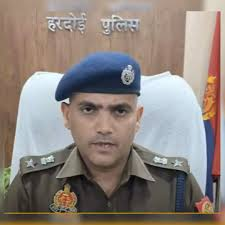

There’s a particular kind of IPS officer that doesn’t make the front pages but makes a real difference — the ones quietly posted to districts across a state, handling everything from law and order to sensitive investigations, moving from one assignment to the next with the steady professionalism the job demands. Neeraj Kumar Jadaun IPS is that kind of officer.
At 43, he is a 2015-batch IPS officer of the Uttar Pradesh cadre — a direct UPSC recruit who has spent the better part of a decade building his career across some of India’s most complex and politically significant districts. His postings read like a map of UP’s law enforcement landscape: Ghaziabad, Bagpat, Bijnor, Hardoi, and now Aligarh — each district with its own distinct character, its own challenges, and its own demands on whoever holds the SP or SSP chair.
He isn’t a household name. But in Uttar Pradesh policing circles, his career trajectory tells a story worth understanding — about what it means to serve in one of India’s most demanding state cadres, and what consistent, professional progression looks like in practice.
Who Is Neeraj Kumar Jadaun IPS?
Neeraj Kumar Jadaun is a serving Indian Police Service officer, IPS ID 20151140, allotted to the Uttar Pradesh cadre through the 2015 batch via direct UPSC recruitment. He joined the IPS formally on 28 December 2015 and has since accumulated over a decade of service across multiple district postings in UP.
His home state is Uttar Pradesh — which means he’s policing the state he grew up in, with all the contextual knowledge and personal investment that carries. UP is India’s most populous state, with over 220 million people, a complex political landscape, and some of the most challenging law enforcement demands in the country. Officers who build careers here don’t get the luxury of quiet postings. Every district comes with its own pressure, its own history, and its own expectations from both the public and the administration above.
Currently posted as Senior Superintendent of Police (SSP) in Aligarh — a Level 12 position — Neeraj Jadaun is at a stage in his career where the responsibilities are significant and the public visibility is high. How he performs here will likely shape the next decade of his professional trajectory.
Neeraj Jadaun IPS Biography
| Detail | Information |
|---|---|
| Full Name | Neeraj Kumar Jadaun |
| IPS ID | 20151140 |
| Batch | 2015 |
| Cadre | Uttar Pradesh |
| Recruitment Type | Direct (UPSC) |
| Date of Joining IPS | 28 December 2015 |
| Age | 43 years old |
| Date of Birth | 1983 (exact date not publicly disclosed) |
| Home State | Uttar Pradesh |
| Education | B.Tech (Uttar Pradesh) |
| Current Posting | SSP, Aligarh (since September 2025) |
| Pay Level | L12 (SSP / Senior SP) |
| Service Years | Approximately 11 years |
| Religion | Not publicly disclosed |
| Net Worth | Not publicly confirmed |
| Contact Number | Not publicly available |
Early Life and Background
Neeraj Kumar Jadaun was born in 1983 — placing him squarely in a generation of Indians who grew up through the economic liberalization of the 1990s, came of age during India’s rapid technological transformation in the 2000s, and then chose to pursue public service rather than the private sector careers that era made newly accessible.
That choice — especially for someone with a technical engineering background — deserves a moment’s thought. The 2000s and early 2010s were a period when B.Tech graduates from UP were in high demand in the IT sector, with Noida and Gurgaon absorbing thousands of engineers from across the state into corporate careers. The civil services path is slower, harder, and offers none of the immediate financial rewards of a tech job. Choosing it anyway says something specific about the kind of person Neeraj Jadaun is.
His roots in Uttar Pradesh — both as his home state and the cadre he was allotted to — mean his entire IPS career has been spent in familiar territory. That familiarity is double-edged. It provides contextual intelligence that officers from other states take years to build. But it also means policing communities where you may know people personally, where local political networks are not abstract — where the pressures are immediate and sometimes personal.
Navigating all of that, across district after district, for over a decade, requires a particular kind of grounded integrity.
Education: B.Tech to the IPS
Neeraj Kumar Jadaun holds a B.Tech degree — his engineering qualification from Uttar Pradesh is documented in his official IPS record. The specific institution and branch of engineering have not been publicly confirmed, but the qualification itself is significant for understanding his profile.
Engineering graduates who attempt UPSC bring a specific intellectual toolkit to the examination. The analytical and problem-solving orientation of technical education tends to translate well into the kind of structured, evidence-based thinking that the IPS demands — particularly in investigation, forensics, and administrative decision-making.
The UPSC examination, however, requires a significant pivot from pure technical knowledge. Candidates must develop depth in Indian history, polity, economics, ethics, and governance — areas that engineering curricula rarely cover. The transition from B.Tech thinking to civil services preparation typically requires a genuine intellectual broadening, a willingness to engage with subjects that don’t have clean, calculable answers.
That Neeraj Jadaun made that transition successfully — clearing UPSC and securing IPS allotment — reflects an intellectual versatility that goes beyond what his engineering degree alone would suggest.
Cracking UPSC and Joining the IPS
The 2015 UPSC Civil Services batch that Neeraj Jadaun belongs to entered service during a period of significant reform momentum in Indian governance. The mid-2010s brought new policy frameworks, increased emphasis on technology in policing, and growing public expectations around police accountability and responsiveness.
Joining the IPS in December 2015, after completing the mandatory training at the Sardar Vallabhbhai Patel National Police Academy (SVPNPA) in Hyderabad, Neeraj Jadaun would have entered field service at a time when UP policing was under considerable public and political scrutiny. The state’s law and order record attracts national attention in ways that most other states don’t, which means even junior postings in UP carry visibility and consequence.
His allotment to Uttar Pradesh as both his home state and cadre is notable. The government’s cadre allotment system sometimes places officers in their home states, though this is not guaranteed. For Jadaun, the result was a career spent entirely within the state he knows best — a situation that carries both opportunity and obligation.
Career Journey: Postings Across Uttar Pradesh
What makes Neeraj Jadaun’s career particularly readable is that his posting history — documented across five snapshots from 2020 to 2026 — tells a coherent story of progression, responsibility, and geographic range across UP’s diverse district landscape.
Here is how that journey has unfolded:
2020 — Additional SP (Rural Area), Ghaziabad (Level 11) His earliest tracked posting placed him in Ghaziabad — one of UP’s most urbanized and industrially significant districts, sitting on the Delhi border. The Additional SP role at the Rural Area level is a foundational district posting, responsible for managing law and order across the non-urban periphery of a major city. Ghaziabad’s proximity to the national capital means its policing environment is unusually complex — crimes cross state lines, political pressures are intense, and media scrutiny is ever-present.
2023 — SP, Bagpat (Level 11) His move to Bagpat as Superintendent of Police marked a significant step up in responsibility. As SP, he became the district’s top police officer — accountable for everything from crime investigation to public order management to staff administration. Bagpat is a western UP district with an agricultural economy and a history of intercommunal tensions that require careful, consistent policing leadership. Holding the SP chair here demands both operational capability and political steadiness.
2024 — SP, Bijnor (Level 12 — Promotion) The transfer to Bijnor came alongside a promotion from Level 11 to Level 12 — a meaningful career milestone. Bijnor, in northwestern UP bordering Uttarakhand, presents its own distinct policing challenges: forest terrain, border management considerations, and a mixed demographic profile. The promotion at this posting reflects recognition of performance at the SP level and readiness for greater responsibility.
2025 — SP, Hardoi (Level 12) Hardoi is a predominantly rural district in central UP, one of the state’s larger districts by area and population. The SP posting here would have required deep community engagement alongside conventional law enforcement — agricultural disputes, local political dynamics, and the particular challenges of policing a district where infrastructure and institutional presence are more stretched than in urban centres.
2026 — SSP, Aligarh (Level 12, since September 2025) His current posting as Senior Superintendent of Police in Aligarh represents both a geographic and symbolic step up. Aligarh is one of UP’s most historically and politically significant cities — home to the prestigious Aligarh Muslim University, a complex communal history, and a lock manufacturing industry that shapes local economics and crime patterns. The SSP role here is high-visibility, high-pressure, and nationally watched. It is not a posting for officers still finding their footing.
District by District: What Each Posting Demanded
Reading Neeraj Jadaun’s posting history as a sequence reveals something important: the government has consistently placed him in districts that require officers with strong judgment, not just administrative capability.
Ghaziabad demands urban complexity management. Bagpat demands inter-community steadiness. Bijnor demands geographic versatility. Hardoi demands rural patience and grassroots engagement. Aligarh demands all of the above, simultaneously, under national scrutiny.
Each transfer built on the last. This isn’t a random posting history — it’s a career being shaped by the demands of a state that sends its trusted officers to the places that most need reliable leadership.
Current Role: SSP Aligarh
As of September 2025, Neeraj Kumar Jadaun holds the position of Senior Superintendent of Police (SSP) in Aligarh — his most senior and most visible posting to date.
Aligarh is a city that rarely stays out of the news for long. Its position in western Uttar Pradesh, its university presence, its industrial significance, and its historical intercommunal sensitivities mean that the SSP’s role here is genuinely consequential. Managing public order during festivals, elections, and moments of political tension; overseeing serious crime investigations; maintaining relationships with community leaders across diverse groups — these are the daily demands of the position.
For an officer who has spent the previous six years building his district-level credentials across progressively complex postings, Aligarh represents a natural — if demanding — next chapter.
Leadership Style and Approach
Without specific public accounts of Neeraj Jadaun’s leadership style from community members or subordinates, drawing detailed conclusions would be speculative. What his career record does suggest is an officer who has demonstrated consistent operational performance — the kind that earns progressive postings and a promotion — without the controversies or controversies that tend to derail careers in UP’s politically charged policing environment.
Officers who last across multiple challenging district postings in Uttar Pradesh, accumulate promotions, and get assigned to high-profile positions like SSP Aligarh are not getting there by accident. They’re officers whose superiors trust them with difficult situations. That trust is earned quietly, over years, through judgment calls that rarely make headlines but define professional reputations.
His engineering background likely contributes an analytical dimension to how he approaches investigations and administrative decisions — a systems-thinking orientation that complements the interpersonal dimensions of community policing.
Contributions to UP Policing
Neeraj Jadaun’s contribution to Uttar Pradesh policing is best understood at the district level — which is where the most important policing work in India actually happens. State-level policy matters, but it’s district SPs and SSPs who translate that policy into daily reality for millions of people.
His decade of service across Ghaziabad, Bagpat, Bijnor, Hardoi, and now Aligarh represents thousands of cases handled, hundreds of public order situations managed, and an incalculable number of daily decisions that collectively determine whether a district feels safe or doesn’t.
That accumulation — invisible in aggregate, essential in practice — is the real substance of his contribution. It doesn’t compress into a single achievement or headline. It lives in the districts he served and the people whose daily security depended on how well he did his job.
Personal Life: Family and Background
Verified details about Neeraj Kumar Jadaun’s wife, children, and parents are not available in publicly confirmed sources. He has not publicly disclosed his personal or family life, which is both understandable and appropriate for a serving officer in a high-visibility role.
IPS officers in UP — particularly those in sensitive postings like Aligarh SSP — have genuine security considerations that make public disclosure of family information inadvisable. This privacy is not a gap in the public record. It is a reasonable professional boundary.
What can be said is that sustaining a career across multiple district transfers — moving from Ghaziabad to Bagpat to Bijnor to Hardoi to Aligarh within six years — requires an enormous amount of personal and familial flexibility. The logistical reality of IPS transfers means families often relocate frequently, or manage long periods of distance. That challenge, shared by most IPS families, is part of the lived reality of this career that rarely gets acknowledged publicly.
Net Worth and Salary
As a Level 12 IPS officer — the SSP/Senior SP pay level — Neeraj Kumar Jadaun’s compensation is governed by India’s 7th Pay Commission structure. At Level 12, the basic pay range starts at approximately ₹78,800 and progresses with annual increments, alongside significant additional entitlements including:
- Government accommodation or house rent allowance
- Official vehicle for the SSP role
- Travel and daily allowances for official duties
- Medical benefits for self and family
His exact net worth has not been publicly confirmed, and any specific figures online without verified sourcing should be treated with appropriate skepticism. For a serving government officer, wealth accumulation is constrained by service rules, annual asset declaration requirements, and the nature of a salary-based career. His primary income is his government salary and associated allowances.
Social Media Presence
Verified personal social media accounts for Neeraj Kumar Jadaun IPS are not currently confirmed in public sources. Many UP cadre IPS officers — particularly those in active field postings — maintain limited or no personal social media presence, given the operational sensitivity of their roles and the security considerations that come with high-profile district assignments.
For official updates related to his postings, press statements, or law enforcement activities in Aligarh, the most reliable channels are:
- UP Police official Twitter/X handle: @UPPolice
- Aligarh Police official handle on Twitter/X and Facebook
- Government press releases through UP’s information department
Following these channels provides the most accurate, verified information about his official activities and statements.
What His Career Tells Us About IPS Service in UP
Neeraj Jadaun’s career is, in many ways, a case study in what sustained IPS service in Uttar Pradesh actually looks like. Not the dramatic, headline-making version — but the real version: years of district postings, each with its own pressures, each requiring a fresh adaptation to new communities and new challenges.
UP is a cadre that tests its officers constantly. The political environment is intense, the public expectations are high, the media scrutiny is persistent, and the sheer scale of the state’s population and geography means that no two postings are alike. Officers who build long, credible careers here have earned something real.
His trajectory — from Additional SP in Ghaziabad to SSP in Aligarh over roughly six years of tracked service — represents genuine, merit-based progression through one of India’s most demanding state police services. That progression, understated as it is, is the most honest metric of professional achievement available.
Conclusion
Neeraj Kumar Jadaun IPS is, at 43, in the middle of a career that still has considerable ground to cover. The 2015 batch has years of service ahead, and officers who reach SSP-level positions in high-profile districts like Aligarh in their early-to-mid career are well-positioned for the more senior roles — DIG, IG, ADGP — that follow.
What’s already visible is a career defined by consistency, geographic range, and the kind of steady professional progression that the IPS demands of its best officers. He hasn’t courted publicity. He hasn’t needed to. The posting history speaks for itself — and in UP policing, a posting history like his speaks quite loudly indeed.
Frequently Asked Questions (FAQs)
1. Who is Neeraj Kumar Jadaun IPS? Neeraj Kumar Jadaun is a 2015-batch IPS officer from the Uttar Pradesh cadre, recruited directly through UPSC. He has served across multiple UP districts including Ghaziabad, Bagpat, Bijnor, and Hardoi, and is currently posted as SSP Aligarh — his most senior posting to date.
2. What is Neeraj Jadaun IPS’s current posting? As of September 2025, he serves as Senior Superintendent of Police (SSP) in Aligarh, Uttar Pradesh — a Level 12 position and one of the most significant district-level postings in the state.
3. What is Neeraj Kumar Jadaun’s educational background? He holds a B.Tech degree from Uttar Pradesh, as documented in his official IPS records. He subsequently cleared the UPSC Civil Services Examination and joined the IPS in December 2015.
4. How old is Neeraj Jadaun IPS? Neeraj Kumar Jadaun is 43 years old, born in 1983. His exact date of birth has not been publicly disclosed.
5. What is Neeraj Jadaun IPS’s contact number? Personal contact details for serving IPS officers are not publicly available. Official communication with SSP Aligarh is conducted through the Aligarh Police official channels and UP Police’s institutional contact mechanisms.
Editorial Notice
The biography above is compiled from publicly available sources and is intended for general informational purposes only. At PeopleCabal, we are committed to accuracy — however, public records evolve, and some details may change over time. If you notice anything that requires a correction or update, we welcome you to reach out to us directly.

Comments are closed.