
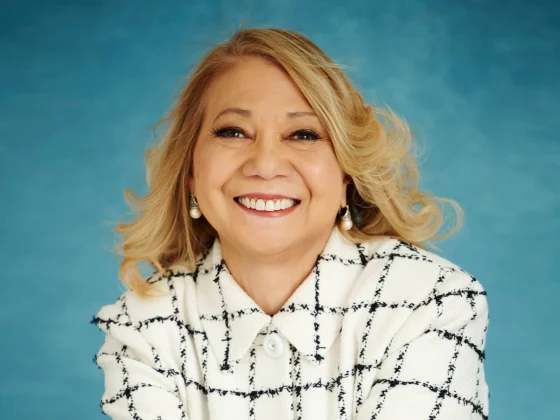

Mildred García is one of the most accomplished Latina leaders in American higher education — an educator, administrator, and advocate who has spent her career working at the intersection of access, equity, and educational excellence in the institutions that shape economic opportunity for millions of Americans. She served as president of two California State University campuses and was subsequently appointed as Commissioner of the American Association of State Colleges and Universities (AASCU) — a position that gave her a platform to advocate for the educational access mission that has defined her career across the national landscape of public higher education.
Quick Profile
| Full Name | Mildred García |
|---|---|
| Nationality | American (Puerto Rican heritage) |
| Occupation | Higher Education Administrator, Academic Leader |
| Education | Teachers College, Columbia University (EdD) |
| Known For | President of Cal State Dominguez Hills and Cal State Fullerton; AASCU Commissioner; Latina education leadership |
Early Life and Educational Journey
Mildred García grew up in New York City in a Puerto Rican family — an origin that placed her squarely within one of the communities that American public higher education has historically underserved, and that has shaped her lifelong commitment to access and equity in education. Her personal experience of navigating the American educational system as a Latina woman in an era when Latina representation in higher education was extremely limited gives her advocacy for educational access an authenticity and urgency that institutional commitment alone cannot produce.
Her academic career took her through multiple institutions and ultimately to a doctorate from Teachers College, Columbia University — one of the world’s most prestigious schools of education, with a long tradition of producing education leaders whose research and practice have shaped American educational policy and institutions. The doctoral training at Columbia gave her both the research foundations and the intellectual frameworks for the academic leadership career that followed.
Her early career involved teaching and educational administration at various levels, developing the practical understanding of how educational institutions function — their bureaucratic structures, their resource allocation decisions, their relationships with communities and governing boards — that effective presidential leadership requires. The path from classroom teacher to university president runs through many intermediate administrative positions, each building additional organizational and political skills that the next role requires.
Presidential Leadership at California State University
García served as president of California State University, Dominguez Hills and subsequently as president of California State University, Fullerton — two campuses of the nation’s largest public university system, both serving student populations with significant proportions of first-generation college students, Latino students, and other underrepresented groups whose success in higher education has historically been shaped by the quality and commitment of institutional leadership.
The California State University system’s mission — providing accessible, affordable, high-quality education to California’s diverse population — aligns directly with the values that have animated García’s career. Leading campuses within this system meant pursuing that mission in concrete operational terms: ensuring that student support services meet the specific needs of first-generation and low-income students, that the curriculum remains relevant to the communities the campuses serve, that research and academic programs create genuine pathways to economic opportunity, and that the institutional culture supports the success of students whose backgrounds differ significantly from the traditional image of the American college student.
Her presidential tenure at Fullerton was particularly notable — CSU Fullerton is one of the largest campuses in the California State system, serving tens of thousands of students and requiring the organizational leadership skills that managing a large, complex institution demands alongside the educational vision that gives institutional leadership its purpose. Under her leadership, the campus focused on student success initiatives, degree completion programs, and the specific supports that help first-generation and transfer students navigate the particular challenges they face.
AASCU Leadership and National Advocacy
Her appointment as Commissioner — and subsequently as President and CEO — of the American Association of State Colleges and Universities (AASCU) placed her at the helm of the primary advocacy and professional development organization for the regional public universities that collectively enroll the majority of American college students. AASCU member institutions are the workhorses of American higher education — not the research-intensive flagships that dominate media coverage of American universities, but the regional comprehensives, historically Black colleges and universities, Hispanic-serving institutions, and other institutions whose primary mission is serving their regions’ students.
In this role, García has been a national voice for the mission and the specific funding and policy needs of public regional universities — arguing for adequate state appropriations, for federal student aid policies that support access, and for the recognition that regional public universities’ educational and economic contributions to their communities deserve the policy attention and resource commitments that they too rarely receive.
Advocacy for Latina Leadership
Throughout her career, García has been an active advocate for increasing Latina representation in higher education leadership — at the faculty, administrative, and presidential levels. Her own career trajectory — from a Puerto Rican family in New York City to the presidency of major California State University campuses and subsequently to national association leadership — has made her both a symbol and a practical example of what is possible, and she has worked through mentorship, public speaking, and organizational advocacy to open similar pathways for the generation of Latina educators and administrators following her.
Personal Life
García has been open about the role of her Puerto Rican heritage and family in shaping her educational values and her commitment to the communities she serves. She is married and has maintained the personal and family commitments that have sustained her through a demanding and consequential career.
Conclusion
Mildred García’s career is built on the conviction — expressed through decades of concrete institutional leadership rather than merely through rhetorical commitment — that public higher education is one of the most powerful engines of economic opportunity and social mobility available in American society, and that its mission requires leaders who understand from personal experience what it means to navigate that system as a first-generation student from an underrepresented community. Her leadership at multiple levels of public higher education has advanced that mission in ways whose effects will be visible for generations.
Frequently Asked Questions
What universities did Mildred García lead as president?
California State University, Dominguez Hills and California State University, Fullerton — two campuses of the nation’s largest public university system.
What is AASCU?
The American Association of State Colleges and Universities — the primary advocacy and professional development organization for regional public universities in the United States.
What is Mildred García’s academic background?
She holds an EdD from Teachers College, Columbia University, one of the world’s most prestigious schools of education.
What communities has Mildred García focused on serving?
First-generation college students, Latino students, and other underrepresented communities whose success in higher education she has made central to her institutional leadership.
Why is Mildred García significant as a Latina leader?
She is one of the most accomplished Latina higher education leaders in the United States, having served as president of two major California State University campuses and subsequently as national association leader — a career trajectory that has made her both a role model and an active advocate for increasing Latina representation in educational leadership.
Editorial Notice
The biography above is compiled from publicly available sources and is intended for general informational purposes only. At PeopleCabal, we are committed to accuracy — however, public records evolve, and some details may change over time. If you notice anything that requires a correction or update, we welcome you to reach out to us directly.
