
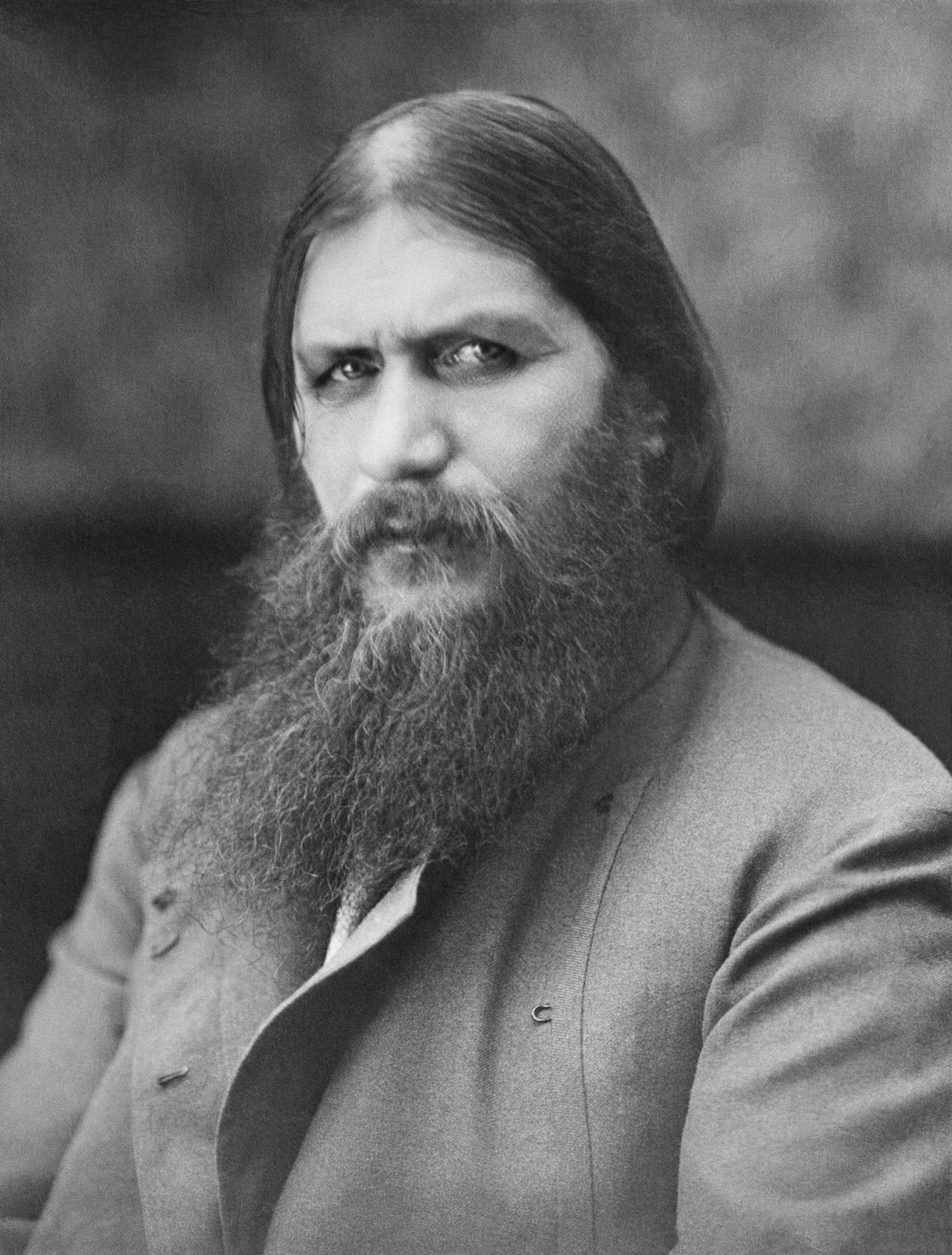

Grigori Rasputin is one of history’s most extraordinary and puzzling figures — a Siberian peasant mystic who somehow became the most feared and influential man in the court of Tsar Nicholas II, the last emperor of Russia. His ability to alleviate the suffering of Tsarevich Alexei, the hemophiliac heir to the throne, gave him a hold over Empress Alexandra that defied the logic of class, politics, and institutional religion. His life, his influence, and ultimately his dramatic murder in 1916 have been dramatized, exaggerated, and mythologized to the point where separating fact from legend requires significant effort. What is not in dispute is that his presence at the Russian court contributed to the erosion of the Romanov dynasty’s credibility at a moment when Russia desperately needed stable governance — and that the empire collapsed within a year of his death.
Rasputin Biography
| Full Name | Grigori Yefimovich Rasputin |
|---|---|
| Date of Birth | January 22, 1869 (approximately) |
| Nationality | Russian |
| Religion | Russian Orthodox Christianity (mystic tradition) |
| Occupation | Mystic, Self-proclaimed Holy Man, Advisor to the Imperial Court |
| Known For | Influence over the Romanov court, alleged healing abilities, dramatic death, historical mystique |
Early Life and Background
Grigori Rasputin was born around January 22, 1869, in the small Siberian village of Pokrovskoye in the Tobolsk governorate. He grew up in poverty in one of the most remote and isolated regions of the Russian Empire, the son of a peasant farmer named Yefim Rasputin. His childhood was not marked by obvious signs of future notoriety — he was one of many peasant children in a vast and largely forgotten part of the empire. However, accounts from this period mention an early inclination toward spiritual matters and folk healing that would develop significantly in his youth.
In his late teens and early twenties, Rasputin undertook extensive religious pilgrimages — a practice that was not unusual in Russian Orthodox folk culture of the period, where wandering holy men (known as stranniki or staretsy) occupied a revered place in peasant spiritual life. He traveled to monasteries and holy sites, including the important Verkhoturye monastery, and reportedly came into contact with the Khlysty — a secretive religious sect accused by mainstream Orthodoxy of various unorthodox practices. Whether his involvement with this sect was real and substantial, or whether the accusation was simply the tool his enemies used against him, has been debated by historians without definitive resolution.
What is clear is that when Rasputin arrived in St. Petersburg around 1903, he had developed a striking personal magnetism, a genuine command of scripture, and a reputation for spiritual gifts — particularly healing and prophetic insight — that rapidly attracted attention in the spiritually hungry circles of the Russian aristocracy.
Rise to Influence at the Imperial Court
The Russia that Rasputin entered in the early 1900s was a society under tremendous pressure — industrializing rapidly, politically unstable, and socially stratified in ways that were becoming increasingly untenable. In this environment, a fascination with mysticism and the occult had taken hold among the Russian aristocracy, including members of the imperial family. Nicholas II and Alexandra were deeply religious people who had struggled for years with the devastating diagnosis of their son and heir, Tsarevich Alexei’s hemophilia — a condition for which 19th and early 20th-century medicine had essentially no treatment. The boy’s suffering was constant and, during crises, genuinely life-threatening.
Rasputin was introduced to the imperial family in 1905 through a chain of aristocratic connections, and his first encounter with the ailing Alexei produced what Alexandra described as a remarkable improvement in the child’s condition. Whether this was the result of genuine healing ability, the power of suggestion reducing the boy’s anxiety and thus his bleeding episodes, or simply the natural ebb and flow of hemophilia’s crises, the effect on Alexandra was permanent. She became utterly convinced that Rasputin was a man of God whose prayers could protect her son, and from that point her attachment to him was essentially unshakeable.
Nicholas II’s relationship with Rasputin was more ambivalent — he referred to him in private correspondence as “our friend” but was aware of the political damage Rasputin’s presence at court was causing. By 1910, Rasputin’s influence had become a source of deep anxiety among the nobility, the clergy, and the political class. His apparent ability to see the Empress privately, his rumored influence over ministerial appointments, and the constant flow of petitioners seeking his intercession with the imperial family made him a lightning rod for resentment and suspicion.
Scandal, Controversy, and Political Damage
The stories that circulated about Rasputin in St. Petersburg society were extraordinary in their variety and their venom. He was accused of sexual impropriety with women who sought his spiritual counsel — accusations supported by his own apparent enjoyment of wine and female company — and of using his access to the empress for personal gain and political manipulation. Whether the most extreme accusations were accurate or fabricated by his enemies — and he had many — the damage to the court’s reputation was real and severe.
When World War I began in 1914 and Nicholas II left for the front to take personal command of Russian forces, Alexandra effectively managed domestic governance in his absence. Her reliance on Rasputin’s counsel during this period — including his reported influence on ministerial appointments — gave his enemies their most potent ammunition. Newspapers that could not directly criticize the royal family attacked Rasputin as a proxy, and the implication of improper relations between Rasputin and the Empress, while almost certainly false, spread through Russian society with devastating effect on the dynasty’s prestige.
He was also a significant obstacle to those who believed that removing him would somehow save the monarchy. Several assassination attempts preceded the successful one, reflecting the desperation of those who saw him as the source of the court’s dysfunction rather than a symptom of deeper structural problems.
The Death of Rasputin
The circumstances of Rasputin’s death on December 30, 1916, have achieved a legendary status in which fact and embellishment are deeply intertwined. The murder was carried out by a group of aristocrats led by Prince Felix Yusupov, one of the wealthiest men in Russia, with the participation of Grand Duke Dmitri Pavlovich (a cousin of the Tsar) and several others who believed that removing Rasputin would revive the monarchy’s reputation. The accounts that have survived — particularly Yusupov’s own memoirs — describe an extraordinary sequence: Rasputin was allegedly fed poisoned wine and cakes, showed no effect, was shot, recovered sufficiently to attack Yusupov, was shot again multiple times, and was ultimately drowned in the Neva River. Forensic examinations of the remains have not definitively confirmed all elements of this account, and some historians believe significant portions of it were embellished.
What is documented is that he was murdered, that his body was found in the Neva River, and that the murder was carried out by members of the aristocracy who faced relatively minor consequences — reflecting the degree to which Rasputin had become a target for the frustrations of an entire social class.
Legacy and Historical Significance
The Russian Revolution began within months of Rasputin’s death — not because of his death, and not prevented by it. The structural causes of the revolution — military catastrophe, economic collapse, political illegitimacy — were far beyond any individual’s capacity to cause or prevent. But Rasputin’s presence at the Russian court during its final decade contributed materially to the erosion of the dynasty’s credibility, the isolation of Alexandra from political reality, and the inability of reformers to find traction at the highest levels of government.
His cultural legacy is extraordinary. He has been the subject of films, novels, plays, operas, and the memorable 1978 disco song “Rasputin” by Boney M., which introduced him to global popular culture audiences who might never have encountered him through historical study. The mythologized version of Rasputin — impossible to kill, sexually voracious, mystically powerful — has proven far more durable in popular imagination than the more ambiguous and human figure that historical research reveals.
Personal Life
Rasputin was married to Praskovia Fyodorovna Dubrovina in 1887, and they had several children together, including daughters Maria and Varvara and a son, Dmitry. Maria Rasputin survived the Russian Revolution and emigrated, eventually writing a memoir about her father that presented a considerably more sympathetic portrait than his enemies had circulated. Rasputin’s wife remained in Siberia throughout his years in St. Petersburg, and he returned periodically to the family home despite his celebrity at the capital.
Conclusion
Rasputin remains one of history’s most compelling enigmas — a man whose actual historical significance is probably smaller than his legendary status suggests, but whose story reveals something genuinely important about the Russian court’s dysfunction, the spiritual hungers of an era, and the way that human desperation — a mother’s terror for her suffering child — can create extraordinary vulnerabilities in even the most powerful institutions. His story is, at its core, not primarily about mysticism or sexual scandal or poisoned wine. It is about a family’s love for a sick child, and the catastrophic consequences of allowing that love to override political judgment.
Frequently Asked Questions
What was Rasputin’s actual religious status?
He was a lay Russian Orthodox Christian with some connection to mystical folk religious traditions. He was never ordained as a priest despite being perceived as a holy man.
Did Rasputin actually heal Tsarevich Alexei?
He consistently seemed to reduce the severity of Alexei’s hemophilia episodes. Some historians suggest his insistence that Alexandra not allow doctors to administer aspirin — then commonly used — may have paradoxically helped, since aspirin thins the blood and would have worsened a hemophiliac’s condition.
Was Rasputin really impossible to kill?
The account of his extraordinary resistance to poison and multiple gunshots is largely based on Yusupov’s memoirs and has been questioned by historians. Forensic evidence suggests he was shot and drowned, without the supernatural resilience the legend describes.
What happened to Rasputin’s family after his death?
His daughter Maria emigrated after the Revolution and spent decades defending her father’s reputation in interviews and memoirs. She lived in the United States and worked, at various points, as a cabaret dancer and a lion tamer.
How did Rasputin contribute to the fall of the Romanovs?
His influence over Alexandra, the scandal his presence generated, and the damage this caused to the dynasty’s prestige all contributed to the erosion of public support for the monarchy. However, historians generally view him as a symptom rather than a cause of the dynasty’s deeper structural failures.
Editorial Notice
The biography above is compiled from publicly available sources and is intended for general informational purposes only. At PeopleCabal, we are committed to accuracy — however, public records evolve, and some details may change over time. If you notice anything that requires a correction or update, we welcome you to reach out to us directly.
