
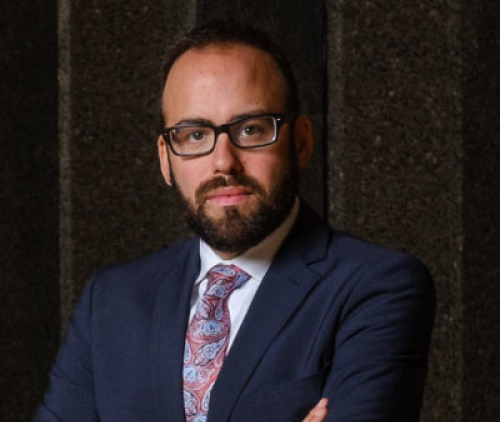
Solomon Friedman Biography: Age, Education, Legal Career & Criminal Defense Work

Solomon Friedman is one of Canada’s most prominent and widely recognized criminal defence lawyers — an Ottawa-based barrister whose career has combined high-profile criminal defence work with significant public advocacy for civil liberties and the rights of accused persons. He is a partner at Edelson Friedman — a boutique criminal defence firm that has established itself as one of the leading practices in Ontario — and a frequent media commentator whose articulate, principled advocacy for the rights guaranteed by the Canadian Charter of Rights and Freedoms has made him a trusted voice in the public debate about criminal justice, police powers, and the legal protection of individual liberty against state authority.
Solomon Friedman Biography
| Full Name | Solomon Friedman |
|---|---|
| Nationality | Canadian |
| Occupation | Criminal Defence Lawyer, Partner at Edelson Friedman |
| Education | University of Ottawa (BA, LLB) |
| Known For | High-profile criminal defence work in Ottawa; civil liberties advocacy; media commentary on criminal justice; cannabis law reform advocacy |
Educational Background and Legal Formation
Solomon Friedman pursued his undergraduate and legal education at the University of Ottawa — an institution with dual French-English bilingual character that sits in Canada’s capital city, giving its graduates particular proximity to the intersection of law and politics that defines the Ottawa professional environment. The University of Ottawa’s Faculty of Law is one of the more distinguished in Canada, with particular strength in constitutional law and public law — areas directly relevant to the civil liberties dimensions of criminal defence practice that would become central to Friedman’s career.
His formation as a criminal defence lawyer was shaped by the specific values that make effective advocacy in this field possible — a genuine commitment to the principle that every accused person is entitled to a full and fair defence, that the state’s power to prosecute must be constrained by robust procedural protections, and that the lawyer who defends unpopular clients or serious charges is performing an essential function in a system that cannot maintain its integrity without it. These values, which are foundational to the rule of law in any liberal democracy, are easy to articulate in the abstract and more demanding to maintain in practice when clients are accused of genuinely serious offences — and Friedman’s career demonstrates sustained commitment to them across a wide range of cases.
He joined what would become Edelson Friedman — initially as an associate and ultimately as a partner — building the practice that has established the firm as one of the most respected criminal defence boutiques in Eastern Ontario. The firm’s focus on criminal defence rather than the full range of legal services that large law firms provide allows its lawyers to develop the depth of specialization in criminal procedure, evidence law, and Charter litigation that effective criminal defence requires.
Criminal Defence Practice and High-Profile Cases
Friedman’s criminal defence practice covers the full range of serious criminal matters — from violent offences and drug trafficking to white-collar crime and regulatory offences — with particular strength in cases that raise complex Charter issues about the admissibility of evidence, the scope of police powers, and the rights of accused persons at various stages of the criminal process. The Canadian Charter of Rights and Freedoms has transformed Canadian criminal law since its adoption in 1982, creating a constitutional framework that gives accused persons significantly stronger procedural protections than existed before, and the litigation of Charter issues has become one of the central skills of effective criminal defence advocacy.
His high-profile cases have attracted media attention and generated significant public discussion about the specific legal issues they raise — about the scope of police powers in specific contexts, about the standards for admissibility of evidence obtained through various investigative techniques, and about the broader implications of specific judicial decisions for the balance between effective law enforcement and the protection of individual rights. These are not merely technical legal questions but questions of genuine public importance about the kind of society Canada wishes to be and the price it is willing to pay — in terms of both public safety and individual liberty — for different balances between state power and individual rights.
Cannabis Law Reform Advocacy
One of the more distinctive dimensions of Friedman’s public profile has been his active advocacy for cannabis law reform in Canada — a position he maintained and publicly argued for years before Canada’s federal government legalized cannabis in 2018. His advocacy in this area drew on both his professional experience with the criminal justice consequences of cannabis prohibition — the disproportionate impact on marginalized communities, the enormous law enforcement resources devoted to cannabis enforcement relative to its social harms, and the specific injustices of criminal prosecution for cannabis possession — and his broader civil liberties commitment to the principle that individuals should be free to make choices about their own bodies and consciousness without criminal sanction.
His advocacy was publicly visible — he wrote and spoke about cannabis policy reform through various media channels, presented his arguments in terms of constitutional rights and evidence-based policy rather than simply personal preference, and maintained his position consistently as the political environment gradually shifted toward the reform that eventually occurred. The legalization of cannabis in Canada — a significant policy change in which public advocacy from multiple directions played a role — represents one area where his public advocacy work contributed to a concrete policy outcome.
Media Presence and Civil Liberties Commentary
Friedman is one of the more visible Canadian criminal lawyers in media — appearing regularly on national television and radio as a commentator on criminal justice issues, legal developments of public interest, and the civil liberties dimensions of policing, security, and law enforcement policy. His media commentary is characteristically direct, well-organized, and principled — he consistently advocates for the primacy of individual rights and Charter protections in his public commentary, bringing the same values that inform his courtroom practice into the public debate.
This media presence serves both his professional profile and a genuine public interest in accessible expert legal commentary on issues that affect every Canadian. Criminal justice, policing, and the legal rights of individuals in their encounters with state authority are subjects that large portions of the Canadian public have direct experience with or genuine interest in, and commentary from lawyers who understand both the technical dimensions and the human consequences of these issues has genuine public value.
Personal Life
Friedman is based in Ottawa, where his law practice is centered. He is known for his engagement with the Ottawa legal and Jewish community — he is an observant Jew whose religious identity is a visible aspect of his public persona and whose community involvement extends beyond his professional practice. He has spoken about how his Jewish values — including the specific Jewish legal tradition’s emphasis on procedural fairness and the protection of the accused — inform his commitment to criminal defence advocacy.
Net Worth
His net worth is not publicly confirmed. A partnership at a successful criminal defence boutique in a major Canadian city, combined with a high-profile practice and media presence, suggests solid professional success. He has not publicly disclosed personal financial details.
Conclusion
Solomon Friedman’s career exemplifies what criminal defence at its best looks like — not merely the technical skill of courtroom advocacy, but a genuine principled commitment to the values that make the institution of criminal defence essential to a free society. His willingness to take on serious cases, to advocate publicly for positions that are sometimes unpopular, and to bring both technical expertise and moral clarity to the public discussion of criminal justice issues makes him one of the more significant figures in Canadian legal culture — someone whose contribution extends from the specific clients he defends to the broader public understanding of why the right to a full and fair defence matters for everyone.
Frequently Asked Questions
What type of law does Solomon Friedman practice?
Criminal defence law, with a focus on serious criminal matters and cases raising Charter of Rights and Freedoms issues about police powers, evidence admissibility, and the rights of accused persons.
What firm is Solomon Friedman a partner at?
Edelson Friedman, a boutique criminal defence firm based in Ottawa that is one of the leading practices in Eastern Ontario.
What public advocacy work is Solomon Friedman known for?
Cannabis law reform advocacy (before Canada’s 2018 legalization) and ongoing civil liberties commentary on policing, criminal justice, and Charter rights.
Where did Solomon Friedman study law?
The University of Ottawa, where he completed both his undergraduate education and his law degree.
How does Solomon Friedman’s Jewish identity connect to his legal work?
He has spoken about how Jewish values — including the Jewish legal tradition’s emphasis on procedural fairness and protection of the accused — inform his commitment to criminal defence advocacy.
Editorial Notice
The biography above is compiled from publicly available sources and is intended for general informational purposes only. At PeopleCabal, we are committed to accuracy — however, public records evolve, and some details may change over time. If you notice anything that requires a correction or update, we welcome you to reach out to us directly.
