
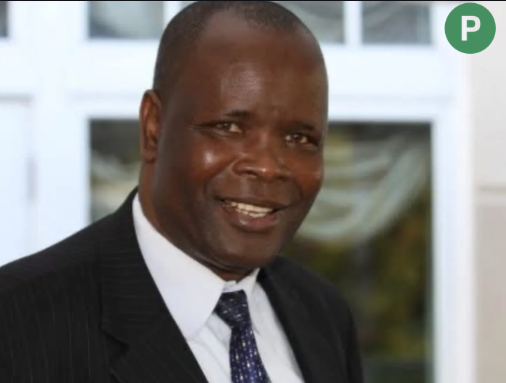

Some public figures live quiet, functional lives in office and leave when their term is done. Peter Ojwang Kaula was not that kind of man. The former Member of the County Assembly (MCA) for Wang’chieng Ward in Karachuonyo, Homa Bay County, was many things: a grassroots politician, a diaspora returnee, a husband — more than once — and ultimately, a man whose personal story went viral across Kenya at the very moment his community gathered to say goodbye to him.
He passed away in late March 2026 after a prolonged illness. His burial, attended by prominent figures including Cabinet Secretary Opiyo Wandayi, did not just honour a local legislator. It became the occasion for a story about love, deception, forgiveness, and the complicated architecture of a man’s life that resonated with Kenyans far beyond the borders of Karachuonyo.
Understanding who Peter Ojwang Kaula was requires looking at both the politician and the person — because in his case, the two were inseparable.
Hon. Peter Ojwang Kaula Biography
| Field | Details |
|---|---|
| Full Name | Peter Ojwang Kaula |
| Also Known As | Hon. Peter Kaula |
| Native Place | Kamwala Village, Karachuonyo, Homa Bay County, Kenya |
| Nationality | Kenyan |
| Ethnicity / Tribe | Luo |
| Religion | Christian |
| Profession | Politician, Community Leader |
| Political Role | Member of the County Assembly (MCA), Wang’chieng Ward, Karachuonyo Constituency, Homa Bay County |
| Political Affiliation | Not publicly confirmed |
| Wives | Mama Patrick (first wife), a second wife, Akinyi (third wife) |
| Children | William Abala (son, raised in the USA), and others |
| Date of Death | Late March 2026 |
| Cause of Death | Prolonged illness |
| Burial Location | Kamwala Village, Karachuonyo, Homa Bay County |
Early Life and Native Place
Peter Ojwang Kaula was born and raised in the Karachuonyo area of Homa Bay County, in Kenya’s Nyanza region — a part of western Kenya that sits along the shores of Lake Victoria and carries a deep, layered history.
His family home was in Kamwala Village, where his burial was later held and where community members and political leaders came to commiserate with his family in the days following his passing.
The specific details of his date of birth, his parents’ identities, and the precise contours of his early childhood are not captured in any publicly verified record — a reality that is true for the vast majority of Kenya’s ward-level elected officials, whose careers unfold far from the national media spotlight. What is documented through community accounts and political records is that he grew up rooted in Karachuonyo, developed a deep bond with its people and its needs, and ultimately chose to serve that community through elected office.
Karachuonyo Constituency is one of eight constituencies in Homa Bay County. Wang’chieng is one of five wards within Karachuonyo — a rural area shaped by agriculture, lake-based livelihoods, and the persistent challenges of development that face much of rural western Kenya. Growing up in this environment would have given Kaula an intimate understanding of what his constituents actually needed: roads, schools, healthcare, economic opportunity, and a representative who showed up.
The Diaspora Chapter: Life in the United States
One of the more striking dimensions of Peter Kaula’s biography is that he spent a significant period of his life in the United States — a chapter that shaped him in ways that would ripple through his personal and public life for years afterward.
The details of when he moved to the US, what he did there professionally, and when he returned to Kenya are not fully documented in public sources. What is confirmed is that he spent enough time there to build relationships, develop a perspective shaped by life outside Kenya, and — crucially — meet and fall in love with the woman who would become his third wife.
He also fathered a son, William Abala, during his time in the diaspora — a son who was raised in the United States and who, by the time of his father’s burial, could not speak the Luo language fluently. That fact, as we will explore further, became a widely shared and tenderly received moment at Kaula’s funeral.
The diaspora experience is a common thread in the lives of many Luo community leaders who have cycled between Kenya and the US, UK, or Australia. But what makes Kaula’s story distinctive is how deeply his American chapter wound itself into the drama of his personal life — and how, ultimately, the story of what happened when he brought that American life back to rural Kenya became the part of his biography that resonated most with ordinary Kenyans.
Political Career: Serving Wang’chieng Ward
Peter Kaula’s formal political career centred on Wang’chieng Ward — one of the five wards in Karachuonyo Constituency. He served as MCA for this ward across two terms in the Homa Bay County Assembly.
His entry into politics was grounded in community advocacy rather than in the conventional pathway of party machinery and elite political networks. Accounts from community members and fellow political leaders consistently describe him as someone who ran on the strength of his personal relationships and his practical understanding of his constituents’ needs.
He is described by those who worked with and alongside him as a “dedicated and visionary leader” whose service genuinely impacted the lives of ordinary residents. Cabinet Secretary Opiyo Wandayi, who attended his funeral, publicly acknowledged him as the “immediate former MCA for Wang’chieng Ward” and offered condolences to his family — a sign of the respect his service commanded beyond his immediate community.
His two terms in the county assembly gave him the opportunity to participate in legislation, oversight, and budget advocacy at the county level — a period long enough to leave visible impact on the ward he represented.
What an MCA Does: Understanding the Role
It is worth briefly explaining what an MCA actually does — because the role is often misunderstood or underestimated.
Kenya’s 2010 Constitution established a devolved system of government with 47 counties, each governed by a county executive (headed by a Governor) and a County Assembly — the legislative arm. MCAs are elected ward representatives who sit in the County Assembly.
Their responsibilities include:
- Passing county legislation and the county budget
- Providing oversight of the county executive and its use of public funds
- Representing their ward’s interests in county-level planning and development decisions
- Acting as a primary contact between constituents and county government
In practice, MCAs are the most locally accountable politicians in Kenya’s entire governance structure. They deal directly with the concerns of thousands of people — borehole construction, school repairs, community health needs, local road maintenance — things that may seem small on the national scale but are transformative in the daily lives of rural communities.
For Wang’chieng Ward, Peter Kaula was the face of that accountability for two full county assembly terms.
His Contribution to Karachuonyo and Homa Bay County
Detailed official records of specific ward-level development projects are not always publicly catalogued in Kenya — particularly for smaller wards — but community testimony and public tributes paint a consistent picture of someone who prioritised practical, people-centred work.
People who knew and worked with Kaula remember him for:
- Youth empowerment initiatives in Wang’chieng Ward, aimed at reducing unemployment and giving young people skills and opportunities
- Infrastructure advocacy, pushing for road improvements, water access, and public facilities within the ward
- Healthcare and education focus, championing the needs of residents in areas where access to public services was limited
- A constituency presence that went beyond election seasons — the kind of consistent, visible engagement that earns genuine community trust
His leadership within the county assembly was noted by peers as people-centred and grounded. He was not a politician who made grand national pronouncements; he was one who showed up in the ward, understood the specific texture of its problems, and worked through the county system to address them.
Tribe and Cultural Identity
Peter Ojwang Kaula was a member of the Luo ethnic community — one of Kenya’s largest and most culturally significant ethnic groups, predominantly based in the Nyanza region and parts of the Rift Valley.
The Luo are known for a rich cultural heritage: a deep tradition of oral storytelling, music (particularly the nyatiti), a history of significant political leadership at the national level, and a community ethic that places high value on collective wellbeing and communal solidarity. The “Ojwang” in his name is a traditional Luo given name — meaning a child born facing downward — reflecting the culture’s practice of embedding birth circumstances and community identity into naming.
His burial at Kamwala Village in Karachuonyo followed Luo traditions of home burial, which hold deep cultural significance: in Luo tradition, the dead are brought home to the land of their ancestors, and the burial ceremony is a community-wide event that draws together family, neighbours, political figures, and the wider clan.
The communal nature of his farewell — attended by county-level politicians, community leaders, and large crowds — reflected both the respect his political service had earned and the strong communal bonds of the Luo culture in which he was raised.
Personal Life: The Family Story That Moved Kenya
The most widely discussed aspect of Peter Kaula’s biography is his personal life — and specifically, the story told by his wife Akinyi at his burial, which spread across Kenyan social media and mainstream digital news outlets within days of the funeral.
The story, as narrated by Akinyi herself, goes like this:
She met Peter Kaula while both were living in the United States. He presented himself to her as a divorced man, free to marry. He even showed her divorce papers — which she examined carefully, she said, because she was not the type to enter a situation blindly. Convinced, and deeply in love with a man she described as significantly older than her, she made the extraordinary decision to abandon her Master’s degree studies and return to Kenya with him.
“When we returned to Kenya, my parents were furious. They could not understand how their ambitious daughter could just leave behind her dreams to follow an older man. I told them this was the man I loved, and that they would eventually learn to love him too,” she said at the burial.
Back in Homa Bay, the truth emerged: Peter Kaula had not only one wife still in the village — Mama Patrick, his first wife — but reportedly a second wife as well. The discovery triggered what Akinyi herself described, with characteristic candour and humour, as “war.”
“I am very dramatic; I caused chaos and even told my husband I would not cook for him,” she recalled.
But the story did not end in bitterness. Friends intervened. Akinyi met Mama Patrick — and was disarmed. “The reason I stayed is because I found a phenomenal woman — don’t joke with Mama Patrick, she is a woman and a half.”
What followed was something that Kenya’s online audience found both remarkable and deeply moving: the two women built not just a functional co-wife relationship, but a genuine friendship. During Kaula’s prolonged final illness, they lived together in one house, taking turns to care for him in hospital. At the burial, Akinyi asked that their bond of love and respect continue even in the absence of their husband.
It is a story of complexity, forgiveness, and love that cuts through any simple narrative — and it is the story that made Peter Kaula’s name known to Kenyans who had never heard of Wang’chieng Ward.
His Illness, Death, and Funeral
Peter Ojwang Kaula died in late March 2026 following a prolonged illness. During his final months, he was cared for by his family — including his wives, who shared the burden of his hospitalisation.
His funeral was held at Kamwala Village in Karachuonyo, Homa Bay County. It was attended by a significant number of mourners — community members, political peers, and public figures including Cabinet Secretary Opiyo Wandayi, who attended the funeral service and publicly paid tribute to him on social media as the “immediate former MCA for Wang’chieng Ward in Karachuonyo Constituency, Homa Bay County.”
Condolence visits to the family home at Kamwala Village were made by political leaders and community members in the days following his passing, with many describing him as a dedicated leader whose service positively impacted many lives.
The Viral Funeral Moment: Akinyi’s Speech
It was Akinyi’s tribute at the burial that transformed a local funeral into a national conversation.
Her account — delivered with raw emotion, honesty, and flashes of genuine humour — captured something that many Kenyans found rare in public discourse: unscripted, unsanitised truth about how a marriage actually unfolds. The complexity of discovering you are a third wife, the fury, the intervention of friends, the discovery of an unexpected sisterhood with a co-wife, the decision to stay and build something together — it was the kind of story that fiction writers aim for and that real life occasionally produces.
The story circulated widely on social media platforms and was covered by major Kenyan digital news outlets including TUKO.co.ke, with the Threads and X communities picking it up and amplifying it significantly. The consensus across comments and responses was not judgment but something closer to admiration — for Akinyi’s honesty, for Mama Patrick’s grace, and for the extraordinary thing the two women had built together in the shadow of a man’s deception.
Whether Peter Kaula himself deserves moral credit for the harmony that ultimately prevailed, or moral responsibility for the deception that created the crisis in the first place, is a question his story leaves open. What is clear is that the women in his life handled it with more grace than most.
The US-Raised Son Who Couldn’t Speak Luo
One more viral moment from Kaula’s funeral deserves recording here, because it speaks to something broader than one family’s story.
William Abala — Peter Kaula’s son who grew up in the United States — delivered a speech at the burial. He openly admitted that he could not speak the Luo language fluently. To manage his tribute, he read parts of the Luo portion of his speech from his phone.
The moment generated warm laughter from the crowd and, later, a broader online conversation about language, diaspora identity, and the responsibilities of parents raising children outside their home countries. Many Kenyans praised William for his honesty and vulnerability in a moment of grief. Others used the moment to call on parents in the diaspora to make deliberate efforts to keep their children connected to their mother tongue and cultural heritage.
It is, in miniature, the story of every diaspora community: the gains of the new world, and what is quietly lost along the way.
Leadership Style and Community Impact
Across the tributes paid to Peter Kaula by community members, political peers, and the public figures who attended his funeral, a consistent portrait emerges.
He was a grassroots politician in the truest sense — someone whose effectiveness depended not on national political connections or media exposure, but on proximity to his constituents and genuine understanding of their lives. In an era when Kenyan politics is often characterised by helicopter politics — leaders who drop in at election time and disappear afterward — Kaula’s consistent community presence was genuinely noted and appreciated.
He was also, by the accounts of those who worked with him, accessible. The MCA role in Kenya is the most locally accountable in the political system, and Kaula appears to have taken that accountability seriously — meeting people, engaging with their problems, and working through the county system to advocate for their needs.
His personal story, whatever its complications, also reveals a man capable of building something durable and real: a family that, despite a deeply fractured beginning, ultimately chose love and solidarity over bitterness.
Net Worth and Financial Background
Peter Kaula’s net worth has not been publicly confirmed and was not a subject of public disclosure during his lifetime. His primary income came from his role as a Member of the County Assembly — a position that carries a government salary and allowances in Kenya, though MCA emoluments are considerably more modest than those of Members of Parliament or county executive officers.
Any additional income from his time in the United States, private business interests, or other sources is not documented in any verified public record. Speculating on figures would be irresponsible, and the available record does not support it.
What is clear is that he lived and died in his community — at Kamwala Village, in the constituency he served — which suggests a man whose life was organised around community, not accumulation.
Religion and Faith
Peter Ojwang Kaula was a Christian. His funeral was described in public announcements as a “Celebration of Life” — a framing commonly used in Kenyan Christian funeral culture that emphasises gratitude and hope over grief alone.
Condolence messages from political colleagues and community members consistently included Christian prayer — asking that God “rest his soul in eternal peace” and grant his family “strength, comfort and divine peace.” His faith appears to have been woven into both his personal life and the communal fabric of how he was mourned.
Conclusion
Peter Ojwang Kaula served Wang’chieng Ward with dedication across two terms in the Homa Bay County Assembly. He was a grassroots politician who prioritised practical development, community welfare, and consistent presence over political grandstanding. His service, though concentrated at the most local level of Kenya’s devolved government, left a real and visible impact on the people he represented.
But the reason his name resonated across Kenya in the days after his death was not his legislative record. It was the extraordinary story that his family told at his burial — of a man who lived a complicated life across two continents, whose deceptions created crises, and whose family responded with a forgiveness and solidarity that most people found genuinely inspiring.
Peter Kaula was, in the end, a fully human figure: political, personal, flawed, and deeply connected to his community. He is survived by his wives and children — and by a story that will be told in Karachuonyo and across Kenya for years to come.
Frequently Asked Questions (FAQs)
1. Who was Peter Ojwang Kaula? Peter Ojwang Kaula was a Kenyan politician who served as Member of the County Assembly (MCA) for Wang’chieng Ward in Karachuonyo Constituency, Homa Bay County. A member of the Luo community, he represented his ward across two terms in the county assembly, focusing on grassroots development, youth empowerment, and community welfare. He passed away in late March 2026 after a prolonged illness.
2. Where was Peter Kaula from? He was from Kamwala Village in Karachuonyo, Homa Bay County, in Kenya’s Nyanza region. This is also where his family home was located and where his burial was held.
3. Who were Peter Kaula’s wives? He had three wives. His first wife, known as Mama Patrick, remained in the village in Kenya. He later married a second wife. His third wife, Akinyi, met him during his time in the United States. At his funeral, Akinyi delivered a widely shared tribute in which she described discovering she was the third wife after returning to Kenya with him, and the unexpected bond of friendship and solidarity she built with Mama Patrick.
4. What happened at Peter Kaula’s funeral that went viral? His third wife, Akinyi, delivered an emotionally raw and candid tribute in which she revealed she had abandoned her Master’s degree in the US to follow him, only to discover on returning to Kenya that he had not been divorced as he claimed. She described the chaos that followed, the intervention of friends, and the extraordinary co-wife friendship she developed with Mama Patrick — including caring for Kaula together during his final illness. Additionally, his US-raised son, William Abala, went viral for openly admitting he could not speak Luo and reading parts of his speech from his phone.
5. What was Peter Kaula’s contribution to his community? During his two terms as MCA for Wang’chieng Ward, Kaula focused on infrastructure development, youth empowerment programmes, healthcare access, and education in his ward. He was consistently described by community members, political peers, and national politicians as a dedicated, people-centred leader whose service positively impacted the lives of ordinary residents in Karachuonyo.
Editorial Notice
The biography above is compiled from publicly available sources and is intended for general informational purposes only. At PeopleCabal, we are committed to accuracy — however, public records evolve, and some details may change over time. If you notice anything that requires a correction or update, we welcome you to reach out to us directly.
