
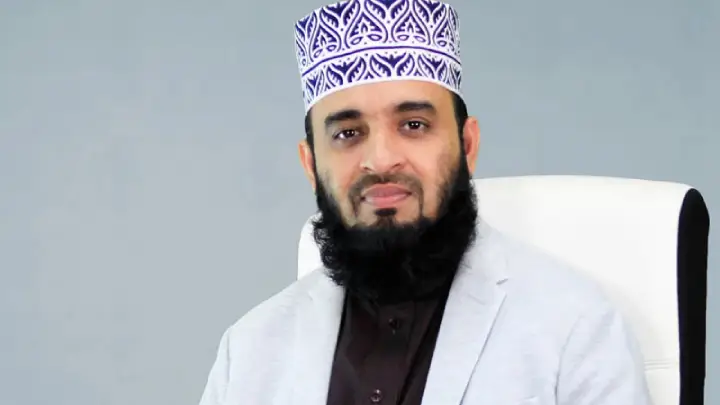
Mizanur Rahman Azhari Biography: Age, Education, Career, Family, and Net Worth

In a country where Islamic discourse has long been shaped by traditional scholars with limited reach beyond local communities, Maulana Mizanur Rahman Azhari represents something different. He is a scholar who blends rigorous academic credentials with an instinctive understanding of how to communicate faith to a generation raised on smartphones and social media. Eloquent in Bangla, Arabic, and English, his Tafseer sessions draw crowds in the tens of thousands, and his digital footprint reaches millions. His story — from a madrasa student in Dhaka to one of Bangladesh’s most recognized religious voices — is as much about personal discipline as it is about divine calling.
Mizanur Rahman Azhari Biography
| Full Name | Mizanur Rahman Azhari |
|---|---|
| Date of Birth | January 26, 1990 |
| Birthplace | Demra, Dhaka, Bangladesh |
| Nationality | Bangladeshi |
| Religion | Islam |
| Occupation | Islamic Scholar, Orator, Educator, Social Reformer |
| Education | Al-Azhar University, Egypt (BA); International Islamic University Malaysia (MPhil, PhD) |
| Known For | Tafseer Mahfils, youth-oriented Islamic discourse, social media preaching |
| Marital Status | Married (January 29, 2014) |
| Children | Two daughters |
Early Life and Background
Mizanur Rahman was born on January 26, 1990, in the Demra area of Dhaka, Bangladesh. His ancestral roots trace back to Muradnagar in Comilla district. His father was a madrasa teacher — a vocation that would prove deeply formative — and his mother was a homemaker who created a household where Islamic education was not merely encouraged but lived.
Growing up in Dhaka during the 1990s, young Mizanur was embedded in a religious educational tradition from an early age. He enrolled in a madrasa, where rote learning and spiritual discipline are the foundations of daily life. For many students, this path leads to a life of local scholarship. For Mizanur, it was the beginning of an extraordinary academic journey that would take him far beyond Bangladesh’s borders.
Education
Mizanur’s academic credentials are among the most distinguished of any contemporary Islamic scholar in Bangladesh. He attended Darunnajat Siddiquia Kamil Madrasa, where he completed both his Dakhil (2004) and Alim (2006) examinations, topping the merit list of the Bangladesh Madrasa Education Board on both occasions — an achievement that is as rare as it is remarkable.
In 2007, he won first place in the Egyptian Government Scholarship Examination organized by Bangladesh’s Islamic Foundation, which earned him a fully funded place at Al-Azhar University in Cairo — the oldest university in the world and still the most prestigious institution for Islamic learning globally. At Al-Azhar, he studied in the Department of Tafsir and Quranic Sciences, graduating in 2012.
Not content to stop there, he pursued advanced academic work at the International Islamic University Malaysia (IIUM). His MPhil research examined human embryology in the Quran — a fascinating intersection of science and scripture — and he subsequently completed a PhD from the same institution. The title “Azhari” affixed to his name is a mark of honor, signifying his graduation from Al-Azhar University, an association that carries enormous weight in the Islamic world.
Career Journey
Mizanur Rahman Azhari began his public engagement with Islamic content around 2010 through Islamic songs and Qirat recitations. He appeared on ATN Bangla TV in an Islamic program, which gave him early exposure to a television audience. By 2015, his career had taken a decisive turn: he began delivering formal Waz-Mahfils (Islamic sermons) and hosted a program called “Islam O Shundor Jibon” (Islam and a Beautiful Life) on Boishakhi Television.
It was his Tafseer sessions, however, that would define his reputation. Azhari’s ability to explain Quranic verses in accessible, conversational Bangla, with references to contemporary issues, resonated profoundly with young Bangladeshis who had grown up feeling disconnected from traditional religious discourse. His sessions are not dry recitations; they are intellectually engaging events that blend scholarship, storytelling, and practical guidance.
His reach expanded dramatically through Facebook and other social media platforms. While he notably avoids a personal YouTube channel, his sermons circulated widely through fan pages and third-party uploads. His Tafseer Mahfils have drawn massive crowds across Bangladesh, with attendance in the hundreds of thousands at peak events.
In February 2020, amid political controversy and scrutiny from pro-government media outlets who accused him of divisive speech, Azhari left Bangladesh. He remained abroad for approximately four and a half years before returning in October 2024, a return that was widely covered by Bangladeshi media and welcomed by his supporters.
Influence and Social Impact
What distinguishes Azhari from many religious scholars in Bangladesh is not just his education but his method. He approaches Islamic discourse as a form of community development. His sermons routinely address moral integrity, family life, social justice, and personal development — themes that resonate equally with educated urban professionals and rural communities. He has been particularly effective at drawing young men and women toward religious engagement who might otherwise have found traditional preaching inaccessible.
In April 2025, he publicly called for a special tribunal against rape — a statement that underscored his willingness to engage with urgent social issues beyond the purely theological. His platform has become, in many ways, a space for civic discourse rooted in Islamic values.
Personal Life
Mizanur Rahman Azhari married on January 29, 2014. The couple has two daughters. He keeps the details of his family life appropriately private, in keeping with the values he espouses in his sermons about family dignity and privacy.
Net Worth
Mizanur Rahman Azhari’s exact net worth is not publicly confirmed. His income streams include honoraria from Tafseer Mahfils, television appearances, and speaking engagements. Given his status as one of Bangladesh’s most prominent religious figures, it is reasonable to assume he has built a modest professional income, though financial disclosure is not customary for Islamic scholars in Bangladesh’s context.
Conclusion
Mizanur Rahman Azhari is among the most consequential Islamic voices of his generation in Bangladesh — not because he shouts the loudest, but because he thinks the most clearly and speaks the most accessibly. His academic journey from Demra to Al-Azhar to Kuala Lumpur, and his return to serve his country’s Muslim community, reflects a rare combination of intellectual ambition and social responsibility. In a region where religious discourse often becomes a vehicle for political division, his consistent emphasis on moral development and human dignity gives reason for genuine optimism.
Frequently Asked Questions
Who is Mizanur Rahman Azhari?
He is a Bangladeshi Islamic scholar, orator, and social reformer known for his youth-oriented Tafseer sessions and extensive social media presence. He studied at Al-Azhar University and holds a PhD from the International Islamic University Malaysia.
What does “Azhari” mean in his name?
The title “Azhari” signifies that he studied at Al-Azhar University in Cairo, Egypt — the world’s oldest university and most prestigious institution for Islamic scholarship. It is a mark of distinction in the Muslim world.
Is Mizanur Rahman Azhari married?
Yes. He married on January 29, 2014, and has two daughters.
Why did Mizanur Rahman Azhari leave Bangladesh in 2020?
He left amid controversy, including scrutiny from pro-government media outlets who criticized some of his sermon content. He returned to Bangladesh in October 2024 after approximately four and a half years abroad.
What is Mizanur Rahman Azhari known for?
He is best known for his Tafseer Mahfils, which blend deep Quranic scholarship with accessible, conversational delivery that resonates especially with younger Bangladeshi Muslims.
Editorial Notice
The biography above is compiled from publicly available sources and is intended for general informational purposes only. At PeopleCabal, we are committed to accuracy — however, public records evolve, and some details may change over time. If you notice anything that requires a correction or update, we welcome you to reach out to us directly.
