
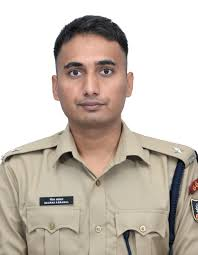

Who Is Gaurav Agarwal? Most UPSC toppers have inspiring stories. Gaurav Agarwal has an unusual one. He didn’t come from a background of struggle or scarcity. He wasn’t fighting against poverty or lack of access. He had already arrived — by most conventional measures — when he chose to walk away and start again.
An IIT Kanpur graduate. An IIM Ahmedabad gold medalist. An investment banker in Hong Kong earning what most Indians can only imagine. And then — he quit. Packed up, flew home, and sat down with UPSC preparation books.
Why? Because something felt missing.
That quiet, deliberate choice — to trade financial comfort for public purpose — is what sets Gaurav Agarwal apart from the crowd of UPSC success stories. In 2013, he didn’t just clear the Civil Services Examination. He topped it. AIR 1. The highest rank in the country. And he did it while making history as the first candidate to cross the 50% marks threshold under the new syllabus format introduced that year.
He’s been a reference point for UPSC aspirants ever since — not just because he topped, but because he shared everything: his notes, his strategy, his failures. That kind of transparency is rare, and it’s earned him lasting respect.
| Gaurav Agarwal | |
|---|---|
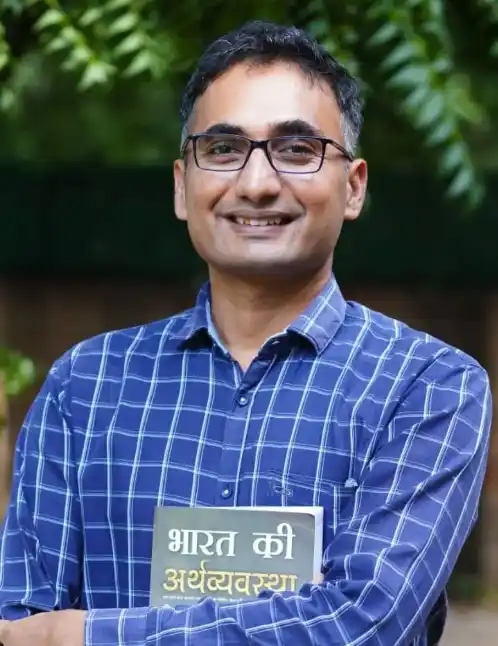 Gaurav Agarwal IAS Biography: What Most People Don’t Know: History · Bio · Photo
|
|
| Wiki Facts & About Data | |
| Full Name: | Gaurav Agarwal |
| Place of Birth: | Jaipur, Rajasthan |
| Occupation: | Investment Banker, Hong Kong |
| Religion: | Hindu |
| Net Worth: | Not publicly confirmed |
| Education: | B.Tech – IIT Kanpur; PGDM (Gold Medal) – IIM Ahmedabad |
| Social / Web: | 📸 @gaurav1agrawal |
Early Life: Growing Up in Jaipur
Gaurav Agarwal was born and raised in Jaipur, Rajasthan — the Pink City, a place known as much for its history as for its hunger to produce achievers in engineering, medicine, and now civil services.
Jaipur has long been fertile ground for competitive exam culture. The city produces a disproportionate number of IIT and IIM entrants, and the academic pressure starts young. Growing up in this environment, Gaurav was clearly someone who thrived under that kind of intellectual rigor.
Details about his parents and family background are not extensively documented in public sources, and he has chosen to keep those aspects of his life private. What’s evident, though, is that he came from a family that valued education deeply — his trajectory from Jaipur to IIT Kanpur to IIM Ahmedabad doesn’t happen without a strong foundational environment.
Education: IIT Kanpur, IIM Ahmedabad & a Gold Medal
This is where Gaurav’s story starts to sound almost cinematic — because his academic record is genuinely exceptional.
He earned his Bachelor of Technology in Computer Science from IIT Kanpur, one of India’s most prestigious engineering institutions. Getting into IIT itself places you in the top fraction of a percent of students in a country of 1.4 billion. Completing a B.Tech in Computer Science from IIT Kanpur puts you in a very specific, very elite category.
But he didn’t stop there. He went on to pursue a Post Graduate Diploma in Management (PGDM) from IIM Ahmedabad — consistently ranked among the top business schools in Asia. And he didn’t just graduate. He graduated as a gold medalist.
Think about what that means. In a room full of India’s sharpest MBA students — people who cleared CAT with near-perfect scores — Gaurav finished first.
It would have been easy to look at that gold medal and decide the story was complete. Many people would have. Gaurav didn’t.
The Hong Kong Chapter: Investment Banking & a Growing Restlessness
After IIM Ahmedabad, Gaurav moved to Hong Kong to work as an investment banker. This is the part of the story that most people gloss over, but it’s actually one of the most important chapters.
Hong Kong’s financial sector is one of the most demanding and lucrative in the world. Working there as an investment banker means long hours, high pressure, complex deals — and compensation that reflects all of that. By any external measure, Gaurav had reached the destination that most IIT-IIM graduates spend their careers chasing.
But something wasn’t sitting right.
Living outside India, in a world of capital markets and corporate transactions, he found himself increasingly disconnected from the social realities of the country he came from. The gap between what he was doing and what he felt he should be doing began to widen.
This isn’t an uncommon feeling among high achievers who grew up in India — but very few act on it the way Gaurav did. He didn’t just feel the disconnect. He made a decision.
The Decision That Changed Everything: Quitting a Dream Job
Gaurav Agarwal quit his investment banking job in Hong Kong, returned to India, and began preparing for the UPSC Civil Services Examination.
Let’s sit with that for a moment.
He walked away from a position that people spend years — sometimes decades — trying to reach. He gave up financial security, international exposure, and the social status that comes with a prestigious global career. He came back to India to study for an exam with a selection rate of less than 0.5%.
Why? Because public service felt more aligned with what he actually wanted to do with his life.
This kind of clarity — knowing what you want and being willing to pay the real price for it — is genuinely uncommon. And it shaped everything about how he approached UPSC preparation. He wasn’t doing this because he had no other options. He was doing it as a deliberate, informed choice. That psychological position matters more than most people realize.
UPSC Preparation: Strategy, Sacrifice & Self-Study
First Attempt: Rank 249 & IPS Trainee
Gaurav’s first UPSC attempt resulted in Rank 249 — good enough to secure the Indian Police Service (IPS). He was already a trainee when he decided to appear again.
Most people would have stopped there. IPS is a prestigious service. Many candidates dream of that rank. But Gaurav knew he wanted the IAS, and he knew he could do better.
Second Attempt: AIR 1 in UPSC CSE 2013
In his second attempt, he secured All India Rank 1 in the UPSC Civil Services Examination 2013, clearing it with a final score of 1041 marks — a combination of 835 in the written examination and 206 in the interview.
His optional subject was Economics — a choice that suited his IIM background and allowed him to leverage genuine depth of knowledge rather than surface-level preparation.
Historic Marks: Breaking the 50% Barrier
Gaurav Agarwal’s 2013 performance wasn’t just a topper story — it was a statistical milestone. He became the first candidate to cross the 50% marks threshold under the new syllabus format introduced that year by UPSC. Here’s how his marks broke down:
| Paper | Marks |
|---|---|
| Essay | 135 |
| GS Paper 1 | 094 |
| GS Paper 2 | 098 |
| GS Paper 3 | 110 |
| GS Paper 4 – Ethics | 102 |
| Economics Optional 1 | 134 |
| Economics Optional 2 | 162 |
| Written Total | 835 |
| Interview | 206 |
| Final Total | 1041 |
What’s striking here isn’t just the total — it’s the consistency. Every paper contributed meaningfully. And that Economics Optional Paper 2 score of 162 is particularly remarkable — it speaks to the depth of his subject knowledge, not just exam technique.
Career Journey: From IAS Probationer to District Collector
After completing his training at the Lal Bahadur Shastri National Academy of Administration (LBSNAA) in Mussoorie, Gaurav Agarwal was allotted to the Rajasthan cadre — bringing him back to his home state.
His career in the IAS has followed the standard trajectory for a promising officer: field postings, district-level administration, and progressively greater responsibility. District-level work in the IAS is where the rubber truly meets the road — it’s where policies become implementation, where governance either works or fails for ordinary people.
Rajasthan is a state with complex administrative challenges: vast geography, significant rural populations, water scarcity issues, and a mix of tribal and non-tribal communities with very different development needs. Working across different districts in this context builds the kind of real-world administrative capacity that no classroom can replicate.
Current Posting: Collector of Udaipur
In a significant reshuffle of district leadership across Rajasthan — involving the transfer of 25 collectors — Gaurav Agarwal was posted as District Collector of Udaipur.
Udaipur is one of Rajasthan’s most important cities — not just as a tourism hub, but as an administrative and economic centre for the southern Rajasthan region. Managing its district collectorate involves overseeing land records, law and order, public welfare schemes, revenue administration, and coordination with multiple state departments.
It’s a posting that signals trust and responsibility. And given Gaurav’s track record, it’s a fitting one.
His Blog & Open-Source Study Strategy
One of the things that has kept Gaurav Agarwal’s name alive in the UPSC community long after his exam — is his personal blog, where he shared his preparation notes, strategy, and insights openly and without any paywall.
In a world where UPSC coaching has become a multi-crore industry, this was a genuinely subversive act. He essentially said: here’s what I did, here’s how I thought about it, take what you need.
His notes on Economics, his approach to Essay writing, his reflections on interview preparation — all of it available freely. This has made him something of a patron saint for self-studying aspirants who can’t afford coaching or who simply want to prepare authentically.
The blog reflects a values system — a belief that public knowledge should be publicly accessible — that aligns naturally with why he chose civil service in the first place.
Leadership Style & Public Service Philosophy
Gaurav Agarwal represents a particular kind of IAS officer — one who entered the service from a position of choice rather than necessity, and who brings intellectual rigor to administrative problems.
His background in economics gives him a specific lens for policy — an understanding of incentives, resource allocation, and systemic effects that complements ground-level administrative work. His time in investment banking, meanwhile, gave him exposure to how institutions function under pressure and how decisions get made in high-stakes environments.
What seems consistent across his public profile is a preference for transparency and sharing — whether in his exam preparation blog or his approach to governance. In a bureaucratic culture that often valorizes opacity, that instinct is worth noting
Personal Life: Family, Faith & Privacy
Gaurav Agarwal has kept his personal life largely out of the public eye, which is entirely his prerogative and fairly standard for serving IAS officers.
He comes from a Hindu family in Jaipur. Beyond that, details about his parents, siblings, spouse, or children are not publicly confirmed in verified sources, and we won’t speculate.
What’s clear is that his family environment supported an exceptional academic and professional journey. And his choice to return to India — rather than building a life abroad — speaks to a set of personal values that go beyond career ambition. 🇮🇳
Net Worth: What We Know
Gaurav Agarwal’s net worth is not publicly confirmed, and no widely verified financial disclosures are available.
His income today comes primarily from his IAS officer’s salary, which follows the 7th Pay Commission pay scales applicable to Indian Administrative Service officers. Senior IAS officers at the District Collector level receive salaries that are comfortable within the Indian government context, though far below what he would have earned continuing in investment banking.
Prior to joining the IAS, he would have accumulated savings from his investment banking years in Hong Kong. But we won’t place a specific number on any of this — that would be speculation dressed as information.
Why Gaurav Agarwal Remains a Reference Point for UPSC Aspirants
Years after his 2013 result, Gaurav Agarwal’s name still appears in virtually every serious UPSC preparation discussion. Why?
Because his story answers a question that many aspirants carry quietly: Can someone who is already successful at something else really crack UPSC? And more specifically: Can someone from an engineering and management background really master humanities and governance subjects?
His answer to both questions — delivered through 1041 marks and a gold medal and a career in public service — is an unambiguous yes.
He also matters because of what he didn’t do. He didn’t commercialize his preparation strategy. He didn’t start a coaching institute. He didn’t monetize his topper status. He just went and did the job he prepared for. That quiet integrity has its own kind of influence.
Social Media & Online Presence
Gaurav Agarwal maintains a modest online presence, consistent with his generally low-key public profile:
- Blog: His personal preparation blog remains one of the most referenced free resources in the UPSC community
- Twitter/X: He has been active on Twitter discussing governance and public policy matters — search @gaurav_agarwal or his name on the platform
- LinkedIn: Professional profile accessible for verified career information
⚠️ His personal contact number is not publicly available, as is standard and appropriate for serving government officers. Official communication can be routed through the District Collectorate, Udaipur.
Conclusion
Gaurav Agarwal’s story is not the typical UPSC underdog narrative — and that’s precisely what makes it valuable. It’s a story about someone who had options, chose public service deliberately, and then brought everything he had — IIT training, IIM rigor, investment banking experience — into a career built around governance and accountability.
From Rank 249 to AIR 1. From Hong Kong boardrooms to Udaipur’s Collectorate. The through-line is consistent: intellectual seriousness, transparency, and a genuine commitment to doing the work.
If you’re preparing for UPSC — find his blog. Read his notes. Not just for the content, but for the mindset.
And if you’re someone wondering whether to make a big, unconventional career pivot — Gaurav’s story is worth sitting with. Sometimes the most rational decision is the one that doesn’t look rational from the outside.
FAQs
1. What rank did Gaurav Agarwal get in UPSC CSE 2013? He secured All India Rank 1 in the UPSC Civil Services Examination 2013, with a total score of 1041 marks.
2. What was Gaurav Agarwal’s optional subject in UPSC? His optional subject was Economics — leveraging his IIM Ahmedabad background to score exceptionally well, including 162 out of 200 in Optional Paper 2.
3. Did Gaurav Agarwal clear UPSC in his first attempt? No. In his first attempt, he secured Rank 249 and was selected for the IPS. He topped in his second attempt in 2013.
4. Where is Gaurav Agarwal currently posted? He has been posted as District Collector of Udaipur, Rajasthan, following a major reshuffle of 25 district collectors across the state.
5. Where can I find Gaurav Agarwal’s UPSC preparation notes? He shared his preparation strategy and notes on his personal blog, which remains freely accessible and is widely referenced in the UPSC community. Search “Gaurav Agarwal IAS blog” to find it
Editorial Notice
The biography above is compiled from publicly available sources and is intended for general informational purposes only. At PeopleCabal, we are committed to accuracy — however, public records evolve, and some details may change over time. If you notice anything that requires a correction or update, we welcome you to reach out to us directly.
