
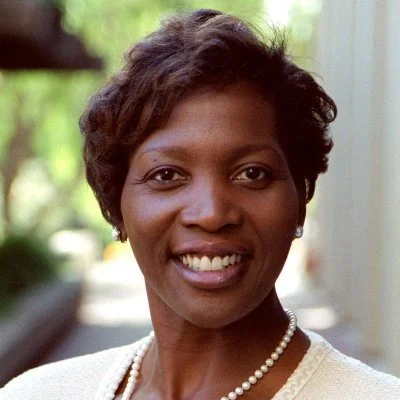

Lisa D. Cook is an American economist whose appointment to the Federal Reserve Board of Governors in 2022 made her the first Black woman to serve in that role in the institution’s 109-year history — a milestone that reflects both the historic underrepresentation of Black economists at the highest levels of American economic policymaking and the exceptional quality of Cook’s own academic and policy work that earned her the appointment. She brings to the Federal Reserve not only technical economic expertise but a research agenda focused on the economics of innovation, race, and economic history that connects monetary policy to the broader questions of who benefits from economic growth and on what terms.
Lisa D. Cook Biography
| Full Name | Lisa Diane Cook |
|---|---|
| Nationality | American |
| Occupation | Federal Reserve Governor, Economist, Academic |
| Education | Spelman College (BA); Oxford University (MLitt); University of California Berkeley (PhD Economics) |
| Known For | First Black woman on Federal Reserve Board of Governors; research on innovation, race, and economic history; Michigan State University professor |
Early Life and Educational Formation
Lisa D. Cook grew up in Eastman, Georgia, in a family that placed enormous value on education and intellectual achievement. Her upbringing in the American South — in a region whose racial history directly shapes the research questions she has spent her career pursuing — gave her both personal motivation and authentic knowledge of the economic dimensions of American racial inequality that her academic work would eventually document and analyze.
She attended Spelman College — one of the most prestigious historically Black colleges and universities in the United States, with a long history of producing scholars, activists, and leaders across multiple fields. Spelman provided her with both an exceptional intellectual education and a community of Black academic women that modeled what was possible in fields where Black women remained dramatically underrepresented. Her undergraduate formation at Spelman was followed by graduate study at Oxford University, where she earned an MLitt — a research degree that expanded her exposure to economic history and comparative political economy beyond the American context.
She earned her PhD in economics from the University of California, Berkeley — one of the world’s leading economics programs — completing the academic formation that would establish her as a research economist of the first rank. Berkeley’s economics department is known for its strength in economic history, labor economics, and development economics, all of which connect to the research agenda Cook has pursued throughout her career.
Academic Career and Research
Cook joined the faculty of Michigan State University’s Department of Economics and Department of International Relations, where she built a research program focused on the economics of innovation, the economic history of race in America, and the relationship between social violence and economic innovation. Her most widely cited research examines how racial violence — specifically, the epidemic of anti-Black violence in the post-Reconstruction period — suppressed Black innovation and economic participation in ways whose effects compound over time and continue to shape economic outcomes today.
Her paper on the relationship between racial violence and patent activity among Black inventors in the early 20th century is one of the more striking contributions to the economics of racial inequality — demonstrating through rigorous economic analysis that the suppression of Black innovation during periods of intense racial violence had measurable, lasting effects on the development of American economic output. This kind of research — which uses the tools of economic analysis to illuminate the economic dimensions of American racial history — sits at the intersection of economic history, political economy, and the contemporary policy debate about the sources and solutions to racial economic inequality.
She has also worked on questions related to economic development in sub-Saharan Africa and on the political economy of bank regulation — research that reflects the international scope of her economic interests alongside her core focus on American economic history and racial economics. She has been recognized within the economics profession as one of the more innovative and consequential contributors to the study of the economic dimensions of race, innovation, and historical violence.
Policy Work and Presidential Councils
Before her appointment to the Federal Reserve, Cook served in various policy advisory roles. She was a senior economist on the White House Council of Economic Advisers during the Obama administration, bringing her academic expertise to bear on real-time policy questions — an experience that extended her understanding of how economic research translates into policy decisions and sharpened her ability to communicate economic analysis to non-specialist audiences.
She has been a fellow at the Brookings Institution and has engaged with policy-relevant research institutions throughout her career, maintaining a presence in policy debates that goes beyond the typical academic economist’s engagement with the public sphere. This sustained policy engagement, combined with the quality of her academic research, made her a natural choice for a Federal Reserve appointment when the Biden administration was building a board that more closely reflected the diversity of the American economy and population.
Federal Reserve Board of Governors
Cook was confirmed to the Federal Reserve Board of Governors in May 2022 — the first Black woman to serve in that role in the Federal Reserve’s history. The Board of Governors is the principal governing body of the Federal Reserve System, responsible for setting the interest rates and reserve requirements that shape monetary conditions across the American economy. Her confirmation vote reflected strong support from Democratic senators and some bipartisan acknowledgment of her qualifications, though her nomination had faced partisan opposition that delayed her confirmation.
As a Federal Reserve Governor, Cook participates in the Federal Open Market Committee (FOMC) — the body that sets the Federal funds rate and through it the monetary policy conditions that affect inflation, employment, and economic growth across the United States. Her votes and her public communications about monetary policy carry the institutional weight of one of the most powerful economic policy institutions in the world.
Her research background gives her a distinctive perspective on monetary policy — one informed by deep knowledge of how the structure of the American economy, including its racial dimensions, shapes the distributional effects of monetary policy decisions. The question of how monetary tightening affects different segments of the labor market — including the specific question of whether Black workers bear disproportionate costs when the Fed tightens conditions to control inflation — is one that her research background makes her particularly well-positioned to analyze.
Personal Life
Cook keeps her personal life largely private, consistent with the professional norms of senior Federal Reserve officials who maintain careful boundaries between their institutional roles and their personal identities. She is based in Washington, D.C., in her role as Federal Reserve Governor, and maintains her academic connections to Michigan State University.
Net Worth
Her net worth is not publicly confirmed. Federal Reserve Governors receive government salaries set by statute, which are competitive but not at the level of private sector financial positions. Her academic career and policy work have provided financial stability rather than wealth accumulation.
Conclusion
Lisa D. Cook’s career represents the kind of genuine, cumulative achievement — exceptional academic formation, important research contributions, sustained policy engagement, and ultimately appointment to one of the most consequential economic policy institutions in the world — that the phrase “historic first” tends to flatten into a single biographical fact. She is the first Black woman to serve on the Federal Reserve Board, yes. She is also an economist whose research has made important contributions to understanding the economics of race and innovation in America. Both things are true, and the second is the foundation on which the first rests.
Frequently Asked Questions
What historic milestone did Lisa D. Cook achieve?
She became the first Black woman to serve as a member of the Federal Reserve Board of Governors, confirmed in May 2022.
What is Lisa D. Cook’s primary research focus?
The economics of innovation, racial violence and its economic effects, economic history of race in America, and the relationship between social violence and economic participation and innovation.
Where did Lisa D. Cook earn her PhD?
The University of California, Berkeley, in economics.
Where did Lisa D. Cook teach before joining the Federal Reserve?
Michigan State University’s Department of Economics and Department of International Relations.
What policy role did Lisa D. Cook hold during the Obama administration?
She was a senior economist on the White House Council of Economic Advisers.
Editorial Notice
The biography above is compiled from publicly available sources and is intended for general informational purposes only. At PeopleCabal, we are committed to accuracy — however, public records evolve, and some details may change over time. If you notice anything that requires a correction or update, we welcome you to reach out to us directly.
