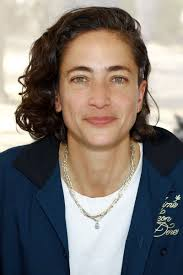

Paola Ramos is a journalist, author, and television correspondent whose career has been dedicated to documenting and amplifying the stories of Latino communities in the United States — particularly the communities that mainstream media, even Spanish-language mainstream media, tends to overlook. Her reporting on Afro-Latinos, indigenous Latinos, Latino LGBTQ+ communities, rural Latinos, and others who fall outside the dominant images of Latino identity has given her a distinctive and increasingly important position in American political and cultural journalism. She is the daughter of Jorge Ramos — one of the most prominent journalists in Spanish-language media — but she has built her own reputation and her own audience through work that is genuinely and recognizably her own.
Paola Ramos Biography
| Full Name | Paola Ramos |
|---|---|
| Nationality | American (Cuban-Mexican heritage) |
| Occupation | Journalist, Author, Television Correspondent |
| Education | Mount Holyoke College (BA); Harvard Kennedy School (MPP) |
| Known For | Vice News correspondent; “Finding Latinx” book; Univision contributor; LGBTQ+ identity and Latino community coverage |
Early Life and Bicultural Background
Paola Ramos grew up navigating multiple cultural identities — the daughter of Jorge Ramos, the Mexican-American journalist and Univision anchor, and a Cuban mother, giving her family roots in two of the largest Latino communities in the United States while growing up within the specific cultural world of Miami’s Cuban-American community and the broader Spanish-language media environment her father inhabited. This bicultural background gave her both a personal understanding of Latino identity’s complexity and a direct exposure to the world of Latino journalism that would eventually define her professional life.
She attended Mount Holyoke College — one of the Seven Sisters colleges, with a long tradition of educating women who go on to leadership roles across multiple fields — where she developed the analytical and communication skills that her subsequent journalism career would build on. She then pursued graduate education at Harvard Kennedy School, earning a Master in Public Policy — a credential that reflects her understanding that effective journalism about political and social issues requires genuine engagement with the policy frameworks that shape those issues, not merely the ability to describe them.
Her time at Harvard also brought her into contact with the political policy networks that led to her working in the 2016 Hillary Clinton presidential campaign — serving as a deputy director in the campaign’s Hispanic media and outreach operations. This direct experience in electoral politics gave her both practical knowledge of how political campaigns engage (and frequently disengage) with Latino communities and a critical perspective on the gap between political rhetoric about Latino voters and the actual diversity of experience and opinion within those communities.
Journalism Career: Finding the Invisible
Ramos joined Vice Media and became a correspondent for Vice News, where she built the reporting franchise that would eventually become “Finding Latinx” — both the name of her reporting series and the title of her first book. Her journalism focused consistently on the Latino communities that fall outside the dominant stereotypes and mainstream narratives — communities whose existence complicates the simple political and demographic narratives that commentators and campaigns typically apply to Latinos as a monolithic group.
Her reporting on Afro-Latino communities — people who identify as both Black and Latino, navigating both identities in a country that rarely makes space for their complexity — brought important visibility to communities whose experiences at the intersection of anti-Black racism and anti-Latino discrimination are rarely examined with the depth they deserve. Her coverage of indigenous Latinos — people whose primary cultural and sometimes linguistic identity is rooted in specific indigenous traditions rather than the Spanish-colonial overlay that most Americans associate with Latino identity — similarly illuminated communities that mainstream media rarely reaches.
She has also reported extensively on LGBTQ+ Latinos — a community whose experience navigating between Latino cultural traditions that may not fully embrace LGBTQ+ identities and broader American LGBTQ+ spaces that may not fully understand Latino experience is one of particular personal and professional relevance for Ramos, who is herself openly gay. Her willingness to bring her own identity into her reporting — not as a performance of vulnerability but as a source of access and understanding — has given her coverage of LGBTQ+ Latino communities a depth that purely external journalism could not achieve.
“Finding Latinx” and Political Analysis
Her book “Finding Latinx: In Search of the Voices Redefining Latino Identity” (2020) synthesized years of reporting into an argument about the extraordinary diversity of the Latino community in the United States — about the inadequacy of treating “Latino” as a single political or cultural identity, about the specific communities that are overlooked even within Latino media and advocacy, and about the political implications of this diversity for parties and campaigns that continue to treat the Latino vote as a monolithic, predictable block. The book received strong reviews for its reporting depth and its willingness to complicate easy narratives, and it established Ramos as a significant voice in the conversation about Latino identity and political power in America.
She has been a contributor to Univision and has appeared on various political and news programs as a commentator on Latino political and cultural issues. Her dual background — in both journalism and political campaign work — gives her a perspective that combines journalistic skepticism with practical understanding of how politics actually operates in relation to Latino communities.
Personal Life
Ramos is openly gay and has spoken and written about navigating her sexual identity within the context of her Latino family background and the specific cultural expectations of those communities. This personal experience directly informs her reporting on LGBTQ+ Latino communities and gives her coverage an authenticity that pure journalistic distance cannot provide. She is based in the United States and maintains an active presence in both English-language and Spanish-language media.
Net Worth
Her net worth is not publicly confirmed. Her income comes from journalism, book royalties, speaking engagements, and her media work. She is not known as a financially wealthy figure, and her public identity is built around journalistic credibility rather than commercial success.
Conclusion
Paola Ramos has built her journalism career on the conviction that the stories most worth telling are often the ones most systematically ignored — not just by mainstream media but even by the media that claims to speak for the communities involved. Her work on the diversity within diversity of the Latino experience in America has made visible what is genuinely invisible in most political and cultural coverage, and has done so with the depth of reporting that comes from treating subjects as complex human beings rather than demographic categories. In a journalism landscape that tends to simplify everything, that commitment to complexity is both rare and valuable.
Frequently Asked Questions
Who is Paola Ramos’s father?
Jorge Ramos, the prominent Univision anchor and journalist widely regarded as the most influential voice in Spanish-language media in the United States.
What is “Finding Latinx” about?
Ramos’s 2020 book argues for the extraordinary diversity within the Latino community in the United States, particularly focusing on communities — Afro-Latinos, indigenous Latinos, LGBTQ+ Latinos — that mainstream media and even Latino media tends to overlook.
Where did Paola Ramos study?
Mount Holyoke College (BA) and Harvard Kennedy School (Master in Public Policy).
What campaign did Paola Ramos work on?
The 2016 Hillary Clinton presidential campaign, where she served as a deputy director in Hispanic media and outreach operations.
Is Paola Ramos openly gay?
Yes — she is openly gay and this identity informs her reporting on LGBTQ+ Latino communities, giving her coverage a personal authenticity and depth.
Editorial Notice
The biography above is compiled from publicly available sources and is intended for general informational purposes only. At PeopleCabal, we are committed to accuracy — however, public records evolve, and some details may change over time. If you notice anything that requires a correction or update, we welcome you to reach out to us directly.
