
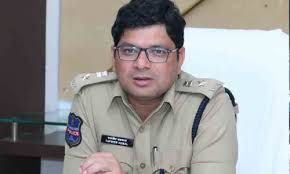

There are police officers, and then there are officers who leave a mark that outlasts their posting. Tafseer Iqbal IPS belongs firmly in the second category. As a senior Indian Police Service officer with decades of front-line experience, he has navigated some of the most complex law enforcement challenges in Telangana — a state that sits at the crossroads of rapid urbanization, communal sensitivity, and dynamic political activity.
What makes Tafseer Iqbal stand apart isn’t just the ranks he has held or the zones he has managed — it’s how he held them. Hyderabad, one of India’s most densely populated and historically layered cities, demanded a commanding yet measured presence. And by most accounts, that’s precisely what Tafseer Iqbal IPS delivered during his tenure as Additional Commissioner of Police for Law & Order, South Range.
This biography takes a close look at who he is, where he came from, and why his career in the IPS continues to attract public attention.
| Tafseer Iqbal | |
|---|---|
|
|
|
| Wiki Facts & About Data | |
| Full Name: | Tafseer Iqbal |
| Date of Birth: | August 2, 1968 |
| Age: | 58 years (as of 2026) |
| Nationality: | Indian |
| Occupation: | Indian Police Service (IPS) Officer |
| Religion: | Islam |
| Relationship: | Married |
Early Life and Background
To understand Tafseer Iqbal, you have to understand the India he grew up in. Born on August 2, 1968, he came of age during a period when the civil services — and especially the Indian Police Service — represented one of the most respected and aspirational career paths a young person from a middle-class or modest background could pursue.
India in the late 1960s and 70s was a country still finding its economic footing. The IPS wasn’t just a job — it was a calling. And for families who valued discipline, public service, and intellectual rigor, it was the highest form of professional achievement.
While specific details about Tafseer Iqbal’s parents, tribal affiliation, and hometown are not widely documented in verified public records, what we do know is that his path to becoming an IPS officer was a product of sustained ambition and preparation. The civil services examination in India is notoriously demanding — it tests everything from general knowledge to analytical reasoning to ethical judgment. The fact that he cleared it and entered the 2008 IPS batch speaks volumes about the kind of focused individual he is.
His religious identity — Islam — is a part of who he is, and in the context of his posting in Hyderabad (a city with deep Islamic cultural roots), it adds an interesting dimension to how he likely connected with communities on the ground. That said, his career has never been defined by religious identity — it has been defined by professional excellence.
Education: The Academic Path That Shaped a Future Officer
The IPS selection process is one of the most competitive in the world. Candidates must clear the UPSC Civil Services Examination, which includes a preliminary test, a mains examination covering multiple papers, and a rigorous personality interview. Only those with strong academic foundations, broad intellectual awareness, and emotional resilience tend to make it through.
Tafseer Iqbal cleared this process and was allocated to the 2008 batch — a batch that has since produced some of Telangana’s most prominent law enforcement officers.
While the precise name of his undergraduate institution hasn’t been confirmed through public records, candidates who clear UPSC typically hold at minimum a bachelor’s degree. Given his depth in law enforcement roles that require legal knowledge, administrative understanding, and on-ground intelligence work, his academic background clearly served him well.
What education gives an IPS officer isn’t just knowledge — it’s a framework for thinking. And in Tafseer Iqbal’s career, that framework has been applied consistently in high-pressure, high-visibility situations.
Career Journey: From Probation to One of Hyderabad’s Top Posts
The Early Years: Entering the Service
Every IPS officer begins the same way — with training at the Sardar Vallabhbhai Patel National Police Academy (SVPNPA) in Hyderabad. This phase is intense and transformative. Officers are exposed to everything from firearms handling and physical fitness to criminal law, human rights, and crisis management.
After completing training, Tafseer Iqbal was assigned to the Telangana cadre — a posting that would define much of his professional life. Telangana, carved out as India’s 29th state in 2014 from Andhra Pradesh, presented a unique set of challenges. From managing the administrative transition to dealing with law and order issues in a rapidly growing metropolis, the officers who served in these early years had to adapt quickly.
For someone like Tafseer Iqbal, this was both a test and an opportunity.
Rising Through the Ranks: Key Milestones
The path from a junior IPS officer to Additional Commissioner of Police (Law & Order) is not a short one. It involves years of posting across different districts, handling everything from rural policing to urban crowd control. Each role builds on the previous one, gradually exposing an officer to more complex and politically sensitive situations.
Over the course of his career, Tafseer Iqbal IPS demonstrated consistency — which, in the world of government service, is perhaps the most underrated quality. Being reliable, professional, and result-oriented in a system that often rewards political connections over merit is no small feat.
His journey included responsibilities across multiple departments within the Telangana police structure before he reached the position that brought him the most public attention.
The Hyderabad Posting: Managing a City Within a City
Hyderabad isn’t just a city — it’s a mosaic. Ancient mosques sit beside gleaming IT campuses. Historic neighborhoods like Charminar and Golconda attract millions of tourists while also requiring careful community policing due to their cultural sensitivity. Meanwhile, rapidly developing areas like Rajendranagar and Shamshabad — home to the Rajiv Gandhi International Airport — demand a very different kind of law enforcement approach.
As Additional Commissioner of Police (Law & Order) for the South Range, Tafseer Iqbal was responsible for all of this. His jurisdiction included:
- Shamshabad — Airport zone, high security, logistical complexity
- Golconda — Heritage zone, sensitive from a communal perspective
- Rajendranagar — Rapidly urbanizing residential area
- Charminar — Historic, densely populated, and culturally significant
Managing four such distinct zones simultaneously requires more than just authority. It requires local knowledge, political sensitivity, crisis management skills, and the ability to maintain trust across communities that may have very different relationships with law enforcement.
What His Role Actually Involved
People often hear “Additional Commissioner” and think of a desk job with paperwork. The reality, especially in a city like Hyderabad, is far more dynamic. Here’s what the role typically encompasses:
- Coordinating law and order during religious festivals, political rallies, and VIP movements
- Supervising multiple police stations across the jurisdiction
- Reviewing crime data and setting investigative priorities
- Community engagement — meeting with local leaders and residents to build trust
- Crisis response — being on the ground when situations escalate
For Tafseer Iqbal, these weren’t abstract responsibilities. Hyderabad sees major religious events throughout the year — from Eid gatherings near Charminar to Ganesh Chaturthi processions that pass through sensitive zones. Each of these requires meticulous coordination and a calm hand at the top.
Leadership Style: Reading Between the Lines
One of the most interesting things to analyze about Tafseer Iqbal IPS is his leadership approach — though admittedly, much of this must be inferred from the nature of his postings and public outcomes rather than direct statements.
The fact that he was given charge of the South Range Law & Order — arguably one of the more politically and communally sensitive zones in Hyderabad — suggests that his superiors trusted him with complexity. In Indian policing culture, officers who are given sensitive postings are typically those who have demonstrated a combination of toughness and restraint. Too rigid, and you create friction. Too lenient, and order breaks down.
Tafseer Iqbal’s placement suggests he was seen as someone who could hold both — and that’s a rare quality.
Balancing Community Relations and Enforcement
Officers posted in areas like Charminar know that heavy-handed policing can quickly become a political issue. At the same time, insufficient enforcement invites disorder. Walking this tightrope effectively requires a nuanced understanding of local dynamics — who the community leaders are, what the historical flashpoints have been, and where proactive intervention can prevent larger crises.
Based on his sustained posting and the trust placed in him by the Telangana police hierarchy, it’s fair to say that Tafseer Iqbal IPS handled this balance well during his tenure.
Personal Life: Family, Faith, and Privacy
Senior IPS officers generally keep their personal lives firmly out of the public eye, and Tafseer Iqbal is no exception. This is both understandable and appropriate — the nature of their work often makes privacy a safety consideration, not just a personal preference.
What is publicly known is that he is married. Beyond that, details regarding his wife, children, or other family members are not confirmed through verified public sources and are therefore not included here. Writing speculatively about a public official’s family would be irresponsible and, frankly, disrespectful.
His religious identity as a Muslim is relevant in the context of his Hyderabad posting — a city with one of India’s largest Muslim populations — but it’s worth emphasizing that his career has been defined by professional performance, not by any particular communal lens.
He was born in August 1968, which makes him 58 years old as of 2026. At that age, and with decades of service, officers of his caliber typically begin to look toward retirement or senior advisory roles — though many continue in active service until the mandatory retirement age.
On Contact Information
Multiple websites list supposed “contact numbers” for IPS officers. It’s important to be clear: the official contact for any IPS officer or police department should only be sought through official Telangana Police channels or verified government portals. Unofficial numbers circulated online are frequently inaccurate or potentially harmful.
If you need to contact the Hyderabad Police for legitimate purposes, visit the official Telangana Police website at www.tspolice.gov.in.
Net Worth: What We Know and What We Don’t
Let’s be direct about this: the net worth of Tafseer Iqbal IPS has not been publicly confirmed through any official or credible financial disclosure.
What we can say with confidence is that his income is primarily derived from his government salary as an IPS officer — which, at the level of Additional Commissioner of Police, is a senior pay grade under the 7th Pay Commission framework used by Indian states.
Senior IPS officers in India typically earn a base salary in the range of ₹1.5 lakh to ₹2.5 lakh per month, plus allowances, accommodation, and other government benefits. Over a career spanning nearly two decades, this adds up to a stable and respectable income — though it’s not comparable to private sector earnings.
Any figure you see cited as his “net worth” on unofficial biography sites should be treated with skepticism unless verified by official disclosures.
Tafseer Iqbal IPS and the Bigger Picture of Telangana Policing
Tafseer Iqbal’s career exists within a broader institutional story — the evolution of the Telangana Police as an independent force after the state’s formation in 2014.
Before bifurcation, the unified Andhra Pradesh Police was one of India’s larger state forces. The division created not just administrative challenges but real identity questions — what would the new Telangana force stand for? How would it handle its unique law and order challenges, particularly in Hyderabad, which technically serves as a joint capital with Andhra Pradesh under a transition arrangement?
Officers like Tafseer Iqbal, who were experienced and already embedded in the system, became critical pillars of the new structure. Their institutional knowledge, operational experience, and relationships with local communities made them invaluable during a period of significant transition.
Hyderabad: The City That Never Gets a Break
It would be unfair to discuss Tafseer Iqbal’s career without giving proper context to just how challenging Hyderabad is as a posting. This city of over 10 million people hosts:
- Multiple major religious festivals from different faiths
- One of India’s busiest international airports
- A thriving IT sector that attracts global attention and investment
- A historic old city with deep-rooted communal sensitivities
- Regular political activity given its status as a state capital
Managing law and order here isn’t just about patrolling streets. It’s about anticipating problems before they become crises, coordinating with intelligence units, engaging with civil society, and ensuring that one of India’s most visible cities maintains its image as a place of safety and opportunity.
That Tafseer Iqbal held a key role in this environment speaks to both his capabilities and the institutional confidence placed in him.
Tribe, Regional Identity, and Cultural Context
In Indian public discourse, the question of “tribe” or regional community often comes up in profiles of public figures. While Tafseer Iqbal’s specific tribal or community background has not been officially documented in verified sources, his Muslim identity and Telangana cadre placement situate him within a rich and complex social context.
Telangana has a significant Muslim population, particularly in Hyderabad, where communities trace their roots back to the era of the Nizams — one of India’s most powerful pre-independence ruling dynasties. An IPS officer with a Muslim background serving in these historically Muslim-majority zones brings a particular kind of cultural literacy to the role.
This isn’t about religious favoritism — it’s about empathy and understanding. Good policing requires knowing your community. And for Tafseer Iqbal, his background likely made him more attuned to the nuances of community policing in areas like Charminar and Golconda.
Social Media and Public Presence
Unlike politicians or entertainers, IPS officers rarely maintain high-profile public social media accounts — and for good reason. The nature of intelligence and law enforcement work requires a degree of professional distance from public platforms.
At the time of writing, Tafseer Iqbal IPS does not appear to maintain a verified personal social media account. However, news about his postings and professional activities can often be found through:
- Telangana Police official social media pages — @TelanganaCOPs on Twitter/X
- Hyderabad City Police — @hydcitypolice on Twitter/X
- Regional Telugu and Urdu news portals that cover law enforcement beats
If you’re looking to follow updates related to his work or the Hyderabad Police broadly, these are the most reliable official channels.
What Sets Tafseer Iqbal Apart: A Genuine Assessment
After reviewing what’s publicly known about Tafseer Iqbal IPS, a few things stand out that set him apart from the average public official profile:
Longevity in a demanding cadre. Telangana — and especially Hyderabad — is not an easy posting. Officers who sustain careers at senior levels in this environment have earned it through consistent performance.
Trust from the institution. The specific zones he was given to oversee — Charminar, Golconda, Shamshabad, Rajendranagar — are among the most complex in the state. That assignment reflects significant institutional confidence.
Professional discipline. The fact that there are minimal controversies associated with his name in public records suggests an officer who has navigated a politically complex environment with care.
Cultural fluency. Serving in Hyderabad’s old city areas with his background, Tafseer Iqbal likely brought a depth of cultural understanding that goes beyond what a textbook or training manual can teach.
These qualities don’t make headlines the way controversies do. But they’re exactly what makes a career worth writing about.
Height and Physical Appearance
Specific details about Tafseer Iqbal’s height have not been confirmed through any verified public source. IPS officers are required to meet a minimum height standard during the physical fitness assessment as part of the UPSC selection process — typically 165 cm (5’5″) for male candidates. Beyond this baseline, his exact physical measurements are not matters of public record.
A Legacy Built in the Field
At 58 years old and nearing the end of a distinguished service career, Tafseer Iqbal IPS represents something that’s increasingly rare in public service: a career built on sustained, unglamorous competence. Not every officer becomes a commissioner. Not every officer gets flashy headlines. But the officers who quietly hold cities together, who coordinate the invisible machinery of safety in a place like Hyderabad — those are the ones who leave real legacies.
The areas he oversaw — Charminar, Golconda, Shamshabad, Rajendranagar — have millions of residents whose daily sense of safety was, in some measure, shaped by decisions made under his watch.
That’s not a small thing.
Conclusion
Tafseer Iqbal IPS may not be a household name outside of law enforcement circles, but within the world of Telangana policing, his career represents exactly the kind of steady, professional service that makes governance work. His journey from the 2008 batch to one of Hyderabad’s most consequential law and order roles reflects years of disciplined work in a system that rewards patience, integrity, and adaptability.
What’s perhaps most admirable is what isn’t in his story — no major controversies, no viral moments for the wrong reasons, no scandals attached to his name. In an era where the news cycle rewards the dramatic, an officer who simply does his job — and does it well — is worth acknowledging.
His contribution to Telangana’s law enforcement landscape, particularly in the complex communal and urban geography of Hyderabad’s South Range, is a chapter in the larger story of how India’s police forces evolve in a democratic, pluralistic society.
Frequently Asked Questions (FAQs)
1. Who is Tafseer Iqbal IPS? Tafseer Iqbal is a senior Indian Police Service officer belonging to the 2008 batch, Telangana cadre. He is best known for his role as Additional Commissioner of Police (Law & Order) for the South Range in Hyderabad, overseeing key zones including Charminar, Golconda, Shamshabad, and Rajendranagar.
2. How old is Tafseer Iqbal IPS? He was born on August 2, 1968, making him 58 years old as of 2026.
3. What is Tafseer Iqbal IPS’s religion? Tafseer Iqbal is Muslim. His religious background and his posting in Hyderabad’s historically Muslim-majority areas added a layer of cultural understanding to his law enforcement work.
4. What is the net worth of Tafseer Iqbal IPS? His net worth has not been publicly confirmed. His income is primarily from his government salary as a senior IPS officer under the 7th Pay Commission framework.
5. How can I contact Tafseer Iqbal IPS? Unofficial contact numbers found online are unreliable and potentially harmful. For legitimate law enforcement matters, contact the Telangana Police through their official website: www.tspolice.gov.in or reach Hyderabad City Police via their verified social media handles.
Editorial Notice
The biography above is compiled from publicly available sources and is intended for general informational purposes only. At PeopleCabal, we are committed to accuracy — however, public records evolve, and some details may change over time. If you notice anything that requires a correction or update, we welcome you to reach out to us directly.
