
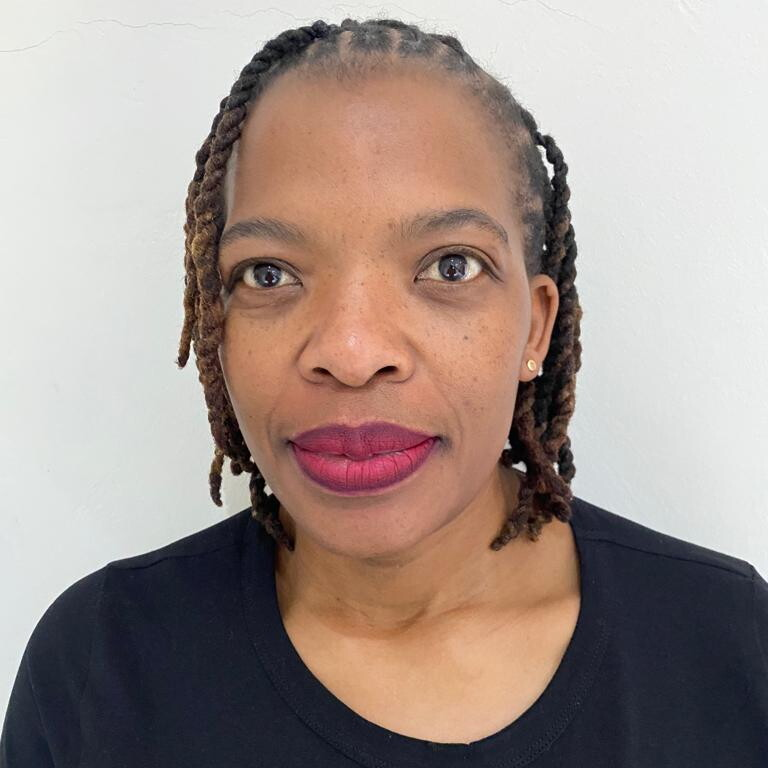

There are leaders who rise through institutions, and then there are leaders who reshape them entirely. Zingiswa Phyllis Losi belongs firmly in the second category. Born in the working-class townships of the Eastern Cape, she climbed from factory shop floors to the presidency of South Africa’s most powerful trade union federation — and did it as a woman in a space that had never seen one lead before.
Her story isn’t a smooth, straight line. It’s full of ideological battles, union politics, unexpected career pivots, and a quiet, determined resilience that has earned her both admiration and controversy. Understanding who Zingiswa Losi is means understanding something fundamental about modern South Africa: that its most important changes often come not from parliament, but from organised labour.
| Zingiswa Phyllis Losi | |
|---|---|
|
|
|
| Wiki Facts & About Data | |
| Full Name: | Zingiswa Phyllis Losi |
| Date of Birth: | 2 October 1975 |
| Age: | 50 years old |
| Place of Birth: | KwaZakhele, Eastern Cape, South Africa |
| Nationality: | South African |
| Occupation: | Trade Unionist, Politician |
| Religion: | Not publicly confirmed |
| Tribe: | Xhosa |
| Children: | Two adult daughters |
Early Life in the Eastern Cape Townships
Zingiswa Losi entered the world on 2 October 1975 in KwaZakhele — a township outside Port Elizabeth (now Gqeberha) in what was then the Cape Province. When she was barely a year old, her family relocated to nearby New Brighton, another township in the same municipality. It’s a detail that might seem minor, but it matters: New Brighton and KwaZakhele were — and remain — deeply working-class communities with strong traditions of resistance, solidarity, and political consciousness.
Think of it this way: if character is partly shaped by geography, Zingiswa Losi was shaped by one of the most politically charged corners of South Africa. The Eastern Cape is the birthplace of many liberation movement giants, and that heritage was very much alive in the streets where she grew up.
She was the eighth of nine children in the Losi household — a large family by any standard. Among those siblings, she has a twin sister named Zamela, a detail that adds a layer of warmth to what is often a formal political biography.
Family Background and Political Roots
Her parents were ordinary people doing extraordinary things to keep a family together under apartheid. Her father, Graham Mzwandile Losi, worked as a general assistant at a hospital before later becoming a debt collector at a furniture store. Her mother, Vuyiswa Esther Losi, was a domestic worker who also eventually found work as a general assistant at a hospital.
These were not wealthy or politically prominent people in the conventional sense. But politics came to them anyway. Two of Zingiswa’s elder siblings went into exile in 1985 and 1986 as part of the anti-apartheid movement — a decision that would have been agonising and deeply consequential for the entire family.
Growing up in this environment, it’s perhaps unsurprising that Zingiswa herself became politically active as a teenager. She joined the Congress of South African Students (COSAS) and the ANC Youth League, embedding herself in the struggle politics of the late 1980s and early 1990s. For many South African youth of that era, political involvement wasn’t a career choice — it was simply what you did.
Education: A Path Marked by Detours
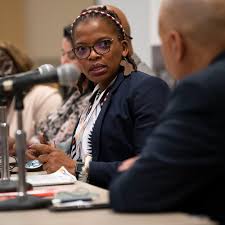
Losi’s educational journey reflects the realities facing many young South Africans: potential interrupted by circumstance. She attended Phendla Lower Primary School and Phillip Nikiwe High School in New Brighton before completing her matric at Ithembelihle Senior Secondary School.
After matriculating, she enrolled at the University of South Africa (UNISA) in 1995 to study economics. However, she dropped out the same year and returned home to enrol at the Algoa College of Education with the intention of becoming a teacher. That path, too, was interrupted when she joined the South African National Defence Force in 1996.
Her education, then, never followed a straight line — but what she lacked in formal credentials, she more than compensated for through experience, self-education, and the intensely practical school of trade unionism.
First Steps Into the Workforce
In 1996, Losi made a decision that would set the tone for the rest of her professional life: she left her studies and joined the South African National Defence Force (SANDF) as a technical assistant to aviation artisans. She was posted at various locations, including the South African Air Force base in Bloemfontein.
She served in the military for three years, departing in 1999. The following year, she returned to Port Elizabeth and worked as a casual employee in JET clothing stores — a humbling position for someone who had served in the military, but one that she took on while remaining active in the ANC Youth League in the Nelson Mandela Bay region.
Then, in 2001, came the job that would change everything.
From Factory Floor to Shop Steward
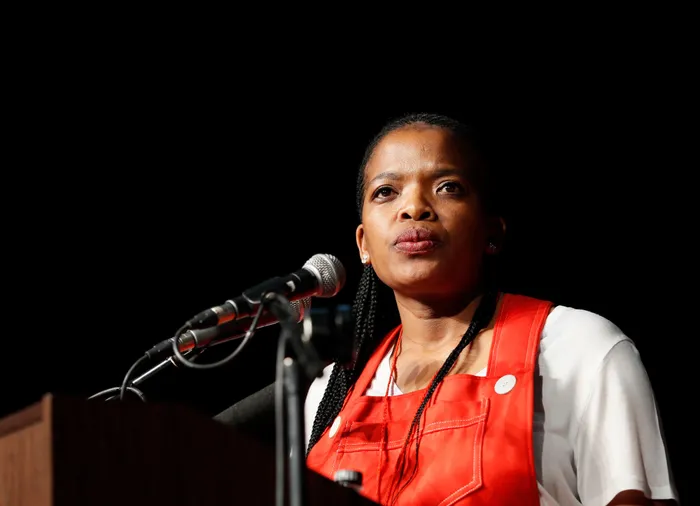
Losi was employed by Ford Motor Company in Port Elizabeth in 2001, working in the engine components and assembly division. She later became a quality inspector. It was physically demanding, technically skilled work — and it put her in close contact with hundreds of other workers navigating the pressures of factory life under corporate management.
In 2002, she was elected as a shop steward for the National Union of Metalworkers of South Africa (NUMSA) — one of COSATU’s largest and most politically assertive affiliates. This was her formal entry into trade unionism, and she threw herself into it with evident commitment.
Being a shop steward is, in many ways, the most grounded and demanding role in labour politics. You are simultaneously a worker and a representative, accountable to colleagues who can see exactly what you’re doing every day. Losi thrived in that environment, building credibility from the ground up.
Rise Through COSATU’s Ranks
Her grassroots reputation earned her a place at COSATU’s 10th National Congress in September 2009, held in Midrand. There, she was nominated and elected as Second Deputy President of COSATU, succeeding Violet Seboni who had passed away. She defeated Boitumelo Louise Thipe of SACCAWU in the vote — a significant win for a woman whose union career was still relatively young.
She was re-elected to a second term in September 2012 and a third term in November 2015, serving under COSATU president S’dumo Dlamini. During this period, she also served on a seven-member ministerial committee overseeing racial and gender transformation at South African universities, appointed under Higher Education Minister Blade Nzimande.
Three consecutive terms as deputy president is not an accident. It speaks to a political acuity that goes beyond slogans.
The NUMSA Fallout: Politics Gets Personal
Not all of Losi’s journey was triumphant. The mid-2010s brought significant internal controversy. She was closely associated with COSATU president S’dumo Dlamini, who was a supporter of President Jacob Zuma. This put her at odds with NUMSA, whose leadership was aligned with Zwelinzima Vavi, Dlamini’s main rival within the federation.
The tension culminated in September 2013 when NUMSA suspended her, pending a disciplinary hearing. It was a bruising public episode
By March 2014, Losi announced that she had left both Ford and NUMSA to join the South African Police Service, where she became a shop steward for the Police and Prisons Civil Rights Union (POPCRU) — another COSATU affiliate. The move allowed her to maintain her standing within the federation while distancing herself from the NUMSA conflict.
It was a pragmatic, politically intelligent move — and it kept her trajectory intact.
Historic Election as COSATU President
On 20 September 2018, Zingiswa Losi was elected president of COSATU, running unopposed. She became the first woman in the federation’s history to hold that position — a milestone that carried enormous symbolic weight in a country where gender equality in leadership remains an ongoing struggle.
Her election was backed by a powerful coalition of affiliates, including the National Union of Mineworkers (NUM) and the National Education, Health and Allied Workers’ Union (NEHAWU). She was re-elected to a second four-year term in September 2022, confirming that her leadership had broad, sustained support across the federation.
To appreciate what this means: COSATU represents hundreds of thousands of workers across sectors. Its president wields genuine influence over national wage negotiations, government policy, and the broader political direction of the ANC alliance. Leading it, as a woman, was a statement in itself.
Leadership Style and Advocacy
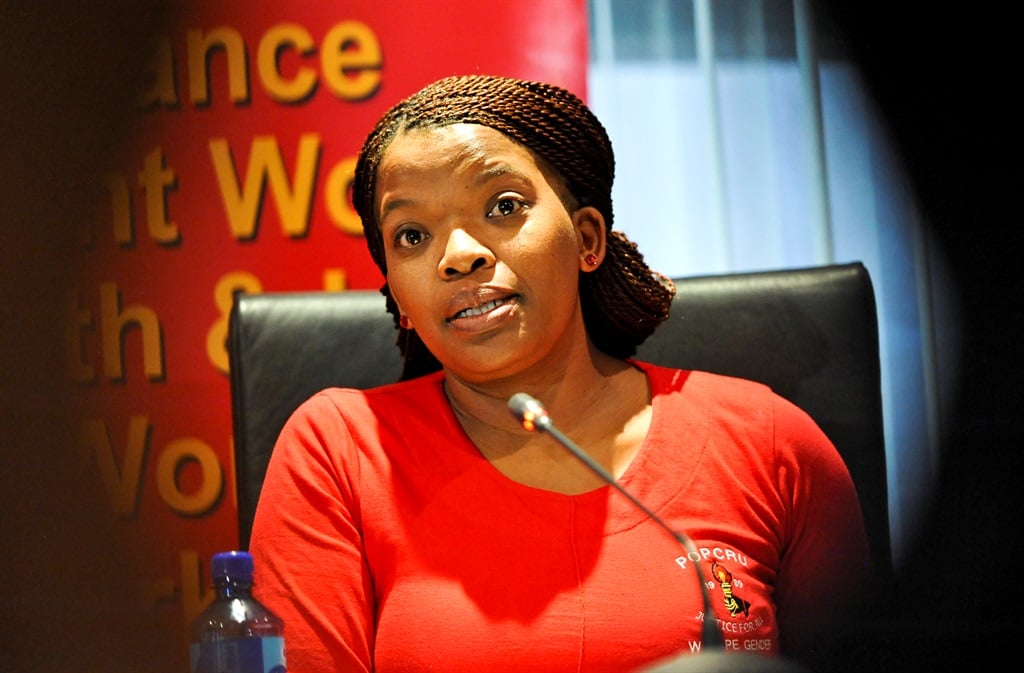
Losi is known for a leadership style that combines political astuteness with genuine worker advocacy. She has consistently positioned herself as a defender of workers’ rights while navigating the complex alliance politics between COSATU, the ANC, and the SACP.
She has spoken out firmly on issues including unemployment, gender-based violence, the living wage, and labour market reforms. Her approach is not purely oppositional — she engages government and business — but she is not afraid to take positions that challenge the status quo when worker interests are at stake.
Political Affiliations: ANC and SACP
Beyond her trade union role, Losi has maintained strong political party ties. She has been a member of the Central Committee of the South African Communist Party (SACP) since July 2017. She also served on the ANC National Executive Committee (NEC) from December 2017 to December 2022.
These affiliations place her firmly within the tripartite alliance — the political framework that has governed South Africa’s left since the end of apartheid. Her membership in these structures gives her influence that extends well beyond labour issues.
Personal Life: Family, Daughters, and Privacy
Zingiswa Losi is a mother to two adult daughters. She has kept her family life largely private — a reasonable boundary for someone in a high-profile public role. Details about a husband or partner are not publicly confirmed, and she has not spoken about her marital status in public forums in any detail.
Her twin sister Zamela remains part of her personal story, even if she stays out of the public eye. What comes through in any reading of Losi’s life is that family — the large, working-class, politically conscious family she grew up in — has profoundly shaped her values and her worldview.
Net Worth and Professional Earnings
Zingiswa Losi’s net worth is not publicly confirmed. As COSATU president, she would receive a salary commensurate with leading one of South Africa’s most significant labour federations, and she has previously earned income through her roles in the SANDF, Ford Motor Company, the South African Police Service, and union leadership positions.
She does not appear to have significant business interests, and her wealth, to whatever extent it exists, is primarily derived from professional and leadership roles in the public and labour sectors. Any specific figures circulating online should be treated with scepticism.
Contact and Social Media
COSATU Official Contact:
- Address: 110 Jorissen Street, Cnr Simmonds, Braamfontein, Johannesburg
- Postal Address: P.O. Box 1019, Johannesburg, 2000
- Phone: +27 (0)11 339 4911
- General Email: enquiries@cosatu.org.za
- Media/Press Enquiries: zaneles@cosatu.org.za
Social Media:
- Follow COSATU and Zingiswa Losi’s public updates via the official COSATU Twitter/X page and COSATU Facebook
Legacy in Progress
Zingiswa Losi’s story is still being written. At 50, she remains an active, influential figure in South African political and labour life. Her greatest achievement — becoming COSATU’s first female president — is historic, but what she does with that position over time will define how she is ultimately remembered.
She represents something important: proof that the path from a township factory floor to national leadership is possible, even when the road bends sharply and unpredictably.
Conclusion
Zingiswa Losi didn’t arrive at the top of South Africa’s labour movement by accident or inheritance. She built her credibility brick by brick — through military service, factory work, union organising, political battles, and a resilience that survived suspension and internal controversy. Her presidency of COSATU is not just a personal achievement; it is a signal to every working-class woman in South Africa that leadership at the highest levels is within reach. The road she walked was neither easy nor straight — and that is precisely what makes her story worth telling.
Frequently Asked Questions (FAQs)
1. Who is Zingiswa Losi? Zingiswa Phyllis Losi is a South African trade unionist and politician, currently serving as President of COSATU — the Congress of South African Trade Unions. She made history in 2018 as the federation’s first female president.
2. How old is Zingiswa Losi? She was born on 2 October 1975, making her 50 years old as of 2025/2026.
3. Does Zingiswa Losi have children? Yes, she has two adult daughters. She keeps her family life largely private.
4. What is Zingiswa Losi’s educational background? She attended schools in New Brighton, Eastern Cape, and briefly enrolled at UNISA to study economics and at Algoa College of Education for teaching before her career took a different direction.
5. What is Zingiswa Losi’s net worth? Her net worth is not publicly confirmed. Her income is primarily derived from her professional roles in trade union leadership and previous employment in the SANDF, Ford Motor Company, and the South African Police Service
Editorial Notice
The biography above is compiled from publicly available sources and is intended for general informational purposes only. At PeopleCabal, we are committed to accuracy — however, public records evolve, and some details may change over time. If you notice anything that requires a correction or update, we welcome you to reach out to us directly.
