
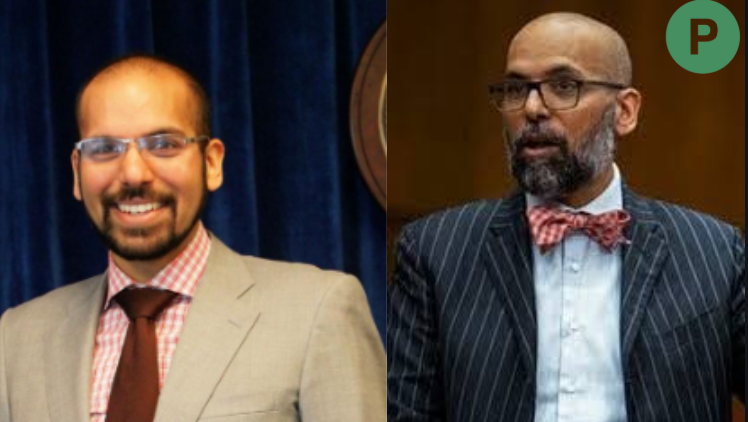

Okay, so imagine you’re a judge — like a really important referee in a very serious game called “the law.” Now imagine that one of the players in your courtroom is accused of something extremely serious, and you still say, “Hey, this person deserves to be treated with basic human dignity.” That’s exactly what U.S. Magistrate Judge Zia Faruqui did in May 2026, and it caused a massive storm online.
Judge Zia Faruqui isn’t someone who just showed up yesterday. He’s been working in the U.S. legal system for years — as a prosecutor, as a legal representative for the Department of Justice, and now as a federal magistrate judge in Washington, D.C. But in 2026, one courtroom moment put him front and center of a national debate about justice, fairness, and how the legal system should treat people before they’re even found guilty.
Let’s dig in and learn everything about this fascinating legal figure.
Judge Zia Faruqui Biography
| Detail | Information |
|---|---|
| Full Name | Zia M. Faruqui |
| Profession | U.S. Magistrate Judge |
| Court | U.S. District Court, District of Columbia |
| Appointed | September 14, 2020 |
| Education | Georgetown University; Georgetown Law |
| Nationality | American |
| Religion | Muslim (based on public statements and cultural references) |
| Marital Status | Married |
| Known For | Federal prosecutions, cryptocurrency law, 2026 Cole Allen hearing |
Early Life and Background
Here’s the thing about Zia Faruqui — he doesn’t come from a flashy background full of old money or political dynasties. What makes his story interesting is how deeply immigrant values shaped who he became.
On UN International Migrants Day, Faruqui himself shared a touching post where he revealed that his mother, father, mother-in-law, father-in-law, and his wife all immigrated to the United States. He wrote about his uncle being the first in the family to arrive in America, and described the courage it takes to make that kind of leap of faith.
“That’s more courage than I have,” he wrote — a refreshingly humble statement from someone who’s built a genuinely impressive legal career.
While the exact details of his birth date and hometown haven’t been officially confirmed in public records, it’s clear that his upbringing was influenced by immigrant resilience, hard work, and a strong sense of public service. These aren’t just background details — they actively shaped the judge he became.
Ethnicity, Religion, and Roots
Based on his name and various public statements, Zia Faruqui is widely understood to be of South Asian descent, likely of Pakistani or Indian heritage — though he hasn’t made an extensive public statement about his specific ethnic background.
His name — “Zia” and “Faruqui” — are both commonly found in Muslim communities of South Asian origin, and his references to immigrant family members suggest strong cultural ties to that community.
As for religion, while Faruqui has not made a formal public declaration, his name, family background, and cultural references strongly suggest he practices Islam. He’s part of a growing but still relatively small group of Muslim-American federal judges in the United States — a distinction that carries both significance and scrutiny in today’s political climate.
Education: Georgetown All the Way
You know how some people have that one school that just defines their path? For Zia Faruqui, that school is Georgetown. He attended Georgetown University for his undergraduate studies and then went on to earn his law degree from Georgetown Law — one of the most respected law schools in the entire country.
Georgetown Law has produced senators, cabinet members, and top federal attorneys. Choosing to stay in the Georgetown ecosystem for both undergrad and law school says a lot — it means Faruqui committed early to a serious, policy-oriented legal education in the heart of Washington, D.C.
That education clearly paid off.
Career Journey: From Prosecutor to Federal Judge
Starting Out as a Litigation Associate
Before he became a judge, Zia Faruqui worked as a litigation associate at Willkie Farr & Gallagher LLP in Washington, D.C. — a prestigious international law firm. His focus there was on government investigations and commercial litigation, which is basically the world of big, complex legal cases involving corporations and government bodies.
This gave him a very practical, hands-on understanding of how the law works at a high level — not just in textbooks, but in real courtrooms with real consequences.
Twelve Years as a Federal Prosecutor
This is where things get really impressive.
Faruqui served as a federal prosecutor for twelve years — split between the U.S. Attorney’s Offices in St. Louis, Missouri and Washington, D.C. That’s not a short stint. That’s a career-defining commitment to public service.
During those twelve years, he worked on some of the most complex and serious cases you can imagine:
- Terrorist use of cryptocurrency — tracking how bad actors tried to fund illegal activities through digital currency
- North Korean weapons proliferation — helping disrupt international arms networks
- Darknet child exploitation cases — some of the most difficult and important work federal prosecutors do
This isn’t a guy who spent his career on easy cases. He went after the hard ones.
Appointed as U.S. Magistrate Judge
On September 14, 2020, Zia Faruqui was appointed as a U.S. Magistrate Judge for the U.S. District Court for the District of Columbia. This is a significant appointment — the D.C. federal court handles some of the highest-profile cases in the entire country, from political prosecutions to national security matters.
Major Cases and Legal Achievements
Beyond the courtroom, Faruqui also reportedly represented the Department of Justice internationally on matters involving financial crimes, cryptocurrency regulation, and national security. That’s a remarkable resume line — it means foreign governments and international legal bodies have sat across the table from this man to discuss some of the most complex legal issues of our time.
His work on cryptocurrency and national security put him ahead of the curve at a time when most of the legal world was still trying to figure out what Bitcoin even was.
The 2026 Controversy: The Cole Allen Hearing
Now let’s talk about why you’re probably reading this article right now.
In May 2026, a man named Cole Allen was accused of attempting to harm President Donald Trump at the annual White House Correspondents’ Association dinner. Allen allegedly fired a weapon during the event and was subsequently arrested and placed in a Washington, D.C. jail.
During a court hearing, Judge Faruqui expressed serious concern about how Allen was being treated in custody. Allen had been placed on suicide watch despite reportedly showing no signs of suicidal behavior during a health evaluation, was housed in a padded cell for 23 hours a day, and was initially denied access to a Bible.
“Whatever you’ve been through, I apologize,” Faruqui told Allen directly in court.
He was clear that the allegations were “extremely serious,” but also firm that pre-trial detention is not supposed to be punitive. In other words: being accused of something, even something grave, doesn’t mean you lose your basic rights as a human being before a trial even happens. Faruqui compared Allen’s treatment unfavorably to how defendants in other high-profile cases had been handled.
It’s a nuanced legal point, but an important one — and it sparked a firestorm.
Public Reaction and Political Backlash
Not everyone saw Faruqui’s remarks as principled jurisprudence. The reaction online was swift and harsh.
Jeanine Pirro, the U.S. Attorney for the District of Columbia, posted on X (formerly Twitter) criticizing the judge’s statement, suggesting he was offering preferential treatment to a dangerous defendant.
Far-right commentators and political figures piled on. Comments like “DC judges are an absolute JOKE” and “The judiciary is a problem” flooded social media. Laura Loomer, a prominent political influencer and ally of former President Trump, also weighed in with strong criticism.
Faruqui’s defenders, however, argued that he was doing exactly what a judge is supposed to do — ensuring that the law is followed, regardless of how unpopular that might be in the moment. And that’s a debate that goes to the very heart of what the American legal system is built on. ⚖️
Zia Faruqui’s Leadership Style and Judicial Philosophy
What stands out about Faruqui — even from the limited public record — is that he seems to operate from a place of principled consistency rather than political convenience.
His comparison between Cole Allen’s treatment and that of January 6th defendants wasn’t a partisan statement — it was a legal observation rooted in equal treatment under the law. He noted that Capitol riot defendants, despite the severity of their actions, had also raised concerns about their housing conditions, and many were treated similarly to Allen.
In other words: Faruqui seems to believe that the rules apply to everyone, no matter which political team is upset about it. That’s a rare quality, and arguably exactly what a federal judge should embody.
Personal Life: Family, Wife, and More
Zia Faruqui is a relatively private person when it comes to his personal life — as most federal judges tend to be. But he has shared a few meaningful glimpses on social media.
He is married, and his wife is a doctor — he affectionately referred to her as “Dr. Wife” in a social media post. Both his parents and his in-laws immigrated to the United States, which speaks to a family deeply rooted in the immigrant experience.
He’s also an uncle, and posted warmly about his nephew Zain Kundi, expressing pride that his nephew was aiming to attend Georgetown University Law Center. It’s a sweet detail that shows the family holds education — and Georgetown specifically — in high regard.
No children have been publicly confirmed.
Net Worth and Professional Earnings
Faruqui’s net worth is not publicly confirmed, which is typical for federal judges who are not required to disclose personal wealth beyond standard government financial disclosures.
His income is primarily earned through his role as a U.S. Magistrate Judge, a position that comes with a federally set salary. Prior to that, his earnings would have come from his years as a federal prosecutor and his earlier work at a major law firm. Federal magistrate judges in the U.S. generally earn in the range of $200,000+ annually, though specific figures for Faruqui have not been independently verified.
Social Media Presence
Judge Faruqui has shown some presence on social media, particularly on X (formerly Twitter), where his posts about International Migrants Day and his nephew gained public attention. However, like most sitting federal judges, he maintains a relatively low and cautious social media profile.
You can search for his public statements and court-related coverage through verified news sources and official court records.
Height, Age, and Other Details
Zia Faruqui’s exact age and height have not been officially published in any verified public source. Based on his career timeline — Georgetown education, twelve years as a federal prosecutor, and his 2020 appointment — he is estimated to be in his mid-to-late 40s, though this is not confirmed.
Details like tribe or political party affiliation are not publicly known or confirmed for Faruqui. As a federal judge, he is expected to operate independently of political affiliation — and there is no verified record of formal party membership.
Conclusion
Judge Zia Faruqui is one of those figures who reminds us that the legal system, at its best, isn’t about popularity contests — it’s about principles.
From his immigrant family roots and Georgetown education, to twelve years prosecuting some of the most complex federal cases in the country, to his current role on one of America’s most prominent federal courts, Faruqui has built a career defined by serious, substantive legal work.
His 2026 courtroom remarks about Cole Allen’s treatment were controversial — but they were also legally coherent. Whether you agree with his position or not, he was doing the job a judge is supposed to do: holding the system accountable to its own standards, even when it’s uncomfortable.
That’s worth understanding, regardless of where you stand politically.
FAQs About Judge Zia Faruqui
1. Who is Judge Zia Faruqui? Zia Faruqui is a U.S. Magistrate Judge for the District of Columbia, appointed in September 2020. He previously worked as a federal prosecutor for twelve years and as a litigation associate at a major Washington law firm.
2. Why is Zia Faruqui in the news in 2026? He made headlines after apologizing to Cole Allen — a defendant accused of a serious attack — for what Faruqui described as legally deficient treatment in a D.C. jail, including being placed on suicide watch without clinical justification and being denied a Bible.
3. What is Zia Faruqui’s educational background? He attended Georgetown University for his undergraduate degree and then earned his law degree from Georgetown Law.
4. Is Zia Faruqui married? Yes. He has publicly referred to his wife as “Dr. Wife,” indicating she is a medical professional. Both his and his wife’s parents immigrated to the United States.
5. What cases did Zia Faruqui work on as a prosecutor? During his twelve years as a federal prosecutor, Faruqui worked on cases involving terrorist use of cryptocurrency, North Korean weapons proliferation, and darknet child exploitation, among other serious federal matters.
Editorial Notice
The biography above is compiled from publicly available sources and is intended for general informational purposes only. At PeopleCabal, we are committed to accuracy — however, public records evolve, and some details may change over time. If you notice anything that requires a correction or update, we welcome you to reach out to us directly.
