
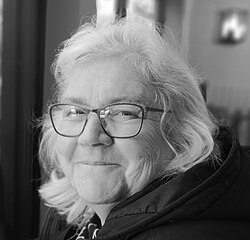

Sue Thomas is an American author, speaker, and former FBI surveillance agent whose extraordinary career in law enforcement — working for the Federal Bureau of Investigation despite being profoundly deaf — became the basis of a beloved television drama and a powerful public testimony about what human determination and divine calling can accomplish beyond the boundaries that conventional thinking assigns to disability. Her story challenged what law enforcement and society more broadly understood about the capabilities of deaf individuals, and her subsequent public speaking and writing career has extended that challenge into a ministry of encouragement that has reached hundreds of thousands of people facing their own barriers of various kinds.
Sue Thomas Biography
| Full Name | Sue Thomas |
|---|---|
| Nationality | American |
| Occupation | Author, Speaker, Former FBI Surveillance Agent |
| Known For | Deaf FBI surveillance agent; “Sue Thomas: F.B.Eye” television series; memoir “Silent Night”; inspirational speaking |
Early Life and Becoming Deaf
Sue Thomas was born hearing and lost her hearing progressively as a young child, becoming profoundly deaf by approximately 18 months of age. The experience of losing a sense so fundamental to communication and connection — particularly during the period of language acquisition when hearing is most developmentally critical — shaped her formative years in ways that would have long-lasting consequences for her communication, her education, and her eventual approach to the specific challenges that deaf individuals face in educational and professional environments designed primarily for the hearing world.
She developed lip-reading skills of extraordinary accuracy over many years of intensive practice — a skill that would eventually become the foundation of her professional value to the FBI. Lip reading is an imperfect and cognitively demanding skill even for the most skilled practitioners; the percentage of spoken English that can be reliably distinguished from lip movement alone is limited, and skilled lip readers supplement what they can visually read with contextual inference, knowledge of the subject matter, and attention to facial expression and body language. Thomas developed this skill to an unusual level of accuracy that would eventually prove professionally invaluable.
She navigated the American educational system during a period when options for deaf students were more limited than they subsequently became, eventually pursuing higher education and professional development despite the significant additional barriers that deafness placed in her path. Her determination to live fully and professionally in a hearing world — without limiting herself to contexts designed for deaf individuals — reflected a personal conviction about her own capabilities that her subsequent career validated dramatically.
FBI Career and Lip Reading as a Professional Asset
Thomas was recruited by the Federal Bureau of Investigation to work as a surveillance agent — using her exceptional lip-reading abilities to read the lips of surveillance targets from a distance, decoding conversations that would otherwise be inaccessible through audio surveillance alone. This application of her disability-derived skill to law enforcement purposes is one of the more striking examples of capability emerging from constraint — her deafness had driven her to develop lip-reading skills of sufficient accuracy to be professionally valuable in contexts that would never have occurred to those who assumed disability was simply limitation.
Her FBI work required not only the lip-reading skill itself but the professional judgment to operate effectively in surveillance environments — to remain inconspicuous, to accurately interpret what she observed, to communicate her observations effectively to hearing colleagues, and to maintain the operational security that surveillance work demands. These professional dimensions of her role were as demanding as the technical skill of the lip-reading itself, and her successful navigation of all of them demonstrated that the FBI’s decision to employ her was not an act of charity but of genuine professional judgment about where her capabilities could be most effectively deployed.
She worked with the FBI for several years, contributing to investigations through her surveillance work, and her career there was both personally significant as an achievement and publicly significant as a demonstration of what deaf individuals could contribute to professional environments that had previously assumed they could not participate in.
Memoir, Television, and Public Ministry
Thomas wrote about her life and her FBI career in her memoir “Silent Night: The Story of a Deaf FBI Special Agent” — which brought her story to a national audience and demonstrated both the specific drama of her law enforcement career and the broader testimony of faith and determination that runs through her life’s narrative. The memoir presented her career not merely as a professional achievement but as an expression of her Christian faith — of the conviction that God had a purpose for her specific capabilities, however unexpectedly those capabilities had developed, and that following that purpose faithfully was both possible and demanded.
The television drama “Sue Thomas: F.B.Eye” — which aired on PAX Television from 2002 to 2005 and subsequently in syndication — dramatized her FBI career and her faith, bringing her story to audiences who might not have encountered her memoir. The show was produced with a deliberately family-friendly and faith-compatible tone consistent with PAX Television’s programming philosophy, and it found a substantial audience among viewers seeking entertainment that reflected Christian values alongside the drama and action of a law enforcement setting. Deanne Bray played the title character with significant critical praise for her portrayal of a deaf professional in a demanding and action-oriented context.
Following her FBI career and the public attention her book and television series generated, Thomas has pursued a ministry of public speaking — addressing audiences at churches, conferences, corporate events, and disability advocacy gatherings about her life, her faith, and the broader lessons she draws from her specific journey through deafness, law enforcement, and public ministry. Her speaking addresses both the practical challenges of deafness and the spiritual dimensions of her experience — the conviction that her capabilities, however they arose, were given for a purpose that she was called to pursue faithfully.
Faith and Calling
A consistent thread through Thomas’s public narrative is her Christian faith and the specific role it played in shaping her approach to her disability and her calling. She has spoken about the experience of understanding her deafness not as a tragedy that diminished her but as a specific condition that shaped her in particular directions — including toward the lip-reading skill that became her professional value — and of experiencing God’s faithfulness in leading her through circumstances that conventional career paths for deaf individuals would not have suggested were possible.
This framework — disability not as tragedy but as difference that can be shaped toward purpose — has been central to her speaking ministry’s message and has resonated with audiences who are navigating their own experiences of limitation, whether disability or other forms of apparent constraint on what they can achieve.
Personal Life
Thomas has been open about her personal life in her speaking and writing — including the specific challenges of relationships, community, and belonging that deafness creates in a predominantly hearing world. She is a committed Christian whose faith is not peripheral to her public identity but central to how she understands everything about her life and career. She has supported various advocacy organizations related to deafness and disability.
Net Worth
Her net worth is not publicly confirmed. Her income comes from her speaking engagements, book royalties, television licensing associated with the F.B.Eye series, and ministry-related activities. She is not known as a financially wealthy figure, and her public identity is centered on her ministry and testimony rather than on financial success.
Conclusion
Sue Thomas’s career is one of the more remarkable demonstrations available in recent American history of what becomes possible when an individual refuses to accept the limitations that their condition and their culture together suggest are appropriate. She took the skill that her disability required her to develop to an extraordinary level and applied it in a professional context that no one had previously imagined a deaf person could occupy. The testimony that emerges from that trajectory — of faith, determination, and the unexpected discovery of purpose in unexpected places — is what has made her story enduring and her speaking ministry impactful far beyond the specific details of lip reading and FBI surveillance.
Frequently Asked Questions
How did Sue Thomas lose her hearing?
She became profoundly deaf progressively from birth, losing her hearing by approximately 18 months of age.
What did Sue Thomas do for the FBI?
She worked as a surveillance agent using her exceptional lip-reading abilities to decode conversations of surveillance targets from a distance.
What television series was based on Sue Thomas’s life?
“Sue Thomas: F.B.Eye,” which aired on PAX Television from 2002 to 2005, dramatizing her FBI career and faith.
What is Sue Thomas’s memoir called?
“Silent Night: The Story of a Deaf FBI Special Agent.”
What does Sue Thomas do now?
Public speaking ministry — addressing churches, conferences, and corporate audiences about her life, faith, and the lessons she draws from her journey through deafness, law enforcement, and public ministry.
Editorial Notice
The biography above is compiled from publicly available sources and is intended for general informational purposes only. At PeopleCabal, we are committed to accuracy — however, public records evolve, and some details may change over time. If you notice anything that requires a correction or update, we welcome you to reach out to us directly.
