
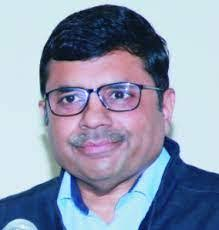

When the BJP swept West Bengal’s 2026 Assembly elections — ending 15 years of Trinamool Congress dominance — one name immediately entered the spotlight: Manoj Kumar Agarwal. Within days of the new government’s first cabinet meeting at Nabanna, this quiet, low-profile IAS officer was elevated to the highest bureaucratic position in the state. The catch? He had just finished supervising those very elections as West Bengal’s Chief Electoral Officer. That single fact ignited a firestorm of political controversy — and thrust a career civil servant who had spent decades largely out of the headlines into the centre of a national debate about institutional integrity.
Who exactly is Manoj Kumar Agarwal? Why does his appointment matter so deeply, and what does his remarkable 36-year career tell us about the inner workings of Indian bureaucracy? Let’s find out.
Manoj Kumar Agarwal IAS Biography
| Field | Details |
|---|---|
| Full Name | Manoj Kumar Agarwal |
| Date of Birth | July 8, 1966 |
| Home State | Uttar Pradesh |
| Nationality | Indian |
| Religion | Hindu |
| IAS Batch | 1990 (West Bengal Cadre) |
| Entry Type | Direct Recruit via UPSC Civil Services Exam |
| Educational Qualification | B.Tech in Mechanical Engineering, IIT Kanpur |
| School | La Martiniere College, Lucknow |
| Years of Service | 36 years (as of 2026) |
| Current Role | Chief Secretary, Government of West Bengal (appointed May 11, 2026) |
| Previous Role | Chief Electoral Officer, West Bengal |
| Retirement Date | July 31, 2026 |
| Spouse | Rooma Agarwal |
Early Life and Background
Manoj Kumar Agarwal was born on July 8, 1966, in Uttar Pradesh — a state that has produced a disproportionately large share of India’s top civil servants. Growing up in a milieu where academic achievement and public service were deeply respected, Agarwal was the kind of student who channelled ambition into discipline.
His upbringing in Uttar Pradesh gave him an early grounding in the complexities of Indian governance — the bureaucratic maze, the interplay between political power and administrative structure, and the quiet but significant ways in which civil servants shape everyday life. It’s a background that would serve him well across decades of service in a different state altogether: West Bengal.
He belongs to the Hindu faith, and his family roots are firmly in northern India, though his professional identity would become entirely defined by his decades in the Bengal cadre. The fact that he was posted outside his home state — a routine feature of the IAS system designed to prevent parochial ties — meant that Agarwal built his career as an “outsider” who had to earn credibility entirely on merit and performance.
Education: From La Martiniere to IIT Kanpur
Before the UPSC, before the government files and district postings, there was the formative journey through some of India’s finest educational institutions.
Agarwal completed his schooling at La Martiniere College, Lucknow — one of the oldest and most prestigious schools in India, known for its colonial-era architecture and rigorous academic culture. It’s the kind of institution that shapes not just minds, but character: disciplined, competitive, yet rooted in a certain old-world tradition of excellence.
From there, he went on to the Indian Institute of Technology (IIT) Kanpur, where he earned a Bachelor of Technology (B.Tech) degree in Mechanical Engineering. IIT Kanpur is routinely ranked among India’s top engineering colleges, and its graduates consistently go on to careers in technology, business, and increasingly, public service.
The combination — elite schooling in Lucknow followed by an engineering degree from IIT Kanpur — reflects a classic north Indian upper-middle-class trajectory of the 1980s. But rather than heading into the private sector or abroad, Agarwal turned toward the UPSC — a decision that would define the rest of his life.
Clearing the UPSC: Entry into the IAS
The Union Public Service Commission (UPSC) Civil Services Examination is often described as one of the most demanding competitive exams in the world. Think of it as a marathon that tests not just knowledge, but stamina, judgment, and the ability to think across disciplines — from economics and history to ethics and public administration.
Agarwal cleared the exam in 1990, earning his place in the Indian Administrative Service as a Direct Recruit — the most prestigious route into the IAS. He was allocated the West Bengal cadre, which meant his entire career would unfold in a state far from his native Uttar Pradesh.
His officer identity number — 01WB034400 — is documented in the Department of Personnel and Training (DoPT) civil list, the official public record of IAS officers in India. It is a number that marks the beginning of a 36-year journey through some of West Bengal’s most complex administrative terrain.
Career Journey: 36 Years Across Bengal’s Administration
If you were to map Agarwal’s career on a chart, it would look less like a neat upward line and more like a dense, sprawling network — branching across districts, departments, central postings, and policy domains that few single officers cover in a lifetime.
He began his career in 1990, with early postings as Additional District Magistrate (ADM) in Bardhaman, Sub-Divisional Officer (SDO) in Bardhaman, ADM in Purulia, and Chief Executive Officer (CEO) in Jalpaiguri — all through the 1990s. These district-level roles are the true proving ground of the IAS: unglamorous, demanding, and absolutely critical to understanding how governance actually works at the ground level.
By 1999, he had risen to become District Magistrate of North Dinajpur, followed by a posting as District Magistrate of Bardhaman from 2001 to 2003. The district magistrate role is often compared to being the captain of a ship in turbulent waters — full executive responsibility for law and order, revenue, development, and disaster response in a large area.
Over his career, DoPT records show 27 distinct postings across 12 locations, with experience spanning Land Revenue (12 years), Home Affairs (nearly 6 years), and Staff Officer roles (over 5 years). He also served approximately 6.7 years on central deputation with the Government of India in New Delhi — including a stint as Personal Secretary to former Union Minister Priya Ranjan Dasmunsi and roles linked to the Delhi Development Authority (DDA).
Key Postings and Turning Points
Several postings stand out as defining moments in Agarwal’s long career.
His role as Principal Secretary and Commissioner in the Food and Supplies Department (2017–2020) was one of his most consequential. Food and supplies administration in a state like West Bengal — with its vast population and complex public distribution system — is not for the faint-hearted. It was during this period, however, that he was reportedly transferred out of the role in 2018 after ordering a raid — a detail that speaks to the uncomfortable reality civil servants often face when institutional duty collides with political convenience.
His tenure as Additional Chief Secretary in Fire and Emergency Services was his longest single posting — spanning approximately 3 years and 9 months — and reportedly one of his most effective.
In April 2025, he was posted as Ex-Officio Additional Chief Secretary — a transitional role that paved the way for his most high-profile assignment yet.
Role as Chief Electoral Officer (CEO) of West Bengal
In March 2025, Manoj Kumar Agarwal was appointed Chief Electoral Officer (CEO) of West Bengal ahead of the state’s critically watched 2026 Assembly elections.
This appointment itself tells a story. The Election Commission of India reportedly rejected the West Bengal government’s first shortlist of candidates for the CEO role and asked for a revised panel. What the Commission wanted was straightforward but unusual: an officer who would retire shortly after the elections — the logic being that such an officer could not easily be pressured by the ruling government with promises of post-retirement career benefits.
Agarwal, due to retire in July 2026, fit that profile exactly.
As CEO, he became the face of election administration in West Bengal — overseeing every logistical, legal, and procedural element of an election that would bring the BJP to power for the first time in the state’s history.
The Special Intensive Revision (SIR) Controversy
Perhaps the most politically charged aspect of Agarwal’s CEO tenure was his oversight of the Special Intensive Revision (SIR) of electoral rolls — the first such revision in West Bengal in over two decades.
The SIR process resulted in the removal of approximately 91 lakh (9.1 million) voters from the electoral rolls before the election. That is not a small number — it represents millions of potential votes, and in a tightly contested state, such a revision carries enormous political consequences.
The Trinamool Congress and opposition parties accused Agarwal of conducting a biased revision that disproportionately removed voters likely to support the TMC. The BJP countered that the revision was a legitimate, long-overdue cleaning of inaccurate voter rolls. Agarwal himself, as a career civil servant bound by institutional neutrality, did not publicly respond to political attacks — a restraint that is both professionally appropriate and, in a politically supercharged environment, strategically difficult to maintain.
Appointment as Chief Secretary: A Political Flashpoint
On May 11, 2026 — just days after the BJP formed West Bengal’s first-ever BJP government under Chief Minister Suvendu Adhikari — an appointment order issued from Nabanna and signed by Additional Chief Secretary Rajesh Pandey named Manoj Kumar Agarwal as the new Chief Secretary of West Bengal.
The order was to remain in effect “until further order.”
Agarwal replaced Dushyant Nariala, who was moved to New Delhi as Principal Resident Commissioner. In his new role, Agarwal becomes the principal advisor to the Chief Minister and the administrative head of the entire state government machinery — every department, every district, every scheme ultimately flows through the Chief Secretary’s office.
The irony — or the problem, depending on your political perspective — is hard to miss. The same officer who supervised the election that brought the BJP to power was immediately elevated to the highest bureaucratic post in that very government’s administration. Is this a reward? A coincidence of seniority? A sign of institutional capture? Those questions are being fiercely debated.
Opposition Backlash and BJP’s Defence
The appointment triggered immediate and sharp criticism from the Trinamool Congress and Congress party.
TMC leaders called the move “shameless,” arguing that an officer who served as the supposedly neutral electoral umpire cannot, within days of that election, accept the top bureaucratic post from the winning party without raising serious questions about his neutrality — and by extension, the integrity of the election itself.
TMC MP Sagarika Ghose questioned whether this constituted a quid pro quo, writing publicly that officers who oversaw “deletions of lakhs of voters” were now being appointed as top bureaucrats by the BJP.
The BJP’s response was equally firm. Party leaders argued that Agarwal was the senior-most suitable officer available in the state administration, and that his appointment was entirely consistent with bureaucratic norms and seniority principles — norms they claimed the previous TMC government had routinely violated by superseding senior officers.
The debate cuts to one of Indian public administration’s most enduring tensions: the theoretical independence of the civil service versus its practical entanglement with political power.
Leadership Style and Administrative Reputation
Within bureaucratic circles, Manoj Agarwal is consistently described as a low-profile administrator — someone who does not seek the limelight and is more comfortable navigating file-rooms than press conferences.
Those familiar with his work describe him as an officer with deep field experience, having served across districts and departments in a way that gives him a genuine understanding of governance at every level. His posting history — from district magistrate in remote North Dinajpur to additional chief secretary in Kolkata — reflects the kind of breadth that produces administrators who understand both policy and its ground-level consequences.
He has also served as President of the West Bengal State IAS Association, suggesting a degree of respect and trust from his peer group within the service.
That said, his career has not been without turbulence — a point worth exploring honestly.
Personal Life: Family and Background
Manoj Kumar Agarwal is married to Rooma Agarwal. Beyond that, he has maintained an intensely private personal life — a characteristic common among senior IAS officers who tend to keep family matters well away from public scrutiny.
His father-in-law is M.P. Garg, who was named in a past legal proceeding (discussed below). His home state remains Uttar Pradesh, though his professional life has been entirely rooted in West Bengal.
Agarwal does not appear to have any significant public social media presence. Senior civil servants at his level typically avoid personal platforms, and Agarwal’s low-profile nature makes this doubly true.
Net Worth and Financial Disclosures
Manoj Kumar Agarwal’s net worth has not been publicly confirmed and is not subject to mandatory public disclosure under current norms for serving IAS officers. His income is primarily drawn from his government salary — at Pay Level 17 of the IAS Pay Matrix, which is among the highest pay grades in the Indian civil services.
Like all IAS officers, he would be required to file annual property returns with the government, but these are not routinely made public. Any speculation about his total assets would be irresponsible and inaccurate. What is documented — and relevant to understand — is the past CBI investigation, discussed below.
The CBI Case: A Complicated Chapter
No biography of Manoj Agarwal would be complete — or honest — without addressing the CBI investigation into alleged disproportionate assets that forms a documented part of his official record.
In a 2010 written reply to the Rajya Sabha, then Union Minister Prithviraj Chavan included Agarwal’s name in a list of IAS officers under investigation. The Central Bureau of Investigation, examining assets acquired between 1990 and 2008, alleged that he had accumulated wealth 116 percent beyond his known income. A raid was conducted on his Delhi residence in 2009.
The CBI alleged that six plots in Dwarka, Gurgaon, Greater Noida, and Kolkata were purchased in his wife Rooma’s name, with his father-in-law M.P. Garg allegedly used as a conduit. The charge sheet named his wife and father-in-law as well, with allegations of nearly 30 bank accounts linked to the case.
A special CBI court summoned Agarwal, his wife, and father-in-law in October 2015. The case was subsequently reported as having been dismissed — though the investigation remains a documented part of his official record and resurfaces whenever his name enters the public conversation, as it has now.
It is worth noting that Agarwal continued to serve in senior positions throughout and after this period, which suggests that neither the government nor the judiciary found cause to terminate or formally penalise his service. But the episode is too significant to omit, and too unresolved to dismiss.
Conclusion
Manoj Kumar Agarwal is scheduled to retire on July 31, 2026 — just months after his appointment as Chief Secretary. Sources suggest he could receive at least a six-month extension, subject to state recommendation and central approval.
In a career spanning 36 years, 27 postings, and some of the most politically charged terrain in Indian public administration, Agarwal’s final chapter may well be his most consequential — and most scrutinised. He arrives at the top of West Bengal’s bureaucracy not during a quiet interlude, but at a moment of historic political transition, with a state rebuilding its administrative identity after 15 years under a single party.
Whether he is remembered as the steady hand that helped anchor a new government’s transition, or as a symbol of the blurring lines between electoral administration and political reward, will depend on what happens in the next few months. What is certain is that Manoj Kumar Agarwal is no longer anonymous. The storm found him — and he is standing right in the middle of it.
Frequently Asked Questions (FAQs)
1. Who is Manoj Kumar Agarwal IAS? Manoj Kumar Agarwal is a 1990-batch IAS officer of the West Bengal cadre who was appointed Chief Secretary of West Bengal on May 11, 2026, days after the BJP formed the state’s first-ever BJP government. He previously served as West Bengal’s Chief Electoral Officer, overseeing the 2026 Assembly elections.
2. What is Manoj Agarwal’s educational background? He completed his schooling at La Martiniere College, Lucknow, and went on to earn a B.Tech in Mechanical Engineering from the Indian Institute of Technology (IIT) Kanpur. He later cleared the UPSC Civil Services Examination in 1990 to join the IAS.
3. Why is Manoj Agarwal’s appointment as Chief Secretary controversial? The controversy stems from the fact that Agarwal moved directly from the role of Chief Electoral Officer — the official responsible for supervising West Bengal’s 2026 Assembly elections — to the top bureaucratic post in the BJP government formed after those elections. Opposition parties, particularly the TMC, have questioned his neutrality and called the appointment a potential quid pro quo.
4. What was the Special Intensive Revision (SIR) that Agarwal oversaw? The SIR was a special revision of West Bengal’s electoral rolls, the first of its kind in two decades. Under Agarwal’s supervision as CEO, approximately 91 lakh (9.1 million) voter names were removed from the rolls before the 2026 elections. Opposition parties claimed this exercise was biased; the Election Commission and BJP maintained it was a legitimate clean-up of inaccurate records.
5. When is Manoj Agarwal due to retire, and could he get an extension? Agarwal is scheduled to retire on July 31, 2026 — just months after his appointment as Chief Secretary. Reports suggest the new BJP government may seek at least a six-month extension for him, subject to central government approval, given the significance of the administrative transition underway in West Bengal.
Editorial Notice
The biography above is compiled from publicly available sources and is intended for general informational purposes only. At PeopleCabal, we are committed to accuracy — however, public records evolve, and some details may change over time. If you notice anything that requires a correction or update, we welcome you to reach out to us directly.
