
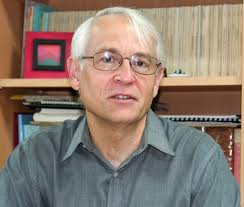
James Mobberley Biography: Age, Career, Education, Compositions and Achievements

In contemporary American concert music, James Mobberley occupies a distinctive space: a composer whose work spans from the orchestral concert hall to electroacoustic environments to film and dance, yet who has built his career not in New York or Los Angeles but at the University of Missouri-Kansas City, where he shaped one of the country’s most respected composition programs across multiple decades. Winner of the Rome Prize, a Guggenheim Fellowship, and an American Academy of Arts and Letters Award, Mobberley’s music has accumulated more than 1,400 performances worldwide — a number that speaks not to niche academic reception but to genuine, broad engagement from performers and audiences across the globe.
James Mobberley Biography
| Full Name | James C. Mobberley |
|---|---|
| Date of Birth | June 10, 1954 |
| Place of Birth | Des Moines, Iowa, USA |
| Nationality | American |
| Profession | Composer, Music Educator, Guitarist |
| Known For | Rome Prize, Guggenheim Fellowship, UMKC Curators’ Distinguished Professor |
| Current Position | Curators’ Distinguished Professor of Music Emeritus, UMKC Conservatory |
Early Life and Background
James Mobberley was born on June 10, 1954, in Des Moines, Iowa. He grew up with a strong connection to both music and instrument-making — guitar being a particular passion that would remain a constant presence in his life both as a performer and as a compositional influence. Iowa in the mid-twentieth century was not a place conventionally associated with avant-garde composition, but Mobberley’s path would take him from the American Midwest to Rome and back, forming a creative identity that was equally grounded in tradition and in the experimental spirit that characterized the postwar American composition scene.
Education
Mobberley pursued his musical education at leading American institutions, developing both his compositional voice and his understanding of the theoretical foundations that underpin serious concert music. His formal training equipped him with the technical range to write fluently across media — from conventional orchestral and chamber formats to electroacoustic and multimedia works. Specific details of his degree programs and institutions are not all widely catalogued in public sources, but his curriculum vitae reflects the rigorous academic trajectory typical of composers who go on to hold senior faculty positions at major conservatories.
Career: Composer, Educator, Department Builder
Mobberley joined the faculty of the University of Missouri-Kansas City (UMKC) Conservatory of Music and Dance, where he would remain for the substantial part of his professional career. UMKC’s composition program is among the largest and best-known in the United States, and Mobberley’s presence was a defining feature of its reputation. He was eventually designated Curators’ Distinguished Professor of Music — a title that recognizes exceptional scholarly and artistic achievement — before transitioning to emeritus status.
As a teacher, Mobberley was known for combining high intellectual standards with genuine engagement with his students’ individual voices. His goal was not to produce composers who wrote like him, but composers who could write like themselves — grounded in craft, aware of history, and fearless in experimentation.
Major Compositions and Style
Mobberley’s compositional output is genuinely diverse, but certain recurring concerns give it coherence. He has written extensively for orchestra, chamber ensemble, solo instruments, voice, and electroacoustic media, as well as music for dance and film. His orchestral and chamber works tend toward a kind of disciplined expressivity — music that communicates emotional intensity without sacrificing structural clarity. His electroacoustic work draws on his interest in the relationship between acoustic and electronic sound worlds, exploring the spaces where organic and synthetic sounds meet and blur.
Notable works include orchestral commissions from major American institutions, chamber pieces written for leading new-music ensembles, and choral works — including A Crowd of Stars for wind ensemble and SATB chorus (2013) and At Play in the Fields of the Mind for SATB chorus (2002). His incidental music for theatrical productions demonstrates his versatility beyond the concert hall. Most of his music is self-distributed, with additional publications through Roger Dean and Edipan (Rome).
Major Awards and Recognition
The Rome Prize, awarded by the American Academy in Rome, represents one of the most prestigious honors available to American artists and scholars. Mobberley won the prize, which provides a residential fellowship in Rome — an experience that has shaped many of the most significant careers in American arts. The Guggenheim Fellowship, another of the most competitive and respected awards in American intellectual and creative life, followed his Rome Prize, cementing his standing as a major figure in American composition. He also received an Award from the American Academy of Arts and Letters — an institution whose recognition reflects peer-level acknowledgment from the country’s most distinguished artists and scholars.
Among his commissioning history, Mobberley has received support from the Fromm Foundation at Harvard University, the Koussevitzky Foundation at the Library of Congress, the Barlow Endowment, Meet the Composer, Chamber Music America, and the National Endowment for the Arts — a roster that represents essentially the full spectrum of major American music commissioning bodies.
Personal Life
James Mobberley maintains a personal website at jamesmobberleymusic.com, where his work and biography are documented. He has been associated with the Kansas City area for the substantial portion of his adult life. Beyond his composing and teaching work, he has remained engaged as a guitarist — the instrument that first drew him to music and that has remained a thread connecting his performing self to his composing self throughout his career.
Net Worth
As an academic composer and music educator at a major American university, James Mobberley’s income has come primarily from his faculty salary at UMKC, commissioning fees, and performance royalties. Specific financial details are not public. The financial realities of contemporary classical composition are well known to be modest relative to popular music industries, but Mobberley’s career has been one of the most successful and sustained in his field.
Legacy
More than 1,400 performances of his music worldwide is not a number that happens by accident. It is the product of decades of writing music that performers actually want to play — music that is technically rigorous without being gratuitously difficult, emotionally communicative without being sentimental, and structurally inventive without abandoning the listener. James Mobberley’s legacy at UMKC is both the music he composed and the composers he trained, many of whom are now contributing their own voices to the ongoing conversation of American music.
Frequently Asked Questions
Who is James Mobberley?
James Mobberley is an American composer, music educator, and guitarist, known for his work as Curators’ Distinguished Professor of Music Emeritus at the University of Missouri-Kansas City Conservatory, and as a winner of the Rome Prize and Guggenheim Fellowship.
When was James Mobberley born?
He was born on June 10, 1954, in Des Moines, Iowa.
What are James Mobberley’s most significant awards?
His most significant awards include the Rome Prize (American Academy in Rome), the Guggenheim Fellowship, and an Award from the American Academy of Arts and Letters.
How many performances has James Mobberley’s music received?
His works have received more than 1,400 performances worldwide.
What types of music does James Mobberley write?
He writes orchestral music, chamber music, choral works, electroacoustic music, and music for dance and film — spanning a wide range of media and performing forces.
Editorial Notice
The biography above is compiled from publicly available sources and is intended for general informational purposes only. At PeopleCabal, we are committed to accuracy — however, public records evolve, and some details may change over time. If you notice anything that requires a correction or update, we welcome you to reach out to us directly.
