
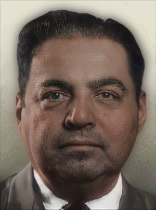
Bobojon Gafurov Biography: Age, Education, Nationality, Books, Career and Legacy

There are scholars whose influence outlasts their century — thinkers who shape how an entire people understand themselves. Bobojon Gafurov was one of them. A Tajik historian, statesman, and academician, he spent his life arguing — through meticulous scholarship — that the Tajik people had a distinct, ancient, and rich civilizational identity that deserved to be told on its own terms. In a Soviet era dominated by political agendas and ethnic hierarchies, that was no small thing.
Quick Profile
| Full Name | Bobojon Gafurovich Ghafurov |
|---|---|
| Date of Birth | December 18, 1908 |
| Place of Birth | Isfisar village, near Khujand, Tajikistan |
| Nationality | Tajik / Soviet |
| Profession | Historian, Academician, Statesman |
| Known For | The Tajiks (Tojikon), History of Tajikistan |
| Education | Law studies in Samarkand; Institute of Journalism, Moscow (1935); PhD, Institute of History, USSR Academy of Sciences (1941) |
| Father | Poet Roziya Ozod |
Early Life and Background
Bobojon Gafurov was born on December 18, 1908, in the small village of Isfisar, near the city of Khujand in what is now Tajikistan. His father was the poet Roziya Ozod — a background that likely shaped Gafurov’s own sensitivity to language, culture, and the power of the written word. Growing up in the early years of the Soviet transformation of Central Asia, Gafurov came of age during a period of profound political and social upheaval. The old order of the tsarist empire was collapsing, and the new Soviet structure was being imposed — a transformation that had complicated, often painful consequences for local cultures and ethnic identities.
As a young man, Gafurov studied law in Samarkand, then the cultural heart of the region. But his intellectual ambitions did not stop there. In 1931, he traveled to Moscow to attend the Institute of Journalism, graduating in 1935. The combination of legal training and journalism gave him a versatile foundation — practical skills for navigating Soviet bureaucracy alongside a communicator’s instinct for reaching broad audiences. From 1930 onward, he worked as a government official in Dushanbe while simultaneously nurturing his passion for journalism and historical research.
Education and Academic Formation
Gafurov’s most formative academic achievement came between 1940 and 1941, when he completed his postgraduate studies at the Institute of History of the USSR Academy of Sciences in Moscow. His doctoral dissertation examined the history of the Ismaili sect from the early nineteenth century to the First World War — a subject that required deep engagement with Islamic history, Persian sources, and Central Asian archival material. He defended this thesis in 1941, earning his PhD and establishing himself as a serious academic historian at a time when such credentials carried enormous weight in Soviet intellectual life.
Career: From Party Secretary to Scholar of World Standing
Gafurov’s career unfolded along two remarkable parallel tracks: political leadership and historical scholarship. From 1944 to 1946, he served as Second Secretary of the Central Committee of the Communist Party of Tajikistan, and from August 1946 to May 1956, he held the position of First Secretary — effectively the highest political office in the republic. During this decade of political leadership, his energy and organizational skill were instrumental in two landmark institutional achievements: the establishment of Tajikistan’s first State University in 1948, and the inauguration of its national Academy of Sciences in 1951. These institutions would become the pillars of Tajik intellectual and scientific life for generations to come.
In 1956, Gafurov made a significant transition: he left the First Secretaryship and became Director of the Institute of Oriental Studies of the Academy of Sciences of the Soviet Union — a post he would hold until the end of his life in 1977. This was, in many ways, where his most enduring contributions were made. Under his directorship, the Institute expanded its scope and engaged with scholarly traditions across Asia and the Middle East in ways that went beyond Soviet ideological constraints. He also founded the Publishing House for Eastern Literatures, which printed scholarly works on history, economics, philology, linguistics, religion, and culture across Asia. He additionally served as editor of the journal Asia and Africa, a platform that reached scholars and readers well beyond the Soviet bloc.
The Work That Defined a Nation
Gafurov’s most celebrated work, The Tajiks: Prehistory, Ancient, and Medieval History (Tadzhiki, 1972), was not simply an academic monograph — it was an act of cultural reclamation. The central argument of the book challenged a prevalent Uzbek nationalist narrative that portrayed Tajiks as essentially Uzbeks who had “forgotten their language.” Gafurov argued the opposite: that the Uzbek population of Central Asia was largely composed of Turkified descendants of the original Iranian-speaking population of the region. The Tajiks, in his telling, were the direct heirs of one of the oldest and richest civilizations in the world.
This was not idle polemic. Gafurov marshaled extraordinary amounts of archaeological, linguistic, and literary evidence across thousands of years of history. The book became the most important work of historical scholarship in modern Tajikistan and remains influential today. An earlier work, his A Concise History of the Tajik People (1947), for which he received a doctorate, had already laid the groundwork. That book went through three Russian editions and was translated into multiple languages.
Over his career, Gafurov published more than 500 works in Russian, Tajik, and other languages — an extraordinary output by any standard. His other major publications include Alexander the Great and the East (1980, co-authored with D. I. Tsibukidis), and his collected works, published in Moscow in 1985.
Honors, Recognition, and Legacy
Gafurov was elected a corresponding member of the Soviet Academy of Sciences and later became a full academician. He was a member of the Royal Swedish Academy of Sciences, the American Philosophical Society, and multiple other international bodies — recognition that extended well beyond the Soviet world. He was posthumously designated one of the six Heroes of Tajikistan in 1997, a rare national honor. The city of Gafurov (previously known as Sovetabad) in the Sughd region of Tajikistan was renamed in his honor after his death. Khujand State University was also named after him by presidential decree in 1997. A museum bearing his name was established in Gafurov District, and a portrait of him — uniquely, woven into a carpet — hangs in the director’s gallery of the Institute of Oriental Studies in Moscow.
Personal Life
Gafurov lived a life shaped by public service and scholarly dedication. Details about his personal family life remain relatively sparse in the public record, as was common for Soviet-era figures who preferred to keep private matters private. He was the son of the poet Roziya Ozod — a connection to Tajik literary culture that ran deep. He passed away on July 12, 1977, and was buried in Dushanbe, the capital of Tajikistan.
Why Bobojon Gafurov Still Matters
It is easy to underestimate what Gafurov accomplished in the context of his time. Writing as a Tajik historian within the Soviet system required constant navigation between political loyalty and scholarly honesty. That he managed to produce work of genuine, internationally recognized academic quality — work that remains foundational to Tajik national identity today — speaks to a rare combination of intellectual courage and political skill. He was not simply a party apparatchik who also wrote books. He was a serious historian who happened to operate within a constrained political environment, and who found ways to advance his people’s historical consciousness despite those constraints.
Net Worth
As a Soviet-era academic and political official, Bobojon Gafurov did not accumulate personal wealth in any commercial sense. His livelihood came from state salaries and academic positions. Net worth in the modern sense is not applicable or documented for his life and career.
Frequently Asked Questions
What is Bobojon Gafurov best known for?
He is best known for his monumental historical work The Tajiks, which provided a comprehensive account of Tajik history and argued for the distinct civilizational identity of the Tajik people within Central Asia.
What political role did Gafurov hold?
He served as First Secretary of the Communist Party of Tajikistan from 1946 to 1956, the highest political office in the republic during that period.
When was Bobojon Gafurov born and where?
He was born on December 18, 1908, in the village of Isfisar near Khujand, in present-day Tajikistan.
Is a city named after Bobojon Gafurov?
Yes. The city of Gafurov (formerly Sovetabad) in the Sughd Province of Tajikistan was renamed in his honor after his death. Khujand State University also bears his name.
How many works did Bobojon Gafurov publish?
He published more than 500 works in Russian, Tajik, and other languages across his career.
Editorial Notice
The biography above is compiled from publicly available sources and is intended for general informational purposes only. At PeopleCabal, we are committed to accuracy — however, public records evolve, and some details may change over time. If you notice anything that requires a correction or update, we welcome you to reach out to us directly.
