
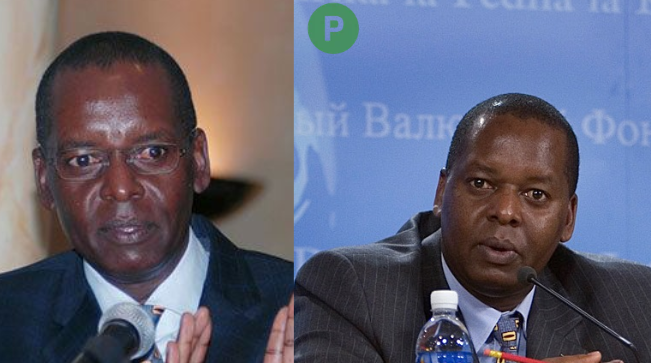

There is a particular kind of freedom that comes only after a long fight — not the abstract kind, but the very specific freedom of walking out of a courtroom after twelve years and saying, clearly and without bitterness: I am done with politics. That is exactly what Amos Kimunya did in 2026, and the way he said it — with plans for lecture rooms and mentorship rather than bitterness — tells you something important about who he is.
At 64, Kimunya is one of Kenya’s more substantial political figures of the post-multiparty era: a former Minister of Finance, former Minister of Lands, former Member of Parliament for Kipipiri, and a man whose public career was shadowed for over a decade by a graft case that ultimately ended in acquittal. His story is not a simple one of rise and fall — it is more nuanced than that, and more instructive.
Who Is Amos Kimunya?
Amos Kimunya is a Kenyan politician, economist, and public administrator who served at the highest levels of Kenya’s government across more than two decades of public life. He is best known for his tenure as Minister of Finance under President Mwai Kibaki, a period during which he oversaw some of the more consequential economic policy decisions in Kenya’s recent history.
He later served as Minister of Lands and represented the Kipipiri constituency in the National Assembly. His political career was marked by both significant achievement and significant controversy — most notably a long-running corruption case that cast a shadow over his later years in public life, and which ended with a full acquittal in 2026.
Now 64, Kimunya has publicly declared that his political chapter is closed, and that his next focus will be education, mentorship, and academic engagement.
Amos Kimunya Biography
| Detail | Information |
|---|---|
| Full Name | Amos Kimunya |
| Age | 64 years old |
| Nationality | Kenyan |
| Profession | Politician, Economist, Former Cabinet Minister |
| Former Constituency | Kipipiri, Kenya |
| Key Portfolios | Finance, Lands, Transport |
| Education | Doctorate (PhD) holder |
| Marital Status | Widower (late wife: Lucy Wanjiru) |
| Current Focus | Mentorship, Academic Engagement |
Early Life and Background
Amos Kimunya was born in 1961 or 1962, placing him at 64 years of age as of 2026. The specific details of his early childhood — his hometown, his parents, and his upbringing — have not been extensively documented in widely available public sources. What the public record does reveal is a man who pursued rigorous academic and professional development before entering the political sphere, suggesting a background that prioritised education.
Kenya in the 1960s and 1970s was a country in the early decades of independence, building institutions and navigating the economic and social challenges of a newly sovereign state. For those who came of age in that environment with access to education, the civil service and professional sectors offered meaningful paths to public contribution — and Kimunya’s trajectory reflects that.
His entry into public life came through the intersection of economic expertise and political opportunity — a combination that defined his most influential years in government.
Tribe, Ethnicity, and Religion
Amos Kimunya is Kenyan Kikuyu — a member of Kenya’s largest ethnic group, which has historically produced a significant proportion of the country’s political and business leadership. The Kikuyu people are primarily from the Central Kenya region, and Kikuyu identity carries considerable weight in Kenyan electoral and political dynamics.
His religious affiliation has not been formally documented in widely available public sources. Kenya is a predominantly Christian country, and many of its senior politicians identify with Christian denominations, but Kimunya’s specific faith tradition has not been a prominent part of his public profile.
Education
Amos Kimunya is a doctorate holder — a fact he referenced himself in his 2026 post-acquittal remarks, when he spoke of his desire to return to lecture rooms and put his PhD to use in mentoring young professionals. The specific institution where he earned his doctorate and the field of study have not been detailed in widely available public sources, though his career trajectory suggests a background in economics, finance, or public administration.
His academic credentials place him among a generation of Kenyan technocrats who combined formal higher education with government service — a profile that was particularly valued during the Kibaki administration, which emphasised technocratic competence in economic management.
The fact that he expressed regret about being unable to teach and mentor during his legal proceedings — citing concern that students might question whether they were being taught by someone under accusation — speaks to how seriously he takes the academic dimension of his identity.
Career Journey
Kimunya’s career in public service represents one of the more varied portfolios in Kenyan political history. He held senior positions across multiple ministries, served as a legislator, and navigated the full complexity of Kenyan coalition-era politics.
His most prominent and consequential role was as Minister of Finance, a position he held under President Mwai Kibaki. In this role, he was responsible for overseeing Kenya’s national budget, managing fiscal policy, and engaging with international financial institutions — responsibilities that carry direct implications for economic growth, public service delivery, and investment climate.
He later served as Minister of Lands — a portfolio that is among the most sensitive in Kenyan politics, given the country’s complex history of land ownership, displacement, and tenure disputes. It was in this role that the controversy that would define his later years emerged.
He also served as Minister of Transport and represented Kipipiri constituency in the National Assembly — a rural constituency in Nyandarua County — across multiple terms.
As Minister of Finance
Kimunya’s tenure at the Finance Ministry placed him at the centre of Kenya’s economic decision-making during a period of relative growth. The Kibaki administration oversaw a period of improved fiscal management compared to the 1990s, and the Finance Ministry was central to that shift.
His work involved budget presentations to Parliament, engagement with the International Monetary Fund and World Bank, management of Kenya’s public debt profile, and oversight of tax policy through the Kenya Revenue Authority. These are not ceremonial responsibilities — they shape the economic environment for millions of Kenyans.
His reputation in this role was, by many accounts, that of a technically competent minister — someone who understood the mechanics of public finance and could engage credibly with both domestic and international financial audiences.
The Lands Ministry and the Grand Regency Affair
The controversy that came to define Kimunya’s later public life centred on his time as Minister of Finance rather than Lands specifically — though the two roles are often conflated in public memory.
The Grand Regency Hotel affair — involving the alleged irregular sale of a hotel that had been acquired by the Central Bank of Kenya — became one of the more high-profile political controversies of the Kibaki era, and Kimunya was at its centre. He initially resigned from the Finance Ministry amid the political fallout, though he was subsequently reappointed to other cabinet positions.
A corruption case arising from related allegations followed him for over twelve years — a period he described after his acquittal as “12 years of suffering for something we did not do.” The case’s duration speaks to the pace of Kenya’s judicial processes and the toll that prolonged legal proceedings exact on individuals caught within them, regardless of eventual outcome.
The Kipipiri Parliamentary Seat
Kimunya served as the Member of Parliament for Kipipiri, a constituency in Nyandarua County in central Kenya. Representing a constituency while simultaneously managing senior cabinet portfolios and navigating legal challenges is a demanding combination — it requires maintaining local political relationships while operating at the national level.
His Kipipiri tenure reflected the dual nature of Kenyan political life, where MPs are expected to deliver both legislative engagement and constituency development, often with limited resources relative to the expectations placed on them.
Leadership Style and Contributions
Kimunya’s public leadership style has historically been characterised by a technocratic orientation — prioritising policy coherence and economic logic over political theatre. This made him effective in roles like Finance, where credibility with markets and institutions matters as much as political standing, but it also made him a target during politically charged controversies.
His willingness to remain in public life and contest parliamentary seats even after the Grand Regency controversy demonstrated a degree of political resilience that is noteworthy. Many politicians facing similar levels of scrutiny either withdraw from public life or retreat to lower-profile roles. Kimunya continued to engage with the electorate and the legislative process.
His post-acquittal framing of his next chapter — focused on mentoring young Kenyans through academic engagement — also suggests a leader whose sense of contribution is not exhausted by political office.
The Graft Case: 12 Years in Legal Limbo
The corruption case against Kimunya lasted more than twelve years — a duration that, in Kenyan legal terms, is unfortunately not unusual for complex financial crime allegations, but which carries enormous personal and professional consequences for the individuals involved.
Throughout this period, Kimunya maintained his innocence. He continued to participate in political life, contesting and winning the Kipipiri parliamentary seat, but the case limited his options and, as he acknowledged himself, prevented him from pursuing academic and mentorship activities he had planned.
The psychological and professional toll of spending over a decade defending oneself against serious allegations — regardless of the eventual outcome — is difficult to overstate. Kimunya’s public comments after the acquittal were notably measured rather than triumphalist, focusing on closure and future contribution rather than recrimination.
The 2026 Acquittal and Its Significance
In 2026, the court delivered a full acquittal in the long-running graft case. Kimunya’s response was illuminating: he welcomed the decision as bringing closure, expressed hope that it would encourage other Kenyans facing prolonged legal battles, and almost immediately pivoted to what comes next.
His statement — “We hope it will happen to all other Kenyans seeking justice, where truth will prevail for those suffering” — reframed the personal vindication as something with broader meaning for Kenya’s justice system and for citizens navigating it.
The acquittal also formally removed the legal cloud that had sat over his public reputation for over a decade, allowing a reassessment of his career on its actual merits rather than through the distorting lens of unresolved allegations.
Life After Politics: Teaching and Mentorship
Perhaps the most striking aspect of Kimunya’s 2026 statements was not the acquittal itself but what he plans to do with the freedom it represents. He was direct: no more politics. And in place of political ambition, he articulated a clear vision centred on education.
He spoke of using his doctorate in lecture rooms, engaging with young professionals and students, and providing the kind of mentorship that combines real-world government experience with academic framework. For someone who spent decades in the upper reaches of Kenyan economic policy, that kind of knowledge transfer has genuine value for the next generation of public servants and finance professionals.
His comment — “I couldn’t do that while appearing in court because students would wonder whether they are being taught by a guilty person or an accused. Now I am free to venture” — was both honest and quietly poignant.
Personal Life: Wife and Family
Amos Kimunya was married to Lucy Wanjiru, who has since passed away. The loss of a spouse is a profoundly personal matter, and Kimunya has not made his private grief a public subject. Details about his children and current family circumstances have not been placed in the public domain in verified sources.
What is known is that he navigated the most challenging years of his public life — the prolonged court case, the political turbulence — as a widower, which adds a dimension of personal weight to what was already a professionally demanding period.
This article respects the boundary between public record and private family life.
Net Worth
Amos Kimunya’s personal net worth has not been publicly verified or disclosed. His income across his career has been primarily drawn from government salaries and allowances as a cabinet minister and Member of Parliament — both of which are publicly gazetted positions with defined remuneration scales in Kenya.
Beyond government service, any private professional or business activities have not been publicly documented. No verified reporting on his personal wealth exists, and this article does not speculate in the absence of confirmed figures.
Social Media Presence
For updates on Amos Kimunya’s public activities, academic engagements, and any future public statements, he can be found through:
- X (formerly Twitter): Search “Amos Kimunya” for any official or affiliated accounts
- Facebook: Public posts and political updates under his name
- Official Kenya National Assembly records for his legislative history
Given his stated intention to move into academic and mentorship spaces, his social media presence may evolve to reflect these new activities. Kenyan news outlets and university platforms are also likely to carry announcements about his teaching and mentorship engagements as they develop.
Conclusion
Amos Kimunya’s career resists easy summary — which is perhaps the most honest thing that can be said about it. He was a Finance Minister who shaped Kenya’s economic policy at a critical period, a parliamentarian who maintained his constituency relationships through prolonged personal difficulty, and a man who spent twelve years defending his name in court before walking out vindicated and immediately redirecting his energy toward teaching.
The decision to leave politics — made freely, after acquittal rather than forced by defeat — says something specific about where he is in life and what he values now. He is 64, holds a doctorate, and has more direct experience of Kenyan public finance and governance than almost anyone who will sit in his lecture room.
That is not a small thing to offer the next generation. And it suggests that Kimunya’s most useful years of contribution may still be ahead of him — just in a very different room.
Frequently Asked Questions (FAQs)
1. Who is Amos Kimunya? Amos Kimunya is a 64-year-old Kenyan politician and economist who served as Minister of Finance, Minister of Lands, Minister of Transport, and Member of Parliament for Kipipiri under President Mwai Kibaki’s administration. He is known for his technocratic approach to economic policy and his long-running legal battle that ended in acquittal in 2026.
2. Why was Amos Kimunya in court for 12 years? Kimunya faced a long-running corruption case related to controversies during his time as Finance Minister, most notably involving the Grand Regency Hotel affair. He consistently maintained his innocence throughout, and was fully acquitted by the court in 2026.
3. What are Amos Kimunya’s plans after leaving politics? Following his acquittal, Kimunya publicly declared he is done with politics and intends to focus on academic engagement and mentorship. He has expressed a desire to use his doctorate to teach in lecture rooms and guide young professionals and students.
4. Who was Amos Kimunya’s wife? Amos Kimunya was married to Lucy Wanjiru, who has since passed away. He has not made detailed personal family information a public subject, and this article respects that boundary.
5. What is Amos Kimunya’s educational background? Kimunya holds a doctorate — a fact he referenced personally in his 2026 post-acquittal remarks. The specific field and institution have not been widely publicised, though his career in finance and economic policy suggests a background in economics, finance, or public administration
Editorial Notice
The biography above is compiled from publicly available sources and is intended for general informational purposes only. At PeopleCabal, we are committed to accuracy — however, public records evolve, and some details may change over time. If you notice anything that requires a correction or update, we welcome you to reach out to us directly.
