
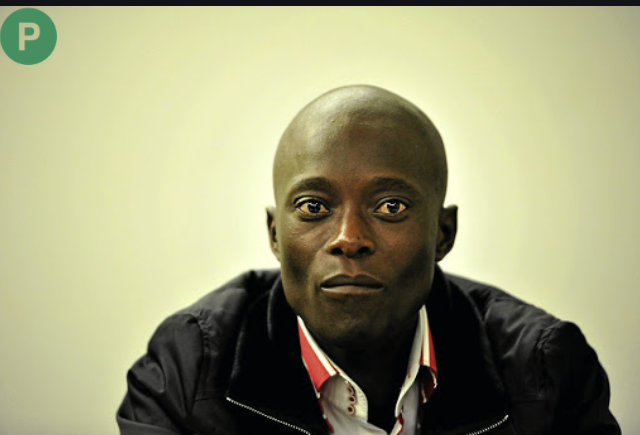

There are political figures who leave quietly, and there are those whose stories refuse to be buried. Sindiso Magaqa belongs firmly in the second category. A young man who rose from the townships of KwaZulu-Natal to lead one of South Africa’s most powerful youth political structures, his life was a testament to both the promise and the peril of grassroots politics in post-apartheid South Africa. Years after his passing in 2017, his name still surfaces in courtrooms, parliamentary debates, and police bulletins — a sign that his story is far from over.
Who Was Sindiso Magaqa?
Sindiso Magaqa was a South African politician whose short but turbulent life encapsulated much of what defines post-apartheid politics in KwaZulu-Natal — ambition, idealism, factional conflict, and the shadows of political violence. Born in Umzimkhulu and shaped by the ANC’s youth movement, he climbed rapidly through party structures before national controversy brought him low. He later rebuilt his political life at the local level, only to be caught in the crossfire of what investigators believe was a targeted attack linked to municipal governance disputes.
He was 35 years old at the time of his passing on 4 September 2017. But the legal and political ripples from his life continue into 2026, with a sitting member of parliament now facing a warrant of arrest linked to alleged interference in the investigation into his attack.
Sindiso Magaqa Biography
| Detail | Information |
|---|---|
| Full Name | Sindiso Magaqa |
| Age at Passing | 35 years old |
| Nationality | South African |
| Profession | Politician, Local Councillor |
| Political Party | African National Congress (ANC) |
| Former Role | Secretary General, ANC Youth League |
| Region | KwaZulu-Natal, South Africa |
| Education | Law studies, University of South Africa (UNISA) |
| Religion | Not publicly confirmed |
| Spouse/Husband | Not publicly disclosed |
| Net Worth | Not publicly confirmed |
Early Life and Township Roots
Sindiso Magaqa was born and raised in Ibisi, a township in Umzimkhulu — a town with a somewhat unusual administrative history. For most of its existence, Umzimkhulu was classified as part of the Eastern Cape. It was only in 2006 that the area was formally incorporated into KwaZulu-Natal. Growing up in this border region, between two provinces and two sets of political cultures, gave Magaqa a perspective that many urban-born politicians never quite develop.
Township life in South Africa is not a backdrop — it is a school. The experience of navigating limited resources, community politics, and the everyday negotiations of life under structural inequality tends to produce one of two things: withdrawal or engagement. For Magaqa, it produced fierce engagement. He joined the Congress of South African Students (COSAS) while still in primary school — an unusually early entry into organized political activity, and a sign of the environment he was growing up in.
His journey from Ibisi to national ANC structures is, in many ways, a story about how South Africa’s liberation movement absorbed young talent from its most neglected corners — and what it did with that talent once it arrived.
Ethnicity, Tribe, and Cultural Identity
Sindiso Magaqa was a Black South African, rooted in the communities of Umzimkhulu. The region is predominantly Xhosa-speaking in its historical character, though its inclusion into KwaZulu-Natal has layered Zulu political and cultural dynamics over the area. Specific details about his tribal affiliation have not been publicly confirmed in verified sources, and it would be irresponsible to speculate beyond what is documented.
What is clear is that his cultural identity was inseparable from his politics. The ANC, as a movement, has always positioned itself as non-ethnic and pan-African in aspiration — but local political life in KwaZulu-Natal is deeply shaped by community belonging, and Magaqa navigated those realities throughout his career.
Education and Intellectual Formation
One of the more underreported aspects of Magaqa’s life is that, alongside his political activism, he pursued formal legal education. He studied law at the University of South Africa (UNISA), one of the country’s largest distance-learning institutions and a common route for working professionals and activists who need flexibility alongside their other commitments.
This choice says something about his intentions. Law is not just an academic subject in South African political culture — it is a tool. Understanding the legal system, how rights are enforced or denied, how institutions can be challenged and held accountable, has been central to ANC political culture since the era of Oliver Tambo and Nelson Mandela. Magaqa pursuing a law degree while active in youth politics followed a well-established tradition.
He also worked for a period as a project manager within the Umzimkhulu Local Municipality — a practical role that gave him direct exposure to how local government actually functions, for better or worse.
Political Career: From Student Activist to National Leader
Magaqa’s political career began before most of his peers were thinking about voting. He joined COSAS as a primary school student, moved through student structures, and formally joined the ANC Youth League (ANCYL) in 1997 — a period when the youth league was still finding its footing in a post-apartheid democratic environment.
His ascent through the Youth League was steady and, eventually, spectacular. He built his reputation as an organizer and communicator, someone who understood both grassroots mobilization and the internal politics of the ANC’s factionalized structures. By the time he reached national prominence, he was one of the recognizable faces of a new generation of ANC youth leadership.
Secretary General of the ANC Youth League
In June 2011, Sindiso Magaqa was elected Secretary General of the ANC Youth League — one of the most senior positions in an organization that had historically served as a training ground for future ANC presidents. The ANCYL under that era was deeply controversial, associated with populist rhetoric and internal battles that reflected the broader divisions within the ANC itself.
As Secretary General, Magaqa held a position of real influence. The ANCYL had a track record of shaping party debates, and its leadership regularly commanded national media attention. For a young man from a small township in what was then a relatively obscure border region, this was a remarkable elevation.
His tenure, however, would not be completed. Less than a year into the role, events took a different turn.
Suspension and Misconduct Controversy
In April 2012, Magaqa was found guilty of misconduct by the ANC and suspended from the party for one year. This brought his term as ANCYL Secretary General to a premature end and marked a significant setback in what had been a fast-rising career.
The details of the misconduct finding, as reported at the time, were connected to internal party disciplinary processes that were common during a highly contested period within the ANC. While the suspension was a real professional and reputational blow, Magaqa did not disappear from political life. Many South African politicians have faced suspension or disciplinary action and returned to active roles — and Magaqa was determined to be among them.
Return to Local Politics in Umzimkhulu
After serving his suspension, Magaqa returned to active political life, this time at the local level. He took on a role as a councillor in the Umzimkhulu Local Municipality — a quieter stage than national youth league leadership, but arguably one closer to where the real work of governance happens.
Local government in South Africa is where service delivery either functions or fails, where tenders are awarded or contested, and where community trust is built or lost. Umzimkhulu, like many small municipalities, carried the tensions that come with resource competition and political loyalty networks.
Investigators would later identify these municipal dynamics — specifically disputes involving tenders and procurement — as likely motivating factors in the events that would ultimately claim Magaqa’s life.
The 2017 Attack and Its Aftermath
In July 2017, Sindiso Magaqa was travelling in Umzimkhulu with colleagues, including fellow municipal officials, when they were targeted in an ambush. He sustained serious gunshot wounds in the attack.
He survived the immediate incident but received critical injuries. After weeks in hospital, he passed away on 4 September 2017 at the age of 35.
His passing sent shockwaves through KwaZulu-Natal political circles and reignited national conversations about political violence in South Africa — particularly the disturbing pattern of local government officials and councillors being targeted in what appeared to be politically motivated attacks.
Investigations, Convictions, and Ongoing Legal Proceedings
What makes Magaqa’s case unusually significant, even years later, is the depth and reach of the investigation that followed. A dedicated task team was assembled, and by 2026, the case remains one of South Africa’s most closely watched political violence investigations.
One individual has already been convicted and sentenced in connection with the attack — described in official communications as the hitman involved in the ambush.
In a striking 2026 development, the South African Police Service (SAPS) issued a warrant of arrest for MP Fadiel Adams, leader of the Western Cape-based National Coloured Congress (NCC). Police allege that Adams interfered with the investigation at a critical stage — specifically in relation to contact with the convicted individual during a sensitive phase of the inquiry. Adams faces charges of fraud and defeating or obstructing the course of justice.
Despite arrangements reportedly made through his legal representative, Adams had not presented himself to authorities as of the time of reporting. The SAPS issued a public statement urging his cooperation.
The involvement of a sitting MP in an obstruction investigation linked to a KwaZulu-Natal political attack underscores just how far the tendrils of this case extend — and how unresolved the full picture of accountability remains.
Religion and Personal Beliefs
Sindiso Magaqa’s religious beliefs were not a matter of public record, and no verified sources confirm his faith tradition. In the ANC’s organizational culture, personal religious affiliation is generally treated as a private matter, though many in the movement draw on both Christian and African traditional frameworks in their personal lives. Without confirmation, it would be misleading to assign any specific affiliation to him.
Personal Life: Family and Relationships
Magaqa’s personal life — his family background, parents, and any spousal or relationship details — was largely kept out of public discourse. His parents were from Umzimkhulu, and his upbringing in the Ibisi township shaped his worldview in the ways described throughout this article.
Details about a spouse or partner have not been confirmed in publicly available, verified sources, and his contact information is — naturally — no longer applicable. Speculation on these matters would add nothing of value and risks being inaccurate.
What is clear is that he was a son of his community, and those who knew him from Umzimkhulu consistently spoke of his connection to the place that formed him.
Net Worth and Professional Earnings
Sindiso Magaqa’s net worth was never publicly confirmed or reported by credible financial sources. His income would have derived primarily from his roles as an ANC Youth League official and later as a municipal councillor — positions that carry structured salaries in South Africa’s public sector rather than private wealth accumulation.
Any figure attached to his name online without verified sourcing should be treated with skepticism. He was a public servant and political figure, not a businessman or celebrity — and his financial profile reflected that.
Legacy and Why His Story Still Matters
Sindiso Magaqa’s legacy is complicated in the way that only real human stories can be. He was not a perfect political figure — his misconduct suspension was real, and his time at the ANCYL was not without controversy. But he was also a man who came from very little, built himself into a national political figure, returned to serve his home community, and was taken from that community in a manner that exposed the ugliness of local political competition at its most dangerous.
The fact that his case continues to produce arrests, convictions, and parliamentary drama in 2026 is not incidental. It reflects South Africa’s ongoing struggle to hold political violence accountable — to insist that the lives of local councillors and community officials matter, even when they are not famous, even when the alleged motives are mundane things like tender disputes and municipal contracts.
In that sense, Magaqa’s story is not just his own. It belongs to every South African who has wondered whether justice in this country reaches the people who need it most.
Conclusion
Sindiso Magaqa’s life traced a remarkable arc — from a primary school activist in a border township to the Secretary General of the ANC Youth League, and eventually to a local councillor whose story became one of the most consequential political violence cases in recent South African history. His education, his political career, his suspension and return, and the ongoing investigations following his 2017 passing all tell a story that South Africa is still, in 2026, working to fully understand. He was 35 years old. That, alone, is worth sitting with.
Frequently Asked Questions (FAQs)
1. What was Sindiso Magaqa’s role in the ANC Youth League? Sindiso Magaqa served as the Secretary General of the ANC Youth League (ANCYL) from June 2011 until April 2012, when he was found guilty of misconduct and suspended from the ANC for one year.
2. Where was Sindiso Magaqa from? He was born and raised in Ibisi township, Umzimkhulu — a town that was historically part of the Eastern Cape before being incorporated into KwaZulu-Natal in 2006.
3. What happened to Sindiso Magaqa in 2017? Magaqa was targeted in a shooting ambush in Umzimkhulu in July 2017 while travelling with colleagues. He sustained serious injuries and passed away in hospital on 4 September 2017.
4. Has anyone been held accountable for the attack on Sindiso Magaqa? Yes. At least one individual — described as the hitman — has been convicted and sentenced in connection with the attack. Investigations are ongoing, and in 2026, a warrant of arrest was issued for MP Fadiel Adams, who is alleged to have interfered with the investigation.
5. What did Sindiso Magaqa study? Magaqa studied law at the University of South Africa (UNISA), pursuing his degree alongside his political and professional career as a project manager in the Umzimkhulu Local Municipality
Editorial Notice
The biography above is compiled from publicly available sources and is intended for general informational purposes only. At PeopleCabal, we are committed to accuracy — however, public records evolve, and some details may change over time. If you notice anything that requires a correction or update, we welcome you to reach out to us directly.
