
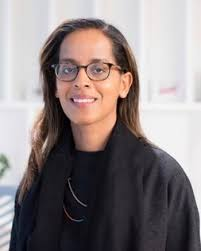

Sewit Ahderom is an Eritrean-Australian model and diversity advocate whose career has taken her from Australia to international runways, magazine covers, and brand campaigns — making her one of the more prominent African models working in the global fashion industry. Her presence in the industry represents a specific and meaningful form of representation: a dark-skinned East African woman in spaces that have historically centered a very narrow conception of beauty, whose success challenges the industry’s long-standing biases and whose advocacy work makes explicit the systemic changes she is working toward through her own career trajectory.
Sewit Ahderom Biography
| Full Name | Sewit Ahderom |
|---|---|
| Nationality | Eritrean-Australian |
| Occupation | Model, Diversity Advocate |
| Known For | International modeling career; representation of dark-skinned African women in fashion; diversity and inclusion advocacy |
Early Life and Background
Sewit Ahderom was born in Eritrea — a small East African nation on the Red Sea coast that gained independence from Ethiopia in 1993 after a thirty-year war of independence, and that has subsequently struggled with authoritarian governance that has made it one of the more difficult countries to leave and one of the larger sources of refugees seeking resettlement in Western countries. Her family’s journey to Australia placed her within the East African diaspora community in Australia — a community whose contributions to Australian cultural and professional life span multiple fields, and whose members navigate the specific experience of carrying African identity and often refugee or immigration history into a predominantly white Australian society.
Growing up in Australia as an Eritrean woman meant navigating questions of identity, belonging, and representation that would eventually inform her advocacy work — the experience of rarely seeing her own face reflected in Australian mainstream media, fashion, and beauty culture, and the specific awareness that this absence is not natural but constructed, and therefore changeable. That awareness — that representation is not a given but a choice, and that choices can be challenged and changed — is the root of the advocacy work that accompanies her modeling career.
She entered modeling through the Australian fashion industry, which while smaller than the American, French, and British industries that dominate global fashion is internationally connected and provides launching platforms for models who achieve visibility within it. Her transition from Australian modeling to international campaigns and editorials reflects both her individual abilities and the specific moment — post-2015, roughly — when the global fashion industry began, under significant public and internal pressure, to take diversity representation more seriously than it had previously done.
Modeling Career and International Reach
Ahderom’s modeling career has taken her to major fashion weeks, international brand campaigns, and magazine editorials that have established her profile beyond Australia’s domestic fashion industry. Her appearance in campaigns for major international brands and in international magazine features has made her one of the more visible East African models working at the international level — a distinction that carries significance beyond individual professional achievement to the broader question of whose faces appear in global fashion and beauty media.
The fashion industry’s relationship with race and specifically with dark-skinned Black models has been documented extensively by researchers and advocates — a history of explicit and implicit discrimination in casting, of different treatment in styling and makeup, and of the persistent elevation of lighter-skinned models even within the industry’s belated moves toward greater racial diversity. Ahderom’s career navigates this landscape with both the practical intelligence of a working professional and the advocacy orientation of someone who understands what her presence means beyond her individual career.
Her editorial work has appeared in publications that reach global fashion audiences, and her campaign work for international brands has placed her image in contexts where it communicates directly about the expanding conception of beauty that these brands wish to be associated with — a communication that is commercially motivated on the brand’s part and representationally significant regardless of that motivation.
Diversity and Inclusion Advocacy
Alongside her modeling work, Ahderom has been active in speaking about diversity and inclusion in the fashion industry — addressing the specific experiences of dark-skinned Black models, the systemic biases that affect their casting and treatment within the industry, and the importance of genuine rather than performative commitment to diversity from the brands and publications that wield the most influence over global beauty standards.
Her advocacy draws on her own direct experience in the industry — the specific encounters with bias, the negotiations around representation, and the gradual building of a career in a space that has not historically welcomed it — as well as the broader pattern of experiences that she shares with other Black models whose careers have been shaped by the same structural dynamics. This personal grounding gives her advocacy a specificity and credibility that purely theoretical arguments about diversity cannot achieve.
She has also spoken about the Eritrean diaspora experience and about what it means to carry African identity into Australian and international professional spaces — the navigation of multiple cultural identities, the representation of communities whose stories are rarely centered in mainstream Western media, and the personal costs and rewards of occupying highly visible spaces as a member of communities that are not typically represented in them.
Personal Life
Ahderom keeps her personal life largely private. She is based between Australia and the international locations her modeling career takes her to, and she maintains connections to the Eritrean-Australian community that shaped her formation. Her public presence is primarily through her professional work and her advocacy — she presents herself as a model and an advocate rather than through the personal celebrity culture that some public figures embrace.
Net Worth
Her net worth is not publicly confirmed. Her income comes from her modeling career — including campaign fees, editorial work, and runway appearances — and from speaking and advocacy engagements. The international fashion modeling market varies enormously in its financial rewards, and while established international models can earn significant incomes, the specifics of Ahderom’s financial situation are not public.
Conclusion
Sewit Ahderom’s career demonstrates both what is possible and what remains challenging for dark-skinned African women in the global fashion industry. Her international success is genuine and hard-won; the advocacy work she does alongside it reflects an accurate understanding of the structural forces that make individual successes meaningful but insufficient on their own. The industry will have genuinely changed not when one Eritrean-Australian model can build an international career, but when such careers are normal — and Ahderom’s advocacy is oriented toward that larger goal rather than merely her individual achievement.
Frequently Asked Questions
Where is Sewit Ahderom from?
She is Eritrean-Australian — born in Eritrea and raised in Australia.
What is Sewit Ahderom known for besides modeling?
Diversity and inclusion advocacy in the fashion industry, particularly regarding representation of dark-skinned Black and African women.
What country is Eritrea?
A small East African nation on the Red Sea coast, which gained independence from Ethiopia in 1993 after a thirty-year war of independence.
What challenges do dark-skinned Black models face in fashion?
Research and advocacy have documented patterns of casting discrimination, differential treatment in styling and makeup, and persistent elevation of lighter-skinned models even within the industry’s diversity initiatives.
How did Sewit Ahderom enter modeling?
Through the Australian fashion industry, which provided a launching platform for her subsequent international career in campaigns and editorial work for major international brands and publications.
Editorial Notice
The biography above is compiled from publicly available sources and is intended for general informational purposes only. At PeopleCabal, we are committed to accuracy — however, public records evolve, and some details may change over time. If you notice anything that requires a correction or update, we welcome you to reach out to us directly.
