
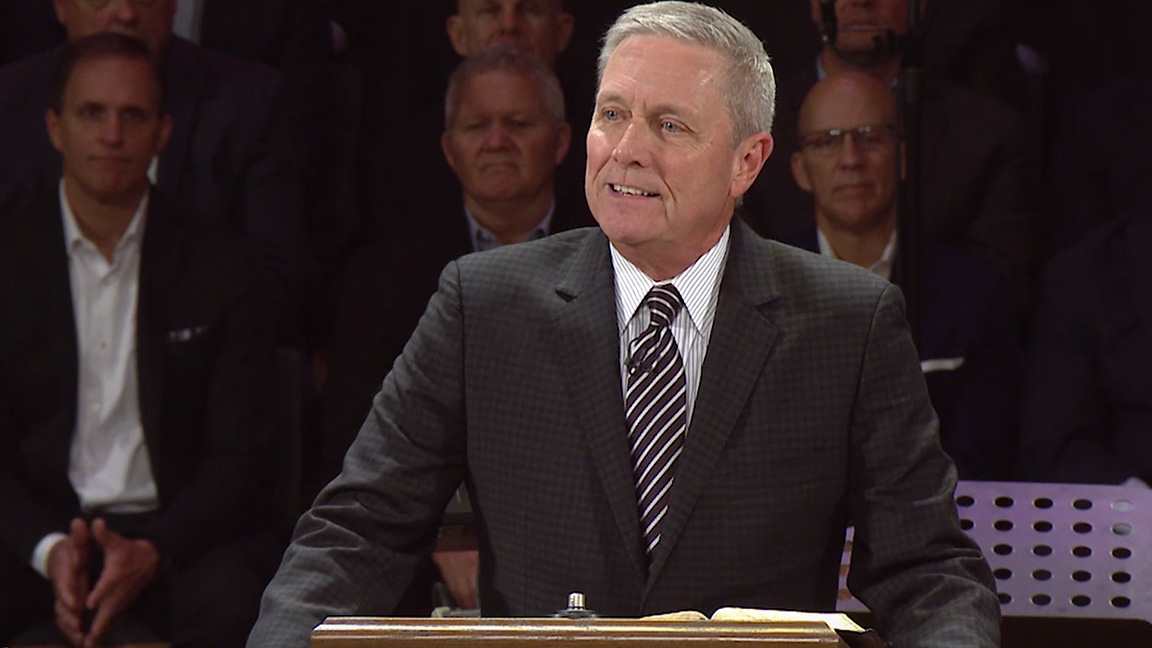

Loran Livingston is a Baptist pastor and preacher who has led Central Church of God in Charlotte, North Carolina for several decades, building it into one of the larger and more influential evangelical congregations in the Charlotte metropolitan area. Known for his expository preaching, his pastoral longevity, and his commitment to the Charlotte community through his church’s various outreach ministries, he represents a model of pastoral ministry that has become less common in an era that increasingly rewards celebrity over consistency — the long-tenured, deeply rooted pastor who knows his congregation and his city across generations.
Loran Livingston Biography
| Full Name | Loran Livingston |
|---|---|
| Nationality | American |
| Occupation | Pastor, Preacher, Author |
| Known For | Central Church of God in Charlotte, NC; expository preaching; long-term pastoral ministry; radio ministry |
Background and Ministry Context
Loran Livingston has been associated with Central Church of God in Charlotte, North Carolina for most of his adult ministry career — a tenure that spans decades and that has given him a depth of relationship with his congregation and his community that short-tenured pastoral ministry cannot produce. The Church of God denomination — one of the Pentecostal-Holiness traditions that emerged from the late 19th and early 20th-century revival movements — places significant emphasis on the work of the Holy Spirit in personal and corporate Christian experience, on heartfelt worship, and on the practical dimensions of Christian living.
Within this tradition, Livingston has developed a preaching ministry known for its engagement with Scripture — its expository quality, in the sense of taking specific biblical texts seriously and drawing genuine meaning from them rather than merely using them as launching points for topical talks. This commitment to biblical substance, delivered with the emotional warmth and personal engagement that Pentecostal-Holiness tradition values, has been the foundation of both the church’s growth and its reputation for depth within the Charlotte evangelical community.
Charlotte Context and Community Impact
Charlotte, North Carolina, has undergone extraordinary transformation over the past several decades — from a mid-sized Southern city to one of the most important financial and commercial centers in the American Southeast, with the population growth and demographic change that major metropolitan expansion brings. Ministering effectively in this changing context — maintaining the commitments of the theological tradition while reaching people whose backgrounds and expectations differ significantly from those of the church’s founding generation — requires both theological faithfulness and cultural intelligence.
Central Church of God under Livingston’s leadership has navigated this transformation, maintaining its theological identity while serving a growing and diversifying city. The church’s community outreach — including various programs addressing poverty, addiction, family disruption, and the other challenges of urban life — reflects a pastoral conviction that the church’s responsibility to its city extends beyond its gathered congregation to the surrounding neighborhood and community. This conviction, expressed through concrete ministry programs rather than mere rhetoric, has given the church a reputation for service that extends beyond its evangelical community into Charlotte’s broader civic life.
Radio Ministry and Extended Reach
Livingston has had a radio ministry — “Power for Today” — that extended the reach of his preaching beyond the physical congregation of Central Church of God to a radio audience across the Charlotte region and beyond. Radio ministry has been an important vehicle for evangelical preaching since the early 20th century, and in an era before digital streaming, it was the primary means by which a local pastor’s teaching could reach people who would never attend his church. The discipline of communicating effectively through the compressed, non-visual format of radio — without the congregation’s presence as a source of feedback and energy — requires specific communicative skills that develop through sustained practice.
His radio presence contributed to a broader recognition in the Charlotte evangelical community as a trusted preacher and pastoral voice, and it built relationships with listeners who might eventually become part of the church or who engaged with his ministry from a distance over many years. This extended reach through media is characteristic of pastoral ministries that understand the church’s responsibility to communicate the gospel through whatever technological means are available.
Preaching Style and Theological Emphases
Livingston’s preaching has been consistently described by those who have heard him as warm, direct, and biblically grounded — qualities that reflect both the Pentecostal-Holiness tradition’s emphasis on heartfelt engagement with God and a genuine commitment to the authority and meaning of Scripture as the primary source of pastoral knowledge and guidance. He preaches with evident personal conviction about the realities he is describing — the love of God, the need for human beings to respond to that love, the practical implications of Christian faith for how people live their daily lives — and that conviction communicates itself to congregations and radio audiences regardless of their prior theological commitments.
His preaching over decades has addressed the full range of human experience — marriage and family, work and money, grief and hope, community and purpose — with the specificity that sustained pastoral engagement with real people produces. A pastor who has been with the same congregation for decades has witnessed his people’s births and deaths, their marriages and divorces, their conversions and their crises, in ways that enrich his preaching with a depth of human knowledge that shorter pastoral tenures cannot produce.
Personal Life
Livingston is married and has family in the Charlotte area. His personal life has been largely shaped by and devoted to his pastoral ministry, which is consistent with the model of ministry he has practiced — deeply rooted in a specific community over a long period of time, rather than mobile and celebrity-oriented.
Legacy
Loran Livingston’s legacy is primarily local — built in Charlotte, for Charlotte, through decades of consistent pastoral presence and faithful preaching. In an era that celebrates global reach and massive platform, there is something worth noting about the different kind of influence that is built through sustained, unglamorous local ministry: the families that are shaped by it across generations, the community that is served by it over decades, the congregation that is formed by it over a pastoral lifetime. That influence is harder to measure than a social media following, and it is arguably more durable.
Frequently Asked Questions
What church does Loran Livingston pastor?
Central Church of God in Charlotte, North Carolina, where he has served for several decades.
What radio program is Loran Livingston associated with?
“Power for Today,” his radio ministry that extended his preaching to audiences across the Charlotte region and beyond.
What denomination is Central Church of God?
The Church of God, one of the Pentecostal-Holiness traditions that emerged from late 19th and early 20th-century revival movements.
What is distinctive about Loran Livingston’s ministry?
His long tenure in a single congregation, his commitment to expository biblical preaching within a Pentecostal-Holiness tradition, and his church’s sustained community outreach ministry in Charlotte.
Why is long pastoral tenure significant?
A pastor who remains with a congregation for decades develops a depth of relationship with the people and community that short-tenured ministry cannot produce — knowing families across generations, witnessing the full arc of human life, and building trust that takes years to earn.
Editorial Notice
The biography above is compiled from publicly available sources and is intended for general informational purposes only. At PeopleCabal, we are committed to accuracy — however, public records evolve, and some details may change over time. If you notice anything that requires a correction or update, we welcome you to reach out to us directly.
