
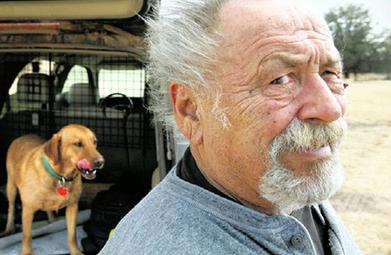

Jim Harrison was one of the most distinctive and genuinely American writers of the late 20th century — a novelist, poet, essayist, and food writer whose work was simultaneously rooted in the landscapes of the Upper Midwest and the desert Southwest and soaked in the great traditions of world literature that he consumed with the same appetite he brought to food, drink, hunting, and every other pleasure and difficulty life offered. He was capable of writing a novella of extraordinary psychological intensity and a poem of perfect lyrical economy in the same week, which is a range that very few writers possess. His “Legends of the Fall” (1979) became a film and introduced him to mass audiences, but those who know his work best tend to argue that his richest and most enduring writing is elsewhere — in the haiku sequences, the Dalva novels, the philosophical food writing, and the poetry collections that span a career of fifty-plus years.
Jim Harrison Biography
| Full Name | James Thomas Harrison |
|---|---|
| Date of Birth | December 11, 1937 |
| Nationality | American |
| Occupation | Novelist, Poet, Essayist, Food Writer |
| Education | Michigan State University (BA, MA) |
| Known For | “Legends of the Fall,” “Dalva,” poetry collections, food essays; Esquire contributor |
Early Life and Michigan Formation
Jim Harrison was born on December 11, 1937, in Grayling, Michigan — a small northern Michigan town in the Great Lakes region that would remain the emotional and geographical center of his imaginative world even when he spent significant portions of his later life in Montana, Arizona, and France. The landscape of northern Michigan — the forests, rivers, lakes, the cycles of hunting and fishing seasons, the working-class communities that inhabited the region — provided the material from which his fiction and poetry were built with a specificity and love that can only come from deep, formative knowledge of a place.
He lost the sight in his left eye at age seven when a girl pushed a broken bottle into his face — an injury that shaped his subsequent relationship to physical vulnerability and mortality, and that he addressed in his writing with characteristic directness. His father and sister were killed in a car accident when Harrison was in his twenties, an experience of sudden, brutal loss that deepened the elegiac undertow of his work and gave his engagement with grief and mortality the kind of earned authority that purely imaginative treatment of these subjects cannot achieve.
He attended Michigan State University, earning both his undergraduate degree and a master’s degree in comparative literature — a training in the full range of world literary traditions that gave his American regionalism a cosmopolitan literary consciousness. He read Dostoyevsky, Faulkner, García Márquez, Rimbaud, and a vast range of poetry in multiple languages with the same voracious appetite he brought to everything else, and that reading is visible in the formal ambition and the literary allusiveness of his best work.
Literary Career: The Full Range
Harrison published his first poetry collection, “Plain Song,” in 1965, establishing from the beginning that poetry would be one of the primary languages of his literary life — not a subordinate form to his fiction but an equal expression of his sensibility. His poetry, particularly the haiku-influenced collections he developed later in his career, is among the finest in American literature of the post-war period, though it has received less attention than his prose partly because poetry always receives less attention than prose in the literary marketplace.
His fiction career began to reach a wider audience with “Legends of the Fall” (1979) — a collection of three novellas, of which the title piece, a multi-generational Western saga of extraordinary violence and beauty, became the most famous and was eventually filmed by Edward Zwick with Anthony Hopkins and Brad Pitt in 1994. The film was beautifully made and commercially successful, and it introduced Harrison to a mainstream audience. But the film is less than the book — partly because the formal compression and the mythic ambition of the novella resist translation into any other medium.
“Dalva” (1988) — a novel narrated by a woman whose interior life Harrison inhabits with unusual psychological penetration and imaginative generosity — is often cited by serious readers of his work as his finest novel. The book addresses Native American history, family legacy, sexuality, and loss with a depth and honesty that his more celebrated work sometimes approaches but rarely exceeds. Its sequel, “The Road Home” (1998), extended and deepened the exploration of the same family and its relationship to the Northern Plains landscape and history.
He was also a remarkably effective essayist, contributing pieces on food, hunting, travel, and American life to publications including Esquire and Smart for many years. His food writing — collected in volumes including “The Raw and the Cooked” and “A Really Big Lunch” — is among the finest in the genre: learned, funny, personally revealing, and written by someone who genuinely loved food with the kind of disciplined passion that produces both genuine knowledge and genuine pleasure.
Poetry and Later Work
Harrison continued publishing poetry throughout his life, and the later collections — particularly the haiku sequences collected in “Songs of Unreason” (2011) and elsewhere — show a formal economy and philosophical depth that reflect decades of living and reading and writing. His engagement with Zen Buddhism and Japanese poetry gave his late work a meditative quality that is the expression of genuine understanding rather than borrowed style.
He published his memoir “Off to the Side” in 2002 — a characteristically honest account of a life lived with enormous appetite for experience, pleasure, and beauty, and with equal willingness to confront its difficulties. The memoir is not a conventional literary autobiography but a meditation on the sources of his creative life — landscape, friendship, food, drink, literature, and the natural world — that illuminates the whole body of his work.
Personal Life
Harrison was married to Linda King Harrison for over fifty years, from 1960 until his death in 2016. Their marriage — sustained through the entire arc of his literary career and his personal excesses — was one of the quiet anchors of a life that could have been entirely consumed by its appetites. He had two daughters and spent his adult life between Michigan, Montana, and Arizona, with significant time in France — particularly in the Périgord region — that fed both his food obsession and his relationship with French literary culture, which he engaged with deep knowledge and genuine love.
Net Worth and Legacy
Harrison’s financial life was never characterized by great wealth — the life of a serious literary writer rarely is, even when the work reaches broad audiences. The film adaptation of “Legends of the Fall” generated more money than most of his publishing did, but he lived primarily from the proceeds of writing, journalism, and teaching. His legacy is his books, which continue to find new readers, and his poetry, which will likely be his most enduring artistic legacy when the literary culture has had sufficient time to evaluate his full range.
Conclusion
Jim Harrison was one of those writers who seem to have lived ten lives while producing the work of ten writers — the hunting, the drinking, the eating, the friendships with writers across multiple languages and countries, the decades of marriage, the engagement with Native American history and landscape, the poetry and the prose and the essays, all of it simultaneous and all of it feeding the work. He died as he had lived — at his writing desk, pen in hand, in the middle of a poem. Few writers have earned a more fitting end.
Frequently Asked Questions
What is Jim Harrison’s most famous work?
“Legends of the Fall” (1979), a novella collection whose title piece was filmed in 1994, though many serious readers consider “Dalva” his finest novel.
What other forms did Jim Harrison write in besides novels?
Poetry (including haiku-influenced collections), essays on food and travel, and memoir — all at a consistently high level of craft.
Where was Jim Harrison from?
Grayling, Michigan, in the northern Great Lakes region that remained the emotional center of his work throughout his life.
Where did Jim Harrison study?
Michigan State University, where he earned both his BA and his MA in comparative literature.
How did Jim Harrison die?
He died in March 2016 at his desk in Patagonia, Arizona, reportedly in the middle of writing a poem — widely considered by his admirers an appropriately Harrisonian ending.
Editorial Notice
The biography above is compiled from publicly available sources and is intended for general informational purposes only. At PeopleCabal, we are committed to accuracy — however, public records evolve, and some details may change over time. If you notice anything that requires a correction or update, we welcome you to reach out to us directly.
