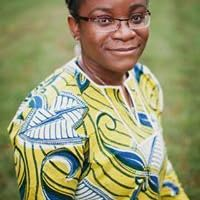

There are people whose entire public existence is a contradiction of what their society insists is possible. Azeenarh Mohammed is one of them. She is Fulani — one of the most culturally conservative ethnic groups in Nigeria and across the Sahel. She grew up in northern Nigeria, in an environment shaped by Islamic tradition, family obligation, and the deeply held expectation that a woman’s identity is most fully expressed through faith, marriage, and motherhood. She studied law, was called to the bar, and practised as a legal professional.
And she is openly queer, a feminist, a human rights activist, a digital security expert, and the co-editor of She Called Me Woman: Nigeria’s Queer Women Speak — one of the most important and widely discussed books in recent Nigerian literary and social history.
Each of those facts, held together, challenges assumptions so fundamental to Nigerian public life that their combination in a single person is itself a political act. That is precisely why Azeenarh Mohammed matters — not because she set out to be symbolic, but because the choices she made about how to live her life, and what to do with her skills and her platform, ended up being more politically significant than most deliberate activism.
Azeenarh Mohammed Biography
| Detail | Information |
|---|---|
| Full Name | Azeenarh Mohammed |
| Nationality | Nigerian |
| Ethnicity | Fulani |
| Religion | Muslim (practising, with an explicitly queer-affirming faith perspective) |
| Identity | Queer, feminist, Muslim |
| Profession | Lawyer (trained), LGBTQ+ rights activist, holistic security trainer, author, writer, media commentator |
| Education | Law degree (Nigerian institution — specific university not publicly confirmed) |
| Notable Work | She Called Me Woman: Nigeria’s Queer Women Speak (co-editor, Cassava Republic Press, 2018) |
| Twitter/X | @Xeenarh |
Editorial Note
This biography covers Azeenarh Mohammed’s public life, professional work, and verified personal statements. It does not take an editorial position on the contested legal and social questions that her work engages — specifically the status of LGBTQ+ rights under Nigerian law and social norms. Those are live, deeply contested issues on which Nigerian society holds a wide range of strongly held views. This profile reports on her work and identity as she has publicly described them, without comment on those broader debates.
Early Life and Background
Azeenarh Mohammed is an upper-class Fulani lady who has made a name for herself in the legal profession, as a human rights activist, as an author, and in the tech space.
She grew up in northern Nigeria — in a social environment shaped by Islamic tradition, family structure, and the particular conservatism of the northern Nigerian Fulani community. Her family background was privileged by northern Nigerian standards: the upper-class Fulani identity she acknowledges publicly came with educational opportunity, social access, and a certain kind of protection that she has since used explicitly in the service of people who have none of those advantages.
“I used to be a full covering hijabite,” Azeenarh says, reminiscing about her time growing up in conservative northern Nigeria. “Despite the fact that I knew early I was queer, I thought I had to live my life and be a good Muslim girl, marry, have kids and all of that.”
That personal history — knowing who she was from an early age while performing a different identity for a community that would not have accepted the truth — is one of the central experiences that shapes her advocacy work. She did not discover her queerness as an adult after a liberal university education. She has known since childhood. The journey was not one of discovery but of courage: the courage to stop hiding and to use the privileges she had been given in the service of those who had been left more exposed.
Her class privilege is something she acknowledges openly and directly — understanding that the protection it affords her is not available to the working-class or rural queer Nigerians whose stories she works to tell and whose safety she works to protect. That honesty about structural advantage, and the deliberate choice to deploy it for others rather than simply enjoy it personally, is one of the defining characteristics of her activism.
Education
Azeenarh Mohammed holds a law degree from a Nigerian institution. She has been described consistently as a “trained lawyer” across all her professional descriptions, though the specific university she attended has not been publicly confirmed in any documented source.
She actually started out as a lawyer from around 2007 to 2011, during which time all she did was practise law.
Law training in Nigeria is rigorous: it requires a bachelor’s degree in law followed by completion of the Nigerian Law School and a call to the bar. The analytical training it provides — how to build arguments, assess evidence, identify logical gaps, and communicate complex positions clearly — is visible in everything Azeenarh does publicly, from her writings to her interviews to her advocacy strategy.
Her subsequent specialisation in digital security represents a second strand of technical training — one she pursued not through formal degree programmes but through the deliberate acquisition of skills in cybersecurity, digital safety tools, and organisational security practices that she now teaches to non-profit organisations across sub-Saharan Africa.
Career Journey
Law Practice: The Foundation
From approximately 2007 to 2011, Azeenarh practised law professionally. This was a period during which she had not yet publicly identified as queer and had not yet made the pivotal decision to move her professional energies toward human rights and LGBTQ+ advocacy.
From the practice of law, she slowly moved into human rights and gender rights. That eventually grew a little too boring, especially in Nigeria where NGOs are not as political or radical as they can be — there is a general lethargy about girls’ rights. Within human and women’s rights, she slowly started varying more towards LGBTQ+ rights, and this was deliberate. She felt she needed to put her energy where people were not putting theirs. “Too many people were working on a certain thing I was not interested in. I was thinking, where would I be of the most use? And my community at that point, the LGBTQ community was a community that nobody wanted to talk about. We really were taboo and nobody would even mention the fact that we existed.”
That strategic reasoning — going where the need is greatest rather than where the social reward is highest — is the hallmark of a serious activist rather than a performative one. She chose the most dangerous professional terrain deliberately, with clear eyes about the risks involved.
Legal Advocacy for LGBTQ+ Nigerians
Having come out as a lesbian, Azeenarh used the voice afforded by her class privilege to speak for the Nigerian queer community. She also provided legal services for those who got into trouble with the Nigerian government.
Providing legal services to LGBTQ+ Nigerians who have been arrested, prosecuted, or harassed under Nigeria’s Same-Sex Marriage Prohibition Act of 2014 is not abstract advocacy. It is direct, practical support for people whose freedom and safety are at immediate risk. The legal training she received in the law practice years became, in this context, a tool for protecting lives.
Holistic Security Training: The Technical Dimension
One of the less widely discussed but most significant dimensions of Azeenarh’s work is her role as a holistic security trainer for non-profit organisations across sub-Saharan Africa.
She is a trained lawyer and a queer, feminist, holistic security trainer who spends her time training non-for-profit organisations on tools and tactics for digital and physical security and psycho-social well-being.
“Holistic security” is a specific professional practice in the human rights sector. It combines digital security — protecting communications, data, and online identities from surveillance and hacking — with physical security — protecting activists and organisations from physical threats — and psycho-social well-being — supporting the mental health and emotional resilience of people doing high-risk advocacy work. For LGBTQ+ Nigerians operating in an environment where their activities are criminalised and their communications may be monitored, this training can be the difference between safety and imprisonment.
She describes herself as a grassroots activist: “Although I do organising and work at the global level and at the national level, the bulk of my energies, resources, and the funding that I work with still continues to be focused on local organising and building alliances. It is no secret that top-down approaches do not work. We have to ensure that we own the narrative, that we own the work, and that the work comes from the bottom up.”
That articulation of grassroots-first activism — combined with global-level work — reflects a sophistication about how social change actually happens that is notably absent from many well-funded advocacy organisations.
On the Twitter blackout imposed by the Nigerian government in 2021, Azeenarh discussed the specific risks for marginalised communities: the internet had opened spaces for such groups to strengthen their identities, exchange ideas, form communities, and organise themselves. Nigeria’s increasing restrictions on freedom of communication and information made that space precarious.
Her analysis connected the Twitter ban — presented by many commentators purely as a press freedom issue — to its disproportionate impact on LGBTQ+ Nigerians who depended on digital platforms for community, safety planning, and legal support. That intersection of digital rights and queer rights is the specific territory she has made her own.
She Called Me Woman: The Landmark Publication
The publication that has most significantly shaped Azeenarh Mohammed’s public profile internationally — and that represents her most enduring contribution to Nigerian literary and social history — is She Called Me Woman: Nigeria’s Queer Women Speak, published by Cassava Republic Press in 2018.
Through first-hand accounts, the book challenges readers to rethink what it means to be a Nigerian ‘woman’, negotiating relationships, money, sexuality and freedom, identifying outside the gender binary, and the difficulties of achieving hopes and dreams under the constraints of societal expectations and legal terrorism. These beautifully told stories of resistance and resilience reveal the realities of a community that refuses to be invisible any longer.
The book collects 25 first-person testimonies from queer Nigerian women — anonymous, varied in class and regional background, honest about both the violence they face and the ordinary texture of their daily lives. What makes it distinctive is precisely that ordinariness: these are not only stories of persecution, though persecution is present. They are also stories of love, friendship, ambition, family, faith, and the universal human desire to be fully known by someone who does not leave.
An academic paper published in February 2025 in the journal African Identities cited She Called Me Woman alongside Chinelo Okparanta’s Under the Udala Trees as a foundational text in understanding the complexities of queer identities in deeply religious and conservative Nigerian society — a recognition that the book’s impact has extended well beyond its immediate publication into the longer-term academic and literary conversation about Nigerian identity.
The book was critically acclaimed internationally. Publishers Weekly described it as achieving something important: bringing LGBTQ+ Nigerian women out of the shadows while maintaining the complexity and humanity of each individual contributor’s story.
Writing and Media Commentary
Azeenarh has written on queerness and technology for publications like This is Africa, Perspectives, and Premium Times NG.
Her writing occupies a specific intersection — between technology and identity, between legal analysis and personal testimony, between northern Nigerian cultural context and global human rights discourse. She writes as someone who carries all of those contexts simultaneously, and her pieces are notable for refusing to simplify any of them for the convenience of a particular audience.
She is active on X (formerly Twitter) as @Xeenarh, where she engages with both Nigerian and international conversations about LGBTQ+ rights, digital freedom, and feminist politics.
Faith and Identity: Being Queer and Muslim
One of the most intellectually significant dimensions of Azeenarh Mohammed’s public persona is her refusal to accept the premise — dominant in both conservative Muslim discourse and in some secular LGBTQ+ discourse — that being queer and being Muslim are mutually exclusive.
“Being a lesbian should not preclude me, for example, from fasting. It should not preclude a gay man from leading prayer.”
That statement — simple, direct, and deeply challenging to multiple simultaneously held orthodoxies — captures the specific space she occupies. She is not an ex-Muslim who abandoned faith for queerness. She is a Muslim who is also queer, and who insists that both are fully hers, without apology and without choosing between them.
This position is contested in Nigerian religious discourse — by conservative Muslims who reject it, and by some secular activists who find the combination surprising. Azeenarh holds it anyway, because it is true to who she is, and because the many queer Nigerians who are also people of faith need to see their full humanity represented rather than demanded to choose.
Personal Life
Azeenarh Mohammed has not publicly confirmed details about her romantic life or family beyond what is documented in her public interviews and writing. She has come out publicly as a lesbian. Her age has not been publicly confirmed in any documented source, though her career timeline — law practice beginning around 2007 — suggests she was born in the early 1980s, placing her in her early-to-mid forties as of 2026.
Net Worth
Azeenarh Mohammed’s net worth has not been publicly confirmed. Her income sources include holistic security training for international and Nigerian non-profit organisations, writing and editorial fees, speaking engagements at international human rights forums, and any legal or consulting work she undertakes. Given the nature of NGO-sector work in Nigeria, financial stability is present but significant wealth accumulation is unlikely in this career path. No specific figure has been published.
Conclusion
Azeenarh Mohammed has built her career at the intersection of multiple identities and disciplines that Nigerian society insists cannot coexist: Fulani and feminist, Muslim and queer, lawyer and activist, digital security expert and storyteller. Her refusal to resolve those contradictions — to choose a simpler, more legible identity — is not stubbornness. It is honesty. And it is that honesty, consistently maintained in one of the most hostile environments in the world for the identities she carries, that makes her work matter far beyond the specific cause with which she is most commonly associated.
She Called Me Woman will be read and studied for decades. The security training she provides protects lives today. The public statements she makes challenge assumptions that Nigerian public discourse has been comfortable leaving unexamined. She is doing three different kinds of important work simultaneously — and doing all three seriously. That is, in any context and any country, an impressive thing.
Frequently Asked Questions (FAQs)
Who is Azeenarh Mohammed? She is a Nigerian Fulani lawyer, LGBTQ+ rights activist, holistic security trainer, author, and media commentator. She is best known internationally as the co-editor of She Called Me Woman: Nigeria’s Queer Women Speak (Cassava Republic Press, 2018).
What is She Called Me Woman? It is a landmark anthology co-edited by Azeenarh Mohammed, Chitra Nagarajan, and Rafeeat Aliyu, collecting 25 first-person testimonies from queer Nigerian women. Published in 2018, it has been critically acclaimed internationally and is studied in academic contexts as a foundational text on queer Nigerian identity.
What does Azeenarh Mohammed do professionally? She works as a holistic security trainer for non-profit organisations across sub-Saharan Africa, teaching digital safety, physical security, and psycho-social well-being practices to organisations and individuals at risk. She also writes, speaks publicly on LGBTQ+ rights and digital freedom, and provides legal support to LGBTQ+ Nigerians facing legal jeopardy.
Is Azeenarh Mohammed Muslim? Yes. She is Fulani and Muslim, and maintains both identities alongside her queer identity. She has publicly rejected the premise that being queer and being Muslim are mutually exclusive.
Where is Azeenarh Mohammed from? She is Fulani, from northern Nigeria. Her exact state of origin and birthdate have not been publicly confirmed.
Is Azeenarh Mohammed married? Her romantic and family status beyond her public identification as a lesbian have not been confirmed publicly.
Editorial Notice
The biography above is compiled from publicly available sources and is intended for general informational purposes only. At PeopleCabal, we are committed to accuracy — however, public records evolve, and some details may change over time. If you notice anything that requires a correction or update, we welcome you to reach out to us directly.
