
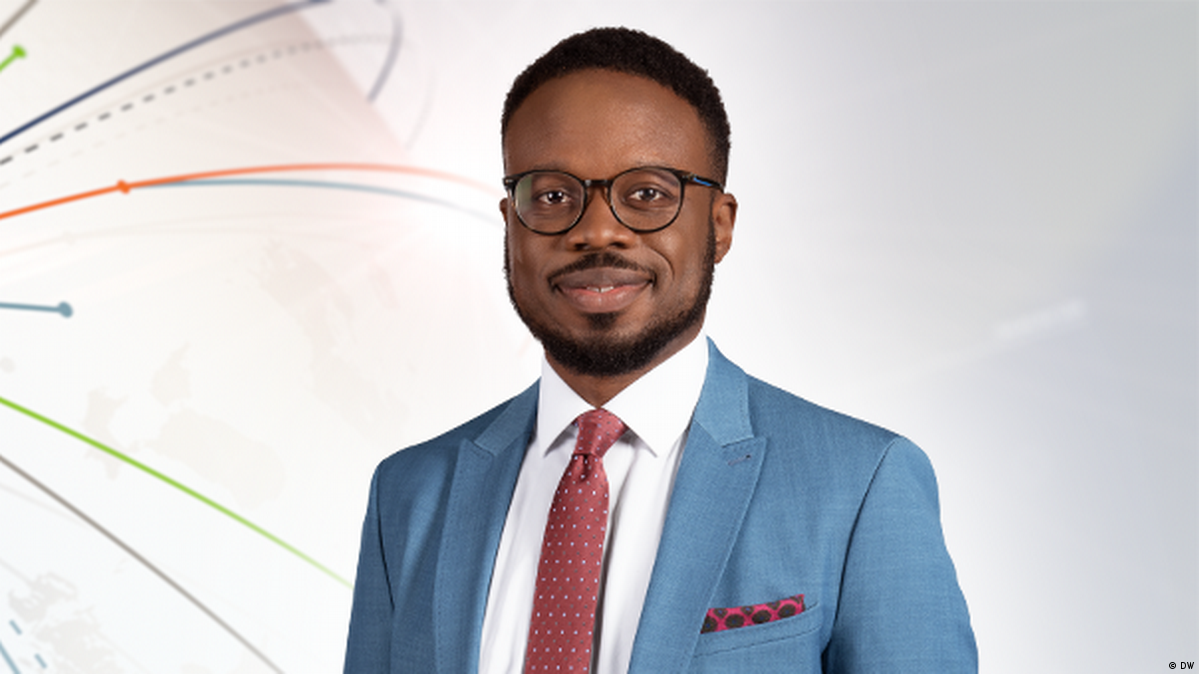

There are journalists who cover Africa from a distance — parachuting in for crises, filing dispatches, and returning to comfortable offices in London or New York. And then there are journalists like Tomi Oladipo, who have spent the better part of two decades embedded in the continent’s most dangerous, most complicated, and most consequential stories — not as a foreign correspondent experiencing Africa for the first time, but as a Nigerian man reporting on the place he comes from, with the cultural fluency and personal investment that outsiders simply cannot manufacture.
Over more than sixteen years of broadcasting, Tomi Oladipo has reported from the front lines of the Boko Haram insurgency, gained exclusive access to militants that other journalists could not reach, covered the kidnapping of the Chibok schoolgirls, investigated human trafficking cartels, reported on civil wars, political transitions, and technological transformation across the continent — first for the BBC over twelve years, and since 2019 for Deutsche Welle in Berlin. He is, by any fair measure, one of the finest journalists Nigeria has produced in the past two decades. Yet his name remains far less known to the Nigerian public than many entertainers who have accomplished far less.
That gap between professional achievement and public recognition is itself a story worth examining.
Tomi Oladipo Biography

| Detail | Information |
|---|---|
| Full Name | Tomi Oladipo |
| Nationality | British-Nigerian |
| Tribe | Yoruba |
| Based | Berlin, Germany |
| Profession | Journalist, news anchor, Africa analyst, geopolitical risk analyst, media trainer |
| Former Employer | BBC World / BBC Africa (12 years, 2007–2019) |
| Current Employer | Deutsche Welle (DW News), since September 2019 |
| Education | Daystar University, Kenya (Communication) |
| Languages | English, French, Swahili, Yoruba |
| Awards | Radio Award, One World Media Awards (2018) |
| Marital Status | Not publicly confirmed |
| Twitter/X | @Tomi_Oladipo |
| Website | tomioladipo.co |
Early Life and Background
Tomi Oladipo is a British-born Nigerian. His surname — Oladipo — is distinctly Yoruba, drawn from the Yoruba phrase meaning “wealth or honour becomes many.” He grew up in a family where engagement with world events was normalised rather than exceptional
Growing up, he was surrounded by a news-savvy family, so whether it was listening to the BBC on the radio or watching CNN, he was fairly up-to-date with world affairs even at a young age. There was Nelson Mandela’s rise to power, the wars in the Balkans, Liberia, and Sierra Leone, and even the OJ Simpson trial. He wanted to be on the scene, witnessing these major world events unfold.
That childhood image — a Nigerian boy in Britain, listening to the BBC World Service radio with his family, absorbing the news of a turbulent world — is not just biographical colour. It is the origin story of the journalist he would become. The BBC was not an abstract institution to him. It was the voice that shaped his sense of what serious journalism sounded like. The fact that he would eventually spend twelve years working for that same institution is one of those biographical circles that feels almost too neat — but is entirely true.
He loved radio, but also wanted to get involved in television, both on air and behind the scenes. He took whatever opportunity he had to learn about technical issues and how studios worked, from learning how basic PA systems worked to making friends in the radio industry and watching as they took on their craft
That self-driven technical curiosity — the willingness to hang around studios, learn the equipment, understand how broadcasting actually works from the inside — is a habit shared by the best journalists of his generation. It is the difference between someone who wants to be a journalist and someone who wants to understand journalism.
Education
Tomi Oladipo studied communication at Daystar University, Kenya.
Daystar University in Nairobi is one of East Africa’s most respected private universities, known for producing graduates who go on to careers in media, development, and public affairs. Choosing to study in Kenya — rather than in the UK, where he was born, or in Nigeria, where his family roots lie — was a significant geographic choice that placed him early in the East African media and development ecosystem and gave him a pan-African perspective that would later serve his journalism enormously.
His multilingual capacity is one of the most professionally distinctive things about him. He is a part of the BBC’s Bilingual Reporters scheme as a result of his ability to tell stories proficiently in three major languages — English, French, and Swahili — as well as his native Yoruba. In African journalism, linguistic range is not merely a cultural asset — it is an operational one. French opens doors across West, Central, and North Africa. Swahili opens East and Central Africa. Yoruba gives depth in Nigeria and the diaspora. Having all four in a single correspondent is genuinely rare.
Career Journey
The BBC: Twelve Years at the Forefront
In 2007, as he was leaving university, he made a good impression during an internship at the BBC and that became his home for the next 12 years.
That internship-to-career conversion is the foundational moment of his professional life. Many Nigerian journalists intern at international organisations and then watch the door close. Tomi walked through it — and then spent twelve years building one of the most substantive Africa-focused journalism careers in British broadcasting.
In November 2008, Tomi became BBC Africa’s correspondent to Nigeria. Being posted as a correspondent to your home country is a specific kind of journalistic challenge. You carry insider knowledge that foreign correspondents lack — the cultural references, the language nuances, the ability to read a political situation without having it explained — but you also carry the emotional investment that can complicate the distance objectivity requires. Tomi navigated that tension throughout his Nigeria posting with the discipline of someone who understood exactly what the role demanded.
Boko Haram: Journalism Under Pressure
The story that defined Tomi’s Nigeria posting — and arguably his entire career at the BBC — was his coverage of the Boko Haram insurgency in Nigeria’s northeast.
On the Boko Haram crisis in Nigeria, Tomi has been one of the key voices, gaining rare and exclusive access to a spokesman for the militant group in 2014. Getting exclusive access to Boko Haram in 2014 — during the period of the group’s most extreme violence and global infamy — was not a journalistic achievement that happened through luck or accident. It required months of relationship-building in some of Nigeria’s most dangerous territory, a level of source cultivation that most journalists never achieve, and the personal courage to sit across from individuals responsible for mass atrocities and ask the questions that needed to be asked.
He was also the first international journalist to report from territory liberated from the insurgents in 2015 in the northeast of the country. He provided key coverage of the kidnapping of the Chibok schoolgirls, gaining exclusive access to the girls who escaped and others who were released later.
The Chibok kidnapping was the single most globally covered African news story of 2014 — a crisis that generated the #BringBackOurGirls campaign and drew attention from Michelle Obama, the United Nations, and governments across the world. Being the journalist with exclusive access to the escaped girls, and to those later released, placed Tomi at the centre of the most consequential journalism about Nigeria in a generation.
That access came because the girls and their families trusted him — trusted that he would tell their stories with care, accuracy, and respect rather than as props in a foreign correspondent’s Africa narrative. That trust is the hardest thing to earn in journalism and the most valuable.
Investigations and Conflict Reporting
He has been involved in investigations on human trafficking cartels between Nigeria and Europe, police death squads in Kenya, and soldier-led sexual violence in South Sudan.
These are not the comfortable assignments of television news. Investigating human trafficking cartels means building sources in criminal networks. Investigating police death squads in Kenya means gathering evidence against armed security forces with the power and incentive to harm those who expose them. Investigating soldier-led sexual violence in South Sudan means getting survivors to speak about trauma in active conflict zones. Each of these assignments carried personal risk and required the kind of editorial seriousness and moral commitment that separates investigative journalism from mere reporting.
He has reported on a wide range of events across the continent including the civil war in South Sudan, Islamist militant activity in the Sahel, the influence of technology in business innovation, Sudan’s political transition, and China’s inroads to Djibouti.
That range — from conflict zones to technology innovation to geopolitical analysis — reflects a journalist who thinks about Africa as a complex, multidimensional subject rather than a monolithic story of crisis.
BBC Television: Anchoring Africa Coverage
Beyond his correspondent and investigative work, Tomi also anchored major BBC television programmes. He presented the television programmes Reporters, Africa Business Report, In Business Africa, and Africa Eye on BBC World News
Africa Eye in particular is one of BBC’s most important investigative journalism programmes focused on the continent — featuring undercover operations, whistleblower testimonies, and in-depth documentary investigations. Tomi’s work on that programme reinforced his reputation as one of the BBC’s most serious Africa-focused journalists.
His work won him the Radio Award at the 2018 One World Media Awards. The One World Media Awards are the UK’s most prestigious awards recognising journalism that covers the global south with depth, accuracy, and fairness. Winning in the radio category is a recognition of the best Africa-focused audio journalism in British media — a meaningful honour from a serious institution.
Deutsche Welle: Berlin and Beyond
In September 2019, Tomi announced via Twitter: “After twelve incredible years, I’ll be leaving the BBC at the end of this month. Next up, moving to Berlin to join the good folks at @dwnews as a news anchor. Thrilled!”
Deutsche Welle is Germany’s international public broadcaster — the equivalent of the BBC World Service or France 24, reaching over 250 million people weekly across television, radio, and digital platforms in 30 languages. As a news anchor and Africa analyst there, Tomi has continued the pan-continental coverage he built at the BBC, while expanding his analytical role on European-facing news programming.
His work as a news correspondent and analyst has seen him based in London, Lagos, Nairobi, and Berlin, while also travelling the world to report on stories that matter.
The four cities of his career — London, Lagos, Nairobi, Berlin — map the geographic arc of a journalist who has genuinely lived the stories he covers, rather than observing them from a safe distance.
Foreign Press Association and Media Training
He is a board member of the Foreign Press Association Africa — a professional body that represents international journalists covering the African continent and advocates for press freedom and journalist safety. Serving on its board places him in a position to shape the standards and conditions under which Africa is covered by the global press — an influence that extends well beyond his own reporting
He also works as a media trainer, helping the next generation of African journalists develop the skills and professional frameworks that international broadcast journalism demands. This mentorship role is one of the less visible but most impactful dimensions of his career.
Influence and Legacy
Tomi Oladipo’s significance in Nigerian and African journalism extends beyond any individual story or award. He represents what it looks like when a Nigerian journalist with roots in Yoruba culture, born in Britain, educated in East Africa, and deployed across the continent, brings all of those overlapping identities to bear on the work of explaining Africa to the world.
His coverage of Boko Haram, the Chibok girls, South Sudan, Sudan’s transition, and the Sahel has shaped how millions of people in Europe and globally understand those crises. His analytical presence on DW News gives African perspectives visibility on a platform that reaches audiences far beyond the traditional BBC or CNN Africa-watching demographic.
He also represents, for young Nigerian journalists, proof that it is possible to build a serious, internationally recognised career without abandoning your identity or your commitment to the continent — that you can be both rigorously professional and authentically Nigerian, both globally credible and locally trusted.
Personal Life
Tomi Oladipo keeps his personal life private. Details about his marital status, family, or romantic relationships have not been publicly confirmed. He is based in Berlin, where he has lived since joining Deutsche Welle in 2019, and describes himself as someone still trying to catch up with a rapidly changing world — a self-description that captures both the humility and the endless curiosity that good journalism requires.
Net Worth
Tomi Oladipo’s net worth has not been publicly confirmed. His income streams span over sixteen years of senior journalism at two of the world’s most significant international broadcasters — BBC and Deutsche Welle — alongside board membership at the Foreign Press Association Africa, media training work, speaking engagements, and analytical consulting. Given the seniority and international scope of his career, he is financially stable by any reasonable assessment, but no specific figure has been published.
Conclusion
Tomi Oladipo has spent more than sixteen years telling stories that the world needed to hear about a continent that the world often misunderstands. He did it from inside war zones and inside militant networks and inside the fragile intimacy of conversations with kidnapping survivors. He did it in four languages across four cities on two continents. He did it before Africa was cool, before Nollywood was on Netflix, before Afrobeats was in European charts — when covering Africa seriously was still considered a professional sacrifice rather than a strategic choice.
Nigeria produced him. Africa shaped him. And his work — filed from Lagos and Nairobi and South Sudan and Berlin — has returned the favour many times over.
Frequently Asked Questions (FAQs)
Who is Tomi Oladipo? He is a British-Nigerian journalist, news anchor, and Africa analyst who spent twelve years at the BBC and has been presenting and reporting for Deutsche Welle (DW News) in Berlin since 2019. He is widely regarded as one of Nigeria’s most accomplished international journalists.
Where is Tomi Oladipo from? He was born in Britain to Nigerian parents. His surname is Yoruba, and he identifies strongly with his Nigerian heritage. He has been based in London, Lagos, Nairobi, and Berlin over the course of his career.
Where did Tomi Oladipo go to school? He studied Communication at Daystar University in Nairobi, Kenya. He is also fluent in English, French, Swahili, and Yoruba — a multilingual range that has been central to his pan-African journalism career.
What is Tomi Oladipo’s most significant journalistic achievement? His exclusive access to Boko Haram spokespeople in 2014, his coverage of the Chibok schoolgirl kidnapping — including exclusive interviews with escaped and released girls — and being the first international journalist to report from liberated territory in Nigeria’s northeast in 2015 are widely considered his most significant field achievements.
What award did Tomi Oladipo win? He won the Radio Award at the 2018 One World Media Awards — the UK’s most prestigious recognition for journalism about the global south.
Is Tomi Oladipo married? His marital status and personal life details have not been publicly confirmed. He keeps these details private
Editorial Notice
The biography above is compiled from publicly available sources and is intended for general informational purposes only. At PeopleCabal, we are committed to accuracy — however, public records evolve, and some details may change over time. If you notice anything that requires a correction or update, we welcome you to reach out to us directly.
