
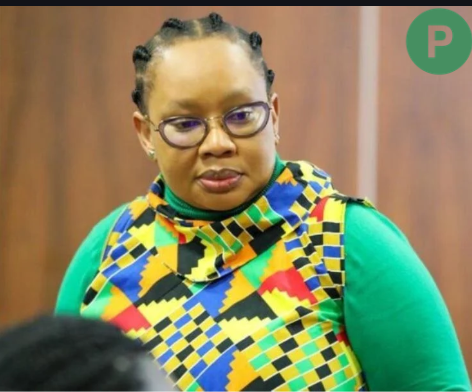

There’s a particular kind of courage required to take on the very institution that employed you — especially in South African politics, where power and accountability rarely travel in the same vehicle. Lumka Oliphant, a seasoned government communications professional and former spokesperson for the Department of Social Development, has in 2025 become one of the most talked-about figures in South African public life — not because she chased the spotlight, but because she refused to let the spotlight go out on what she believes are serious governance failures.
Her story is one of a career built quietly over decades, now thrust into a very public reckoning.
Who Is Lumka Oliphant?
Lumka Oliphant is a South African government communications specialist who served for years as the official spokesperson for the Department of Social Development (DSD). In a political landscape where spokespersons are often seen as interchangeable message-deliverers, Oliphant built a reputation as someone with genuine institutional knowledge and a sharp tongue when necessary.
But it’s in 2025 that her name has truly entered the national conversation — following her dismissal from the department and her very public confrontation with Minister Sisisi Tolashe. What could have been a quiet exit became a high-profile standoff that has pulled opposition parties, parliament, and investigative journalists into its orbit.
| Lumka Oliphant | |
|---|---|
|
|
|
| Wiki Facts & About Data | |
| Full Name: | Lumka Oliphant |
| Age: | 47 years old |
| Nationality: | South African |
| Occupation: | Government Spokesperson / Communications Professional |
| Religion: | Christianity |
| Relationship: | Married |
Early Life and Background
Lumka Oliphant was born and raised in South Africa, and while she has not made extensive public statements about her upbringing, the confidence and institutional fluency she has displayed throughout her career point to a background shaped by both education and early exposure to public service values.
Growing up in post-apartheid South Africa means her formative years unfolded during one of the most dramatic political transitions in modern history. For many of her generation, public service wasn’t just a career choice — it was a form of participation in rebuilding a nation. That context matters when you try to understand why someone like Oliphant, at 47, would risk professional security to call out what she sees as ministerial misconduct.
She is not a politician. She is, by training and temperament, a communicator — someone who understood that in government, words are policy, and silence can be complicity.
State of Origin and Tribe
Lumka Oliphant is South African, and based on her name and cultural references — including her use of Xhosa phrases in public statements — she is widely understood to be of Xhosa heritage. Her now-famous Facebook post, “Isukile. Uyandiqala uGladys” (loosely: “It has begun. Gladys is provoking me”), was written in Xhosa, suggesting a cultural and linguistic identity rooted in the Eastern Cape tradition, though her exact hometown has not been officially confirmed.
Religion
Lumka Oliphant has not made her religious beliefs a public part of her professional identity. Like many South African public servants who prefer to keep personal faith separate from governmental work, her religion has not been officially confirmed in any public record or interview. This section will be updated should she choose to speak on it.
Education
Oliphant’s educational background, while not exhaustively documented in the public domain, is consistent with the profile of a senior government communications officer. To hold a position of spokesperson at a national department — one as politically sensitive as Social Development, which oversees social grants touching millions of South Africans — you need not just academic qualifications but deep bureaucratic literacy.
She is understood to hold qualifications in communications or public relations, fields that would have prepared her for the high-stakes environment of ministerial messaging, parliamentary briefings, and media management. Her ability to navigate complex policy language and translate it for public consumption is evident from her years in the role.
Career Journey
Building in the Background
Lumka Oliphant’s career in government communications did not begin with fanfare. Like most communications professionals in the South African public sector, she worked her way through the machinery of government — understanding how departments function, how ministers communicate, and how public messaging intersects with policy delivery.
Key Turning Point: The Department of Social Development
Her most significant and visible role came as the spokesperson for the Department of Social Development — one of South Africa’s most consequential ministries. The DSD administers the social grants system that supports over 18 million South Africans. Communicating on behalf of such a department means fielding questions about hunger, child welfare, the elderly, disability grants, and systemic poverty on a near-daily basis. It is not a comfortable desk job.
Over her tenure, Oliphant became one of the more recognisable faces of the department’s media interface. Journalists who covered social policy knew her name. She was, in the truest sense, the public face of a ministry that affected the most vulnerable citizens in the country.
Major Achievement: Institutional Credibility
In government communications, longevity is itself an achievement. Surviving ministerial changes, policy shifts, and the relentless scrutiny of South Africa’s active press corps requires skill, discretion, and the ability to know when to speak and when to stay quiet. Oliphant did this for years — until she decided the time to speak had come, and there was no staying quiet.
Role at the Department of Social Development
As spokesperson, Oliphant’s responsibilities included drafting official statements, managing media inquiries, coordinating press briefings, and advising senior leadership on communications strategy. It is a role that places you at the intersection of political power and public accountability.
Critically, the spokesperson often knows things — about internal dynamics, about decisions made behind closed doors, about what has been said publicly versus privately. This institutional knowledge is precisely what makes Oliphant’s allegations against Minister Tolashe so explosive, and why the department has responded with such intensity.
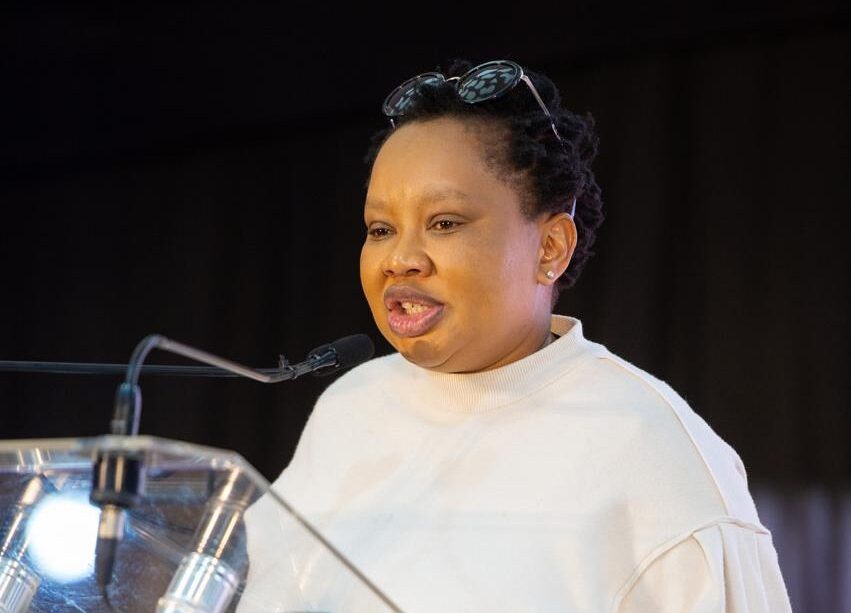
The 2025 Controversy: Dismissal and Fallout
On September 1, 2025, Lumka Oliphant was placed on precautionary suspension by the Department of Social Development. On October 17, 2025, she was formally dismissed.
Rather than accepting her exit quietly, Oliphant went public — and she came armed.
The Ministry of Social Development issued a statement accusing her of orchestrating “a deliberate and sustained campaign” to mislead the public and damage the reputation of Minister Sisisi Tolashe. The department characterised her conduct as an attempt to divert attention from the legitimate reasons for her dismissal.
Oliphant’s response, delivered in a voice note heard by TimesLIVE, was direct and unsparing. She placed herself in contrast to the minister, listing things she said she had not done — implicitly accusing the minister of doing precisely those things.
Oliphant’s Counter-Claims Against Minister Tolashe
This is where the story becomes particularly significant for public governance in South Africa. Oliphant’s allegations against Minister Tolashe, if verified, would represent serious misconduct at the highest level of a national department.
Among her claims:
- That an unqualified person was appointed in the minister’s office
- That the Director-General was given a five-year contract against the one-year authorisation granted by Cabinet and the President
- That the minister failed to declare two luxury SUVs reportedly received from Chinese officials — vehicles the minister says were donated to the ANC Women’s League
- That a department-employed worker was deployed to perform duties at the minister’s private residence and was allegedly pressured to hand over part of her salary to a member of the minister’s family
- That the minister misled Parliament
Oliphant has pointed to parliamentary records and the Auditor-General as sources that could verify her claims, stating: “These are public documents that people can go there and find.”
Opposition parties have taken note. Both ActionSA and the Democratic Alliance (DA) have laid criminal complaints against Minister Tolashe, and multiple calls have been made for President Cyril Ramaphosa to remove her from office. The minister has denied all wrongdoing and says she will not resign unless instructed by the President.
Oliphant’s public Facebook post — “Isukile. Uyandiqala uGladys” — signalled that she viewed this as only the beginning.
Leadership Style and Public Profile
What distinguishes Oliphant in this saga is not just what she’s saying, but how she’s saying it. She has been composed, specific, and — perhaps most importantly — she has cited verifiable sources rather than relying on emotional appeals alone.
Think of it like a chess player who has been watching an opponent for years and finally decides to turn the board around. She knows where the pieces are.
Her willingness to challenge a sitting minister, publicly and by name, in a political culture where institutional loyalty is heavily enforced, speaks to either considerable conviction or considerable evidence — possibly both.
Personal Life: Husband and Children
Lumka Oliphant is married, though she has kept the details of her husband and family life largely private, as is her right and preference. In a media environment that can be reductive about women in public life, reducing their complexity to their domestic roles, Oliphant has consistently centred the conversation on her professional conduct and the issues she raises.
She is understood to have children, though specific details — names, ages — have not been shared publicly. Her personal life, by her own design, remains her own.
Net Worth
Lumka Oliphant’s net worth has not been publicly confirmed, and any specific figure would be speculative. Her income has primarily been derived from her career in the South African public sector, where salaries for senior communications officials — while competitive by public service standards — are a matter of public record through departmental annual reports rather than personal disclosure.
Given her seniority and years of service, she would have earned a stable government income, but she is not known to have business interests or external income streams that would suggest significant personal wealth beyond her career earnings.
Social Media Presence
Oliphant has been notably active on Facebook, where her post in Xhosa following the ministry’s statement went viral and signalled her intent to continue the public confrontation. While her accounts are not extensively documented across platforms, her Facebook activity has become a reference point for journalists and observers following the story.
Those wishing to follow developments in her ongoing dispute with the Department of Social Development are advised to follow credible South African news outlets including TimesLIVE, Daily Maverick, and News24, which have been covering the story closely.
Conclusion
Lumka Oliphant at 47 is not at the beginning of her story — she is at what may prove to be its most defining chapter. A career built on being the voice of a ministry has given way to something more complicated and, arguably, more important: being a voice against a ministry she believes has lost its moral footing.
Whether her allegations against Minister Tolashe are ultimately substantiated through parliamentary processes, legal action, or audit findings remains to be seen. But what is already clear is that Oliphant has chosen accountability over comfort — and in a country where systemic poverty makes the integrity of the Department of Social Development a matter of life and death for millions, that choice carries genuine weight.
She has framed this not as personal vendetta, but as a matter of public record. Time, and South Africa’s institutions, will be the judges.
Frequently Asked Questions (FAQs)
1. Who is Lumka Oliphant? Lumka Oliphant is a South African government communications professional who served as the spokesperson for the Department of Social Development. She was dismissed in October 2025 and has since publicly accused Minister Sisisi Tolashe of multiple governance failures.
2. How old is Lumka Oliphant? Lumka Oliphant is 47 years old.
3. Why was Lumka Oliphant dismissed from the Department of Social Development? The department placed her on precautionary suspension on September 1, 2025, and formally dismissed her on October 17, 2025. The ministry has stated her conduct involved a campaign to mislead the public, which Oliphant strongly disputes.
4. What allegations has Lumka Oliphant made against Minister Tolashe? Oliphant has alleged that the minister appointed an unqualified official, gave the Director-General an unauthorised five-year contract, failed to declare luxury vehicles, misled parliament, and deployed a department worker to her private residence under inappropriate conditions.
5. Is Lumka Oliphant married and does she have children? Yes, Oliphant is married and is understood to have children. She has chosen to keep the details of her family life private and out of the public domain.
Editorial Notice
The biography above is compiled from publicly available sources and is intended for general informational purposes only. At PeopleCabal, we are committed to accuracy — however, public records evolve, and some details may change over time. If you notice anything that requires a correction or update, we welcome you to reach out to us directly.
