
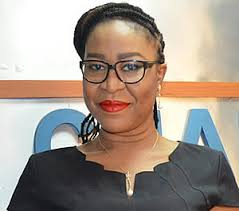

In Nigerian television journalism, covering local politics is the default. Covering international affairs with depth, consistency, and genuine understanding of the geopolitical forces at play — that is a far rarer thing. Amarachi Ubani has built her career on precisely that rarer thing, and she has done it with a quiet, sustained professionalism that deserves considerably more attention than it typically receives.
As Head of the Foreign Desk at Channels Television — one of Nigeria’s most credible and consistently watched broadcast stations — she sits at the nerve centre of how Nigerian audiences understand the world beyond their borders. She is not just a face on a screen. She is the journalist deciding which international stories matter, how they should be framed, and why they connect to Nigerian lives. That is a significant editorial responsibility, and her trajectory from Abia State University graduate to award-winning news anchor represents one of the more instructive career paths in modern Nigerian broadcasting.
| Amarachi Ubani | |
|---|---|
 Amarachi Ubani Biography (2026): Age, Husband & Personal Life: History · Bio · Photo
|
|
| Wiki Facts & About Data | |
| Full Name: | Amarachi Ubani |
| Nationality: | Nigerian |
| Occupation: | Broadcast Journalist, News Anchor, TV Presenter |
| Tribe: | Igbo |
| Years Active: | 2007 - present |
| Education: | Abia State University, Uturu (B.A. History and International Affairs) |
| Social / Web: | 📸 @amarachiubani |
Early Life and Background
Amarachi Ubani belongs to a generation of Nigerian journalists who did not drift into the profession — they chose it deliberately, built for it academically, and then committed to it professionally for the long term. Understanding who she is requires understanding the choices that shaped her before she ever stepped in front of a Channels Television camera.
Her name, Amarachi — a distinctively Igbo name meaning “God’s grace” — reflects a cultural identity rooted in southeast Nigeria, a region with a long tradition of academic achievement, entrepreneurship, and a particular hunger for education as a route to impact. The Ubani surname is also strongly associated with the Igbo-speaking communities of southeastern Nigeria, particularly Abia State — a connection that aligns naturally with her university education in the same state.
Details about her parents, siblings, and the specifics of her childhood have not been shared in the public domain, which reflects a pattern of personal privacy that Amarachi has consistently maintained throughout her career. What can be said with confidence is that her educational path — choosing History and International Affairs as a degree — was not an accident. It reveals an early intellectual orientation toward the world beyond Nigeria’s borders, an awareness that the forces shaping African nations are rarely contained within their own coastlines.
Growing up in a country as politically complex and globally significant as Nigeria, with its oil wealth, its vast population, its colonial history and its position in West African geopolitics, it is not hard to understand how a young woman drawn to understanding the world would find international affairs to be the obvious discipline to study. Amarachi made that choice, and it became the foundation of everything that followed.
Education: Studying the World Before Reporting on It
Amarachi has a passion for covering international affairs — a passion that stems from her study of History and International Affairs at Abia State University, Uturu.
That degree choice is worth examining carefully, because it is not the obvious route to a television career. Many Nigerian broadcast journalists have backgrounds in Mass Communication or English — degrees designed explicitly for media work. History and International Affairs is a different kind of preparation. It teaches you to think in timescales, to understand why events happen rather than simply what happened, and to read the relationship between nations with an analyst’s eye rather than a reporter’s surface instinct.
For a journalist who would go on to cover US presidential elections, African Union summits, post-election crises in West Africa, and the diplomatic fallout of global conflicts, that academic grounding was precisely the right foundation. She arrived at Channels Television not just with a desire to report on the world, but with an intellectual framework for understanding it.
Abia State University in Uturu, where she studied, is a state-owned federal university in Nigeria’s southeast — an institution that, at its best, has produced graduates with the kind of rigorous analytical thinking that strong humanities education demands. The fact that Amarachi chose to study there and chose this specific field says something about the intentionality with which she approached her future.
Career Journey: From Reporter to Head of Foreign Desk
Joining Channels: 2007 and a Clear Vision
In 2007, Amarachi joined Channels Television as a Presenter and Reporter. Channels Television, at that point, was already establishing itself as Nigeria’s most credible and professionally run broadcast station. Joining there was not a casual decision — it was an alignment of ambition with the right platform
She has grown to become the station’s foreign affairs correspondent, overseeing the daily international news programme The World Today and Diplomatic Channel, which discusses major developments on the foreign scene. Both programmes carry significant weight in Nigerian broadcast journalism. The World Today is Channels’ flagship daily international news programme — a show that demands a presenter who can contextualise breaking global events without losing a domestic Nigerian audience. Diplomatic Channel goes deeper still, examining the machinery of international relations: treaties, summits, bilateral agreements, and the movement of power between nations.
Presenting and producing both programmes simultaneously is a substantial workload. It speaks to the trust Channels Television has placed in Amarachi’s editorial judgement, not just her presenting ability.
The Obama Years: Being There for History
One of the clearest measures of a foreign correspondent’s standing is where they are sent when history happens. Amarachi’s assignments have included coverage of the US elections that saw Barack Obama enter the White House twice, Obama’s visit to Africa, the African Union Summits, and the political situation in Côte d’Ivoire
Covering Barack Obama’s first election in 2008 was not simply a news assignment — it was one of the most consequential political moments of the early 21st century, with particular resonance across Africa, where Obama’s Kenyan heritage made his victory feel both global and personal. Being part of Channels Television’s coverage of that moment, and then returning to cover his re-election, placed Amarachi at the centre of some of the decade’s defining international stories.
The coverage of Côte d’Ivoire’s post-election crisis in 2011 was equally significant. That crisis — which followed disputed election results and descended into armed conflict — was one of West Africa’s most serious political emergencies in recent memory. Covering it required not just journalistic skill but a deep familiarity with the regional dynamics: the role of ECOWAS, France’s historical relationship with Francophone West Africa, and the mechanisms by which African nations respond to governance breakdowns. Her academic background in international affairs was, in that moment, not just useful — it was essential.
Rising to Head of Foreign Desk: Leading, Not Just Reporting
Her keen interest in her job has seen her rise to the position of Head of the Foreign Desk, supervising and producing three international affairs programmes at Channels Television.
The transition from on-screen presenter and reporter to Head of a desk is a meaningful career evolution. It moves the journalist from execution to strategy — from telling individual stories to deciding which stories get told, how they are resourced, how they are framed, and who covers them. It is a role that carries editorial authority and managerial responsibility simultaneously.
She describes herself publicly as an Award Winning News Anchor, Presenter, and Reporter — and Head of the Foreign Desk. The self-description is precise and not inflated, which is characteristic of someone who lets the work speak first.
The MTN Media Innovation Fellowship: Staying Current
In 2025, Amarachi Ubani was selected as one of the fellows for the MTN Nigeria Media Innovation Programme, run by the School of Media and Communication at Pan-Atlantic University. Being selected from over 3,000 applicants for a fully funded fellowship that includes academic sessions, field visits, and study trips to South Africa, at a stage of her career where she is already Head of a major desk, reflects something admirable: a commitment to continued professional development rather than a resting on established credentials.
In a media landscape evolving rapidly under the pressure of digital platforms, artificial intelligence, and changing audience habits, the willingness to keep learning is not a sign of insecurity. It is a sign of professional seriousness.
Influence and Contributions: Bringing the World Home
Amarachi Ubani’s most significant contribution to Nigerian journalism is arguably conceptual: she has spent nearly two decades making the argument, through her daily work, that international news is not a luxury supplement to Nigerian broadcasting — it is a necessity.
At the Wole Soyinka Centre for Investigative Journalism’s February 2026 Journalism and Society Conversations, she argued that foreign stories resonate more when journalists clearly demonstrate how global developments affect Nigeria, citing examples such as grain supply disruptions linked to the Russia-Ukraine war and the evacuation of Nigerian students during conflicts in Sudan and Ukraine
That framing — localisation of international stories — is not a technique. It is a philosophy of journalism, one that requires both global knowledge and a deep understanding of the Nigerian context into which those stories must land. It is easy to present international news as something happening over there, to other people. Amarachi’s career has been built on refusing that separation.
She has also argued that smaller nations must regroup and strengthen regional alliances, warning that institutions such as ECOWAS have declined in relevance over the years, leaving young people increasingly disillusioned. These are not safe, anodyne journalistic observations. They are substantive editorial positions that reflect an intellectual engagement with her subject matter that goes beyond daily news gathering.
Personal Life: Private by Design
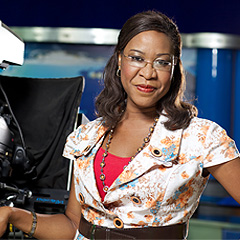
Amarachi Ubani’s personal life — details about a husband, children, her parents, and her siblings — has not been made publicly available through any verified source. Her date of birth has similarly not been disclosed. Her height has not been confirmed in public records.
This is a deliberate choice, and one that is entirely consistent with how she has navigated her public profile throughout her career. She has built her professional reputation on the substance of her journalism, not on the currency of personal disclosure. In a media environment where personal revelation is increasingly treated as a professional asset, her preference for privacy is a considered one.
What does emerge from her public work is a personality shaped by intellectual curiosity, professional discipline, and a genuine engagement with the ideas behind the stories she covers. Whether it is geopolitics, regional diplomacy, or the consequences of global conflict for ordinary Nigerian people, she brings both head and heart to the material.
Net Worth
Amarachi Ubani’s net worth has not been publicly confirmed or independently verified. Her income is primarily drawn from her long-standing employment at Channels Television, where she holds a senior editorial position as Head of the Foreign Desk, as well as from presenting and production work across multiple international affairs programmes. For someone with nearly two decades of consistent broadcast journalism at Nigeria’s leading television network, her financial standing reflects that seniority and longevity. Specific figures that may appear on third-party websites are unverified and should not be relied upon.
Conclusion
Amarachi Ubani is not the most loudly celebrated name in Nigerian broadcast journalism. She has not sought that kind of visibility. What she has done instead is something more durable: she has spent nearly twenty years building genuine expertise, expanding her editorial authority, and using a platform at one of Africa’s most respected television stations to make Nigerian audiences more literate about the world that shapes their lives.
Her career is a quiet argument for a particular kind of journalism — one rooted in academic depth, field experience, editorial courage, and the conviction that international affairs are not remote but deeply, consequentially local. The grain on Nigerian shelves, the students stranded in a foreign conflict zone, the regional body that has lost its purpose — these are not abstractions. They are the stories Amarachi Ubani covers, and the reason that her work matters well beyond the studio.
She is still looking forward to more stories, as her own Channels Television profile notes. That forward-facing disposition, held after nearly two decades in the profession, is perhaps the most telling thing about her.
Frequently Asked Questions
1. Who is Amarachi Ubani and what is she known for? Amarachi Ubani is a Nigerian award-winning broadcast journalist and news anchor at Channels Television, where she also serves as Head of the Foreign Desk. She is best known for her international affairs reporting, including coverage of US presidential elections under Barack Obama, African Union summits, and West African political crises.
2. What is Amarachi Ubani’s state of origin and tribe? Amarachi Ubani’s state of origin has not been officially confirmed in public sources. Her name and educational background at Abia State University, Uturu suggest strong ties to southeastern Nigeria and the Igbo cultural community, though this has not been formally stated by her.
3. What did Amarachi Ubani study and where? She studied History and International Affairs at Abia State University, Uturu. That academic foundation directly informed her specialisation in international affairs journalism and her role overseeing Channels Television’s Foreign Desk.
4. What programmes does Amarachi Ubani work on at Channels TV? She has been involved in presenting and producing The World Today — Channels Television’s flagship daily international news programme — and Diplomatic Channel, which covers major developments in global diplomacy and foreign relations.
5. Is information available about Amarachi Ubani’s husband, children, or family? No verified public information is available about her husband, children, parents, or siblings. Amarachi Ubani has consistently maintained a strong boundary between her professional public profile and her private personal life, and that privacy has not been breached by credible public sources
Editorial Notice
The biography above is compiled from publicly available sources and is intended for general informational purposes only. At PeopleCabal, we are committed to accuracy — however, public records evolve, and some details may change over time. If you notice anything that requires a correction or update, we welcome you to reach out to us directly.
