
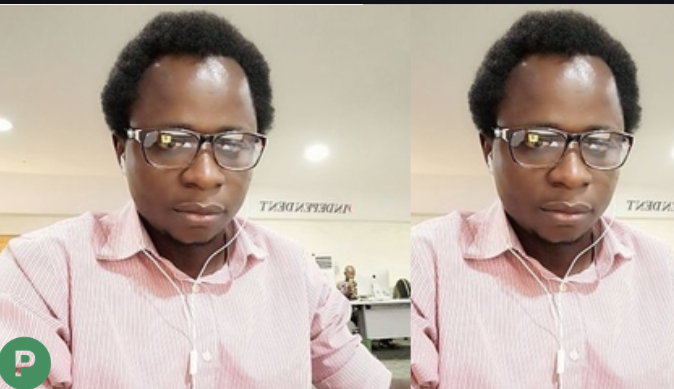
Akinwunmi King – Senior Political Correspondent, Independent Newspapers Nigeria

Political journalism in Nigeria is not a career for the faint-hearted. It demands patience in rooms where power performs rather than governs, persistence in institutions that are not always designed to be transparent, and a particular kind of moral clarity that keeps a reporter honest when the pressures around them are anything but. Akinwunmi King has spent more than a decade navigating exactly that terrain — and he has done it with the quiet conviction of someone who chose this work not because it was convenient, but because he believed it mattered.
He is a Senior Political Correspondent at Independent Newspapers Nigeria, currently assigned to cover the Lagos State House of Assembly — one of the most politically consequential legislative bodies in the country. But his story is not simply about where he ended up. It is about the deliberate, sometimes unconventional path he took to get there: from a 2006 internship at a Lagos newspaper, through elections and legislative chambers and a four-year detour into the machinery of government itself, and back to the press bench with a depth of institutional knowledge that most journalists never accumulate.
Akinwunmi King describes himself as a principled radical — a writer, critic, and journalist with a defined media outlook. That self-description is worth taking seriously, because it signals something about how he approaches his work: not as a neutral conduit for official statements, but as someone with a point of view, shaped by years of watching how power actually operates in Lagos.
| Akinwunmi King | |
|---|---|
 Akinwunmi King – Senior Political Correspondent, Independent Newspapers Nigeria: History · Bio · Photo
|
|
| Wiki Facts & About Data | |
| Full Name: | Akinwunmi King |
| State of Origin: | Lagos State |
| Nationality: | Nigerian |
| Occupation: | Senior Political Correspondent, Journalist, Writer |
| Tribe: | Yoruba |
| Years Active: | 2006 - present |
| Education: | ND – Lagos State Polytechnic, Ikorodu (2006); HND – Nigerian Institute of Journalism, Ogba (2016) |
Early Life and Background
Akinwunmi King is Nigerian, of Yoruba heritage, rooted in Lagos State — a city that is simultaneously the commercial engine of Nigeria and one of its most complex political arenas. Growing up in Lagos gives a person an early, unfiltered education in how systems work, how institutions are navigated, and how the gap between official narrative and lived reality can be vast enough to drive a bus through.
That gap, in many ways, is what political journalism exists to document. And it is difficult not to read Akinwunmi’s eventual choice of beat — Lagos politics, specifically the legislature — as something shaped by an environment that made him alert to power and how it moves.
His self-description as a “principled radical” is not a casual label. In Nigerian media culture, where many journalists find themselves navigating commercial pressures, political affiliations, and the economics of survival in a challenging industry, describing yourself as principled is a statement of intent. Describing yourself as radical suggests a willingness to ask the uncomfortable questions, to push beyond the official line, to treat journalism as something more than the transcription of press releases.
Those qualities, wherever they were first formed, have been present in his professional approach throughout a career that has now extended well beyond a decade.
Education
Akinwunmi King’s educational journey is one of the more interesting in Nigerian journalism, partly because of its pace and partly because of where it led him.
He obtained his National Diploma (ND) from Lagos State Polytechnic, Ikorodu in 2006 — the same year he entered the journalism industry as an intern at Independent Newspapers. That simultaneity is telling. He did not wait for a degree to pursue the work. He walked into a newsroom at the earliest opportunity and began learning on the job, treating the newspaper floor as a classroom as much as the polytechnic had been.
Then, by his own honest account, the love of the job intervened. It took him a while to return to school — because he was busy working, building his craft, covering elections, learning the Lagos political terrain from the inside. That gap between his ND and his Higher National Diploma is not a mark against him. It is a mark of someone who understood that the journalism profession rewards doing, not just studying.
He eventually returned to formal education, completing his Higher National Diploma (HND) at the Nigerian Institute of Journalism (NIJ) in Ogba, Lagos, in 2016. The NIJ is a specialist institution — unlike a general polytechnic or university, it is dedicated specifically to journalism training, which means the HND he earned there was directly vocational, practically oriented, and grounded in the specific demands of the profession he had already been practising for a decade.
That combination — a decade of real experience followed by formal specialist education — produced a journalist who understood his craft from both ends. The theory confirmed what the practice had already taught him. And the practice gave the theory a weight and texture it could not have had in a classroom alone.
Career Journey
The Beginning: Walking Into a Newsroom in 2006
Akinwunmi King’s journalism career began in 2006 when he joined Independent Newspapers Limited in Lagos as an intern — a trainee reporter taking his first steps in a newsroom that has been one of the pillars of Nigerian print journalism for decades. Independent Newspapers is not a small, peripheral publication. It is an established media institution, and entering it as an intern means being immediately exposed to the standards, pressures, and rhythms of serious professional journalism.
The early years of any journalism career are about breadth before depth. You cover what you are assigned, you learn the beats, you discover what kind of reporter you are and what kind you want to become. Akinwunmi covered Metro, Politics, and Business in those formative years — three of the most demanding beats in Nigerian newspaper journalism, each requiring a different set of skills and a different relationship with sources.
Metro journalism in Lagos is a particular training ground. The city is enormous, its stories are relentless, and the pace of a Lagos metro desk teaches a reporter to work fast without sacrificing accuracy. Politics introduces a journalist to the peculiar ecosystem of Nigerian governance — the relationships, the power plays, the official statements that require translation and the silences that require investigation. Business journalism demands numeracy, context, and the ability to explain complex economic realities to a general audience.
That he covered all three early in his career gave Akinwunmi a foundation that narrow specialists rarely develop.
Election Coverage and Political Immersion
A significant dimension of Akinwunmi King’s early and mid-career was his involvement in covering the electioneering campaigns of political parties in Lagos — in 2007, 2011, and 2015. These were three of the most consequential election cycles in recent Nigerian political history, each with its own character and its own implications for the country’s democratic development.
Covering three full election cycles in Lagos — where political competition is fierce, where the stakes are high, and where the relationship between money, power, and public mandate is often uncomfortably visible — is an education that cannot be replicated in any classroom or training programme. It teaches a journalist not just how elections work on paper, but how they work in practice: the campaigns, the rallies, the backroom negotiations, the voter dynamics, the moment when results come in and the city either celebrates or holds its breath.
By 2015, Akinwunmi had covered enough Nigerian politics to have a sophisticated, experience-grounded understanding of how the Lagos political system actually operates. That understanding would soon be tested in an unexpected way.
The Government Detour: Inside the Legislature
Between July 2015 and May 2019, Akinwunmi King made a decision that most journalists never make: he stepped away from active journalism to work as a Media and Legislative Aide at the Lagos State House of Assembly.
This is the most analytically interesting period of his career, and it deserves careful consideration. Working as a legislative aide is not a betrayal of journalism — it is a different kind of education. From inside the Lagos State House of Assembly, Akinwunmi was able to observe the mechanics of legislative governance not as a reporter watching from the press gallery, but as someone embedded within the institution itself.
He saw how legislation is drafted, debated, amended, and passed — or quietly shelved. He understood the internal politics of a state legislature: the committee structures, the relationships between lawmakers and the executive, the way public positions are constructed and private decisions are made. He developed contacts, built institutional knowledge, and acquired a granular understanding of how the Lagos House of Assembly actually functions that no amount of external reporting could have produced.
When he returned to Independent Newspapers in July 2019, he came back as a different kind of journalist — one who understood his beat from both sides of the railing. That is an advantage that shows in the quality and depth of political coverage, even when the reader cannot quite articulate why one reporter’s stories feel more authoritative than another’s.
The Lagos State House of Assembly Correspondent
Since his return to Independent Newspapers, Akinwunmi King has worked as a Senior Political Correspondent, covering the Lagos State House of Assembly as his primary beat. The Lagos Assembly is one of the most important sub-national legislative bodies in Nigeria. It oversees governance in Africa’s largest city by population, approves budgets that run into hundreds of billions of naira, and exercises legislative oversight over an executive that wields enormous economic and political power.
Covering that institution well requires exactly the combination of skills and experience that Akinwunmi has accumulated: the reporting instincts developed over a decade in newsrooms, the political knowledge built across three election cycles, and the institutional understanding acquired from four years working inside the legislature itself.
His work has appeared in Independent Newspapers and on AllAfrica — giving his reporting both a national and a continental reach, and placing his coverage of Lagos politics within a broader African media conversation.
Influence and Contribution
Akinwunmi King’s contribution to Nigerian political journalism is rooted in a quality that is both simple and rare: he knows what he is talking about. In a media environment where political reporters sometimes rely on press releases and official statements as the primary material of their coverage, Akinwunmi brings the kind of institutional depth that allows him to ask better questions, identify what is missing from official accounts, and give his readers context that transforms information into understanding.
His self-identification as a “principled radical” and a “critic” suggests someone who sees journalism not merely as a reporting function but as a watchdog role — a responsibility to hold institutions accountable rather than simply document their activities. That orientation, when sustained over a decade-plus career, produces journalism that serves the public interest in a way that safer, more compliant reporting rarely does.
His experience as a legislative aide also positions him uniquely as a resource for younger journalists covering government and politics. He understands the terrain from multiple vantage points, and that breadth of perspective is the kind of thing that, shared deliberately, can raise the standard of political reporting across an entire newsroom.
Personal Life
Akinwunmi King has maintained a deliberate privacy around his personal life — his wife, family, and domestic circumstances have not been placed into the public domain in any comprehensive way. For a journalist who describes himself as principled and who has spent his career directing attention toward institutions and systems rather than personalities, this is entirely consistent.
What comes through in his professional public presence is a person of clear convictions — someone whose values are not performed for an audience but are evident in the choices he has made: the beats he has covered, the institution he returned to after a four-year absence, the way he describes his own work. Those qualities tend to be rooted in personal foundations that are stable, and suggest a man who knows what he values both professionally and privately.
His Yoruba heritage and Lagos roots remain present in his professional identity — in the intimacy with which he understands the city he covers, and in the cultural groundedness that gives his political reporting a local texture that journalists parachuted in from elsewhere rarely manage to replicate.
Net Worth
Akinwunmi King’s net worth has not been publicly confirmed by any verifiable source. His income is primarily derived from his work as a Senior Political Correspondent at Independent Newspapers Nigeria, supplemented potentially by writing, commentary, and any consultancy or advisory work connected to his legislative and political expertise. Nigerian print journalism, it should be noted honestly, is not among the most financially rewarding professions in the country — the value Akinwunmi brings to his beat is measured in public service and professional legacy more than in income figures, and any specific financial estimates circulating online should be treated with appropriate scepticism.
Conclusion
Akinwunmi King’s career is a study in how journalism done with commitment and integrity accumulates into something more than a collection of bylines. He started as a trainee reporter in 2006 and built, methodically and without shortcuts, a body of experience that now makes him one of the more credible voices covering Lagos political affairs in the Nigerian press.
The four years he spent inside the Lagos State House of Assembly were not a detour from journalism — they were an investment in it. He came back to the press bench knowing things that most reporters covering the same beat can only guess at. That knowledge, combined with the principled, critical approach he has carried throughout his career, is what makes him worth reading and worth profiling.
Nigerian democracy requires journalists who understand the institutions they cover deeply enough to hold them accountable meaningfully. Akinwunmi King, by the evidence of his career, is one of those journalists. In a profession where that kind of commitment is increasingly rare, that is not a small thing.
FAQs
1. Where did Akinwunmi King start his journalism career? He began his journalism career in 2006 at Independent Newspapers Limited in Lagos, where he joined as an intern — a trainee reporter. He has since risen to the position of Senior Political Correspondent at the same organisation.
2. What beat does Akinwunmi King currently cover? He currently covers the Lagos State House of Assembly as a Senior Political Correspondent for Independent Newspapers Nigeria. His work has also appeared on AllAfrica, giving his coverage a broader continental reach.
3. Why did Akinwunmi King leave journalism between 2015 and 2019? He took a planned break from active journalism to work as a Media and Legislative Aide at the Lagos State House of Assembly. He returned to Independent Newspapers in July 2019, bringing with him a deepened institutional understanding of the legislature he now covers as a reporter.
4. What elections has Akinwunmi King covered? He was part of the press crew that covered the electioneering campaigns of political parties in Lagos during the 2007, 2011, and 2015 election cycles — three of the most significant election years in recent Nigerian political history.
5. What does Akinwunmi King mean by calling himself a “principled radical”? It is his way of describing a journalism philosophy that goes beyond neutral reporting — one that is critical of power, committed to accountability, and grounded in clear editorial values. It signals that he approaches political journalism as a watchdog role rather than simply a reporting function.
Editorial Notice
The biography above is compiled from publicly available sources and is intended for general informational purposes only. At PeopleCabal, we are committed to accuracy — however, public records evolve, and some details may change over time. If you notice anything that requires a correction or update, we welcome you to reach out to us directly.
