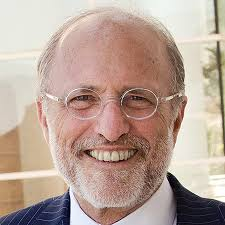

In the world of art museums, James Cuno occupies a rare position: someone who has led institutions at virtually every level of prestige, from university galleries to one of the world’s largest private art foundations. His career is an argument that museum leadership is not just administration — it is a form of scholarship in its own right, requiring both intellectual rigor and institutional courage.
James Cuno Biography
| Full Name | James Cuno |
| Date of Birth | April 6, 1951 |
| Place of Birth | St. Louis, Missouri, USA |
| Nationality | American |
| Occupation | Art Historian, Museum Director, Author |
| Education | BA History, Willamette University (1973); MA Art History, University of Oregon (1978); AM & PhD Fine Arts, Harvard University (1981, 1985) |
| Known For | President & CEO, J. Paul Getty Trust; President, Art Institute of Chicago |
Early Life and Education
James Cuno was born on April 6, 1951, in St. Louis, Missouri. He pursued his undergraduate education at Willamette University in Salem, Oregon, graduating in 1973 with a Bachelor of Arts in History. He then moved to the University of Oregon, where he completed a Master of Arts in Art History in 1978 — an institution to which he remains connected and by which he has been recognized as a distinguished alumnus.
Cuno then entered Harvard University, earning an AM in Fine Arts in 1981 and a PhD in the History of Art in 1985. His doctoral work focused on French art history, and his scholarly interests in 19th-century French caricature would remain a through-line in his publishing career even as administrative responsibilities consumed more of his time.
Career Journey
James Cuno’s career in museum leadership began in the classroom and the gallery simultaneously. After serving as assistant professor of art at Vassar College (1983–1986), he moved to UCLA as director of the Grunwald Center for the Graphic Arts (1986–1989), then to Dartmouth College as director of the Hood Museum of Art (1989–1991).
The pivotal move came in 1991 when he was appointed the Elizabeth and John Moors Cabot Director of the Harvard University Art Museums — comprising the Fogg, the Busch-Reisinger, and the Arthur M. Sackler Museums — a position he held for twelve years. During that tenure he led the largest capital campaign in the Harvard Art Museums’ history, raising $55 million, and was elected president of the Association of Art Museum Directors (AAMD).
In 2003 he briefly took the directorship of the Courtauld Institute of Art at the University of London — one of the world’s premier art history institutions — before being drawn away in 2004 to become president and director of the Art Institute of Chicago. There, he oversaw the development of the institution’s celebrated Modern Wing, a landmark expansion designed by architect Renzo Piano.
In 2011, Cuno made his final and perhaps most consequential move: President and CEO of the J. Paul Getty Trust, the Los Angeles-based organization that oversees the Getty Museum, the Getty Conservation Institute, the Getty Foundation, and the Getty Research Institute. He held that position until his retirement in 2022.
Scholarly Contributions
Despite his heavy institutional responsibilities, Cuno maintained a genuine scholarly voice. He authored and edited several books published by Princeton University Press and the University of Chicago Press, including Whose Muse? Art Museums and the Public’s Trust, Who Owns Antiquity: Museums and the Battle Over Our Ancient Heritage, and Museums Matter: In Praise of the Encyclopedic Museum. These works engaged serious debates about cultural property, repatriation, and the public mission of art museums — debates that grew increasingly urgent during his tenure at the Getty.
Recognition
Cuno was elected a Fellow of the American Academy of Arts and Sciences in 2001 and has served on its Council as International Secretary. He has also served on the boards of the Courtauld Institute of Art, the Pulitzer Arts Foundation, and Willamette University.
Personal Life
James Cuno has kept his personal life relatively private. He is married and has been based in Los Angeles, particularly during his years at the Getty.
Net Worth
James Cuno’s net worth has not been publicly confirmed. His career as a museum executive and scholar — particularly his decade-plus leading the J. Paul Getty Trust, one of the world’s wealthiest art foundations — would suggest a comfortable professional life, though specific figures are not publicly available.
Conclusion
James Cuno’s career is a case study in the possibility of combining serious intellectual life with institutional leadership. He moved through some of the most important art institutions in the English-speaking world not as a caretaker but as a shaper — raising money, sparking debate, and insisting that museums are not simply repositories of beautiful objects but are active participants in cultural and philosophical life.
Frequently Asked Questions
Q: What is James Cuno best known for?
A: He is best known for serving as President and CEO of the J. Paul Getty Trust from 2011 to 2022, and before that as president of the Art Institute of Chicago.
Q: Where did James Cuno get his PhD?
A: He earned his PhD in Fine Arts (History of Art) from Harvard University in 1985.
Q: What books has James Cuno written?
A: He authored Who Owns Antiquity, Whose Muse?, Whose Culture?, and Museums Matter, among others.
Q: When was James Cuno born?
A: April 6, 1951, in St. Louis, Missouri.
Q: Did James Cuno teach at universities?
A: Yes — he taught at Vassar College, UCLA, Dartmouth, and Harvard at various stages of his career.
Editorial Notice
The biography above is compiled from publicly available sources and is intended for general informational purposes only. At PeopleCabal, we are committed to accuracy — however, public records evolve, and some details may change over time. If you notice anything that requires a correction or update, we welcome you to reach out to us directly.
