
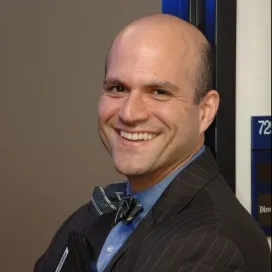
Dr. Farzad Mostashari Biography: Age, Education, Health Policy Career & Legacy

Dr. Farzad Mostashari is an Iranian-American physician, health policy expert, and entrepreneur whose career has placed him at the center of one of the most ambitious and consequential transformations in American healthcare — the shift from paper-based medical records to electronic health records (EHR) that has reshaped how patient information is stored, shared, and used across the American healthcare system. As the National Coordinator for Health Information Technology in the Obama administration, he oversaw the implementation of a multibillion-dollar federal program that dramatically accelerated EHR adoption by American hospitals and physician practices. After leaving government, he founded Aledade — a company that has pioneered new models of primary care practice that use technology and data to improve patient outcomes while reducing costs. His career is a study in how a physician with genuine policy vision and entrepreneurial courage can use different levers — government leadership, private sector innovation, and public advocacy — to drive transformation in a healthcare system that resists change with extraordinary force.
Dr. Farzad Mostashari Biography
| Full Name | Farzad Mostashari |
|---|---|
| Nationality | American (Iranian heritage) |
| Occupation | Physician, Health Policy Expert, Entrepreneur, Co-founder of Aledade |
| Education | Yale University (BA); Harvard Medical School (MD); Harvard School of Public Health (MPH) |
| Known For | National Coordinator for Health IT; Aledade co-founder; electronic health records implementation; accountable care organizations |
Early Life and Academic Formation
Farzad Mostashari was born in Iran and came to the United States, where he pursued one of the most distinguished academic paths available in American medicine — studying at Yale University for his undergraduate education before attending Harvard Medical School for his MD, with additional graduate training in public health from the Harvard School of Public Health. This trifecta of elite academic institutions gave him both the clinical medical training and the population health and policy perspective that his subsequent career at the intersection of medicine, technology, and policy would require.
The Harvard School of Public Health component of his education is particularly significant for understanding his career trajectory — public health training orients physicians toward questions of population-level health outcomes and the policy and systemic interventions that produce them, rather than solely toward the individual patient encounters that clinical medicine centers. This population health perspective gave Mostashari the analytical framework to think about healthcare reform at scale — to consider not just how individual patients are treated but how the entire system is organized and whether that organization produces the outcomes that the enormous resources devoted to American healthcare should theoretically generate.
Before his federal government role, Mostashari worked in public health positions at the New York City Department of Health and Mental Hygiene — the largest local health department in the United States — where he led various initiatives including the department’s response to emerging health challenges and its development of health information technology infrastructure. This experience in large-scale public health operations gave him the practical knowledge of how government health systems actually function that purely academic training cannot provide.
National Coordinator for Health Information Technology
Mostashari’s appointment as National Coordinator for Health Information Technology in the Obama administration placed him at the helm of one of the most significant healthcare technology initiatives in American history. The Health Information Technology for Economic and Clinical Health (HITECH) Act, passed as part of the 2009 economic stimulus legislation, allocated approximately $30 billion in federal incentive payments to hospitals and physicians who demonstrated “meaningful use” of certified electronic health records — creating the largest financial incentive program for healthcare technology adoption ever implemented.
When Mostashari took on the National Coordinator role, EHR adoption among American physician practices and hospitals was strikingly low by international standards — the United States, despite spending far more per capita on healthcare than any other developed nation, had been significantly slower than many European and Asian countries to digitize its medical records infrastructure. The paper-based system that predominated was not merely inefficient but actively harmful — medication errors, duplicate testing, communication failures between providers, and the inability to analyze population-level data for quality improvement were all directly attributable to the fragmentation and inaccessibility of paper records.
Under his leadership, ONC (the Office of the National Coordinator) implemented the meaningful use program with an aggressiveness and a focus on results that dramatically accelerated EHR adoption. By the time Mostashari left the role in 2013, EHR adoption among hospitals had risen from approximately 12% to over 80% — a transformation achieved in approximately four years that would otherwise have taken decades. This acceleration was not without costs and controversies — the speed of implementation, the design of EHR systems optimized for billing rather than clinical use, and the usability problems that resulted from rapid adoption have been legitimate criticisms of the program — but the fundamental transformation of American healthcare’s information infrastructure under his leadership is undeniable.
Founding Aledade
After leaving the Obama administration, Mostashari co-founded Aledade — a company that partners with independent primary care physicians to form Accountable Care Organizations (ACOs) that take on financial responsibility for the total cost and quality of care for a defined patient population. Aledade’s model addresses one of the central dysfunctions of American healthcare — the fee-for-service payment system that rewards volume of services rather than outcomes, creating financial incentives misaligned with patient health — by helping independent primary care doctors participate in alternative payment models that reward keeping patients healthy rather than treating them when they are sick.
The company provides independent physician practices with the technology, data analytics, practice transformation support, and regulatory navigation assistance that participation in value-based care models requires — capabilities that individual small practices lack but that Aledade can provide at scale across its network. The approach has been designed to keep independent primary care physicians — a critical but endangered component of the American healthcare ecosystem — viable in a changing payment environment while improving the quality and efficiency of the care they deliver.
Aledade has grown significantly since its founding, becoming one of the most prominent and successful ACO enablement companies in the US, working with thousands of physicians across multiple states and managing billions of dollars in healthcare spending. Its success has been recognized through multiple rounds of venture capital investment and significant media and policy attention as a model for how value-based care transformation can actually work in practice rather than only in theory.
Personal Life
Mostashari is based in the Washington, D.C. area and remains deeply engaged in health policy debates, public advocacy for healthcare reform, and the business of building Aledade. His Iranian-American identity has shaped his perspective on the healthcare challenges facing immigrant and minority communities, and his immigrant experience of seeking opportunity through education and professional achievement reflects in his approach to healthcare reform as a vehicle for expanding opportunity and reducing the health disparities that inequality produces.
Net Worth
His net worth is not publicly confirmed. Aledade has raised hundreds of millions of dollars in venture capital funding and has grown significantly — as a co-founder, Mostashari holds equity in a company that has achieved considerable scale and valuation, though the specific financial details are not public.
Conclusion
Farzad Mostashari’s career demonstrates the multiple levers that a physician with genuine policy vision can use to drive healthcare transformation — government leadership to accelerate systemic change at scale, and entrepreneurial innovation to address the specific problems that systemic change creates or reveals. His work on EHR implementation transformed America’s health information infrastructure, and his work at Aledade is attempting to transform its payment and care delivery structure — two of the most consequential dimensions of healthcare reform. Both initiatives represent the kind of sustained, ambitious engagement with complex systemic problems that the physician-policymaker-entrepreneur role at its best can produce.
Frequently Asked Questions
What was Farzad Mostashari’s role in the Obama administration?
National Coordinator for Health Information Technology — overseeing the $30 billion HITECH Act meaningful use program that dramatically accelerated electronic health records adoption across American hospitals and physician practices.
What is Aledade?
A company co-founded by Mostashari that helps independent primary care physicians form and participate in Accountable Care Organizations — alternative payment models that reward keeping patients healthy rather than treating them when sick.
Where did Farzad Mostashari study?
Yale University (BA), Harvard Medical School (MD), and Harvard School of Public Health (MPH).
What was the impact of EHR adoption during Mostashari’s tenure?
Hospital EHR adoption rose from approximately 12% to over 80% during his tenure — a transformation that would otherwise have taken decades.
What problem does Aledade address in American healthcare?
The misalignment between the fee-for-service payment system that rewards volume and the outcomes-focused payment models that reward keeping patients healthy — helping independent primary care doctors participate in value-based care that aligns financial incentives with patient health.
Editorial Notice
The biography above is compiled from publicly available sources and is intended for general informational purposes only. At PeopleCabal, we are committed to accuracy — however, public records evolve, and some details may change over time. If you notice anything that requires a correction or update, we welcome you to reach out to us directly.
