
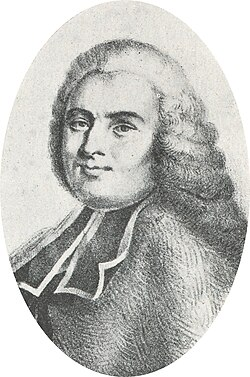
Jacques Barbeu-Dubourg Biography: Age, Nationality, Career, Education and Contributions

The eighteenth century produced a particular kind of intellectual: the polymathic curiosity-driven scholar who moved fluently between medicine, botany, history, journalism, and politics without feeling any contradiction in the combination. Jacques Barbeu-Dubourg was one of the finest examples of this type — a French physician who translated Benjamin Franklin into French, invented a lightning-rod umbrella, designed one of the most ambitious historical visualization tools of his era, and played a quiet but significant role in the diplomatic intrigues of the American Revolution. He is rarely a household name today, but his contributions touched multiple fields and his friendship with Franklin placed him at the center of one of the most consequential transatlantic intellectual exchanges of the Enlightenment.
Quick Profile
| Full Name | Jacques Barbeu-Dubourg |
|---|---|
| Date of Birth | February 12, 1709 |
| Place of Birth | Mayenne, France |
| Nationality | French |
| Profession | Physician, Botanist, Writer, Translator, Publisher |
| Education | Theological studies (early); Doctorate in Medicine, Paris (1748) |
| Known For | Translating Benjamin Franklin; inventing the lightning-rod umbrella; the Carte chronographique |
| Memberships | Royal Society of Medicine (Paris), Medical Society of London, American Philosophical Society |
Early Life and Education
Jacques Barbeu-Dubourg was born in Mayenne, in northwest France, on February 12, 1709. His early intellectual trajectory pointed toward theology — he initially pursued religious studies with what appeared to be genuine commitment. But the pull of science proved stronger. He eventually abandoned theological studies to devote himself to medicine and natural philosophy, a transition that was not uncommon in an era when the boundaries between disciplines were porous and the spirit of Enlightenment inquiry was reshaping what educated Europeans considered worth knowing.
He studied medicine in Paris and obtained his doctorate in 1748 — a decade-long process that reflected the rigorous demands of eighteenth-century French medical education. By this point, he had already developed broad intellectual interests that extended well beyond clinical practice: botany, mathematics, electrical experimentation, history, and political theory all fell within his range.
Career: A Life Across Disciplines
Barbeu-Dubourg’s professional identity was genuinely difficult to categorize, which was precisely the point. He practiced medicine, but he was equally engaged with reforming the practice of medicine as with practicing it himself. He published the Gazette d’Épidaure in 1762 — a medical journal that served as a vehicle both for clinical news and for broader scientific commentary. In the same journal, he published his first French translations of some of Benjamin Franklin’s early experimental work on electricity, beginning what would become one of the most important transatlantic intellectual friendships of the Enlightenment era.
He was a botanist of serious standing, publishing Le Botaniste français in two volumes in 1767 — a work designed, unusually for the era, to make botany accessible to ordinary readers: herbalists, rural people, women, and children, as he wrote in the preface. The plant genus Barbeuia was later named in his honor — a standard form of scientific recognition that reflects the respect he commanded among naturalists of his time.
His most spectacular intellectual project was the Chronographie (1753), a visual representation of world history so ambitious in scale that it bordered on the theatrical. The chart was 54 feet long, mounted on a scroll mechanism with cranks and handles — what Barbeu-Dubourg himself called a “chronographic machine” — designed to allow readers to navigate through history as if moving through space. This was one of the most ambitious data-visualization projects of the pre-digital era, and it has been recognized by historians of information design as a genuine innovation in historical representation.
Friendship with Benjamin Franklin
Barbeu-Dubourg’s relationship with Benjamin Franklin was the defining intellectual partnership of his later career. The two men began corresponding, probably in the 1760s, and developed a warm friendship built on mutual respect for each other’s breadth of interest and practical curiosity. Franklin’s own range — science, politics, philosophy, publishing — mirrored Dubourg’s remarkably closely.
In 1773, Barbeu-Dubourg published a comprehensive French translation of Franklin’s Observations and Experiments, complete with extensive annotations — a major scholarly project that brought Franklin’s scientific ideas to a French-speaking audience at a critical moment. When the American Revolution broke out, the French government briefly appointed Barbeu-Dubourg as a secret intermediary to channel support to the American cause. He was eventually replaced in this role by Pierre-Augustin Caron de Beaumarchais, who proved more suited to the political dimensions of the task. Nevertheless, Barbeu-Dubourg’s willingness to participate in the effort reflected the depth of his commitment to the American revolutionary project — a commitment that aligned with his broader Enlightenment values around liberty and reason.
Inventions and Innovations
Among Barbeu-Dubourg’s more whimsical contributions to practical life was the invention of a gentleman’s umbrella fitted with a lightning conductor — a tall spike and trailing chain designed to offer protection from lightning strikes, inspired directly by Franklin’s electrical experiments. At a time when fashionable women were wearing lightning conductors on their hats, Barbeu-Dubourg saw no reason gentlemen should not have equivalent protection in a more portable form. The design was never widely adopted, but it illustrated his characteristic approach: taking serious scientific ideas and finding practical, even playful applications for them.
Personal Life
Barbeu-Dubourg lived in Paris for most of his adult life, operating within the vibrant intellectual networks of the French capital. He was a member of the Royal Society of Medicine in Paris, the Medical Society of London, the American Philosophical Society of Philadelphia, and the Royal Swedish Academy of Sciences — a remarkable spread of institutional affiliations that underscores his standing as a figure of genuine international reputation. He died in Paris on December 14, 1779.
Net Worth
As an eighteenth-century physician, publisher, and scholar operating in pre-revolutionary France, Barbeu-Dubourg earned his living through medical practice and publishing revenues. Quantifying a “net worth” in any modern sense is not possible. He was, by the standards of his time, a working intellectual — comfortable but not wealthy in the manner of the aristocracy he worked alongside.
Legacy
Barbeu-Dubourg’s legacy sits at the intersection of several fields without dominating any one of them — which may explain why he is less celebrated today than his contributions warrant. He helped bring Enlightenment science across the language barrier at a moment when Franco-American intellectual exchange was becoming politically consequential. He pushed the boundaries of what botanical writing could be by insisting on accessibility. He imagined new ways to represent time and history in physical form. And through his friendship with Franklin, he participated in one of the great intellectual partnerships of the age. The plant genus named after him in Madagascar is perhaps the most lasting reminder that he was, in his own quiet way, indispensable.
Frequently Asked Questions
What is Jacques Barbeu-Dubourg best known for?
He is best known for translating Benjamin Franklin’s scientific works into French and for inventing a gentlemen’s umbrella fitted with a lightning conductor.
When was Jacques Barbeu-Dubourg born?
He was born on February 12, 1709, in Mayenne, France.
What was Barbeu-Dubourg’s role in the American Revolution?
He was briefly appointed by the French government as a secret intermediary to channel French support to the American revolutionary cause, before being replaced in that role by Beaumarchais.
What was the Carte chronographique?
It was a 54-foot-long visual representation of world history, mounted on a scroll mechanism, designed to allow readers to navigate through historical time. It is considered a pioneering work in data visualization.
Is there a plant named after Barbeu-Dubourg?
Yes. The plant genus Barbeuia, from Madagascar, was named in his honor in recognition of his contributions to botany.
Editorial Notice
The biography above is compiled from publicly available sources and is intended for general informational purposes only. At PeopleCabal, we are committed to accuracy — however, public records evolve, and some details may change over time. If you notice anything that requires a correction or update, we welcome you to reach out to us directly.
