
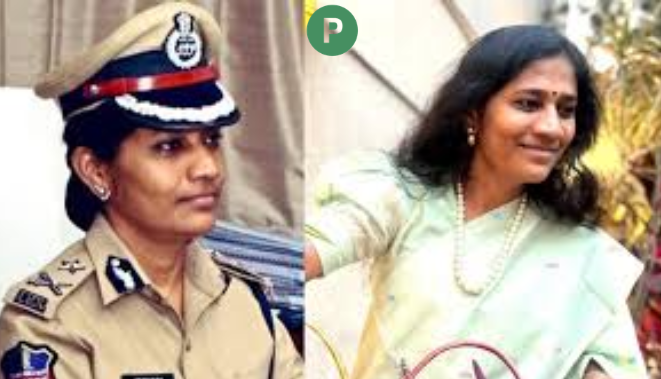

Most senior police officers of two decades’ standing would be well past the point of standing alone at a bus stop at 2 AM to see what happens. B. Sumathi is not most senior police officers.
In May 2026, the Commissioner of Police for the Malkajgiri Commissionerate in Telangana did exactly that — dressed in plain clothes, standing at the Dilsukhnagar bus stop between 12:30 AM and 3:30 AM, observing firsthand what women in the city face when they wait alone in public spaces at night. The results were deeply instructive. Dozens of men allegedly approached her with inappropriate remarks. Many appeared to be under the influence of substances. Around 40 individuals were identified and later counselled.
It wasn’t a stunt. It was, characteristically, a method.
This is the kind of policing that has defined B. Sumathi’s career — rigorous, field-grounded, and stubbornly focused on outcomes rather than optics.
Who Is Sumathi IPS?
B. Sumathi is a senior Indian Police Service (IPS) officer of the 2006 batch, currently serving as the Commissioner of Police for the Malkajgiri Commissionerate in Telangana. As of May 1, 2026, she holds one of the more consequential policing positions in the state, overseeing a commissionerate that covers densely populated urban zones on the outskirts of Hyderabad.
She has built her reputation across two decades of service through a combination of intelligence work, field operations, and an unusually direct approach to women’s safety issues — a subject she has returned to repeatedly and practically throughout her career. In a profession where seniority often means distance from the ground, Sumathi has consistently moved in the opposite direction.
Sumathi IPS Biography
| Detail | Information |
|---|---|
| Full Name | B. Sumathi |
| Designation | Commissioner of Police, Malkajgiri |
| IPS Batch | 2006 |
| Cadre | Telangana (formerly Andhra Pradesh) |
| Nationality | Indian |
| Known For | Women’s safety operations, intelligence strategy, hands-on field policing |
| Current Posting | Malkajgiri Commissionerate, Telangana (as of May 2026) |
| @sumathiips |
Early Life and Background
Detailed personal information about B. Sumathi’s childhood, hometown, and family background has not been placed in the public domain — which is consistent with how many senior IPS officers manage their privacy. What the public record does reveal is a career arc suggesting someone drawn to public service from early on, with the discipline and intellectual ability that the IPS selection process demands.
The IPS is among the most competitive civil services in the world. Candidates must clear the Union Public Service Commission (UPSC) examinations — a multi-stage process that tests analytical reasoning, general knowledge, writing ability, and personality across months of assessments. Clearing it in the 2006 batch and being allotted the Andhra Pradesh cadre (which later bifurcated to form Telangana) placed Sumathi among a small group of officers who would go on to serve one of India’s most significant newly formed states.
Her roots, upbringing, and the specific experiences that drew her to a career in law enforcement remain part of a private story she has chosen not to publicize — a choice that, for a public servant, is entirely reasonable.
Ethnicity, Tribe, and Religion
B. Sumathi is Indian, and based on her name and cadre allocation, she is understood to be of South Indian heritage, most likely from the Telugu-speaking region. Her specific community, caste background, or religious affiliation have not been documented in publicly available verified sources.
India’s IPS is a constitutionally secular service, and officers function under that framework regardless of personal background. Attributing religious or community identity without verified sourcing would not be responsible, and this article does not do so.
Education
B. Sumathi’s academic qualifications have not been detailed in widely available public sources. However, given the requirements of the UPSC Civil Services Examination — candidates must hold at minimum a bachelor’s degree from a recognized university — she is at minimum a graduate. Many IPS officers hold postgraduate qualifications in law, public administration, or related disciplines.
Her evident fluency in operational intelligence, administrative management, and community engagement suggests a strong foundational education combined with significant on-the-job learning across varied postings over twenty years of service.
Career Journey: Two Decades of Distinguished Service
B. Sumathi’s career spans nearly two decades of active policing across Telangana. As a 2006-batch IPS officer, she has served in multiple capacities — moving through the typical progression of district-level postings before rising to senior leadership positions.
She has been notably identified as a key intelligence strategist within the Telangana Police, which speaks to a dimension of her work that extends beyond conventional law and order management. Intelligence-led policing requires analytical precision, network management, and the ability to synthesize information from multiple sources into actionable conclusions — a skill set that takes years to build and is rarely publicly visible.
Women’s safety has been a consistent thread throughout her career. This is not merely a professional portfolio item for Sumathi — her approach suggests genuine conviction. The fact that she conducted a field assessment as a young DSP near Kazipet railway station roughly 25 years ago, and then replicated a similar exercise as Commissioner in 2026, tells a story about an officer who uses operational methodology, not just policy statements, to understand the problems she is trying to solve.
Her rise to Commissioner of Police — the head of a full commissionerate — represents one of the more senior positions available to IPS officers in Telangana, and reflects the institutional trust placed in her across successive administrations and departments.
The Dilsukhnagar Night Operation: 2026
The operation that drew fresh national attention to Sumathi in 2026 was as simple in concept as it was striking in execution.
As Malkajgiri Commissioner of Police, she conducted a late-night field assessment at the Dilsukhnagar bus stop — one of Hyderabad’s busier transit points — standing in plain clothes from 12:30 AM to 3:30 AM to directly observe the experience of women waiting alone in public spaces at night.
During those three hours, multiple men allegedly approached her with inappropriate remarks and unsolicited questions. Police sources noted that many appeared to be intoxicated. The exercise resulted in approximately 40 individuals being identified and subsequently counselled by police — a response that chose awareness and correction over immediate punitive action, reflecting a considered approach to changing public behaviour.
The operation served a dual purpose: gathering ground intelligence and sending a public message about harassment in urban spaces. It also asked an uncomfortable question — one that Sumathi herself posed through action rather than words: after 25 years, how much has actually changed?
The response from the public and within policing circles was largely one of appreciation, particularly for the willingness of a senior officer to do the work herself rather than delegate it.
A Pattern of Hands-On Policing
What makes the Dilsukhnagar operation notable is not just its boldness but the fact that it fits an established pattern. Sumathi reportedly conducted a similar exercise during her early service as a DSP near Kazipet railway station — suggesting this methodology is not new for her. She returned to it as Commissioner because she wanted to compare what she observed then with what exists now.
This kind of longitudinal, experiential policing is rare. It treats field observation as data, and data as the foundation for genuine intervention. It also demonstrates that her commitment to women’s safety is not a recent addition to her public profile — it has been part of her operational philosophy throughout her career.
Role in Intelligence and Strategic Policing
Beyond visible field operations, Sumathi has been recognized within the Telangana Police establishment as a key intelligence strategist. This dimension of her work is, by nature, less publicly documented — effective intelligence work rarely generates press releases.
What it does generate, over time, is institutional reputation. The fact that she has been described in this capacity by official sources reflects a track record of analytical and strategic contributions to the broader security infrastructure of the state.
Leadership Style and Contributions
If there is a defining quality to Sumathi’s leadership, it is proximity to the problem. She does not appear to be an officer who manages from behind a desk, issuing directives that others translate into action. Her career record suggests a strong preference for understanding challenges at the source — which, in policing, often means being physically present in the spaces where the problems occur.
This approach builds a particular kind of credibility — with junior officers who see a senior willing to share the discomfort of field work, and with communities who encounter a police leadership that demonstrates rather than just declares its priorities.
Her work on women’s safety also contributes to a broader institutional conversation about what urban safety actually means for half the population — and how law enforcement can measure its own effectiveness in that domain through something more reliable than statistics alone.
Political Affiliation
As a serving IPS officer, B. Sumathi operates under the framework of the Indian Administrative and Police Services, which requires political neutrality. IPS officers serve under the state government of the day and do not hold or declare political affiliations. This is a constitutional requirement, not merely a convention.
Her postings and career progression reflect standard service conditions and inter-departmental transfers, not political alignment.
Personal Life: Husband and Family
Details about B. Sumathi’s husband, family, and personal life have not been shared in verified public sources. She has maintained a clear separation between her professional identity and her private life — a boundary that is entirely appropriate and consistent with how many senior civil servants choose to operate.
Whether she is married, has children, or details about her parents remain matters she has not addressed publicly. This article respects that boundary and does not speculate.
Height and Physical Appearance
B. Sumathi’s exact height and other physical details have not been listed in any official public record or profile. Her public presence is defined overwhelmingly by her professional conduct and operational record rather than any aspect of physical appearance.
Net Worth
B. Sumathi’s net worth has not been publicly disclosed, and no credible financial reporting on the subject exists. As a senior IPS officer, her income is drawn from government salary and associated allowances, which are governed by the 7th Pay Commission scales applicable to IPS officers of her seniority. Senior IPS officers at Commissioner level receive structured government compensation, which is publicly available in policy documents but varies based on grade pay and allowances.
No information suggests any additional significant income sources, and speculating beyond verified government pay structures would not be appropriate here.
Social Media Presence
B. Sumathi maintains a verified presence on Instagram, where she can be followed at:
📷 Instagram: @sumathiips
Her social media presence reflects her professional activities and public communications related to her role. For the most current updates on her work, her Instagram account is the most direct and verified source available.
Conclusion
B. Sumathi’s career offers a compelling argument for what consistent, field-grounded public service looks like over two decades. She did not become a senior IPS officer and then stop asking hard questions about the problems her work is meant to address. She stood at a bus stop at 3 AM to find out what women in her city actually experience — not because it was required, but because that is, apparently, how she thinks effective policing works.
That instinct — to test assumptions against reality, to remain close to the communities being served, and to use authority as a tool for understanding rather than just enforcement — is what distinguishes a career from a record. Sumathi’s career, as it stands in 2026, is both.
Frequently Asked Questions (FAQs)
1. Who is Sumathi IPS? B. Sumathi is a 2006-batch Indian Police Service officer currently serving as Commissioner of Police for the Malkajgiri Commissionerate in Telangana. She is known for her work on women’s safety and her reputation as an intelligence strategist within the Telangana Police.
2. What did Sumathi IPS do at Dilsukhnagar in 2026? She conducted a late-night field operation, standing in plain clothes at the Dilsukhnagar bus stop from 12:30 AM to 3:30 AM to observe the experiences of women waiting alone in public spaces at night. Around 40 individuals who behaved inappropriately were later identified and counselled.
3. What is Sumathi IPS known for professionally? She is recognised for her hands-on approach to policing, her long-standing commitment to women’s safety initiatives, and her role as a key intelligence strategist within the Telangana Police establishment.
4. Is Sumathi IPS on social media? Yes. She maintains an Instagram account at @sumathiips, which covers her professional activities and public communications.
5. What is Sumathi IPS’s current posting as of 2026? As of May 1, 2026, she serves as the Commissioner of Police for the Malkajgiri Commissionerate in Telangana, one of the senior leadership positions within the state’s policing structure
Editorial Notice
The biography above is compiled from publicly available sources and is intended for general informational purposes only. At PeopleCabal, we are committed to accuracy — however, public records evolve, and some details may change over time. If you notice anything that requires a correction or update, we welcome you to reach out to us directly.
