
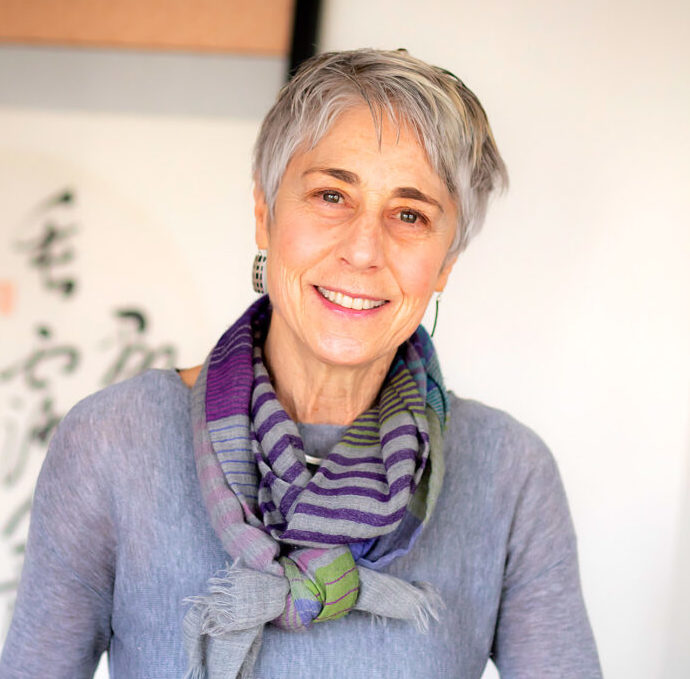

Susan Greenhalgh is an American anthropologist and China scholar at Harvard University whose research has made her one of the world’s leading authorities on China’s one-child policy — its origins, its implementation, its consequences, and its eventual dismantling. Over a career spanning more than three decades of sustained engagement with this subject, she has produced scholarship that has fundamentally changed how scholars, policymakers, and the educated public understand one of the most consequential population policies in human history — one that shaped the lives of hundreds of millions of people and whose demographic consequences continue to influence Chinese society decades after the policy was introduced.
Susan Greenhalgh Biography
| Full Name | Susan Greenhalgh |
|---|---|
| Nationality | American |
| Occupation | Anthropologist, China Scholar, Harvard University Professor |
| Education | Columbia University (PhD Anthropology) |
| Known For | “Just One Child: Science and Policy in Deng’s China”; Harvard population studies; China one-child policy research |
Academic Formation and Intellectual Background
Susan Greenhalgh earned her doctorate in anthropology from Columbia University — one of the world’s leading programs in cultural and medical anthropology — and developed her academic focus on the intersection of population, politics, and science in the Chinese context through her early fieldwork and research in China during the period when the one-child policy was being implemented. Anthropology’s methodological emphasis on immersive fieldwork, on understanding social phenomena from the inside rather than merely through quantitative measurement, gave her a perspective on Chinese population policy that purely demographic or policy-focused scholarship could not provide.
Her research in China during the critical years of the one-child policy’s development and implementation gave her access to dimensions of the policy’s history — how it was conceived, how it was justified scientifically and politically, how it was experienced by the Chinese people subject to it, and how it was enforced through mechanisms that the official record did not always capture honestly — that scholars who relied primarily on official sources could not access. The combination of anthropological training, language skills, and sustained long-term engagement with her research site produced a body of scholarship that is both empirically rich and theoretically sophisticated.
She has held positions at multiple universities before joining Harvard, where she has been a professor focusing on China’s population politics and the broader issues of science, governance, and reproduction that her China research illuminates. Harvard’s resources, networks, and prestige have given her access to archival sources, collaborative partnerships, and policy-influencing platforms that strengthen the reach and impact of her scholarship.
The One-Child Policy Scholarship
Greenhalgh’s scholarly contributions to understanding China’s one-child policy span multiple books and numerous academic articles that collectively constitute the most comprehensive anthropological account of the policy available in any language. Her work examines the policy from multiple dimensions simultaneously — the specific scientific and cybernetic theories about population and development that shaped its initial formulation; the political processes through which it was adopted and implemented; the specific enforcement mechanisms that were used and the enormous coercion — including forced sterilizations and forced abortions — that accompanied implementation in many regions; the demographic and social consequences of the policy including the dramatic imbalance in the sex ratio that selective abortion and female infanticide produced; and the eventual political and demographic pressures that led to the policy’s relaxation and eventual abandonment.
Her book “Just One Child: Science and Policy in Deng’s China” is the most comprehensive single-volume treatment of the policy’s origins and early implementation, tracing how a specific scientific framework — drawing on systems theory and cybernetics — was applied to the politically urgent problem of managing China’s population growth and became the intellectual foundation of a policy with profound and deeply problematic consequences for hundreds of millions of people. The book is a model of how good scholarship in science and technology studies can illuminate the ways in which scientific frameworks — presented as neutral and objective — carry political and ideological content that shapes their policy applications in consequential ways.
Her subsequent work on the policy’s gender dimensions — the way in which the policy intersected with pre-existing preferences for male children in Chinese culture to produce systematic discrimination against girls, including sex-selective abortion and female infanticide — addresses some of the most serious human rights dimensions of a policy that was officially framed in purely technocratic and developmental terms.
Policy Influence and Public Engagement
Greenhalgh’s scholarship has not remained solely within academic circles — she has engaged with policy audiences and has been consulted by organizations examining the Chinese policy’s consequences and by those considering population policies in other contexts. Her work provides precisely the kind of rigorous empirical and analytical foundation that policy discussions about reproduction, coercion, and governance require but do not always receive.
She has also written for broader audiences through essays, public lectures, and contributions to publications that reach beyond academic specialists — the essential work of translating complex scholarly understanding into accessible form for the educated public that needs to engage with these questions. The one-child policy’s consequences — demographic, human rights, and social — are not merely historical curiosities but ongoing realities that shape China’s development trajectory and that raise questions about the ethics of population policy that are relevant wherever governments consider intervening in reproductive decision-making.
Personal Life
Greenhalgh is based in the Boston area at Harvard and has maintained the sustained engagement with China research that her career has demanded. The long-term commitment to a specific research area that her scholarship represents — returning to the same subject and the same geographic and political context across three decades — reflects the kind of scholarly patience and methodological depth that produces the most consequential academic work.
Net Worth
Her net worth is not publicly confirmed. A senior faculty position at Harvard University provides the financial stability and professional resources that academic careers at elite institutions offer, without the financial scale of careers in finance or business. She has not publicly disclosed personal financial details.
Conclusion
Susan Greenhalgh has spent her career illuminating one of the most consequential and least honestly examined episodes in 20th-century policy history — China’s one-child policy and the enormous human costs of its implementation. Her scholarship has made it impossible to understand the policy as merely a technocratic demographic management exercise, because her research reveals the specific coercion, the specific human rights violations, and the specific gender-based discrimination that were embedded in its implementation. That knowledge — rigorously documented, carefully analyzed, and accessibly communicated — is a genuine contribution to human understanding of what happens when scientific frameworks are applied to the governance of intimate human decisions without adequate ethical constraint.
Frequently Asked Questions
What is Susan Greenhalgh’s primary research focus?
China’s one-child policy — its origins, implementation, consequences, and dismantling — examined through the lens of anthropology and science and technology studies.
What is Susan Greenhalgh’s most important book?
“Just One Child: Science and Policy in Deng’s China,” which traces the policy’s origins in specific scientific theories and its political implementation.
Where does Susan Greenhalgh teach?
Harvard University, where she holds a professorship focusing on China’s population politics and related issues.
What were the human rights dimensions of China’s one-child policy?
Research including Greenhalgh’s documents widespread coerced sterilizations and abortions, sex-selective abortion and female infanticide driven by preference for male children, and the massive imbalance in the Chinese sex ratio that resulted.
Where did Susan Greenhalgh earn her doctorate?
Columbia University, in Anthropology.
Editorial Notice
The biography above is compiled from publicly available sources and is intended for general informational purposes only. At PeopleCabal, we are committed to accuracy — however, public records evolve, and some details may change over time. If you notice anything that requires a correction or update, we welcome you to reach out to us directly.
