
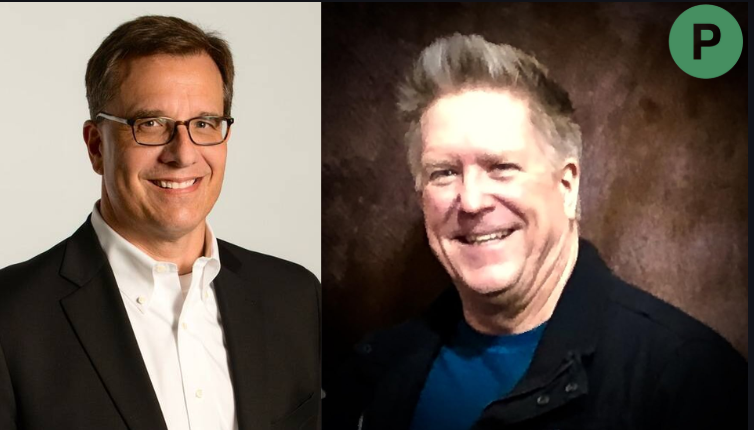

Scott Rouse is an American body language analyst, behavioral consultant, and speaker who has spent his career developing expertise in nonverbal communication — the signals that human bodies transmit through gesture, posture, facial expression, and movement that often communicate more honestly than the words spoken alongside them.
He has consulted with law enforcement agencies including the FBI, military organizations, and corporate clients on the application of behavioral analysis to interviews, negotiations, and high-stakes communication situations where the ability to read what is not being said is as valuable as understanding what is. His public profile has been built through a combination of private consulting, media appearances, and educational content that has made him one of the more recognized figures in the specialized world of body language education.
Scott Rouse Biography
| Full Name | Scott Rouse |
|---|---|
| Nationality | American |
| Occupation | Body Language Analyst, Behavioral Consultant, Speaker, Author |
| Known For | Body language analysis consulting with FBI and law enforcement; corporate behavioral training; media commentary on nonverbal communication |
Background and Path to Body Language Analysis
Scott Rouse developed his expertise in body language and nonverbal communication through a combination of formal training in behavioral science, extended study of the research literature on nonverbal communication, and practical experience in consulting and interview contexts that required applying this knowledge in real situations with real consequences. Body language analysis is a field that sits at an interesting intersection between scientific research — there is a genuine and growing empirical literature on nonverbal communication, deception detection, and behavioral indicators — and practical application that requires judgment, context-sensitivity, and experience that no amount of reading can fully substitute for.
His expertise draws on the foundational work of researchers including Paul Ekman — the psychologist whose work on micro-expressions (fleeting facial expressions that reveal concealed emotions) and universal facial expressions has been the most influential in the field — and the broader research tradition in social and behavioral psychology that has examined how humans communicate nonverbally. Rouse has built his practical knowledge on this research foundation while developing the applied judgment that distinguishes effective practitioners from merely well-read theorists.
He has trained extensively in interview and interrogation techniques — areas where the stakes of accurate behavioral reading are highest and where the practical application of body language knowledge is most consequential. Law enforcement and military organizations that deal with deception and concealment regularly require the ability to detect indicators that something is being hidden, and Rouse has developed expertise relevant to these contexts through sustained engagement with the practitioners and researchers who work in them.
Law Enforcement and Military Consulting
Rouse’s consulting work with law enforcement agencies — including the FBI and various other organizations — represents the most consequential application of his expertise. In interview and interrogation contexts, the ability to notice behavioral shifts that indicate stress, concealment, or deception can provide investigators with information about the reliability of what they are being told and can inform the direction of questioning in ways that verbal content alone does not support.
It is important to note that the scientific literature on deception detection through body language is more nuanced than popular accounts sometimes suggest — research has consistently shown that untrained individuals perform at chance levels in detecting deception, and even trained professionals show relatively modest improvements. Rouse is careful to position his work within this context, emphasizing behavioral analysis as a source of hypotheses to be investigated rather than definitive conclusions, and focusing on specific behavioral indicators with empirical support rather than the broader and less reliable folk wisdom about “tells” that pervades popular accounts of body language.
His military consulting has addressed applications in situations including cross-cultural communication, where nonverbal behavioral norms differ significantly across cultures and where misreading behavioral signals can have serious consequences. The cultural dimension of nonverbal communication — the extent to which behavioral displays are culturally specific rather than universal — is one of the more practically important and theoretically complex aspects of applied body language analysis, and Rouse’s work with diverse military and law enforcement contexts has given him practical experience with this dimension of the field.
Corporate Training and Executive Consulting
Beyond law enforcement and military applications, Rouse has built a significant practice in corporate training — helping executives, negotiators, sales professionals, and others in high-stakes communication roles develop their ability to read behavioral signals and to manage their own nonverbal communication more effectively. The corporate applications of body language expertise span negotiation — where reading the other party’s behavioral signals can provide information about their preferences, priorities, and discomfort — to leadership communication, where executives’ nonverbal behavior powerfully shapes how their messages are received by their organizations.
His corporate training programs address both the reading and the performing dimensions of nonverbal communication — helping clients understand how to interpret the behavioral signals they observe and how to ensure that their own nonverbal behavior is aligned with the messages they intend to convey. Incongruence between verbal and nonverbal communication — where someone says one thing while their body communicates something different — is one of the most reliable sources of distrust in communication, and developing awareness of one’s own nonverbal behavior is one of the more practically useful things that body language training can produce.
Media Presence and Public Education
Rouse has appeared in various media contexts — television programs, podcasts, and online content — as a body language commentator and analyst. This public presence has involved real-time or post-hoc analysis of public figures’ behavior in high-profile situations — political debates, court proceedings, media interviews — drawing on his expertise to offer perspective on what behavioral signals suggest about the subjects’ emotional states and the authenticity of their communications.
He has also produced educational content — books, online courses, and social media content — that makes body language knowledge accessible to people who cannot access his private consulting but who want to develop their own behavioral reading skills. This educational dimension of his work extends his influence beyond the organizations and individuals who can afford private consulting to a broader public audience.
Personal Life
Rouse maintains his personal life largely private — perhaps appropriate for someone whose professional expertise involves reading what people reveal without intending to. He is based in the United States and is known primarily through his professional work.
Net Worth
His net worth is not publicly confirmed. Private consulting, speaking, training programs, and media appearances suggest solid professional success, though he has not publicly disclosed financial details.
Conclusion
Scott Rouse’s career occupies a specific and valuable niche in the broader world of communication expertise — the application of behavioral science to the practical challenge of understanding what people communicate beyond their words. In the high-stakes contexts he primarily serves — law enforcement interrogation, military intelligence, corporate negotiation — the ability to read behavioral signals accurately can have consequences that go far beyond communication effectiveness into decisions of real human consequence. His sustained expertise in this demanding and nuanced field, built on genuine scientific foundations and extensive practical experience, makes him one of the more credible figures in a space that attracts more than its share of overconfident practitioners.
Frequently Asked Questions
What does Scott Rouse do professionally?
He is a body language analyst and behavioral consultant who works with law enforcement agencies (including the FBI), military organizations, and corporate clients on the application of nonverbal communication expertise to high-stakes situations.
Is body language analysis scientifically valid?
There is a genuine research literature supporting specific aspects of nonverbal communication and behavioral analysis, though popular accounts often overstate its reliability. Rouse positions it as a source of hypotheses rather than definitive conclusions.
What researcher’s work does Scott Rouse draw on?
His expertise draws significantly on Paul Ekman’s work on micro-expressions and universal facial expressions, as well as the broader social psychology research on nonverbal communication.
What corporate applications does Scott Rouse address?
Negotiation, leadership communication, sales, and executive communication — helping professionals both read behavioral signals and manage their own nonverbal communication.
Where does Scott Rouse appear publicly?
Television programs, podcasts, and online content, where he provides body language analysis and commentary on public figures’ behavior in high-profile situations.
Editorial Notice
The biography above is compiled from publicly available sources and is intended for general informational purposes only. At PeopleCabal, we are committed to accuracy — however, public records evolve, and some details may change over time. If you notice anything that requires a correction or update, we welcome you to reach out to us directly.
