
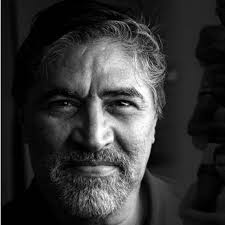

Rigoberto Torres is a Puerto Rican-American sculptor and visual artist whose life casting work — creating extraordinarily detailed figurative sculptures by casting actual human beings in polyurethane foam — has made him one of the more distinctive voices in American contemporary art, and one of the most important artists to emerge from the South Bronx in the late 20th century. His collaboration with artist John Ahearn produced a body of work that documented the community of the South Bronx during one of the most difficult periods in its history with an intimacy, dignity, and technical mastery that painting or photography alone could not achieve. He is an artist whose importance to the communities he has documented is as significant as his importance to the art world that has eventually recognized him.
| Rigoberto Torres | |
|---|---|
|
|
|
| Wiki Facts & About Data | |
| Full Name: | Rigoberto Torres |
| Nationality: | American (Puerto Rican heritage) |
| Occupation: | Sculptor, Visual Artist |
| Known For: | Life casting of South Bronx community members; collaboration with John Ahearn; polyurethane figurative sculpture |
Early Life in the South Bronx
Rigoberto Torres grew up in the South Bronx, New York City — one of the most economically devastated urban neighborhoods in America during the 1970s and early 1980s, when large portions of the Bronx experienced widespread arson, abandonment, and the specific social collapse that accompanies concentrated poverty and political neglect. The South Bronx of this period was also, simultaneously, a crucible of extraordinary cultural creativity — it was the birthplace of hip-hop, of graffiti as an art form, of the cultural responses to urban crisis that would eventually influence the entire world. Torres grew up in this specific time and place, experiencing its difficulties and its creative energies simultaneously.
His introduction to art-making came through his encounter with artist John Ahearn, who had moved to the South Bronx from downtown Manhattan and who was developing a life casting practice — using alginate and plaster to create molds of people’s faces and bodies, then casting the molds in plaster to produce detailed figurative sculptures. Ahearn recognized Torres’s aptitude and interest, and their subsequent collaboration — which has extended over decades — became the foundation of Torres’s artistic career and produced one of the more significant bodies of community-engaged figurative sculpture in contemporary American art.
Life Casting as Community Documentation
The life casting technique that Torres and Ahearn developed is physically intimate and emotionally demanding in ways that other sculptural techniques are not. To be cast requires lying still or standing immobile while alginate — a quick-setting material derived from seaweed — is applied to the face or body and allowed to set, creating a negative mold that captures every detail of the subject’s appearance at that specific moment. The process takes courage from the subject — there is a vulnerability in having your face encased in material, however temporarily — and it produces an intimacy between artist and subject that reflects in the quality of the resulting work.
Torres became extraordinarily skilled at this process — both the technical dimensions of casting, mixing, and finishing the polyurethane foam sculptures and the interpersonal dimensions of earning the trust of community members willing to participate in the process. His own status as a South Bronx community member — someone who shared the experience of the neighborhood with his subjects rather than observing it from outside — gave him access that an outsider artist could not have achieved. The sculptures that resulted are documents of the South Bronx community with a specificity and dignity that reflects this insider relationship.
The casts were painted in vivid, realistic colors and often displayed in the neighborhood itself — on building facades, in community spaces, and in public contexts that made them visible to the people they depicted and the community they came from before they entered the gallery and museum contexts of the broader art world. This decision to exhibit in the community first was both an ethical statement about who the work belonged to and a practical demonstration that public art could function as a mirror that communities recognized and valued.
The South Bronx Commissions Controversy
One of the most discussed episodes in Torres and Ahearn’s collaborative career involved a set of public sculpture commissions for a police station in the South Bronx — a project that generated significant controversy when community members raised objections to the specific figures chosen for depiction. The controversy — which involved questions about whose image should be memorialized in public space, who represents a community, and what the appropriate relationship between public art and the communities it depicts should be — resulted in Ahearn removing the sculptures. The episode illuminated the complex ethics of community-engaged art and the genuine tensions between artistic vision and community self-determination that public art regularly encounters.
Torres and Ahearn continued to work and to evolve their collaborative practice through and after this controversy, maintaining their commitment to community engagement while developing a more nuanced understanding of the relational dimensions of public art-making.
Recognition and Legacy
Torres’s work has been recognized in major museum collections and exhibitions, including at the Whitney Museum of American Art and other significant institutions. His contribution to the tradition of community-engaged public art — of art that takes its subjects from the communities where it is made and returns them as images of dignity and particularity — is recognized by art historians and critics as a significant contribution to the history of American figurative sculpture.
His legacy is also the community members whose lives he documented — the people of the South Bronx during one of the most difficult periods in that community’s history, rendered in polyurethane foam with the kind of loving attention that prevents history from erasing them entirely. That documentary function — which the art world sometimes undervalues relative to formal innovation — is the dimension of Torres’s work that his subjects and their community most clearly recognize and appreciate.
Personal Life
Torres has remained rooted in his community and continues to work. His personal life is not extensively documented in public sources — consistent with an artistic identity that has always been about the community rather than the individual artist.
Conclusion
Rigoberto Torres’s career is the story of what art can do when it takes its subjects and its community as seriously as it takes its formal concerns — when the technical achievement of extraordinary life casting is placed in service of documenting people who deserve documentation, rendering them visible and permanent in a cultural moment that would otherwise have passed without record. His work from the South Bronx is a gift to the people it depicts, a gift to art history, and a demonstration of what community-engaged art looks like when it is done with full seriousness and full love.
Frequently Asked Questions
What technique does Rigoberto Torres use in his sculpture?
Life casting — creating detailed molds of people’s faces and bodies using alginate, then casting the molds in polyurethane foam to produce figurative sculptures.
Who did Rigoberto Torres collaborate with?
Artist John Ahearn, with whom he developed the life casting practice and produced an extensive body of work documenting the South Bronx community.
Where is Rigoberto Torres from?
The South Bronx, New York City, where he grew up and where much of his community documentation work has been made.
What museums have collected Torres’s work?
The Whitney Museum of American Art and other significant American institutions have collected and exhibited his work.
What controversy surrounded a Bronx public sculpture commission?
A commission for a police station in the Bronx generated community controversy over the choice of figures depicted, resulting in Ahearn removing the sculptures — illuminating the complex ethics of community-engaged public art.
Editorial Notice
The biography above is compiled from publicly available sources and is intended for general informational purposes only. At PeopleCabal, we are committed to accuracy — however, public records evolve, and some details may change over time. If you notice anything that requires a correction or update, we welcome you to reach out to us directly.
