
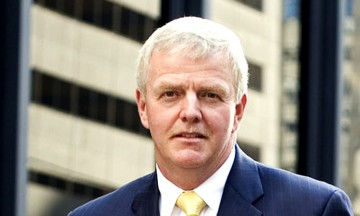

General Rick Hillier served as Chief of the Defence Staff of the Canadian Armed Forces from 2005 to 2008, and during that period he was the most publicly visible, most frankly outspoken, and arguably the most consequential military leader Canada had produced in decades. His tenure coincided with Canada’s expanded combat role in Afghanistan — particularly in the dangerous Kandahar province — and he became the public face of an institution that had spent years in relative obscurity, advocating forcefully for the men and women of the Canadian Forces and for the resources and political support they needed to do the jobs they were being asked to do. He was not a subtle man, and he did not believe subtlety served his mission.
General Rick Hillier Biography
| Full Name | Rick John Hillier |
|---|---|
| Date of Birth | July 5, 1955 |
| Age | 68 (as of 2024) |
| Nationality | Canadian |
| Occupation | Retired Military General, Author, Speaker |
| Education | Memorial University of Newfoundland; multiple military colleges and programs |
| Known For | Chief of the Defence Staff 2005–2008; Afghanistan mission advocacy; “scumbags and murderers” comment; “A Soldier First” memoir |
Early Life and Military Formation
Rick Hillier was born on July 5, 1955, in Campbellton, Newfoundland — a Newfoundlander by origin and identity, and he has never let anyone forget it. His Newfoundland background gave him a directness, a warmth, and a common-touch quality that distinguished him from the more diplomatically careful style associated with senior military and government leadership, and that made him an unusually effective public communicator when he chose to be one. He attended Memorial University of Newfoundland before pursuing his military career through the officer training and professional development programs of the Canadian Armed Forces.
His military career took him through multiple commands and exercises, including significant service with NATO and alongside allied forces. He commanded at various levels within the Canadian Army, developing the operational and leadership experience that would eventually qualify him for the most senior military appointment in the country. A significant period of his career involved working with and commanding multinational forces — an experience that gave him a sophisticated understanding of coalition military operations and of the political dimensions of military activity that purely national service cannot provide.
His time commanding a NATO corps in Bosnia in the late 1990s — during one of the most complex and morally demanding chapters of post-Cold War European peacekeeping — gave him direct experience with the tension between the military’s capabilities and the political will to use them. That experience shaped his subsequent advocacy for Canadian military capacity and political clarity about what the forces were being asked to do and why.
Appointment as Chief of the Defence Staff
Hillier was appointed Chief of the Defence Staff by Prime Minister Paul Martin in 2005 — an appointment that, by many accounts, was both a reflection of his obvious leadership qualities and a deliberate choice to put someone in the top military job who would shake up an institution that had become, in some observers’ views, too bureaucratic, too politically cautious, and too focused on internal processes rather than operational effectiveness.
He arrived in the role with a clear agenda: to restore the Canadian Armed Forces to operational effectiveness, to secure the resources and political support they needed to do so, and to make the institution’s activities and purposes visible to a Canadian public that had, in his assessment, been allowed to become disconnected from its military. All three objectives required him to be more publicly visible and more outspoken than most of his predecessors had been, and he pursued all three with characteristic energy and directness.
Afghanistan and Controversial Frankness
The most dramatic episode of Hillier’s tenure as CDS was his response to a question about Canada’s expanded mission in Kandahar province — the most dangerous region of Afghanistan — in 2005. When asked about the Taliban and other militants Canadian Forces would be facing, he famously described them as “detestable murderers and scumbags” who “have no respect for human life.” The comment was widely reported, generated significant controversy in Canada’s political and media establishment, and was embraced enthusiastically by Canadian military personnel and veterans who felt that their leaders had for too long failed to speak clearly about what the forces actually faced in the field.
The controversy illuminated a genuine tension in Canadian political culture between the instinct toward diplomatic language — particularly about international conflicts — and the practical reality of a military engagement that was killing and maiming Canadian soldiers in significant numbers. Hillier’s willingness to describe that reality in plain terms, and to do so publicly, was experienced very differently by different segments of Canadian opinion, but it was undeniably effective at focusing public attention on the Afghanistan mission in ways that previous communications had not achieved.
Canada lost 158 military personnel in Afghanistan — the majority during the Kandahar mission that Hillier championed. He was a consistent and visible advocate for those individuals, for their families, and for the importance of the mission they were undertaking. His advocacy for proper care of veterans and for recognition of the sacrifices made in Afghanistan continued after his retirement.
“A Soldier First”
After retiring from the Canadian Armed Forces in 2008, Hillier wrote “A Soldier First: Bullets, Bureaucrats and the Politics of War” — a memoir of his military career that was characteristically frank about his views on political leadership, military bureaucracy, and the management of Canada’s military engagement in Afghanistan. The book became a bestseller in Canada and contributed to ongoing public debate about the country’s military policy and its treatment of veterans. It is notable among military memoirs for its willingness to name and criticize specific individuals and institutional failures, rather than offering the diplomatic vagueness that senior military memoirs often adopt.
Post-Military Career
After retirement, Hillier pursued various public roles including service on Ontario’s COVID-19 vaccine distribution task force in 2020-2021, where he was credited with significantly improving the efficiency of Ontario’s vaccine rollout — demonstrating that the organizational and leadership skills developed over a military career translate effectively to civilian public administration challenges. He has also been active as a speaker, board member, and public commentator on defence, veterans’ affairs, and leadership.
Personal Life
Hillier is married to Joyce Hillier, who has been a constant presence throughout his military career. He has spoken warmly about the specific challenges facing military families — the frequent moves, the deployments, the anxiety of having a spouse in dangerous environments — and about the debt that the institution owes to the families who sustain it. He has children and is based in Canada.
Net Worth
His net worth is not publicly confirmed. His post-military income has come from public service roles, speaking engagements, book royalties, and board positions. He is not known for personal wealth and has not sought it publicly.
Conclusion
Rick Hillier’s legacy as CDS is the restoration of the Canadian Armed Forces to a level of public visibility and political seriousness that the institution had not enjoyed for years, achieved through a combination of genuine operational leadership and deliberately plain public communication. His willingness to say in public what military leaders typically say only in private — about the nature of the enemies Canadian Forces faced, about the inadequacy of the resources they had been given, about the failures of political leadership — was controversial precisely because it was effective. For Canadian military personnel and veterans, he remains one of the most admired senior leaders the institution has produced in modern times.
Frequently Asked Questions
What is General Rick Hillier most famous for?
His tenure as Canada’s Chief of the Defence Staff during the Afghanistan mission, his frank public communication style including the “scumbags and murderers” comment, and his memoir “A Soldier First.”
What was Rick Hillier’s “scumbags and murderers” comment?
In 2005, when asked about the Taliban, Hillier described them as “detestable murderers and scumbags” — a comment that was controversial but widely supported by Canadian military personnel.
What book did Rick Hillier write?
“A Soldier First: Bullets, Bureaucrats and the Politics of War” — a frank memoir of his military career and the Afghanistan mission.
What COVID-19 role did Hillier play in Ontario?
He led Ontario’s vaccine distribution task force in 2020-2021 and was credited with significantly improving the efficiency of the province’s vaccine rollout.
Where is Rick Hillier from?
Campbellton, Newfoundland, Canada.
Editorial Notice
The biography above is compiled from publicly available sources and is intended for general informational purposes only. At PeopleCabal, we are committed to accuracy — however, public records evolve, and some details may change over time. If you notice anything that requires a correction or update, we welcome you to reach out to us directly.
