
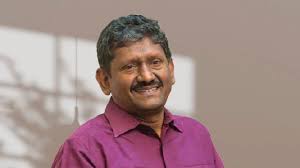

In India’s bureaucratic landscape, where transfers are often used as punishment for officials who ask too many inconvenient questions, U. Sagayam turned those transfers into a kind of badge. Over more than two decades in public service, he was transferred more than 20 times — not because he underperformed, but precisely because he performed too well for the comfort of those around him. His story is less a conventional career biography and more a sustained argument about what a civil servant can actually be, if they choose to be it seriously.
Now 64 years old, retired from the Indian Administrative Service, and stepping into the unfamiliar world of politics, Sagayam remains one of Tamil Nadu’s most talked-about public figures — not because of wealth or political dynasty, but because of a single-minded commitment to honesty that few officials his generation managed to sustain.
IAS Sagayam Biography – The Officer Who Made Honesty His Most Dangerous Weapon
| Detail | Information |
|---|---|
| Full Name | Ubagarampillai Sagayam |
| Date of Birth | 3 July 1962 |
| Age | 64 |
| Birthplace | Perunchunai village, Pudukkottai, Tamil Nadu |
| Nationality | Indian |
| Religion | Christianity |
| Profession | Retired IAS Officer, Politician, Social Activist |
| IAS Cadre | Tamil Nadu (2001 batch) |
| Political Movement | Sagayam Arasiyal Peravai |
| Wife | Vimala |
| @sagayam_arasiyal_peravai |
Early Life
Sagayam was born into a farming family in Perunchunai village, Pudukkottai, Tamil Nadu, and is the youngest of five sons. Pudukkottai is a district with deep rural roots and a modest economic profile — not the kind of place that typically produces individuals who go on to shape state governance, which is part of what makes his trajectory interesting.
His father was a farmer and his mother a housewife. It was his mother who gave him his foundational lesson in ethics — one he has recalled publicly more than once. He once told Outlook magazine: “Our adjoining field had mango trees and my friends and I would pick the fallen fruit. But my mother made me throw the mangoes away, saying I should enjoy only what is mine.”
That might sound like a small thing. But for a child raised on a farm, where the line between your land and your neighbour’s isn’t always physically obvious, it was a lesson about property, restraint, and the quiet discipline of not taking what isn’t yours — even when no one is watching. It is the kind of moral formation that either fades under the pressures of adult professional life, or becomes something structural. For Sagayam, it became structural.
He first attended a panchayat elementary school before moving on to Ellaippatti’s Government Higher Secondary School. His educational path was rooted in the public system — no elite institutions, no family connections that opened particular doors.
Education: Two Master’s Degrees and a Different Kind of Ambition
Sagayam earned his Master’s degrees in both social work and law. The combination is telling. Social work suggests an orientation toward community and welfare; law suggests an instinct for systems, rules, and accountability. Together, they describe the kind of intellectual foundation that prepared him not just to administer, but to challenge — to understand both the human cost of corruption and the legal mechanisms available to fight it.
His academic profile was neither glamorous nor internationally prestigious. What it was, was purposeful.
Career Journey: Transfers as a Measure of Integrity
First Steps — and the First Transfer
Sagayam joined the Central Secretariat Service in 1989 after qualifying through the Civil Services Examination. After working for seven months in New Delhi, he voluntarily resigned from the Central Secretariat Service. That decision alone sets him apart — walking away from a Union government position to take state-level exams specifically so he could serve the people of Tamil Nadu more directly.
He later took the Tamil Nadu Public Service Commission exams, was appointed to the Tamil Nadu State Civil Service, and after attaining seniority, was promoted to the Indian Administrative Service in the 2001 batch.
In 1991, he started his career in Tamil Nadu as a sub-divisional magistrate in the district of Ootacamund. His very first confrontation came quickly: in Ooty, he became embroiled in a dispute with the District Collector, whom he accused of favouritism toward the operators of large tea estates. The result was his first transfer — and it established the pattern that would define the next three decades.
The Sign Above the Chair
Wherever Sagayam went, he brought one thing with him before anything else: a board for his office. His office door bears a sign reading “Lanjam thavirtthu, nenjam nimirtthu” — which translates to “Reject bribes, hold your head high.” It wasn’t decoration. It was a public statement of intent, posted where subordinates and visitors could see it, framing every interaction that followed.
He has acknowledged the weight of it: “I know I sit under a dangerous slogan and probably alienate people.”
Key Milestones That Made Headlines
2004 — The Gas Cylinder Crackdown: Working as deputy commissioner of civil supplies in Chennai, Sagayam discovered that subsidized gas cylinders intended for domestic use were being illegally used by restaurants. He confiscated 5,000 such cylinders. It was early evidence that he had no interest in letting the scale of vested interests determine whether he acted
2009 — A Historic Declaration: Posted as the District Collector of Namakkal district, Sagayam posted details of his personal assets on the district website — a bank balance of ₹7,172 and a house in Madurai, jointly owned with his wife, worth ₹9 lakh. He became the first IAS officer in Tamil Nadu to upload details of his assets publicly in this way. His reasoning was clear: if a District Collector is asking subordinates to be honest, he should lead by personal example and make his own financial position visible to the public
2011 — The Madurai Election: At the behest of the Election Commission of India, Sagayam was posted as the District Collector of Madurai and charged with ensuring the 2011 Legislative Assembly elections were conducted fairly. He arrived 20 days before voting began, staged a campaign to educate voters about the law, and confiscated ₹20 lakh intended for distribution to voters as bribes. He was commended by India’s Chief Election Commissioner for his work on that election.
2012 — The Granite Scandal: Perhaps the most consequential chapter of his career. Sagayam’s investigation accused several senior officials of collusion with illegal granite miners, and suggested that losses to the state from illegal mining amounted to at least ₹16,000 crore — and possibly twice that. Within days of submitting the report, he was transferred again — his 19th such transfer.
2014 — A Night in a Graveyard: Appointed by the Tamil Nadu High Court to probe the mining scam further, Sagayam approached local police to exhume bodies allegedly connected to the case. When the police refused, he decided to spend the night at the graveyard himself to ensure evidence would not be disturbed. He stayed awake almost the entire night. It is the kind of detail that reads like fiction but is documented fact — a senior government official alone at a graveyard at night, protecting evidence because the system around him wouldn’t.
Retirement — on His Own Terms
In 2020, Sagayam applied for voluntary resignation from IAS, two years before his natural retirement. In 2021, the Government of Tamil Nadu accepted his resignation. He had served as Vice Chairman of Science City Chennai as his final posting. Leaving early, rather than waiting out his remaining years in a comfortable posting, was in keeping with everything that had come before.
Into Politics: Sagayam Arasiyal Peravai
Retirement from the IAS did not mean withdrawal from public life. Former Tamil Nadu bureaucrat Sagayam announced that his unregistered party, Sagayam Arasiyal Peravai, had formed an alliance with the Tamil Nadu Youth Party and the Valamana Tamizhaga Katchi to contest the upcoming Assembly election
The 20 candidates of the Sagayam Arasiyal Peravai contested under the name and symbol of the Tamil Nadu Youth Party. Sagayam himself did not contest, but fielded candidates in 20 constituencies
On fielding young candidates, Sagayam said: “A few youngsters told me that they can do something for society only if young people like them get a space in the political arena. So considering that, I have decided to field them.”
At a political meeting in Chennai, he urged his followers to break barriers of caste and religion in politics, avoid hero worship, and stay simple and honest. The ideology of his political movement is essentially a continuation of his administrative one — anti-corruption, secular, and oriented toward ordinary citizens rather than established power.
Leadership Style: The Texture of Real Accountability
What makes Sagayam’s story compelling isn’t simply the list of actions he took, but the manner in which he took them. As District Collector, he held a Monday “durbar” at which anyone could meet him with their complaints. During tours, he would suddenly stop a school bus to talk to children or visit a school unannounced to take a class.
His approach to enforcement could be unconventional. Driving on Madurai’s main road, he saw a young man talking on his phone while riding a motorbike. He stopped the man and instructed him to plant 10 saplings within 24 hours as a consequence
In Namakkal, when village administrative officers who lived in cities — far away from the villages they were meant to oversee — tried to have Sagayam transferred, over 5,000 villagers protested the transfer attempt, forcing its withdrawal. That is a rare thing: a bureaucrat with such genuine grassroots credibility that ordinary people mobilise in his defence
Personal Life: Vimala, Stability, and Shared Risk
Sagayam is married to Vimala. Sagayam’s wife Vimala has stood by him through the repeated transfers and the threats that came with his work on elections and corruption cases. She told one interviewer: “He always says if you are right, nobody can hurt you. But sometimes it becomes difficult.”
That “sometimes it becomes difficult” carries significant weight. Being the spouse of an official who publicly wages war on powerful mining interests, corrupt politicians, and entrenched bureaucratic networks is not a passive experience. Vimala’s quiet support runs throughout the accounts of Sagayam’s career, even when the details of their family life have remained appropriately private.
Sagayam is the youngest of five sons, a detail that perhaps explains something of the personality — youngest children often have to work harder to earn their place, to be seen. Whether or not that shaped his drive is speculation, but the farming village background and the large family certainly grounded him in the practical realities of ordinary Tamil Nadu life.
Net Worth
Sagayam’s financial profile is one of the more unusual aspects of his public persona — because he made it public himself. In 2009, he voluntarily declared his assets: a bank balance of ₹7,172 and a house in Madurai, jointly owned with his wife, worth ₹9 lakh
For a senior IAS officer, those figures are remarkably modest. His income throughout his career was derived from his government salary and allowances — the standard remuneration for an IAS officer in Tamil Nadu. He has never been publicly associated with business interests or private wealth accumulation. Any figures circulating online should be treated with significant scepticism, as his own declared assets tell a very different story.
Social Media
Sagayam maintains a presence through his political movement’s Instagram page, where updates on Sagayam Arasiyal Peravai activities are shared.
- 📸 Instagram: @sagayam_arasiyal_peravai
The Man Who Chose the Harder Path, Every Time
What makes U. Sagayam genuinely notable isn’t any single case or headline. It is the consistency. Most people who enter public service with good intentions find that the system gradually wears those intentions down — through incentives, through social pressure, through the exhaustion of constant resistance. Sagayam found a different way to respond to that pressure: he put a sign about it on his door and transferred offices more than 20 times without changing what the sign said.
In a country where bureaucratic integrity is often discussed in terms of what is lacking, he represents something different: proof that the choice was always available, and that someone kept making it. His move into politics, with an unregistered party fielding young candidates and refusing hero worship, suggests that even after retiring from service, he hasn’t finished making the argument.
Frequently Asked Questions
1. Who is U. Sagayam? U. Sagayam (full name Ubagarampillai Sagayam) is a retired Indian Administrative Service officer from the Tamil Nadu cadre (2001 batch), widely known for his sustained anti-corruption work during his career. He voluntarily resigned from the IAS in 2020, two years before his natural retirement, and later entered politics through his unregistered movement, Sagayam Arasiyal Peravai.
2. How many times was Sagayam transferred during his career? Sagayam was transferred more than 20 times over the course of his career — a consequence of his repeated actions against corruption and his willingness to confront powerful political and business interests. He has treated these transfers as an unintended measure of his integrity rather than as setbacks.
3. What is Sagayam Arasiyal Peravai? It is an unregistered political movement formed by Sagayam in 2021 ahead of the Tamil Nadu Assembly elections. The movement allied with the Tamil Nadu Youth Party and Valamana Tamizhaga Katchi to field candidates in 20 constituencies. Sagayam himself did not contest but served as the movement’s guiding voice, emphasising secularism and honest governance.
4. Who is Sagayam’s wife? His wife’s name is Vimala. She co-owns a house in Madurai with him — the primary property he publicly declared in 2009 — and has been a consistent support through the professional and personal pressures of his career.
5. What is U. Sagayam’s educational background? He completed his Master’s degrees in both social work and law, providing him with both the welfare orientation and the legal knowledge that characterised his administrative approach throughout his career
Editorial Notice
The biography above is compiled from publicly available sources and is intended for general informational purposes only. At PeopleCabal, we are committed to accuracy — however, public records evolve, and some details may change over time. If you notice anything that requires a correction or update, we welcome you to reach out to us directly.
