
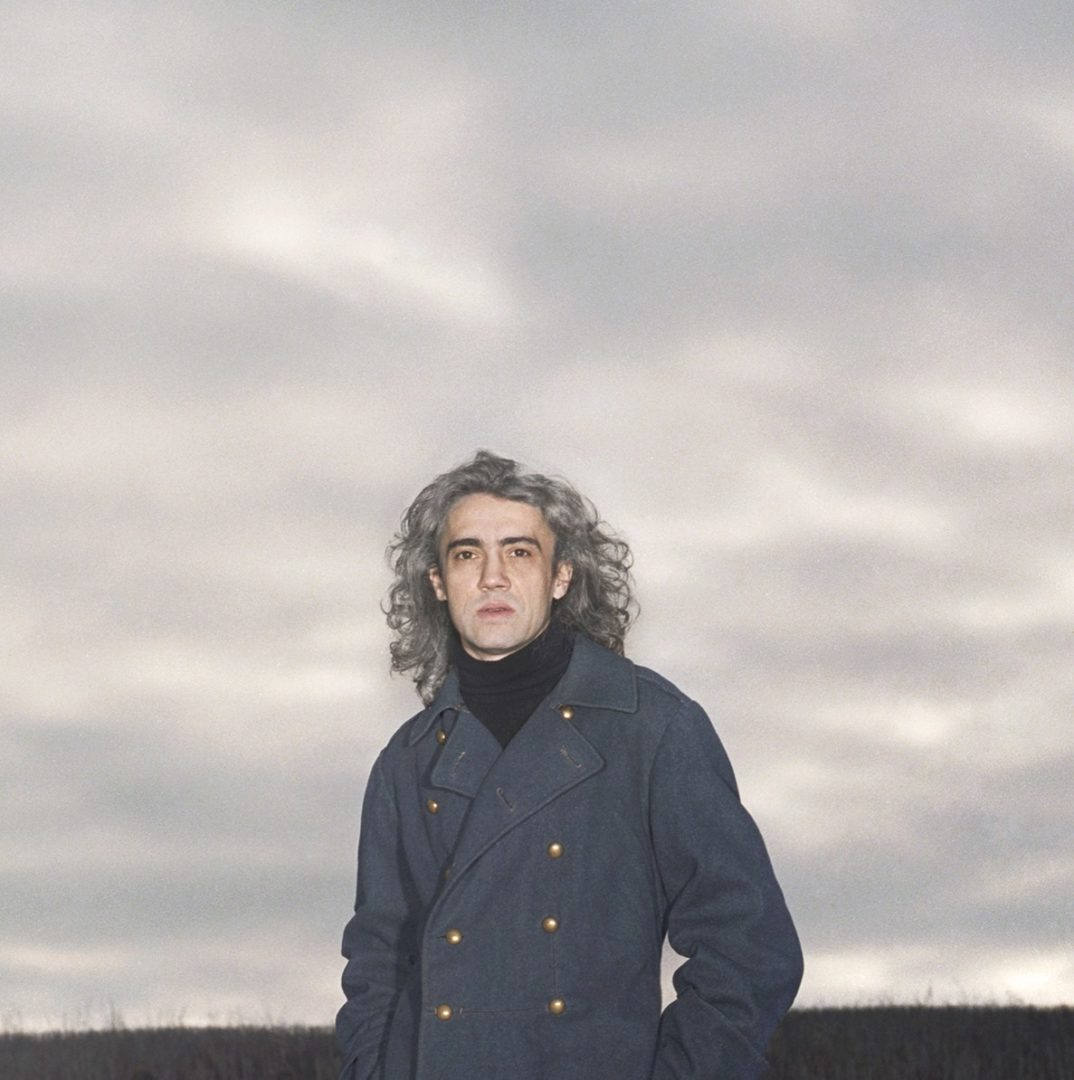

In the world of fashion, where relevance is often measured in weeks and trends expire before they finish trending, Marc Le Bihan has spent over three decades doing something almost countercultural — making clothes that are built to last, emotionally and physically. He doesn’t chase seasons. He doesn’t chase Instagram moments. He works, slowly and deliberately, from a workshop in Paris’s 9th arrondissement, producing garments that hover — as one retailer memorably put it — “in space and time.”
That description is not exaggeration. Marc Le Bihan is a rigorous conceptualist, creating timeless fashion rather than transitory trends. His collections don’t aim at important differences from one another — pieces are repeated or updated, because he doesn’t consider his work as creating a collection, but as a complicated, ongoing process
For fashion insiders, his name carries significant weight. For the general public, he remains something of a well-kept secret — which, given the artisanal, deliberately slow nature of his practice, may be exactly how he prefers it.
| Marc Le Bihan | |
|---|---|
 Marc Le Bihan: Biography, Age, Career, Education & Fashion Legacy: History · Bio · Photo
|
|
| Wiki Facts & About Data | |
| Full Name: | Marc Le Bihan |
| Nationality: | French |
| Occupation: | Fashion Designer, Couturier |
| Education: | Manufacture des Gobelins; École Nationale Supérieure des Arts Décoratifs; Central Saint Martins, London |
| Known For: | Artisanal couture, deconstructed vintage aesthetics, gender-fluid silhouettes |
Early Life and Background
Marc Le Bihan’s story begins not in a design studio, but on a loom. His education in textiles began at the prestigious tapestry factory Manufacture des Gobelins in Paris, where he worked as a weaver before becoming a designer. Gobelins supplied tapestry to the court of Louis XIV.
That early immersion in one of France’s most historically significant textile institutions was not incidental — it fundamentally shaped his relationship with fabric. Where many fashion designers think about cloth as a surface to print on or cut through, Le Bihan learned to think of it as a living thing, something with history, weight, and integrity of its own.
He trained in the ancient art of tapestry at the Manufacture des Gobelins from 1982 to 1986, then worked as a licier (a master tapestry weaver) until 1990. That’s eight years before he ever showed a collection — eight years spent understanding thread, tension, and the relationship between material and form. It’s a foundation that almost no other working fashion designer can claim.
His personal life — parents, family background, religious beliefs — has never been the subject of public discussion, and Le Bihan has consistently kept that side of his life separate from his professional identity. This article respects those boundaries and only covers what has been verified publicly.
Education
Le Bihan studied at the École Nationale Supérieure des Arts Décoratifs (ENSAD), one of France’s most prestigious schools of art and design, where he developed a taste for timelessness over fashion trends
He then trained in the textile design section of the National School of Decorative Arts, presenting two collections in 1990, before heading to Central Saint Martins College of Art and Design in London in 1993
Central Saint Martins, it’s worth noting, is where Alexander McQueen and John Galliano also trained — a school with a well-established tradition of producing designers who think beyond conventional fashion. Le Bihan’s time there coincided with a period of enormous creative experimentation in British fashion, and the exposure to that environment clearly left its mark.
What’s distinctive about his educational path is its breadth: ancient craft at Gobelins, fine art and design theory at ENSAD, and avant-garde fashion thinking at Saint Martins. Each institution added a different layer to a practice that would eventually become entirely his own.
Career Journey
The Beginning: Thread, Loom, and a First Collection
In 1991, Le Bihan founded his company Lange et Linceul and made his first collection. His first catwalk followed in 1992. The name “Lange et Linceul” — French for “swaddling cloth and shroud” — announced immediately that this was not a designer interested in surface glamour. The first and last garments a human body ever wears. That conceptual framing was deliberate, and it established the philosophical register in which all of his subsequent work would operate.
The Hyères Breakthrough
In 1993, he received a Special Prize at the International Arts Festival in Hyères for a collection of spectacular dresses cut from mailbags and old linen sheets. The Hyères Festival is one of Europe’s most prestigious platforms for emerging fashion talent — past participants have gone on to define entire movements in contemporary design. Winning a prize there with garments made from mailbags and antique linen is the kind of statement that gets people paying attention: not because it’s provocative, but because it demonstrates genuine creative intelligence
The ANDAM Grant and the Label
In 1994, Le Bihan received the ANDAM grant and founded his own brand: Marc Le Bihan. The ANDAM (Association Nationale pour le Développement des Arts de la Mode) is France’s leading fashion industry support fund, providing financial backing to emerging designers of genuine promise. Recipients have included future luminaries of French fashion. For Le Bihan, it provided the platform to transform what had been an artistic project into a functioning label.
The brand walked down the catwalks from 1992 to 2006. During that period, his presence on the Paris schedule was a marker of serious, uncompromising design — the antithesis of commercial fashion, but deeply respected within professional circles
International Recognition
In 2003, he was invited by the Fédération de la Haute Couture et de la Mode to show in Tokyo alongside other French designers. In 2004, during the “France in China” year, he was invited to present in Beijing with other French designers. These invitations — extended by France’s most powerful fashion governing body — signal something important: official recognition not merely as a niche independent, but as a representative of French creative culture itself
Also in 2004, he became a guest member of Haute Couture at the French Federation of Couture and Ready-to-Wear. Guest membership of the Haute Couture federation is one of the most exclusive designations in fashion — it places Le Bihan in formal company with some of the most significant names in the history of French dressmaking
Expanding the Label
In 2007, he launched a second line of ready-to-wear in conjunction with FlashNmore: Korda di Marc Le Bihan. The “Lange and Linceul” line annually produces 5,000 pieces.
Since 2010, Marc Le Bihan has operated the boutique bearing his name in Paris, at 25 Rue Henri Monnier in the 9th arrondissement. The 9th is a neighbourhood that sits between the grand boulevards of the Right Bank and the bohemian streets of Montmartre — a fitting location for a designer whose work occupies a similar in-between space: rigorously French in its craft traditions, yet genuinely experimental in its outcomes
Design Philosophy and Artistic Influence
Understanding what makes Marc Le Bihan significant requires understanding what he refuses to do. He does not produce radically different collections each season. He does not use runway spectacle to generate press coverage. He does not chase the vintage trend — even though vintage fabrics and techniques are central to his practice.
Beacon pieces of his work, like the “dancer dress” or the “Man Ray suit,” come back each season, always reinvented, allowing the rediscovery of the garment. His work includes and revolves around the “influence of fashion on fashion,” with an important part of his process concerning the deconstruction of vintage garments and the use of vintage fabrics
Inspired by designers such as Yohji Yamamoto, Rei Kawakubo, and Martin Margiela, Le Bihan uses a restricted color palette of near-blacks and almost-whites, frequently employing fabric dyes. He incorporates a twin notion in his choice of fabrics, combining heavy materials such as rugged leather with light ones such as chiffon or light cotton
His collections are mixed, consisting of fundamentally identical pieces for both sexes, which are modified according to the figures. Through his work, a distinct identity of each sex is portrayed against the same frame
This gender-fluid approach to construction — before that language even existed in mainstream fashion discourse — reflects a designer who thinks structurally about clothes rather than decoratively. A Le Bihan garment is not an outfit. It is an argument about what clothing is for.
His designs are uncompromisingly independent and deeply rooted in the French couture tradition. With his keen sense of materiality and structure, he creates garments that appear to be more sculpture than fashion.
Personal Life
Marc Le Bihan maintains a deliberate and consistent privacy about his personal life. There is no publicly confirmed information about a spouse, partner, or children. His religious beliefs, tribal or ethnic background beyond his French nationality, and family background are not matters he has chosen to discuss in any public forum or interview. No contact number or personal contact details are publicly available, and it would be inappropriate to speculate on any of these matters.
What can be said is that the interior life he brings to his work — the philosophical weight of “swaddling cloth and shroud,” the attention to animals and nature, the slow accumulation of a body of work built over decades — suggests a person of considerable depth and deliberate intention. His garments, as several critics have noted, feel like they carry something personal. What exactly, only he knows.
For professional enquiries, his boutique at 25 Rue Henri Monnier, Paris, and his official website serve as the appropriate points of contact.
Net Worth
Marc Le Bihan’s personal net worth has not been publicly confirmed or reported. His income is primarily derived from his eponymous label, couture commissions, and ready-to-wear sales through his Paris boutique and international stockists. As an independent designer operating outside the luxury conglomerate system — no LVMH, no Kering backing — his business model is deliberately artisanal and small-scale. The label produces approximately 5,000 pieces annually. At luxury price points, this represents a financially viable independent operation, but specific net worth figures are neither available nor appropriate to estimate without verified data.
Social Media and Official Links
- 🌐 Official Website: marc-lebihan.com
- 📸 Instagram: @marclebihan
Conclusion
Marc Le Bihan is not a designer who needs a celebrity endorsement or a viral moment to validate his work. He has been making the same essential argument for over thirty years: that clothing, at its best, is not decoration but meaning. That fabric has memory. That a garment should outlast the season it was made in.
His career arc — from weaver’s apprentice at the Manufacture des Gobelins to guest member of the French Haute Couture federation — is one of the most coherent and quietly remarkable in contemporary French fashion. He never abandoned his roots in craft to chase scale. He never traded his philosophical instincts for commercial safety. What he has built instead is a body of work with genuine staying power — which, given that his entire practice is an argument against disposability, seems exactly right.
FAQs
Q1. Who is Marc Le Bihan? Marc Le Bihan is a French fashion designer and couturier based in Paris, known for artisanal, conceptual clothing that prioritizes timelessness over seasonal trends. He founded his label in 1994 after training as a weaver and attending Central Saint Martins.
Q2. Where did Marc Le Bihan study? He trained at the Manufacture des Gobelins in Paris, studied at the École Nationale Supérieure des Arts Décoratifs (ENSAD), and attended Central Saint Martins College of Art and Design in London in 1993.
Q3. When did Marc Le Bihan start his fashion label? He founded his company Lange et Linceul in 1991, made his first catwalk appearance in 1992, and officially launched the Marc Le Bihan label in 1994 after receiving the ANDAM grant.
Q4. Where is Marc Le Bihan’s boutique located? His Paris boutique has been located at 25 Rue Henri Monnier in the 9th arrondissement since 2010.
Q5. Is Marc Le Bihan part of the Haute Couture federation? Yes. Since 2004, he has been a guest member of Haute Couture at the French Federation of Couture and Ready-to-Wear, one of the most prestigious formal recognitions in French fashion.
Editorial Notice
The biography above is compiled from publicly available sources and is intended for general informational purposes only. At PeopleCabal, we are committed to accuracy — however, public records evolve, and some details may change over time. If you notice anything that requires a correction or update, we welcome you to reach out to us directly.
