
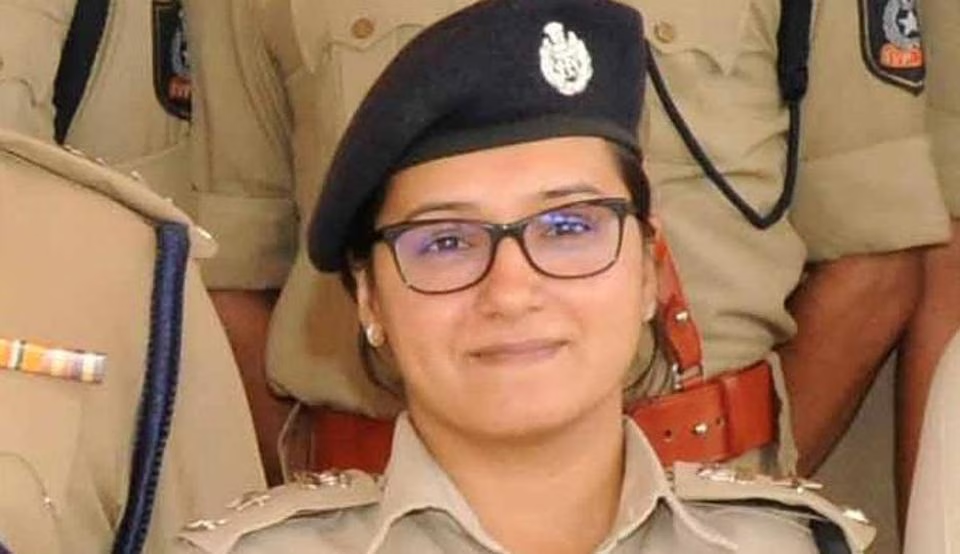

There’s a particular kind of resolve it takes to sit the UPSC Civil Services Examination — one of the most competitive tests in the world — and emerge not just passing, but earning a posting in the Indian Police Service. For every name that appears on that final list, there are years of sacrifice, discipline, and quiet determination behind it. Manisha Chaudhary IPS is one of those names, and her story is worth telling properly.
At 36, she represents a generation of women officers who are steadily reshaping what leadership looks like within India’s law enforcement institutions. In a service historically dominated by men, the presence of officers like Manisha Chaudhary carries significance beyond the personal — it signals a broader, structural shift in how India polices itself.
Who Is Manisha Chaudhary IPS?
Manisha Chaudhary is an Indian Police Service (IPS) officer whose career has drawn attention both for its professional depth and for what it represents in the wider conversation about women in Indian civil services. Currently 36 years old, she has built her reputation through postings that demand not just administrative skill, but real on-ground leadership — the kind that doesn’t show up in press releases but makes a tangible difference in the communities being served.
Her husband is Rahul Sharma, and like many IPS couples navigating the complexities of cadre postings and government service, their personal life exists in the context of a professional world that rarely makes things simple. That intersection of personal commitment and public duty is, in many ways, one of the defining features of life in the Indian civil services.
| Manisha Chaudhary | |
|---|---|
|
|
|
| Wiki Facts & About Data | |
| Full Name: | Manisha Chaudhary |
| Age: | 36 years old |
| Nationality: | Indian |
| Occupation: | Indian Police Service (IPS) |
| Religion: | Not publicly disclosed |
| Spouse/Partner: | Rahul Sharma |
| Net Worth: | Not publicly confirmed |
Early Life and Background
Manisha Chaudhary’s early life hasn’t been extensively documented in the public record, which is itself telling — she is, first and foremost, a public servant, not a public personality. What we do know places her within a generation of Indian women who pursued the civil services not as a fallback option, but as a deliberate, ambitious choice.
Growing up in India in the late 1980s and early 1990s meant coming of age in a country undergoing rapid economic and social transformation. The liberalization of 1991 was reshaping aspirations. The idea that a young woman could sit a national exam and compete for one of the most powerful administrative roles in the country — and win — was becoming less exceptional and more expected, at least in educated, aspirational households.
For someone who would later enter the IPS, the formative years typically involve not just academic preparation, but a gradual understanding of what public service actually means. It’s rarely a single moment of inspiration. It’s more often a slow accumulation — noticing how institutions work, how power operates, and deciding you want to be inside that system working to improve it rather than outside it criticizing it.
Education and UPSC Preparation
Specific details about Manisha Chaudhary’s educational institutions have not been independently verified in public sources, so it would be irresponsible to speculate. What is certain is that her path to the IPS ran through the UPSC Civil Services Examination — a multi-stage process that includes a preliminary screening, a main written examination, and a personality interview.
The UPSC exam demands breadth. Candidates must demonstrate knowledge across general studies, ethics, Indian governance, and their chosen optional subjects. The preparation period typically spans two to four years of focused study, often at the cost of conventional career paths and social milestones. Those who succeed aren’t just academically sharp — they’ve demonstrated stamina, adaptability, and a particular kind of mental resilience.
That Manisha Chaudhary cleared this process and secured an IPS allotment speaks clearly enough to her academic and intellectual caliber, even without a detailed institutional biography.

Entering the Indian Police Service
The IPS is not like most career paths. Entry comes through national examination, and from the moment of allotment, an officer’s life is shaped by postings, transfers, and the particular demands of whichever cadre they’ve been assigned to. Every district, every state has its own political texture, its own history of conflict and community, its own policing challenges.
New IPS officers go through rigorous training at the Sardar Vallabhbhai Patel National Police Academy (SVPNPA) in Hyderabad, where they receive instruction in law, criminal procedure, physical fitness, weapons handling, and leadership. The training is deliberately demanding — because the situations officers will face in the field are genuinely demanding.
Manisha Chaudhary’s entry into the service placed her in a professional world where credibility is earned slowly and lost quickly, where decisions made under pressure have real consequences for real people, and where navigating institutional hierarchy while maintaining integrity is a daily challenge.
Career Journey and Key Postings
IPS officers in India serve across a range of roles — from district Superintendent of Police to assignments within specialized wings like the CBI, intelligence services, or state-level vigilance bureaus. The specific postings that have defined Manisha Chaudhary’s career trajectory are not fully detailed in verified public sources at this time.
What is clearly documented in broader civil service reporting is the significant pattern of cadre postings and inter-state transfers that affect IPS officers, particularly those who are married to fellow civil servants. This is a structural reality of the service. Over the past decade, numerous IAS, IPS, and IFoS officers have had their cadres transferred across states — from Tamil Nadu to Tripura to Haryana — following marriage to officers in different state cadres. The government processes these transfers through a formal spousal cadre allotment mechanism.
This context matters for understanding how IPS careers — including Manisha Chaudhary’s — are shaped by more than professional performance alone. Logistics, geography, and family considerations are woven into every posting decision, and navigating all of that while maintaining operational effectiveness is no small feat.
Leadership Style and Professional Approach
Within Indian policing, there’s a meaningful difference between officers who are administrators and those who are leaders. Administrators manage paperwork and maintain systems. Leaders change cultures — within their departments and in the communities they serve.
Women IPS officers in particular have often been noted for bringing different approaches to community engagement, handling of gender-based crimes, and internal departmental communication. This isn’t a generalization — it’s a pattern observed across multiple state cadres and documented in civil service research. Officers who combine technical competence with genuine empathy tend to build trust faster in communities that have historically been suspicious of police institutions.
While specific accounts of Manisha Chaudhary’s leadership style in particular postings are not available in verified public reporting, her career within a demanding national institution speaks to a set of qualities — discipline, consistency, and commitment to public service — that are non-negotiable at that level.
Contributions to Indian Policing
The contribution of any IPS officer is rarely measurable by a single headline-making moment. More often, it accumulates over years: cases properly investigated, communities that feel safer, junior officers mentored, institutional processes reformed. The less visible the work, often, the more foundational it is.
Manisha Chaudhary’s contribution sits within a generation of officers who are collectively modernizing how Indian policing operates — embracing technology, advocating for better treatment of victims, and pushing against the inertia that large institutions inevitably produce. The symbolic contribution is also real: every woman who rises to a position of authority within the IPS makes the path slightly clearer for the next one.
Personal Life: Husband and Family
Manisha Chaudhary is married to Rahul Sharma. Beyond this confirmed detail, the specifics of their family life — including whether they have children, their parents’ backgrounds, and domestic arrangements — have not been publicly disclosed, and that privacy deserves to be respected.
What is worth understanding, however, is the unique complexity of being a civil service couple in India. When both partners are government officers, or when one is an IPS officer with demanding postings, the relationship requires a particular kind of mutual understanding and flexibility. Cadre transfers, midnight emergencies, public scrutiny — these are not hypothetical pressures. They are the daily architecture of this kind of life.
The broader pattern of inter-state cadre transfers following marriages between IPS and IAS officers — documented across multiple recent cases in states like Haryana, Himachal Pradesh, and Uttar Pradesh — reflects just how much logistical negotiation goes into building a life within India’s civil service framework. It’s a personal story with very public institutional implications.
Net Worth and Salary
As a serving IPS officer, Manisha Chaudhary’s salary is structured according to the 7th Pay Commission recommendations, which govern all central government employees in India. IPS officers draw pay within the Pay Level 10–14 scale, depending on rank and years of service, with additional allowances for housing, travel, and other official duties.
Her exact net worth has not been publicly confirmed, and any figures circulating online without verified sourcing should be treated with appropriate skepticism. Income for a serving IPS officer comes primarily from:
- Government salary as per rank and pay scale
- Official allowances (housing, travel, medical)
- Potential investments in line with government service disclosure norms
IPS officers are required to file annual property disclosures with their respective state governments, but these are administrative documents, not widely published figures.
Social Media Presence
Many IPS officers maintain a limited or professional social media presence, given the sensitive nature of their roles. As of the time of writing, Manisha Chaudhary IPS does not have a widely known or publicly verified social media profile across platforms like Instagram, Twitter/X, or Facebook.
For official updates related to her postings or statements, the appropriate channels are:
- State Police official handles on Twitter/X
- Government press releases through PIB or state information departments
This is not unusual — many senior officers deliberately maintain a low digital footprint, prioritizing operational discretion over public visibility.
Why Manisha Chaudhary’s Story Matters
India has over 5,000 IPS officers. Each of them has passed one of the world’s hardest examinations, undergone rigorous training, and taken on one of the most complex public roles imaginable. Manisha Chaudhary is one of them — and the fact that her story attracts genuine public interest says something important.
Part of it is the continuing fascination with how women are navigating institutions that weren’t originally designed with them in mind. Part of it is the broader public appetite for understanding how Indian civil servants actually live and work behind the official designations. And part of it is simply that stories of discipline, public service, and quiet excellence tend to resonate — because they offer something increasingly rare: a model of achievement that isn’t built on self-promotion.
Conclusion
Manisha Chaudhary IPS is, at 36, still very much in the middle of a career that has considerable ground yet to cover. What’s already visible is a professional biography defined by genuine commitment to public service, the particular resilience required to navigate India’s complex civil service landscape, and the personal steadiness to balance a demanding career alongside a life shared with her husband, Rahul Sharma.
She hasn’t courted celebrity. She hasn’t needed to. In a country of 1.4 billion people, the work of keeping communities safe and institutions accountable is its own kind of legacy — and one that tends to outlast any amount of social media following.
Frequently Asked Questions (FAQs)
1. Who is Manisha Chaudhary IPS? Manisha Chaudhary is a serving Indian Police Service (IPS) officer, currently 36 years old. She is known for her career in Indian law enforcement and is one of the women officers representing a growing shift in the gender composition of India’s civil services.
2. Who is Manisha Chaudhary’s husband? Manisha Chaudhary IPS is married to Rahul Sharma. Further details about their family life have not been publicly disclosed.
3. What is Manisha Chaudhary IPS’s salary? As an IPS officer, her salary is governed by the 7th Pay Commission of India. The exact figure depends on her current rank and years of service, with additional government allowances for housing and travel.
4. What is Manisha Chaudhary IPS’s contact number? Personal contact details of serving IPS officers are not publicly available and should not be shared publicly. Official communication is handled through designated government channels and state police departments.
5. What is Manisha Chaudhary IPS’s net worth? Her net worth has not been publicly confirmed. Her primary income comes from her government salary and associated allowances as a serving IPS officer, in line with the 7th Pay Commission structure.
Editorial Notice
The biography above is compiled from publicly available sources and is intended for general informational purposes only. At PeopleCabal, we are committed to accuracy — however, public records evolve, and some details may change over time. If you notice anything that requires a correction or update, we welcome you to reach out to us directly.
