
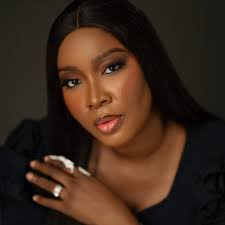

Journalism, at its best, is not about the journalist. It is about the story — the people inside it, the context around it, and the audience that needs to understand it. Tolulope Adeleru-Balogun has built her entire career on that understanding, and it shows in every dimension of her professional life.
She is an award-winning broadcast journalist with more than twelve years of experience in a field that chews through talent quickly and rewards consistency rarely. The fact that she is still here — still growing, still training, still described by those who know her work as passionate rather than merely proficient — says something that a list of credits alone cannot fully communicate.
What distinguishes Tolulope in a crowded profession is not just longevity or awards, though she has both. It is the combination of academic rigour, relentless professional development, and a genuine commitment to amplifying voices and narratives that might otherwise go unheard. She graduated top of her class in Mass Communication and then kept going — seeking training from leading international news agencies long after most people would have considered their education complete.
That refusal to stop learning, in an industry where many settle into comfortable routines, is perhaps the most telling thing about who Tolulope Adeleru-Balogun is as a journalist.
| Tolulope Adeleru-Balogun | |
|---|---|
|
|
|
| Wiki Facts & About Data | |
| Full Name: | Tolulope Adeleru-Balogun |
| Nationality: | Nigerian |
| Occupation: | Broadcast Journalist, Storyteller, Media Personality |
| Tribe: | Yoruba |
| Years Active: | 12 years |
| Social / Web: | 📸 @tolulopeab |
Early Life and Background
Tolulope Adeleru-Balogun is Nigerian, with Yoruba heritage that anchors a cultural identity visible in both her name and the values she brings to her professional work. The specifics of her earliest years — where exactly she grew up, the texture of her childhood — have not been placed extensively into the public record, which is consistent with a journalist’s instinct to keep the spotlight on others rather than on herself.
What the available record does reveal is that she came from an environment that took education seriously. The discipline required to graduate at the top of a Mass Communication class — not merely to pass, but to lead — does not emerge from nowhere. It is cultivated, usually in households and communities where intellectual effort is encouraged and where the connection between hard work and achievement is made clear early.
Her Yoruba background is part of a South-Western Nigerian tradition that has produced a disproportionately large share of Nigeria’s journalists, writers, broadcasters, and public intellectuals. There is something in the cultural value placed on oratory, on the careful use of language, on storytelling as both entertainment and record-keeping, that has historically inclined people from this tradition toward communication-driven careers. Tolulope fits naturally within that lineage, even as she has extended it into distinctly modern, internationally trained territory.
The hyphenated surname — Adeleru-Balogun — carries the particular weight of two family names joined, something that in Yoruba Nigerian culture often signals a marriage that both parties have chosen to honour through naming. It is a small biographical detail, but one that speaks to a personal life lived with intention.
Education
Tolulope Adeleru-Balogun’s educational record begins with a result that deserves more than a passing mention: she graduated top of her class with an honours degree in Mass Communication. In Nigerian university contexts, where Mass Communication programmes are often large, competitive, and demanding, finishing first is a meaningful achievement. It signals not just intelligence but the kind of sustained, focused effort that separates the exceptional from the merely capable.
But the more interesting part of her educational story is what came after graduation. Rather than treating her degree as a completed task, Tolulope pursued extensive additional training from leading international news agencies — organisations whose standards for journalism practice are among the most rigorous in the world.
This kind of post-degree, internationally oriented professional development is not common. It requires initiative, because no one is requiring you to do it. It requires investment of time and, often, money. And it requires a particular intellectual humility — the recognition that however well you graduated, there is more to learn, and that the best teachers may not be in the room where you started.
For Tolulope, this ongoing education has been the engine behind her continuous improvement. It is why, twelve years into a career, she is still described as someone dedicated to perfecting her craft rather than someone who has settled into a comfortable professional plateau.

Career Journey
Beginning With a Top-Class Foundation
Tolulope Adeleru-Balogun entered broadcast journalism with credentials that immediately marked her as someone to watch. Graduating top of her class in Mass Communication was not just an academic honour — it was a signal to editors, producers, and media organizations that here was someone who had demonstrated, under measurable conditions, that they were serious about the work.
Her early career in broadcast journalism gave her the foundational experience that all good reporters need: the rhythm of a deadline, the discipline of accuracy, the particular pressure of telling a story clearly and correctly when time is short and the stakes are real. These are skills that cannot be fully taught in a classroom. They have to be earned, usually under conditions of moderate stress and real consequence.
Over a Decade of Award-Winning Broadcasting
Twelve years is a significant stretch of time in any profession. In broadcast journalism, where burnout is common, where the political and economic pressures on media organizations are constant, and where the emotional toll of covering difficult stories accumulates quietly, staying the course for more than a decade while continuing to grow is not a small thing.
Tolulope has not simply survived those twelve years. She has gathered awards along the way — recognition from peers and institutions that have observed her work and judged it excellent by the standards of the profession. Award-winning journalism is not a self-declared status. It is conferred, usually by bodies that have seen enough of the field to know the difference between competent and exceptional. That Tolulope has earned that recognition, more than once, is significant.
International Training and Global Standards
One of the most distinctive elements of Tolulope’s career has been her investment in training from leading international news agencies. This is worth examining in some detail, because it speaks to both her ambition and her method.
International news agencies — organisations like Reuters, the BBC, AFP, and similar institutions — operate at a scale and standard that Nigerian broadcast journalism, while vibrant and fast-evolving, does not always match. Their training programmes are designed to produce journalists who can work across contexts, under pressure, with a level of precision and ethical rigour that global audiences demand.
For a Nigerian journalist to seek out and complete training at that level is to deliberately hold her own work to a higher standard than her immediate environment might require. It is to say: I am not just trying to be good by local comparison. I am trying to be good, full stop. That orientation has clearly informed the quality of Tolulope’s output and is a significant part of what has made her an award-winner rather than simply a veteran.
Amplifying New Voices and Narratives
Perhaps the element of Tolulope’s work that is most reflective of her deeper journalistic values is her dedication to bringing new voices and narratives to the forefront. After more than a decade in the industry, many journalists become comfortable with familiar sources, established contacts, and well-worn story types. The beats are known. The experts are on speed dial. The template is set.
Tolulope has consciously resisted that comfortable narrowing. Her commitment to finding and amplifying voices that are not already prominent — stories that are not already being told — reflects an understanding of what journalism is ultimately for. It is not for the comfortable documentation of what is already known. It is for the discovery and communication of what audiences need to understand but have not yet been shown.
That principle, maintained consistently across twelve years and counting, is one of the more admirable professional commitments in Nigerian broadcast journalism.

Influence and Contribution
Tolulope Adeleru-Balogun’s contribution to Nigerian broadcast journalism operates on several levels simultaneously. At the most direct level, there is the work itself: the stories told, the interviews conducted, the audiences informed and engaged over more than a decade of active broadcasting. That body of work, accumulated broadcast by broadcast, represents a genuine public service.
At a broader level, she represents a standard — a visible example of what a Nigerian broadcast journalist can look like when academic excellence, continuous professional development, and genuine editorial values are combined in a single career. In a media environment that is sometimes pressured by commercial interests and political influence, the presence of journalists who prioritise craft and integrity is more important than it might appear from the outside.
Her dedication to ongoing training also carries a quiet influence for younger journalists who observe her career. The message embedded in that behaviour — that excellence is a practice, not an arrival point — is one that the profession needs communicating clearly to every generation that enters it.
Personal Life
Tolulope Adeleru-Balogun is married, as her hyphenated surname suggests — a joining of two family names that in Yoruba Nigerian tradition carries both cultural significance and personal meaning. The details of her husband, children, and domestic life have not been placed into the public domain in any comprehensive way, which is entirely consistent with the disposition of someone who has spent her career making other people’s stories the focus rather than her own.
What comes through in her public professional presence is the sense of a person who is grounded — someone whose values, evident in her journalism, are not a professional performance but a reflection of how she actually sees the world. That kind of authenticity is difficult to manufacture and tends to be rooted in personal foundations that are stable and meaningful.
Her family background, Yoruba heritage, and the community that shaped her early thinking remain, in the ways that matter most, present in her work — in the care she takes with language, in her instinct toward the human dimension of every story, in the respect she brings to the voices she amplifies.

Net Worth
Tolulope Adeleru-Balogun’s net worth has not been publicly confirmed by any credible, verifiable source. Her income is primarily derived from her career as a broadcast journalist — which, at the award-winning, internationally trained level she has reached, includes not just reporting and presenting but potentially consultancy, training, speaking engagements, and editorial contributions. Any specific figure found elsewhere online should be approached with scepticism, as such numbers relating to Nigerian media professionals are rarely sourced from verifiable disclosures.
Conclusion
Tolulope Adeleru-Balogun’s career is a sustained argument — made through twelve years of deliberate, award-winning work — that journalism done well is still one of the most important things a person can do with a professional life. She graduated at the top of her class and then kept studying. She spent a decade in broadcast journalism and then kept growing. She built a career that earned recognition and then kept reaching for new voices and new stories.
In an industry that can make cynicism feel rational and routine feel inevitable, she has remained, by all available evidence, genuinely passionate. That is harder than it sounds. It requires the kind of professional integrity that doesn’t bend when things get comfortable and doesn’t break when things get difficult.
Nigerian broadcast journalism is better for having her in it. And if the trajectory of her career so far is any guide, the most important chapters may not yet be written.
FAQs
1. What is Tolulope Adeleru-Balogun known for? She is known as an award-winning Nigerian broadcast journalist with over twelve years of experience, recognised particularly for her storytelling quality, her commitment to amplifying new voices, and her ongoing pursuit of international journalism training.
2. Where did Tolulope Adeleru-Balogun study? She holds an honours degree in Mass Communication, which she completed at the top of her class. She has since pursued extensive additional training from leading international news agencies, though she has not publicised all the specific institutions involved.
3. What tribe is Tolulope Adeleru-Balogun from? She is of Yoruba heritage, from South-Western Nigeria — a tradition with a long and strong history of producing journalists, writers, broadcasters, and public communicators.
4. Is Tolulope Adeleru-Balogun married? Yes. Her hyphenated surname — Adeleru-Balogun — reflects a married name, which is a common practice among Yoruba Nigerian women who choose to join family names after marriage. The details of her husband and family life have not been made comprehensively public.
5. What makes Tolulope Adeleru-Balogun stand out in Nigerian journalism? Several things set her apart: she graduated top of her class, has pursued continuous international training across her career, has won awards for her broadcasting work, and has maintained a deliberate focus on bringing underrepresented voices and narratives into public conversation — a commitment she has sustained across more than a decade in the industry
Editorial Notice
The biography above is compiled from publicly available sources and is intended for general informational purposes only. At PeopleCabal, we are committed to accuracy — however, public records evolve, and some details may change over time. If you notice anything that requires a correction or update, we welcome you to reach out to us directly.
