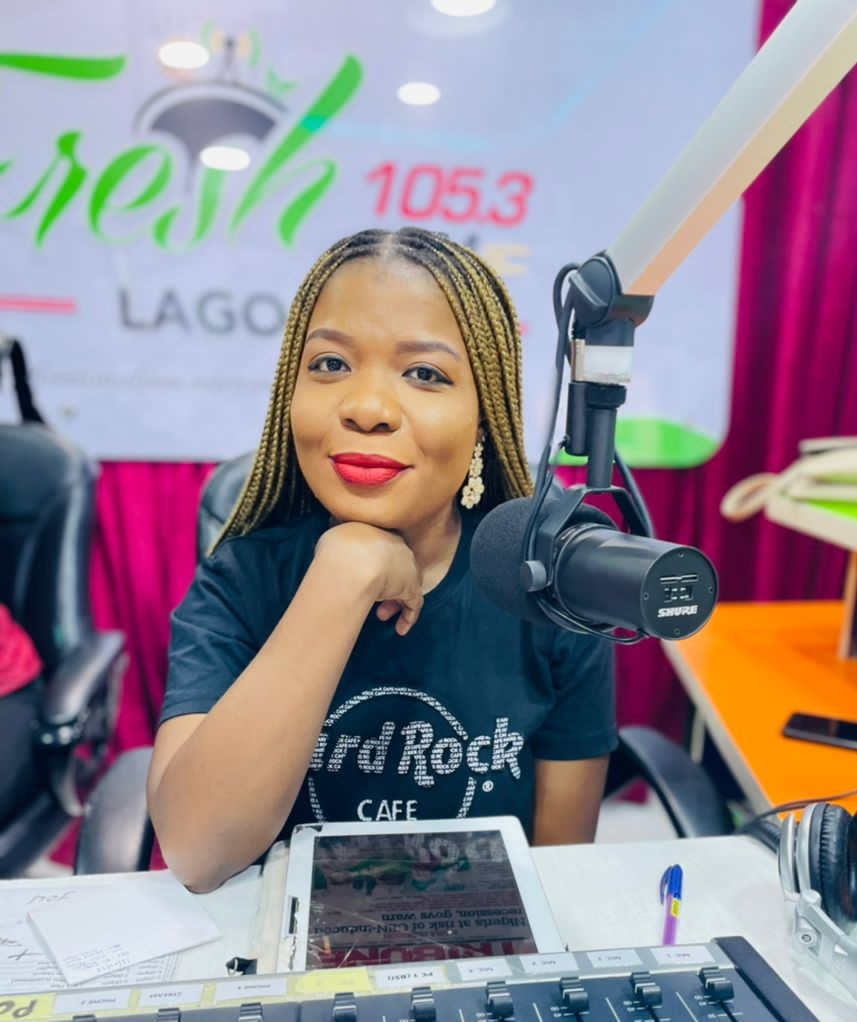

Most people stumble into their calling. Adenike Lanlehin stumbled into a radio station at nineteen — and never really left.
What began as an internship at OGBC, the Ogun State Broadcasting Corporation, became the foundation of a broadcasting career that has stretched across decades, platforms, and conversations. Today, Adenike is recognized not just as a radio presenter with a voice that commands attention, but as someone who has thought more seriously about the craft of broadcasting than most people in her industry. She is a practitioner, yes — but also something rarer: a reflective professional who understands what radio is for and why it matters.
In an era when the Nigerian media landscape is being reshaped by podcasts, social media, and digital disruption, Adenike Lanlehin represents a particular kind of anchor: someone deeply rooted in the traditions of broadcast radio while remaining genuinely curious about what comes next. Her Instagram series Radio Lessons is evidence of that — a voluntary effort to pass knowledge forward to the next generation of broadcasters, driven not by commercial incentive but by genuine love for the craft.
That combination of technical excellence, mentorship instinct, and intellectual engagement with her own industry makes her a figure worth understanding properly.
| Adenike Lanlehin | |
|---|---|
|
|
|
| Wiki Facts & About Data | |
| Full Name: | Adenike Lanlehin |
| State of Origin: | Ogun State |
| Nationality: | Nigerian |
| Occupation: | Radio Broadcaster, Media Personality, Mentor |
| Tribe: | Yoruba |
| Known For: | Radio presenting, Radio Lessons Instagram series |
Early Life and Background
Adenike Lanlehin’s roots are in Ogun State, one of the South-Western states of Nigeria with a strong Yoruba cultural identity and a long history of producing educated, articulate public figures. The state sits between Lagos and the interior of the South-West, and its proximity to Lagos has historically given its people access to both the cultural depth of traditional Yoruba life and the professional opportunities of Nigeria’s commercial capital.
Growing up, Adenike was surrounded by language used purposefully. By her own account, one of her earliest inspirations was her father — specifically, the articulate way he delivered jingles. That detail is worth pausing on. Most people point to a teacher, a famous broadcaster, or a moment on television as the spark that lit their career interest. For Adenike, it was the sound of her father’s voice, shaped with care and precision, that first made her understand what a well-used voice could do.
That early imprinting — the idea that language, tone, and delivery are things you shape deliberately rather than simply emit — would become central to everything she later built professionally.
She also cites the late Dan Foster, the legendary broadcaster who became one of the most beloved voices in Nigerian radio history, as a major inspiration. Dan Foster’s influence on a generation of Nigerian broadcasters is difficult to overstate. He brought a particular quality of warmth, intelligence, and genuine listener-centredness to Nigerian radio that set a standard many have aspired to since. That Adenike counted him among her inspirations speaks to the level of craft she was aiming for from early on.
Education
The specific details of Adenike Lanlehin’s formal education have not been made comprehensively public. What is clear from her career trajectory and the sophistication of her professional thinking is that she is a well-educated woman whose intellectual formation has been as important to her broadcasting career as any technical training.
Her entry into radio came through an internship at OGBC at the age of nineteen — suggesting that her broadcasting journey began either alongside or shortly after her formal education. The internship itself became her most formative classroom: the kind of hands-on, real-world training that no lecture theatre can fully replicate.
For a broadcaster, that kind of immersive early experience often matters more than the certificates that precede it. What Adenike learned in those early years at OGBC — how to prepare for a show, how to read a room through a microphone, how to serve a listener she couldn’t see — became the technical and philosophical bedrock of a career that has lasted far longer than most.

Career Journey
The Internship That Started It All
Adenike Lanlehin walked into the Ogun State Broadcasting Corporation at nineteen as an intern. That is, by Nigerian standards and by any standard, a young age to begin shaping a professional identity — young enough that most people that age are still figuring out what they want, let alone building toward it.
But internships at state broadcasting corporations in Nigeria are not casual affairs. OGBC, like similar state broadcasters across the country, operates in a serious broadcast environment with real audiences, real deadlines, and real professional expectations. Being thrown into that environment at nineteen either breaks you or shapes you. For Adenike, it shaped her.
What the internship gave her was not just technical knowledge but something harder to teach: the understanding that radio is fundamentally about the listener. Everything — the preparation, the delivery, the pacing, the choice of words — exists in service of someone on the other side of the frequency who cannot see you and will not wait for you to get it together. That listener-first philosophy has been a thread running through her entire career.
Developing a Voice, Developing a Standard
As Adenike moved from intern to presenter and built her broadcasting career, she developed a set of professional standards that are evident in how she talks about her work. She values confidence and ease in a broadcasting voice — not the performance of confidence, but the genuine article, which comes from deep preparation and real knowledge of your material.
Her approach to show preparation is, by her own description, intense. She goes in knowing what she wants to give her listeners, having thought through not just the content but the experience she wants to create. That level of intentionality is rarer than it should be in broadcasting, and it is a significant part of what has made her a figure that audiences trust and colleagues respect.
Over time, she became not just a recognised voice in Nigerian radio but a recognised mind — someone whose opinions on broadcasting, regulation, and the future of media carry weight because they are clearly the product of sustained, thoughtful engagement with the industry.
Radio Lessons: Teaching the Next Generation
One of the most telling things Adenike Lanlehin has done in recent years is launch Radio Lessons, an Instagram series dedicated to sharing broadcasting knowledge with aspiring and developing radio talent. The series was inspired by broadcaster Tony Doe, and it reflects something that Adenike has been explicit about: a genuine desire to leave the industry better than she found it.
Radio Lessons is not a commercial product. It is not a paid masterclass or a sponsored content series. It is a broadcaster who loves her craft deciding to share what she knows because she believes the next generation deserves better preparation than they are getting. That kind of professional generosity is not common, and it has earned her a reputation as a mentor that goes beyond the microphone.
The series covers the nuts and bolts of radio broadcasting — preparation, delivery, audience awareness, the technical and the human — and it has built a following among young Nigerians who are serious about the industry. In doing so, Adenike has extended her influence well beyond the stations she has worked at and the shows she has hosted.
Engaging With Broadcast Regulation and Industry Debate
Adenike has shown herself willing to engage with the harder conversations in her industry — including the role of the National Broadcasting Commission (NBC) in regulating Nigerian broadcast media, particularly in sensitive periods like the #EndSARS protests and the controversial Twitter ban in Nigeria.
These are not easy topics to navigate publicly, especially for a working broadcaster whose livelihood depends partly on maintaining good professional relationships within the industry. That she has been willing to offer her perspective on them demonstrates a kind of professional courage and civic seriousness that goes beyond entertainment.
Her engagement with the podcast versus radio debate is equally thoughtful. Rather than dismissing podcasting as a threat to traditional radio, she has acknowledged what podcasts offer that radio doesn’t — particularly the personalised listening experience that allows audiences to curate their own content consumption. That nuance, the ability to credit a competing format while still articulating what makes radio irreplaceable, is the mark of someone who understands their industry at a level deeper than self-interest.
Influence and Contribution
Adenike Lanlehin’s influence in Nigerian radio operates on two levels. The first is the direct influence of her on-air work: the listeners who have trusted her voice over the years, who have made her show part of their morning routine or their commute, who have come to associate her delivery with a certain quality of information and warmth. That relationship between a broadcaster and their audience is one of the most intimate in media, and sustaining it over years requires a consistency of character that most people cannot maintain.
The second level is the influence she has exercised off-air — through mentorship, through Radio Lessons, through her willingness to speak publicly about the craft and the industry. This is the kind of influence that shapes not just an audience but a profession, and it is arguably the more lasting of the two.
In a Nigerian radio landscape that has sometimes struggled with the tension between entertainment and journalism, between personality and professionalism, Adenike has been a consistent voice for taking the work seriously. That is a contribution that doesn’t always get the recognition it deserves, but it is a real one.
Personal Life
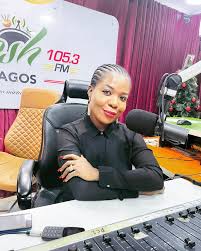
Adenike Lanlehin keeps her personal life largely out of the public spotlight — a choice that is particularly striking given that she works in a medium built on personal connection and self-disclosure. It is a reminder that being good at creating intimacy on air does not mean being obligated to perform your private life for public consumption.
Details about her husband and family have not been made comprehensively public, and that privacy is respected here. What comes through clearly in her professional persona is the influence of her family background — particularly her father, whose articulate use of language she has cited as a formative inspiration. That speaks to a household where words were taken seriously, where communication was understood as a craft rather than a function.
Her Yoruba heritage and Ogun State roots remain visible in the warmth and cultural groundedness she brings to her work, even as her career has connected her to audiences and colleagues far beyond that geographic origin.
Net Worth
Adenike Lanlehin’s net worth has not been publicly confirmed by any credible or verifiable source. Her income is primarily derived from her broadcasting career, which has spanned multiple platforms and formats over many years, as well as from any brand partnerships, consultancy work, and her growing role as a media educator and mentor. Specific figures circulating online are unverified and should be treated accordingly.
Conclusion
Adenike Lanlehin’s career is a quiet argument for the idea that the most valuable thing a broadcaster can do is care — genuinely, consistently, and beyond what the job strictly requires. She cared enough about her listeners to prepare intensely for every show. She cared enough about the next generation to build Radio Lessons without being asked. She cared enough about her industry to engage with its difficult questions rather than sidestep them.
What she has built over a career that began with a teenage internship at OGBC is not just a body of broadcast work. It is a reputation — for professionalism, for thoughtfulness, and for a love of radio that has never curdled into routine. In an industry that can make that kind of passion difficult to sustain, that is no small achievement.
The legacy she has spoken about wanting to leave — one of genuine love and care for the craft — is, by the evidence of her career, already being written.
FAQs
1. How did Adenike Lanlehin start her radio career? She began as an intern at OGBC, the Ogun State Broadcasting Corporation, at the age of nineteen. That internship became the foundation of a career that has spanned decades in Nigerian broadcasting.
2. What is Radio Lessons? Radio Lessons is an Instagram series created by Adenike Lanlehin to share broadcasting knowledge and professional insights with aspiring and developing radio talent in Nigeria. It was inspired by broadcaster Tony Doe.
3. Who are Adenike Lanlehin’s broadcasting inspirations? She has cited the late Dan Foster, one of the most beloved voices in Nigerian radio history, as a major inspiration. She has also spoken about the influence of her father’s articulate delivery as an early formative influence on her relationship with voice and language.
4. What state is Adenike Lanlehin from? She is from Ogun State, Nigeria, and is of Yoruba heritage.
5. What has Adenike Lanlehin said about podcasts versus radio? Rather than dismissing podcasting, she has acknowledged the personalised listening experience that podcasts offer audiences, while continuing to articulate what makes traditional radio distinctive and irreplaceable. Her approach reflects a nuanced, forward-looking engagement with the evolving media landscape.
Editorial Notice
The biography above is compiled from publicly available sources and is intended for general informational purposes only. At PeopleCabal, we are committed to accuracy — however, public records evolve, and some details may change over time. If you notice anything that requires a correction or update, we welcome you to reach out to us directly.
