


There’s a particular kind of success that doesn’t just happen – it’s built, brick by brick, through setbacks, reinvention, and an almost stubborn refusal to be ordinary. Funke Akindele is that kind of success story. Long before she became the highest-grossing director in Nigerian box office history, she was a young girl from Ikorodu with a dream that didn’t fit neatly into any box. Actress. Director. Producer. Lawyer. Politician. HIV awareness ambassador. She has worn each of these titles not as accessories, but as convictions.
To understand Funke Akindele is to understand a great deal about the modern Nigerian entertainment industry — how it grew, what it demands, and who has been willing to push it forward when it wasn’t yet ready to move. Her story is worth telling properly.
| Olufunke Ayotunde Akindele | |
|---|---|
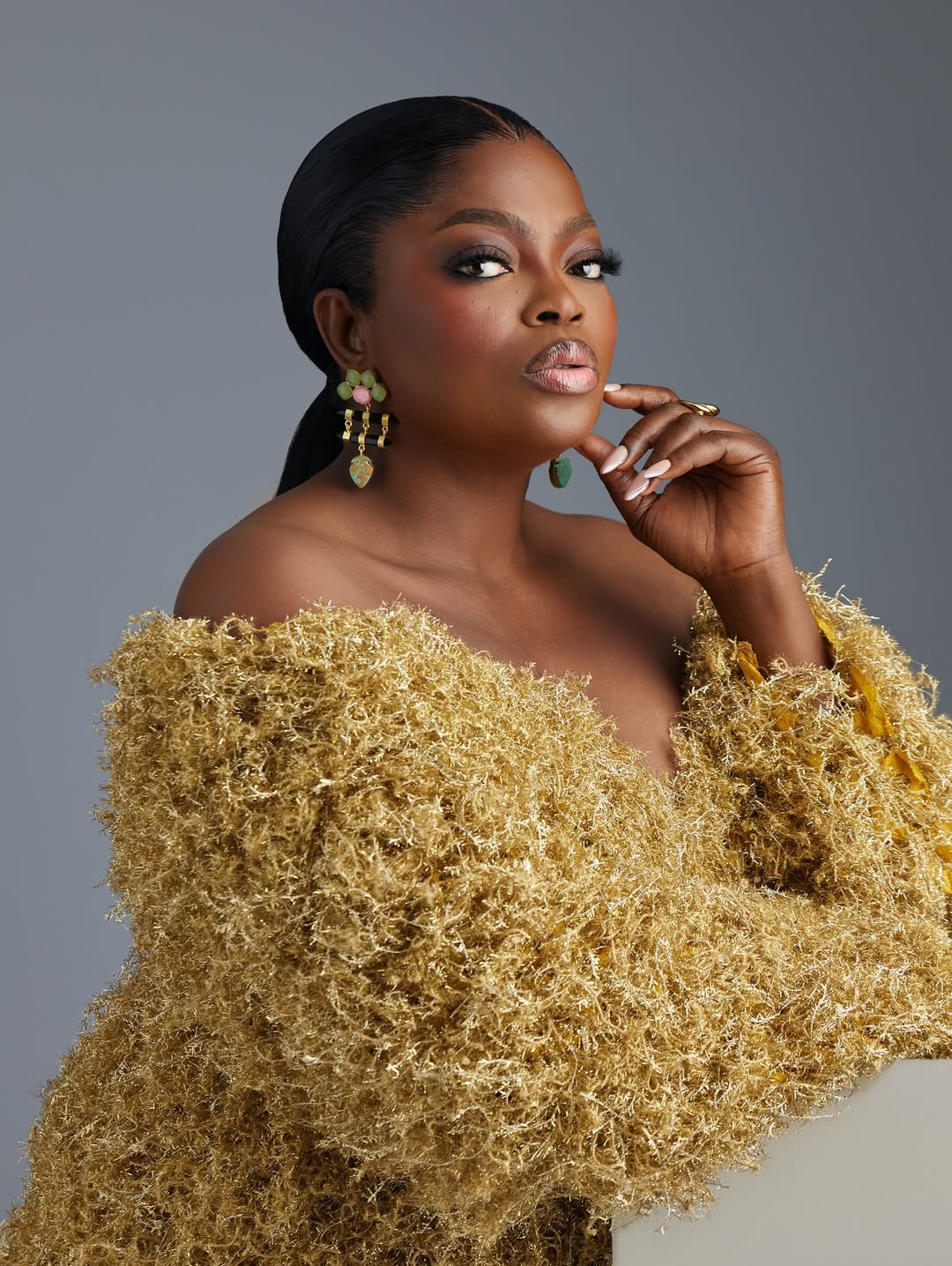 Funke Akindele: Biography, Career, Family & Legacy.: History · Bio · Photo
|
|
| Wiki Facts & About Data | |
| Full Name: | Olufunke Ayotunde Akindele |
| Date of Birth: | August 24, 1977 |
| Age: | 48 years old (as of 2026) |
| Place of Birth: | Ikorodu, Lagos State, Nigeria |
| State of Origin: | Ogun State |
| Nationality: | Nigerian |
| Occupation: | Actress, filmmaker, producer, director, politician, realtor |
| Tribe: | Yoruba |
| Children: | Twin boys (born 2018) |
| Net Worth: | Approximately $5 million – $11 million |
| Years Active: | 1996 - present |
| Education: | Law Degree – University of Lagos |
| Known For: | Jenifa |
| Social / Web: | 🌐 Website📸 @funkejenifaakindele🐦 @funkeakindele👤 Facebook▶ YouTube |
Early Life and Background
Funke Akindele was born on 24 August 1977 in Ikorodu, a bustling area on the northern fringe of Lagos State that is a far cry from the glamour often associated with Nigerian celebrity. She grew up as the second of four children — three girls and a boy — in a household that valued education above almost everything else.
Her parents were not entertainers. Her mother was a medical doctor, and her father a retired school principal. Think about what that combination produces in a child: discipline from one side, intellectual curiosity from the other. It’s not the typical backstory you’d write for a future Nollywood queen, which is perhaps exactly why it worked. She wasn’t being groomed for fame — she was being prepared for substance.
Growing up in Ikorodu in the late 1970s and 1980s meant growing up in a Nigeria that was still figuring itself out post-independence, a place where ambition had to coexist with practicality. That tension — between dreaming big and staying grounded — would later become a recurring theme in her work. Her films frequently explore the lives of ordinary Nigerians navigating extraordinary circumstances, and it’s hard to imagine she didn’t draw that instinct from her own upbringing.
She attended Grace Children’s School in Gbagada, Lagos — another detail that locates her firmly within a certain Lagos middle-class experience that millions of Nigerians recognise and connect with.
Education: From Mass Comm to Law
Funke Akindele’s academic journey is, in itself, a statement about who she is. She studied Mass Communication at what was then Ogun State Polytechnic (now Moshood Abiola Polytechnic), earning an Ordinary National Diploma — a qualification that put her in direct contact with the fundamentals of media, storytelling, and communication. It was arguably the most natural stepping stone toward a career in film, even if the path wasn’t perfectly straight.
But she didn’t stop there. She went on to earn a law degree from the University of Lagos — one of Nigeria’s most competitive institutions. A law degree from UniLag isn’t decorative. It signals analytical thinking, an ability to argue a case, and a certain tolerance for complexity. Those skills might not show up obviously on a film set, but they show up in everything: in the contracts she negotiates, in the narratives she constructs, in the way she fights for her vision.
It’s the combination of creative training and legal rigour that makes her an unusual figure in Nollywood — someone who can write a scene and then read the fine print on the deal that brings it to screen.
Breaking Into the Industry: The Early Years
Funke Akindele’s entry into acting came not through a dramatic audition or a lucky break at a party, but through the kind of sustained, professional commitment that characterises everything she does. In 1998, she joined the cast of I Need to Know, a UNFPA-supported Nigerian sitcom focused on youth sexual health and HIV/AIDS awareness. She remained with the show until 2002.
This is worth pausing on. Her first major role wasn’t in a blockbuster — it was in a socially conscious series designed to educate young Nigerians about some of the most sensitive issues of their time. For a young actress, it would have been easy to see this as a stepping stone to “real” fame. Instead, Akindele gave it everything, and in doing so, built both her craft and her character simultaneously.
That early immersion in HIV awareness content also plants a seed that would bloom decades later in a completely different form — but more on that shortly.
Through the early 2000s, she continued building her body of work, taking on film and television roles that kept her visible in the industry without yet making her a household name. She was doing the quiet, unglamorous work that serious careers are built on.
The Role That Changed Everything: Jenifa
In 2009, everything shifted.
Jenifa — a comedy-drama about a village girl navigating the culture shock of city university life — became one of the most beloved Nigerian films of its generation. Akindele played the title character, and the performance was a revelation. She wasn’t just funny; she was precise. The physicality, the dialect, the comedic timing — all of it felt effortless in the way that only deeply rehearsed work ever does.
The film won her the Africa Movie Academy Award for Best Actress in a Leading Role in 2009. But more than the trophy, it gave her something rarer: a character that Nigerians genuinely loved. Jenifa wasn’t a glamour figure or an aspirational ideal. She was relatable, flawed, hilarious, and ultimately triumphant — everything that resonated with audiences who were tired of seeing themselves romanticised rather than reflected.
She reprised the role in The Return of Jenifa in 2011, and then transformed the character into a full television series — Jenifa’s Diary — in 2015. The series became appointment television for millions of Nigerian households and ran for multiple seasons, earning Akindele the Best Actress in a Comedy award at the Africa Magic Viewers’ Choice Awards in 2016, 2017, 2020, and 2022. Four wins in that single category. Five overall in the Best Actress in Comedy category. It’s not a record — it’s a dominance.
Building an Empire: Jenifa’s Diary and Beyond
What separates Funke Akindele from many of her contemporaries isn’t just talent — it’s the transition she made from performer to architect. While Jenifa’s Diary was running, she was simultaneously developing her production company and her capabilities as a director and producer. She wasn’t content to be in front of the camera; she wanted to control what the camera pointed at.
This move into production and direction is where her legal and communication background arguably became most valuable. Running a production house is a business, and many creatives have brilliant ideas that collapse under the weight of poor management. Akindele built systems. She built teams. She built a brand.
Her subsequent films expanded in scope and ambition. A Tribe Called Judah (2023), for instance, demonstrated a markedly different register — darker, more complex, more socially layered. It suggested that she wasn’t simply capitalising on a winning formula but genuinely evolving as a filmmaker. The film was met with critical acclaim and strong box office performance, reinforcing her status not just as a popular entertainer but as a director with something to say.
Record-Breaking at the Box Office
Numbers, in the film industry, are rarely just numbers. They are votes — audiences choosing, with their money and their time, to show up. By that measure, Nigerians have voted for Funke Akindele more consistently and more emphatically than for almost anyone else in Nollywood history.
She is only the second director ever to gross over one billion naira at the Nigerian box office, and she currently holds the record as the highest-grossing director in Nigerian box office history, with a cumulative total exceeding ₦4.7 billion. To put that in perspective: she has done this as a woman, as an independent filmmaker, and in an industry that didn’t always make it easy for either.
She is also the most nominated actress and filmmaker at the Africa Magic Viewers’ Choice Awards (AMVCA) and holds the record for most wins for an actress with six. The breadth of those nominations — across acting and directing categories — speaks to an unusual range.
Awards and Recognition
Beyond the AMVCA records and the AMAA win, Funke Akindele’s trophy shelf reflects a career of consistent excellence across multiple decades. What’s notable is that her recognition has come from peer-voted awards, audience-voted awards, and institutional recognition — suggesting that her appeal isn’t manufactured or niche but genuinely widespread.
Her awards tell a story of someone who started strong, dipped slightly into the background, then returned with such force that the industry had to recalibrate its sense of who deserved the top honours. That pattern — of return and reinvention — is one of the most compelling things about her career arc.
Her Influence on Nigerian Cinema
Funke Akindele’s influence on Nollywood is the kind that doesn’t announce itself loudly but reshapes the landscape quietly. By consistently producing commercially successful films with recognisably Nigerian stories and characters, she has demonstrated that local authenticity and box office success are not mutually exclusive — a lesson the industry is still absorbing.
Her willingness to tackle social themes — class, gender, migration, ambition — through the vehicle of popular comedy and drama has expanded what Nigerian audiences expect from their cinema. She showed that a film can make you laugh and make you think, sometimes in the same scene.
She has also, perhaps less visibly but equally importantly, created employment. Her productions have provided consistent work for writers, crew members, editors, caterers, drivers, and scores of other professionals across the value chain. In a sector that has struggled with sustainability, her output has been a stabilising force.
Politics and Public Service
In 2022, Funke Akindele stepped into a different kind of public spotlight. She was nominated as the running mate to Abdul-Azeez Olajide Adediran, the People’s Democratic Party gubernatorial candidate for the 2023 Lagos State gubernatorial election.
The move raised eyebrows in some quarters — a beloved entertainer stepping into one of Nigeria’s most politically charged states — but it was also consistent with a thread running through her entire career: a willingness to use platform for purpose. Lagos is a city that Akindele knows intimately, and her campaign represented a genuine attempt to translate cultural capital into civic engagement.
The PDP ticket did not win the election, but her participation marked a meaningful moment in the ongoing conversation about celebrity, influence, and political participation in Nigeria.
UNAIDS Appointment: A New Kind of Platform
Here is where her story comes full circle in a way that feels almost scripted, except that real lives rarely are.
In December 2024, during the World AIDS Day commemoration, the Joint United Nations Programme on HIV and AIDS (UNAIDS) appointed Funke Akindele as the National Goodwill Ambassador for Nigeria. Her remit: promoting HIV prevention and awareness across the country.
Cast your mind back to 1998 — a young actress in a socially conscious HIV awareness sitcom. More than two decades later, she is now the face of the country’s most prominent HIV awareness platform. The continuity is striking. It suggests that her early work on I Need to Know wasn’t merely a career move but a genuine engagement with issues she cared about, one that has since matured into formal institutional commitment.
As ambassador, she brings something that few policy advocates can offer: mass reach, cultural credibility, and the ability to make difficult conversations feel approachable. In a country where stigma around HIV remains significant, that combination is genuinely valuable.
Personal Life: Marriage, Twins, and Moving On
Funke Akindele’s personal life has attracted as much public attention as her professional one — a reflection of both her fame and the Nigerian media’s intense interest in the lives of its celebrities.
Her first marriage, to Kehinde Almaroof Oloyede, lasted from 2012 to 2013. Details from that period remain largely private, and she has not spoken extensively about it publicly.
Her second marriage, to Nigerian rapper and producer Abdulrasheed Bello — better known as JJC Skillz — was more publicly documented. They married in 2016, and in 2018 welcomed twin boys, whose births were greeted with widespread celebration among her fan base. The marriage appeared, from the outside, to represent a meaningful personal anchor for someone with such a demanding professional life.
In June 2022, JJC Skillz publicly announced the end of their marriage, citing irreconcilable differences. The announcement came as a surprise to many, and the subsequent period involved reports of ongoing negotiations over the custody of their children. It was, by any measure, a painful chapter.
What followed, however, was instructive. Rather than retreating from public life or allowing the split to define her narrative, Akindele channelled her energy back into work. A Tribe Called Judah was produced in this period. Her UNAIDS appointment came after it. By early 2026, she remains separated from JJC Skillz, with no public announcement of a new relationship. She is raising her twin sons and, by all visible accounts, building rather than rebuilding.
Net Worth and Business Interests
Precise net worth figures for Nigerian entertainment figures are difficult to verify with confidence, and often the numbers circulated online owe more to speculation than to documentation. What can be said responsibly is that Funke Akindele’s income streams are diverse and significant: acting fees, directing and producing revenues, brand endorsements, her production company, and reportedly real estate investments.
Some estimates place her net worth in the region of $11 million, though this has not been publicly confirmed by Akindele herself or through verifiable financial disclosures. Given her box office record — over ₦4.7 billion in cumulative gross — and her sustained commercial activity, it is reasonable to describe her as one of the most financially successful figures in Nigerian entertainment history.
Her interests in real estate (she is listed as a realtor among her professional titles) suggest a deliberate approach to long-term wealth management, rather than the feast-or-famine financial patterns that have characterised some entertainment careers.
What Makes Funke Akindele Different
If you were to distill what separates Funke Akindele from the many talented people who have passed through Nollywood, it would come down to this: she treats storytelling as infrastructure.
Most entertainers build careers. She has built an ecosystem. From the characters she creates to the audiences she cultivates, from the productions she finances to the conversations she sparks, everything she does seems oriented toward something larger than any single film or role. She is not just interested in being seen — she is interested in mattering.
There is also something to be said about her relationship with reinvention. At every stage where the industry might have tried to calcify her into a single identity — the Jenifa actress, the comedy queen, the Nollywood star — she has expanded her scope. She added directing. Then producing. Then serious drama. Then politics. Then international advocacy. Each move has felt less like a pivot and more like the natural expression of someone who was always more than the last thing she was known for.
Conclusion
Funke Akindele is not simply Nigeria’s most commercially successful female filmmaker. She is a study in what it means to build a career with intention — to refuse the comfortable corners that fame offers and keep pushing toward something more difficult and more meaningful.
From a household in Ikorodu to the halls of UNAIDS, from a polytechnic in Ogun State to the biggest screens in Nigeria, her journey maps something important about what ambition looks like when it is paired with discipline, skill, and genuine concern for the world around you. Her twin boys are growing up watching a woman who did not wait to be given a seat at the table — she built the table, filled it with stories worth telling, and invited a nation to sit down and watch.
Whatever she does next, she has already earned her place not just in Nigerian cinema, but in the broader story of African creative ambition.
Frequently Asked Questions (FAQs)
1. What is Funke Akindele best known for? She is best known for playing the character Jenifa in the 2009 film of the same name, which won her the Africa Movie Academy Award for Best Actress in a Leading Role. She subsequently expanded the character into a long-running television series, Jenifa’s Diary, and has become the highest-grossing director in Nigerian box office history.
2. How many awards has Funke Akindele won at the AMVCA? She holds the record for the most wins by an actress at the Africa Magic Viewers’ Choice Awards, with six wins. She has also won the Best Actress in a Comedy category five times, including in 2016, 2017, 2020, and 2022.
3. Does Funke Akindele have children? Yes. She has twin boys, born in 2018 during her marriage to Nigerian rapper and producer JJC Skillz. The couple separated in 2022.
4. What is Funke Akindele’s educational background? She studied Mass Communication at Moshood Abiola Polytechnic (formerly Ogun State Polytechnic), earning an OND, and later obtained a law degree from the University of Lagos.
5. What is her role with UNAIDS? In December 2024, she was appointed as the UNAIDS National Goodwill Ambassador for Nigeria, a role focused on promoting HIV prevention and awareness across the country — a full-circle moment given that her earliest major acting role was in the HIV awareness sitcom I Need to Know in the late 1990s.
Editorial Notice
The biography above is compiled from publicly available sources and is intended for general informational purposes only. At PeopleCabal, we are committed to accuracy — however, public records evolve, and some details may change over time. If you notice anything that requires a correction or update, we welcome you to reach out to us directly.
