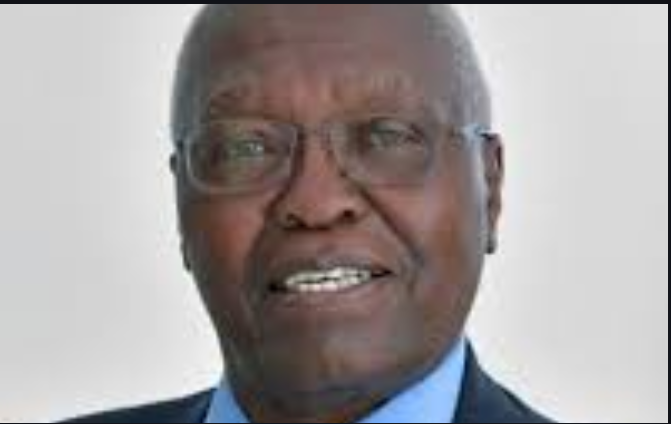

Some people shape institutions. Fewer shape entire systems. Prof. Raphael Munavu belonged to the second, rarer category.
When news broke on April 26, 2025, that Prof. Munavu had passed on, the tributes that followed were not the usual polite farewells. They came from presidents, scientists, university administrators, and former students — many of whom credited him with building the educational frameworks they operate within today. President William Ruto, who was among his students at the University of Nairobi, publicly acknowledged him as a former lecturer and mentor. That alone says something significant.
Munavu’s career was not defined by a single headline moment. It was built over four decades of quiet, consequential work — teaching chemistry, leading universities, reforming national examinations, and ultimately chairing the Presidential Working Party on Education Reforms that would influence how millions of Kenyan children are taught. He died at 80, having lived a life that intersected almost perfectly with Kenya’s post-independence intellectual story.
Early Life and Background
Prof. Raphael Munavu was born in Machakos, a town in eastern Kenya with a long tradition of academic achievement. Growing up in the years surrounding Kenya’s independence in 1963, he came of age during a period when education was not taken for granted — it was seen as the most direct path out of colonial limitation and into national self-determination.
That context matters. The generation of Kenyans who pursued advanced education in the 1960s and 1970s did so with a particular seriousness of purpose. They were not simply building personal careers; they understood, often explicitly, that they were building a country. Munavu absorbed that ethos early, and it stayed with him throughout his professional life.
His Christian faith also formed a quiet but consistent thread through his personal and professional conduct. Those who knew him described a man of principle — someone who took institutions seriously because he believed they existed for a reason larger than any individual.
Education
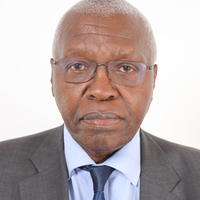
Munavu’s academic path took him far from Machakos. He pursued his undergraduate studies in the United States, earning a Bachelor of Arts degree from Kalamazoo College in Michigan — a small liberal arts institution known for producing analytical thinkers. He then moved to Wayne State University in Detroit for his Master of Science degree in chemistry, before completing his PhD at the University of Detroit.
The choice of chemistry was telling. In the 1960s and early 1970s, science was considered the language of development. Countries that could train their own chemists, engineers, and biologists would not have to depend on foreign expertise. Munavu returned to Kenya with exactly that kind of knowledge — and a clear sense of where to apply it.
Career Journey
The University of Nairobi Years
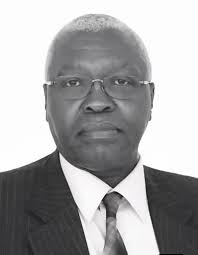
Prof. Munavu joined the University of Nairobi’s Department of Chemistry in 1976, arriving as a lecturer with a freshly minted American doctorate. In those early years, he taught undergraduate science students with a reputation for being demanding but fair — the kind of lecturer students grumble about in the moment and appreciate years later.
One of those students was a young William Ruto, who would go on to become Kenya’s fifth president and who later described Munavu as a formative academic influence. The anecdote is not merely a celebrity footnote. It illustrates what Munavu’s classroom represented: a space where future leaders were intellectually shaped.
By 1987, he had risen to Dean of the Faculty of Science, a position he held until 1990. It was a role that required him to think beyond individual courses and consider how an entire scientific faculty functions — its curriculum, its staffing, its relationship with the broader university and national goals.
Building New Institutions
In 1990, Munavu was appointed as the founding principal of Laikipia College, then a constituent college of Egerton University. Founding any institution is a different challenge from running an established one. There are no inherited systems to rely on, no culture already in place. Munavu built one from scratch, laying the administrative and academic foundations that would later allow Laikipia to grow into a fully independent university — one he would return to chair as Chancellor between 2013 and 2018.
From 1992 to 1994, he served as Deputy Vice-Chancellor at Egerton University, before returning to the University of Nairobi in 1994 as Deputy Vice-Chancellor for Administration and Finance. In 1998, he was appointed Vice-Chancellor of Moi University — one of Kenya’s largest and most complex public universities — a position he held until 2002.
National Governance and Policy
After his time as Vice-Chancellor, Munavu’s influence shifted from institutional to systemic. He served as Chairperson of the Kenya National Examinations Council (KNEC) from 2000 to 2010 — a decade during which the integrity and architecture of national examinations came under increasing scrutiny. His leadership there helped stabilize and reform how the country assessed student achievement at scale.
From 2002 to 2021, he chaired the Kenya National Academy of Sciences, an almost two-decade tenure that positioned him as a bridge between Kenya’s research community and its policymakers. He also served as a Commissioner at the Commission on Revenue Allocation between 2010 and 2016, and chaired the Konza Technopolis Development Authority — Kenya’s flagship smart city project — in his later years.
The Education Reforms Commission
The capstone of Munavu’s public career came in September 2022, when President Ruto appointed him to chair the Presidential Working Party on Education Reforms. The task was significant: review Kenya’s entire education system, with particular focus on the Competency-Based Curriculum (CBC), which had been introduced in 2017 and was generating intense public debate.
The working party submitted its final report to the President in 2023. Whatever policy decisions follow from that report, Munavu’s fingerprints are on the intellectual framework. His career had come full circle — from a chemistry lecturer shaping individual students to a national reformist shaping an entire generation’s educational experience.
Influence and Leadership Style
Those who worked alongside Munavu consistently used the same words: principled, disciplined, thorough. He was not a flashy leader. He did not seek attention for its own sake. What he sought, by all accounts, was well-functioning institutions — universities that actually taught, examination bodies that actually measured learning, science academies that actually connected research to policy.
His longevity in public service — spanning more than four decades — was itself a form of influence. He was present at enough critical moments in Kenya’s educational history that his perspective carried a depth that newer voices simply could not replicate.

Personal Life
Prof. Munavu was married to Martha Salome Munavu, who predeceased him. Details about his children and family have not been widely publicized, consistent with the private manner in which he carried his personal life. He was a Christian, and those who knew him personally described a man whose faith informed his commitment to service — quiet, steady, and without performance.
Net Worth
Prof. Munavu’s wealth was never a subject of public record or media focus. Given his career in public academia and government service, his income came primarily from university salaries, board positions, and public service roles. Estimates circulating informally suggest a range of $180,000 to $300,000, though this has not been publicly confirmed by any official source. He appeared to live modestly, consistent with someone whose professional identity was defined by intellectual rather than material achievement.
Conclusion
Prof. Raphael Munavu’s death on April 26, 2025 closes a chapter in Kenya’s educational history that will be difficult to replicate. He was not simply an academic who became an administrator — he was someone who understood, at every stage of his career, that education is the mechanism through which a society reproduces and improves itself.
From teaching chemistry at the University of Nairobi to chairing the commission that would review how every Kenyan child is educated, his trajectory was unusually coherent. Most careers wander. His did not. It deepened.
Kenya has produced many scholars. It has produced far fewer who combined scholarship with the patience, institutional knowledge, and policy influence that Munavu demonstrated across five decades. His passing leaves a gap that will be felt most clearly in the moments when that combination is needed again — and no one of equivalent standing is available to fill it.
FAQs
1. Who was Prof. Raphael Munavu? Prof. Raphael Munavu was a Kenyan academic, chemist, university administrator, and national education reformist who spent over four decades shaping Kenya’s higher education landscape and national education policy.
2. What was Prof. Munavu’s connection to President William Ruto? President Ruto was among the students Prof. Munavu taught at the University of Nairobi in the late 1970s. Ruto has publicly acknowledged Munavu as a former lecturer and mentor, and later appointed him to chair the Presidential Working Party on Education Reforms in 2022.
3. What is the Competency-Based Curriculum (CBC) and what role did Munavu play? The CBC is Kenya’s current school curriculum framework, introduced in 2017. Prof. Munavu chaired the Presidential Working Party tasked with reviewing it and the broader education system, submitting recommendations to the President in 2023.
4. When did Prof. Raphael Munavu die? His passing was confirmed on Sunday, April 26, 2025, through senior academic sources. He was 80 years old.
5. What institutions did Prof. Munavu lead? He served as Vice-Chancellor of Moi University, founding Principal of Laikipia College, Chancellor of Laikipia University, Chairperson of KNEC, Chairperson of the Kenya National Academy of Sciences, and Chairperson of the Konza Technopolis Development Authority, among other roles.
Editorial Notice
The biography above is compiled from publicly available sources and is intended for general informational purposes only. At PeopleCabal, we are committed to accuracy — however, public records evolve, and some details may change over time. If you notice anything that requires a correction or update, we welcome you to reach out to us directly.
